Feast?

Let’s talk about something new, at least as far as I can recall, I’ve never blogged about it.

I’m gonna do this a little differently, before announcing my topic, I’m going to list a few examples of it.

One: Watching a whole season of a show in one sitting.

Two: Eating a whole box of chocolates.

Three: Playing a game for half the day.

And what do these three things have in common? You got it, they all have to do with a thing we call bingeing.

There has got to be a more widespread problem than this, but it’s probably in the Top Ten of First World issues. It’s possible people would get defensive if I even called it a full on problem. We all find various ways to justify our indulgences.

But let’s just be honest, we all know doing anything in excess is unhealthy. I’ve done it yes, but I always pay a price. Too much of a show makes me feel cranky and it’s not even enjoyable after a certain point. Too much food, and sooner or later, you stop eating it because it tastes good, and just eat it because it’s your go-to comfort. Too much gaming and it becomes more and more about needing to conquer the game and less and less about fun and imagination. Now, these are only three things, there are endless examples.

Bingeing is not a 21st century invention, it’s as old as the hills, only it used to be called gluttony. Or luxury, by some. Or indulgence. sometimes we are disgusted with it even when it’s our own; other times we need to take a look at the bigger picture.

The most disturbing thing I saw recently was, I believe, Cloudy with a Chance of Meatballs. When I watched it a few years ago, I thought it was okay, weird, but with a good moral. But now that I’ve seen it as an adult, I think it actually has no real point. The best part is where Mr. T. (as a police officer) gives his speech. he’s the  most honest person in the movie. And the father of Flint is the most sensible. The whole plot turns around a machine that can turn water into food by mutating it. I realized that there is absolutely no way that could be healthy for a person but that is never discussed. However, what we see is that it is definitely harmful, people start getting carried away pretty quickly. A lot of them start eating constantly, the food is almost addictive to them. It is never said whether the food is actually addictive in its genetic make up, but there’s not much doubt of it from an emotional perspective.

In the end, the people’s greed becomes so great, the food literally almost destroys them. I would give the movie a pass if I thought the lesson here was intentional, and expounded upon, but it has to be read into for you to see what happened. Still, it’s a good metaphor for gluttony.

Flint, who created the machine, meant it to be a good thing, but he was motivated by a desire to be accepted by everyone, and have his genius appreciated. So he did not bother testing his product on anything beforehand, or considering what it would do to people if they could get food without effort. Or if it could have any real nutritional value. he also let his desire for appreciation get in the way of turning off the machine while he could, before it got to the disastrous point, or standing up to the people about making so many demands. How many creators of our own time give the consumers products, and never bother to consider whether it’s good for them or not.

See, people used to care about providing each other with quality, a lot still do, but many of us play off each other’s weaknesses to sell things. It’s selfish, and we’re paying for it.

But what’s more, why did no one except Flint’s dad ever think of the possible problems with the food? Why was he the only one who realized people were liking it too much?

Why did the mayor care so much about fame that he became a more and more reprehensible leader, as he became the biggest glutton of all, and embraced it. Encouraging the  people to keep it up.

Perhaps like those who write and act in shows and movies that are complete trash, just because there are a lot of fans addicted to the products.

In the end, their own greed nearly destroyed them all. And yes, gluttony is greed. We gorge ourselves on things out of fear that we’re left out, or alone, like Flint. Or we buy into the right shows and games because we get a sense of triumph from it. Or of belonging. And greed is what motivates a lot of screenwriters and producers.

This is not a nice subject by any means, but I can’t always pick nice subjects. I don’t like thinking about it, but after watching that stupid movie, I realized gluttony is a huge reason for our country’s decline. we want so many things, at no inconvenience to ourselves, that we’ve forgotten that sooner or later you have to pay the piper. Whether it’s with your health; your children ( see the original story;) your freedom; your emotional dependency; whatever.

If you ignore the red warning, you will suffer the consequences. That’s the hard truth.

On a final note, not everything we binge on we are addicted to, sometimes its’ a one time thing, it’s probably not a good idea, but that’s not being a glutton as a lifestyle.

Anyway, this has been a serious post, hopefully my next one will be about a
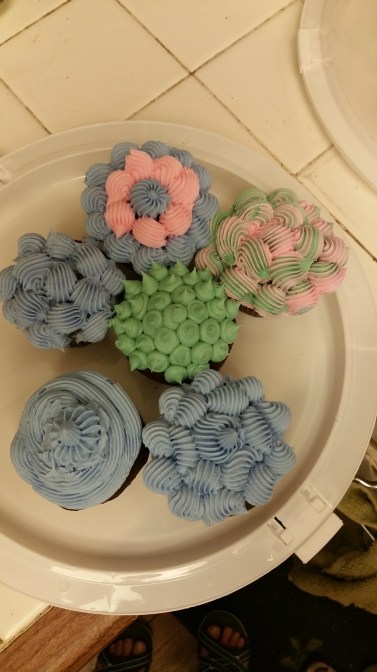
20160628_201011

Enough is as good as a feast

happier subject, until then–Natasha

 

The Importance of Fun

I though I’d break from my more serious theme to talk about something equally important: Fun

I have a movie to illustrate this too, but I’ll talk about that later. First I want to say that despite the fact that I’m constantly thinking, (Or even because of that,) I make time for doing fun things on purpose.

I don’t think it matters what you’re doing, as long as it’s appropriate, just so you’re relaxing or getting pumped from the clean, honest excitement of doing fun things. For me, playing with my younger siblings is a lot of fun. And it  keeps out imaginations limber. When I want to have fun alone, I usually write. ; )  Nothing like getting lost in a story to take your mind off being sad or gloomy.

The only problem is that sometimes we use fun as a way to hide from our problems for too long, that’s another post right there.

I want to talk about the benefits of it. I’m sure you can list them right along with me. The most obvious might be that we get to bond with the people around us when we have fun; or that we get to relax and unplug from the stuff that stresses us out. But there’s a less acknowledged benefit too.

Now for the movie: Some of you may have seen Rise of the Guardians, in that movie (spoiler warning) towards the end, Jack Frost , the main protagonist, figures out that his center (his purpose) is fun. He is supposed to bring fun to the children, and this is what defeats the antagonist, Pitch Black. The point is to realize what being a kid is about, but adults need it too. Pitch Black wants everyone to be afraid of him, or of their nightmares, whatever. And that’s one reason fun is so important. It drives away fear. Ask any shy person if it’s easier to open up when they’ve had a lot of fun.

And last but not least, fun really helps us see things more clearly. We need to have a sense of humor in life, I mean, we’re bloggers, or blog-readers, we can’t take ourselves too seriously. No matter what our station in life is, or our circle of influence, we’ve got to be able to laugh at the absurd things we do, or have happen to us. Christian (and non Christian) comedians often say “God has a sense of humor.” And one has to acknowledge, that it does seem like the universe is just designed to be humorous, whether it’s in irony, or flat out comicalness. Watch an animal for a while, animals are hilarious. People may be even more so.

It’s really not hard to have fun, unless you make a big deal out of everything, in which case–chill. For goodness sake!

Literally, it’s much easier to be good when you’ve had a good laugh over something.

Happy Hunting–Natasha. 🙂

SAMSUNG CSC

Reach for the skies

Me, Yourself, and Respect.

Respect. There’s a word that’s gotten pretty iffy in recent years.

We all want respect, but I don’t think any of us are born wanting to give it to someone else.

Respect must be earned, that’s why it’s so difficult to give, and to earn. Often people have higher standards for us to earn their respect than we think they should have.

It’s on my mind because I happen to be one of those individuals who gets talked to about respect quite a bit. I also am one of those individuals who is socially unaware a lot. I’ve offended people without knowing it. Sometimes things I don’t find offensive personally end up offending other people. It always ends up coming back to respect and being polite. I’ve never cared that much about being polite aside from being decent to people , and considerate. But when it comes to saying just the right thing and doing just the right things, I’ll admit I’m pretty clueless.

I think it’s because I usually am assessing myself, and I miss the signals other people send sometimes. As I’ve gained confidence I’ve gotten better at reading people, you wouldn’t think those two things would go hand in hand, go figure.

Not to make excuses for myself or anything. I’ll bet some of you have been there. Often it’s easier to pick up on stuff in writing than when it’s happening.

Unfortunately, I’ve found very few people will be understanding of my problem with respect and manners. so if you find people who will, stick with them, and let them help you. That’s my best advice for overcoming this barrier. It is a real barrier too.

Respecting someone means treating them the right way according to their position in life, and in relation to you. You respect an employer one way, an employee another, and your peers still another. It’s best when we’re all humble enough to learn from each other, regardless of our status, but sometimes that doesn’t happen, and respect is what we give each other as human beings. It’s what keeps us functioning as a society.

Btu on a final note, I’ve also dealt with people who were determined to find fault with my behavior  no matter what it was, because they have their own personal standard that doesn’t make sense to other people; in that case, I would caution anyone against changing too much. Do the best you can to work with that person, but understand that even if you met their standards, it wouldn’t be worth it. It’s too much based on the superficial.

If anyone has any advice to add to this, go ahead, I need it too. Until next post–Natasha.

Down in the valley

You know what’s hardest about being a millennial is that we don’t like to wait.

Even if you have the gift of natural patience, you still have those moments when it seems like something is taking forever.

Welcome to my world. Ever since I was little, I always thought once I got to be a grown up I’d be able to do al the things I wanted to do now. Then when I got to be 13 or so, I started reading books that told me I didn’t have to wait for adulthood to do amazing things. That may be true. But it sure seemed like the amazing things I in particular wanted to do were limited by age. Now I’m finally old enough to do everything except drink and run for a Political office (and i don’t want to do either of those) and yet  I’m at one of those times in life where I’m still waiting for things to happen.

Once you get mature enough at one age to admit that you aren’t ready for certain things yet, you turn a bend, and think that you’re ready now, at this new age. Maybe you are, maybe you aren’t yet. You’re still raring to go.

But you’re stuck waiting again. I have those moments every now and then where I want to scream, to cry, to rant about how unfair it is. But when I calm down and return to my normal state of composure, I remember the other things those books told me. When you’re waiting, you need to make it productive.

It’s so easy to get lazy when nothing’s happening outside your own little world of household events. (Unless you’re the type who thrives on that, and good for you then.) But that’s the trap of boredom. I don’t believe any of us dreamers have never fallen into it at least once, if you’re lucky, the one time is enough to scare you into never being idle again; If you’re like me, you have to remind yourself over, and over,  and over.

There’s this song I used to sing all the time when I was having one such season of waiting.

This is my prayer in the desert, when all that’s within me feels dry, this is my prayer in my hunger and need, my God is the God who provides.

And this is my prayer in the fire, in weakness or trial or pain, there is a faith proved of more worth than gold, so refine me Lord through the flame.

What this means, if you put it in non-religious lingo, is that our attitude in times of waiting needs to be that we keep hoping for the better times to come, and that when the waiting is actually painful (and oh is it, at times) our hope and our patience then become worth something. Asking God to refine us is our way of saying we want this time to be one where we learn to deal with problems better, and become stronger.

To make something our prayer is the same as to make it our hope, to make it our creed, to make it the thing we stake all on. If you’re prayer is not like that, then you have not put much into it. A prayer is plea, and it’s a thank you at the same time.

So that’s what I want my prayer to be while I’m waiting. And it’s important to have seasons of waiting, because then it produces the humility of this last verse in the song:

This is my prayer in the harvest, when favor and providence flow; I know I’m filled to be emptied again, the seed I’ve received I will sow. (Hillsong, Desert song.)

“I really wish I could just stay on the mountain, but I must go back down into the valley.”–Martin Luther King, Jr.

–Natasha.100_1572

Proudly Unpopular–Part 4

Even though the last part was more general, I still wanted to talk about why my faith is so unpopular, so you know what you’re in for.

You see, I think a lot of Christians have this idea that if we were just nicer people, more non-believers would be interested in our message. And to be fair, a lot of unbelievers do say that.

I won’t argue that Christians often don’t know how to live out the faith. Maybe to some that means it doesn’t work, but I’ve never felt that way.

When I was growing up in church, I always sensed this difference between myself and the other believers. I would think to myself that they had something I didn’t. I never knew what it was exactly. Some describe it as happiness, but I wouldn’t call it that. It’s not that I didn’t believe, I did, but I lacked something. Some meaning that my parents saw, and other adults saw, and I didn’t. After I became a Christian full on, I realized what it was.

Before I reveal it, I want to say something more. I’ve since noticed the same difference between other people I know, and between different families I know. You may have noticed that you feel different around different people. Some make you feel secure, some make you nervous, some make you focused, others distract you.

The reason I don’t think Christians themselves are an excuse to stay away from Christianity is that despite the difference I mentioned, I never found Christians to be any nicer, more friendly, or more inclusive than non Christians. They acted the same most of the time, except they prayed and talked about the Bible, and listened to a different kind of music. So what made the difference?

The faith itself. Maybe this won’t make sense if you haven’t seen it, but faith really is a part of your personality. It should be the most important part. And though I believed, I lacked the genuine, fulfilled faith that I saw in other people. Until I began to have it myself.

Until I did, I hated anything in Christianity that was outside my comfort zone of what I could trust. I had nothing to make me more ready for the harder parts of it.

And that is why people hate Christianity. It is not that Christians are jerks, religions of more violence and cruelty than Christianity are not knocked as often or as bitterly as it; it is because Christianity is scary. C. S. Lewis wrote that until he became a Christian, he was sometimes terrified that Christianity might be true. After he became one, he had sickening doubts that it might be false. The problem is, Christianity, if you understand it at all, is not something you can be half in and half out. You are either all in, or all out. The Bible gives no middle ground. I don’t say this to convince anyone it’s true. My point is that those who are concerned about being nicer about it to toher people have missed the point.

It is not a nice religion.

Now, I can already hear the protests from those of you who are Christians, telling me that we need to be loving. Oh yes, we do. We need much more of that, there never can be too much of love in the world. That is not what I mean. I mean that there is no easy way to become a Christian.

We’ve put way too much focus on nursing people into it. People come to church and leave unchanged, not because we aren’t loving, not because we aren’t teaching the Word of God, not even because we are making God too soft; no, no , no, you can’t exaggerate the kindness of God, as Amanda Cook said. People leave because they don’t share the faith. And they don’t see it in us because we haven’t been honest about it.

You see, real faith is fiery. It makes timid people bold, and foolish people wise. this actually is true of any genuine faith in a good thing, but especially in God.

Christianity is not meant to be popular. It shouldn’t be. Not because I don’t wish it was, but because the only way it ever becomes popular is by people neglecting certain parts of it. (Study Martin Luther, you’ll see what I mean.) It is a waste of our time to try to make it more appealing by selling it on the world’s terms. We just need to live it. And I don’t mean by loving others, though that’s a big part, but by loving God more than others.

People, until I loved God more than others, or myself, I couldn’t really believe on Him and trust Him. Whatever your experience with God has been, until it’s to that point, it isn’t actually faith yet. If you aren’t ready for that, that’s okay. I had to get there. I’m not making an altar call. I just want to set the record straight.

I really want my love for God to be the most important thing to me. I don’t care if it make me unpopular, because when you really get to know Him, you don’t care anymore. The Bible really won’t make sense to someone until they realize that it’s about God and the People who loved Him, not about rules.


Okay, this did get preachy, but I warned you; if you read his far, you wanted to hear it. So, thank you, and until next post–Natasha.

Proudly Unpopular–Part 3

Still continuing the discussion of unpopularity. I used to find being popular and appealing thing, even if I never thought it was something to revere. Now I think it would be exhausting to be popular. I’d rather have a few friends who really care about me and get me, than a bunch who I only hang out with for fun.

But being widely liked is nice. I’m one of those fortunate people who is liked by most who meet her, but I don’t know if that means much, other than I polite and well brought up by my parents.

To be widely liked you just have to meet certain expectations, and not fulfill other ones. If people expect someone my age to be obsessed with their image, always on some electronic, never interested in learning or real conversation, then when I don’t fulfill those expectations, they are pleasantly surprised, usually. Or they assume I’m just under fed on technology and they need to give me access to it. (? I don’t get that.)

This principle of popularity, or at least approval, doesn’t just apply to my life of course. It applies to everything. People have expectations about ideas, faiths, clothing, food, music, everything they care about. and if you just tap into those expectations, you can sellalmost anything.

If someone expects the worst of a lawyer for instance, all you have to do to convince them lawyers are dishonest is to point out one example, or point out something that looks dishonest to them if/because they don’t know the actual law, and boom! Their expectations are confirmed.

Now stay with me, this is part of unpopularity too.

The ideas that guide our culture our its most popular ideas. They aren’t popular because they are good, per sec, but because people have expectations they want fulfilled, and the trendsetters of our culture understand that and play to it.

Take movies. The adult ones are now, for the most part, sex obsessed; violence packed; and full of other ugly or profane things that seem to sell nowadays. Why do they sell? We just expect that from movies now. It doesn’t shock us anymore, and we continue to buy into it, so it shocks us less and less, until our culture has deemed it totally acceptable to allow those things.

To prove my point further, did you know words like “damn” and “hell” used to be never even used as interjections in polite company, around children, and certainly not in books, unless used by a character you were supposed to despise. Men perhaps used them when they were together and working, it was called “rough language.” Why, “heck” used to be as bad as “hell” is now. What happened? I haven’t researched it, but I’ll bet you a lot changed when movies started allowing those words in more and more often, and younger people started watching them, and eventually it stopped being shocking. in my own life, I never heard bad words (that I recognized as such) until I was older than 12. Then for some reason, people stopped censoring themselves around me. I still don’t use curse words, but it got a lot harder the more it seemed like no one else cared about it except me and my mother and siblings.

Multiply that times thousands of people and you get a culture shift. I don’t think words are really the issue, and honestly, neither is violence. Not in of themselves. The problems that the idea of what violence is, and what curse words represent, got to be more and more acceptable.

You know what’s acceptable now? Living a life of bitterness and hatred, and being haunted by a troubled past. That’s what movies and shows are promoting now. Always from the cool, but aloof good guys, whom you really like, but they are always unhappy. And what usually starts to fix them? Sex. Or they go off the deep end and start killing people.

Why do we like this now? Could it be because we started letting things like cursing someone for driving too slowly; or cursing someone in front of our kids; and releasing all our negativity on people who really didn’t deserve it, become okay? Could it also be that we kept saying the violence on TV was either not real (if you’re the type who feels better if it’s fake;) or like real life (if you’re the type who feels smart when you’re doing something that’s realistic;) and so eventually the violence that actually happens just  seems life  apart of life.

I’m as guilty of feeling this way as anyone. But I don’t like it. I don’t want to embrace it. It’s funny, the people I know who are apt to excuse the garbage on TV as being fake, tend to think I take things too seriously; but the people who talk about it being realistic, think I’m sheltered. Maybe some of you other bloggers can relate. (One reason we all like blogging is that we can express our real opinion without someone we know assuming they already know it, right?)

So, my way of seeing things is definitely unpopular. Even more so because the majority of the culture would side more with the idea that the stuff we condone as “harmless is really harmless. It’s not like we’re part of the problem, right? We just go and see the new movies because we’re curious. We don’t have to buy them all. (Heavy sarcasm.)

You get what you expect. But here’s the thing, I actually suspect that a lot of us are frustrated with the low standards. We go along with it, but deep down we wish we had better options. maybe we do and we just don’t utilize them because it’s easier to go along with everyone’s else’s standards. So you see what I mean? Ideas are either popular or unpopular. The question I’m posing is will we choose to be proudly  unpopular.

It’s a tough call, there’s lot of pressure to just go with the flow of the culture. Go see the next Star Wars Movie, check out that new show, rely on your phone apps to amuse you and do everything for you from photography to studying. It’s not like everything has to be quality right?

Wrong. At least I think so. Well, this is too long already, so adios. I think I’ll be doing one more installment in this series, so catch me next time–Natasha.