Why did I choose Therapy?

I was looking at some posts and videos about therapy today, just to see if other people are sharing my experiences.

I found some surprisingly negative stuff, people saying therapy is for people who can’t face reality, yada yada.

Well, a lot of people have written articles debunking therapy myths, so I can’t add anything new, but I’d like to share why I chose Therapy.

  1. it was not because my depression and anxiety are so debilitating I cannot function.

I can sleep, eat, and work, I don’t feel bad all the time. The feelings are not usually very strong when I do, more of a nagging “something isn’t right” kind of feeling.

The reason I decided to seek therapy despite that is A. I didn’t want it to turn into that because I ignored the problem, and B. I don’t want to act in ways that will hurt the people around me.

With abuse and trauma and neglect, the problem is all you’ve seen demonstrated is the wrong way to handle stuff, therapy cannot replace good parents, but your therapists ideally is showing you a healthier way to listen and talk about feelings and problems, and helping you find what will work for you. In place of being shown it as a child, you can choose to learn it as an adult.

2. I didn’t want a pity party.

What drew me to therapy versus just some kind of support group sort of thing was I wanted to be able to learn and apply for myself so I don’t end up dependent on other people for everything in my life. My therapist acknowledges my life was hard, but doesn’t linger on how that makes me a victim, I’d hate that.

3. I ran out of options

The thing is, therapy is not always necessary. A strong friend group, family, and community can help you the same way.

The problem is, if you need therapy, that’s a  good sign you don’t have any of those things.

That was the case for me, I have loving family members, but not ones who are very emotionally healthy and strong in the areas I need to grow in.

I have friends, but few I can really talk to, I end up encouraging them, more than they contribute to me. Also, people don’t want to talk about abuse, it scares them.

My community was somewhat supportive, but not on an intimate level where I could talk things out and figure out how to move on.

I’ve sought these things for years, and not had as much success as I could wish, so rather than wait until I do, Therapy seemed the wiser choice. Give me some breathing room to build better relationships.

Of course, it can be frustrating not to have those things, but to not have them should not be the end of emotional healing and growth.

4. Therapy is a way to acknowledge my need for help.

It’s dangerous to try to handle everything yourself, but I am tempted to do it. Therapy is a commitment that will keep me from being able to do that, even if I wanted to. It also keeps me talking to my family about my struggles because they are aware of what I’m doing.

5. Therapy is not an escape from the hard stuff.

I did not want to ignore what happened by putting a band-aid on it. Therapy does not do that. The idea is to face it with the attitude that it does not define you, and you can keep it that way by developing healthier habits.

A little look at what this is for me:

A lot of the process of healing is something I’ve been working on for years. So, my therapist knows she is not talking to a novice. So far she focuses on what I need to be encouraged to keep doing it. And to not give up on thinking it can get better, which was what I was tempted to do, and still am sometimes.

I lived in the ad situation for years, it affected me in ways I’ll still be discovering for years, and that’s okay. Because good emotional health does not depend on knowing every thing that bothered you ever before you can be good again. It depends on knowing how to treat it when something comes up.

Also, having issues does not mean you live out of them, as I’ve said before.

One of my defining issues for years has been “It’s my fault”, my dad used to blame me for literally everything that upset him about our family.

My therapist says he was all the more angry at me because I refused to accept his blame. My dad upbraided me for “fighting him” which meant all I resisted and argued and called him out on over the years. he didn’t break me. But he tried, and just knowing he tried was traumatic.

Perhaps some of you know what I’m talking about. Maybe the person didn’t go all the way with a threat, or an attack, or a bad decision, but just that they did part of the way was scary, and you didn’t know if they’d go further.

The more my dad tried to scare me, the more I fought it.

There’s a quote I found about depression that goes like this:

Quotes about Clinical Depression (42 quotes)

That’s what it is like for me. I was holding my family together by sheer enduracne, it felt like, until I just couldn’t do it any more. I ignored my suffering. Or I faced it alone with God because I had no one to talk to.

I came a lot further because of God, but turning to God can become a way of avoiding it, not because God does not help, but because you can stop actually seeking his help in your attempt to use that to justify not needing anyone else. God’s help may be in other people.

6. I thought God told me to.

Avoiding therapy was stressing me out more than my other problems were, now at least that is off my plate.

I did not want to need help, but the thing is, I also do not want to live my life by that desire. The one to be stronger than other people just to make it easier for myself. Being smart has always made college classes easy for me, yet in classes I do struggle in, the worst of it the people who have an easy time and have no pity for those who don’t.

I’m the classmate people ask questions of and what the homework is, because I don’t mind telling them. Would you ask the person who acts like they are better than you for knowing?

Even if I stumbled through without therapy, I don’t want to be the type to judge people for needing it. I have had a weakness for being afraid of people who are broken, partly because I lived with it for so long, but I want to have compassion for them and be able to help them.

(Note: I know someone who thinks that handling things on their own has always gotten them through life just fine, but this same person rarely if ever confronts people about what they don’t like, shares their feelings, admits to needing help, or is able to sympathize with other people. They are not a bad person, they are a kind person in many ways, but you just can’t talk to them about anything really deep and expect understanding. So it can be deceptive to assume you are fine just because you feel fine, maybe you aren’t miserable, but your life could be lacking so much meaning in it because you settled for barely getting by on your own.)

7. Therapy will, I hope, make me a better person.

My hope is to be a better sister, daughter, wife, friend, and christian for gong through the hard steps of therapy now and not later.

In all honesty, it can feel like it’s only making it worse. After a session I feel like my insides got poked with a stick on all the raw spots. I can feel off for days afterward.

But even with physical sickness, treatment can make you feel worse.

I used this analogy with my sisters (two of us have or have had braces)

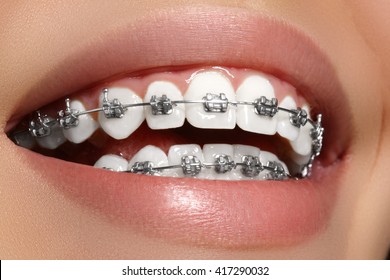
Therapy is like getting braces.

Your teeth may be really messed up, many teeth problems can cause serous issues later in life if left unchecked, like breathing problems, infection, or bone damage from incorrect chewing. Teeth can grow in on themselves and be very painful.

But you’ve had them that way your whole life, since they grew in, you’ve grown up biting and sleeping the way you do, you’re used to how it looks. It’s just your teeth.

So, when your parents make you get braces, it feels awful. It’s painful for the first few weeks, and then with each new tightening, the pain is fresh all over again.

If you’re like me, you have a bunch of appliances, it gets stressful changing the new methods time after time, just when you got used to it.

And then, finally, you have that perfect smile you always wanted, the work is over right, only took 2 and half years…

Metal Braces Images, Stock Photos & Vectors | Shutterstock

but, then you have a retainer, or your teeth will go back into their old habits.

49024 Orthodontist | What Happens If I Don't Wear My Retainer?

You see how it’s the perfect metaphor?

Teeth are as stubborn as thought and behavioral patterns, if you aren’t careful, they get out of hand fast. They are hard to correct, and without diligent care, braces can get pretty gross and give you cavities.

Therapy is like braces, it hurts, every session can feel like a new tightening, until you get used to it. even then, what if a new element is introduced later that starts the pain up all over. Even if in reality it’s only a couple years, at the beginning, that seems like forever.

And afterward, you know it won’t stay fixed without help. You have to “retain” what you learned in therapy in order to maintain a healthy  life.

Maybe not getting braces won’t be fatal (it can be with extreme dental problems) but it will leave you in a lot worse shape than if you just bite the bullet for a couple years.

My dad, ever the example of what not to do, did not wear his retainer or keep gong ot the dentist, and his teeth got crooked again and he ended up with a painful infection, had to get most of them replaced.

And you may not be so lucky with emotional and behavioral problems.

My dad almost preferred not having the real thing, it can be easier that way, dentures and fake teeth don’t rot, right?

Just so superficial relationships with people who won’t challenge you may last 20 years, but never be anything really valuable.

I like to keep my real teeth just like I’d like to feel my own feelings with really deep relationships. So, I’ll take the harder but healthier method.

Therapy does not get me out of hard work, it just keeps me form blowing it out of proportion. It keeps things in their proper place, much like braces do.

That’s what I have for you today, I hope if some of  you were wondering about what therapy is like, this answered your questions. This is just my experience of 4 sessions, so I’m barely getting started and not all therapy is the same, but it’s what I have available.

Until next time–Natasha.

Miraculous Ladybug is an Empath’s Nightmare! (And other things)

Chloe is best girl, yeah, I said it.

Man is this show hard to watch and not get involved. Especially if you can sympathize with almost every villain, and the main one. Even if they annoy me.

Now that I finished Season 3, I think:

A. What the heck is wrong with you Natalie? Natalie, vous-ete (est?) tres stupide!

(I took French last year, this show keeps reminding me of it.)

B. Why, oh why, are they dragging out this ship, everyone knows it’s endgame by now.

C. They are wasting Yagame as part of a triangle, she’s freaking awesome, she should be a separate character.

D. Chloe is hands down the best character on this show. Sorry, HawkMoth, go suck an egg.

I am not crazy about the finale, I think they did my girl Chloe dirty, she slowly won me over as the most complex, sympathetic character of the main cast. Unlike the villains, she occasionally makes good decisions, and improves herself.

But by far the crowning moment for Queen Bee was being the very first person to successfully throw off an Acuma (the moth mind control thing, if you don’t know.)

The Mary Sue Marinette does dodge an acuma a couple of times, but only Chloe has thrown one off after already being infected.

Until suddenly, she’s too stupid to know HawkMoth is just using her, or too petty to care. This show has a habit of scrapping Chloe-character development whenever it’s plot convenient.

Even if it did make sense, it’s pretty negative to have a character regress so often, and I don’t see how it helps the message of the show.

But as an empath, this show can be one heck of a ride. The fact that negative emotions are the main antagonistic feature is both interesting, and difficult. They keep it PG, but some of the stuff is very adult, even so. Jobs, money, fraud, all that stuff that adults and kids alike have to worry about.

They have this little sociopath Lyla on the show now, and she’s officially the worst character.

But Lyla provides an all too ugly example of the kind of people we’ve all meant, the ones who embrace and nurse their wounded feelings, and choose hatred and spite on purpose, no matter what someone tries to do to make up for it.

Any little thing is enough to offend those people, and if it’s a big thing, you can be sure you’ll never hear the end of it from them.

One can’t help but think while watching about how we are tempted by our own negative feelings to give into them.

The show does not hide that many of the people who get acumatized feel ashamed afterwards, their private feelings were just displayed for all the world to see, and they do not even remember it.

The show even acknowledges that some people would begin to find the city of Paris a too dangerous place to walk around in freely, but the wiser characters remind them that giving into to fear will only make it worse.

The show kind of skips the distraction of politics that usually make it hard to focus on the point of whether living in fear is wise, or necessary, instead it goes right to showing how living in fear is the worst response to a threat because it gives it more power. Intimidation is a key component of any take over, the season 2 finale even shows this brazenly in its plot.

That being the case, we can draw some interesting parallels to many things in our world, where our fear makes the situation worse.

People decry the world for getting too relaxed, lazy, indolent. Shows like MHA, and RWBY, even have the villains taunt heroes with that attitude, but the fact is, fear driven societies are disasters. They are miserable, and there’s a collective wisdom in our desire not to dwell on fear.

How to Cope in a Fear-Driven Society | Psychology TodayIf It Bleeds, It Leads: Understanding Fear-Based Media ...

The idea that we should not dwell on our negative feelings is one that strikes home with me too, as you may remember, I have been dealing with depression.

Happily, it’s gotten much better, I don’t think it was ever full force anyway, but I had to do some soul searching, and I came to the conclusion… soul searching doesn’t work.

There are times and phases in life when you have to look at yourself and ask “what the heck am I doing?” but not when you’re depressed, stressed, or anxious. Introspection is a real pain when you aren’t feeling great about yourself to begin with, and it’s rarely honest.

Jeremiah 17:9The heart is deceitful above all things, and desperately wicked: who can know it?”

“It is the glory of God to conceal a matter and the glory of kings to search it out. 3 As the heavens are high and the earth is deep, so the hearts of kings cannot be searched. ” (Proverbs 25:2-3) 

C. S. Lewis gave up keeping a diary because he saw no use for focusing on his own thought and feelings so much anymore. As a young teen, having a journal kept me sane, I did not have a lot of people to talk to.

Now, I still don’t have a ton of people to talk to, but I think I understand emotions a little better than when I was 13.

I do still keep a journal, but it’s become less of a comfort, it can be fun to write out good things, but the hyper-focus on what’s wrong no longer helps me process, it’s become rehashing the same thoughts over and over.

I think journaling does work, but perhaps God has not put his hand into that at this time of my life. So, I switched to therapy.

And in my last talk with my therapist, she told me again that my controlling father will probably not change, after decades of getting away with the same behavior.

At one time, I would not have wanted to hear that. While he was around, hoping he’d change was about all that kept me from despairing of my situation, up until last year, I never imagined he could leave. It’s still remarkable that it happened.

I can’t say I enjoyed hearing that it may be hopeless, but I did realize something, a lot of my hope depends on the idea that other people will change, or that I myself will somehow learn a new trick to manage my life.

In therapy, I’m being encouraged to just keep doing what I’ve already done, with few extra tips. Turns out, maybe therapy is  support system for what people already would need to do, but we can get so psyched out if left to ourselves, and not make those decisions. We need someone else to back us up.

See, the approach so far is not that I need to be “fixed” like I thought, but that I need to be encouraged to keep making the right choices, it’s having someone else on your team.

So, if you’ve ever considered therapy, at least Christian therapy, let me say, don’t expect it to be carrying you, but it can give you more resolve and help you feel there’s a way to move forward.

I now don’t think I’d have lost my mind without it, but it is hopefully shortening the amount of years I’ll spend recovering from this, since a huge part of recovery is not walking in the same circles of anxiety.

How does this tie in to the show?

Well… everyone on this show needs therapy. They need to learn ways to make better choices.

Chloe had the right idea, having someone you can trust to care about you is  good first step, you need to have hope.

Chloe hit the wall of having hope in a human being though, they will not always understand, or make wise choices.

Honestly, one of the ironies of the show is that Marinette, the person with a good background, loving parents, loyal friends, can be the most insecure, immature person in the main cast, save for Hawkmoth, ’cause that guy is whacked.

However, I’ve been thinking about that.

See, my dad had a royally flipped up background. Some of it might blow your mind, but some of you might have had similar experiences, I’ve discovered that suffering and evil are not what’s uncommon.

I know people with better parents than mine, too. But I have still been lucky in some ways.

The thing is, the people with good parents, aren’t necessarily the strongest, neither are the people with bad parents, despite what anime seems to think.

Trauma+tragedy is not a recipe for strong, brave character. In many cases, they are the most afraid and abusive of all.

s3uddaqxa6001

But, good family also doesn’t make you compassionate. Marinette is a perfect fictional example of how it make you less able to understand what others go through, while Adrian is far more sympathetic to people’s difficulties.

81elfiwFRVL

Miraculous Ladybug is Adrien's Story: Here's Why

I used this analogy the other day, your background is like being dealt a hand of cards (I borrowed this from Stasi Eldredge).

The thing is, in most card games, you don’t win with the hand you start out with. With games like Shanghai, you have to add and replace cards slowly over time to get the right combinations.

A hand of cards at the start of a game of bridge - ABC News ...So, whether it was good hand, a bad hand, or in between, you still can’t win, unless you play the game, and play it well.

The game is life, bro.

What I mean is, you can choose to discard what was negative in your life, to stop listening to that, to exchange it for something better, in a Christian’s case, a new history in God.

How To Play UNOYou can get help, you can change your course. You can build on a good background, if you have one.

Whether you start off bad or good, you choose where it goes from there.

On the show, Chloe has to look at the very bad examples of both her parents, and realize she wants to be a hero, she wants to be kinder.

77.9k Likes, 709 Comments - Chloe Bourgeois ...Thomas Sanders just released a new video talking about almost the same thing, and asking the question “Why should we be good? What’s our motivation.”

I could have saved him 45 minutes of screen time, I have the answer.

Because God made us with that purpose. God requires goodness of us, and God has provided a way to be justified in his sight, because we cannot pull it off.

When you love God, you will want to be good. You will be able to be, more than if you were just trying for some abstract standard. Love is really all that motivates us.

“If you love me, you will keep my commandments.” (John 14:15)

And for me, I don’t love myself so much I want to be a better person just for that reason, I do want to be happy, but there are times I loathe myself, not because I think it’ right, but because I have issues. I can’t always feel pleased with who I am.

But what I don’t do, is hate on myself when I feel that way. I try to remind myself God has a better vision of who I am.

And for the love of God, I can keep trying, He is the one who’s there for me, and I am so grateful for that. Even on days when I feel down, and feel like it’s not worth it, and I’ll never be free.

That’s just an illusion, a Lie, if you will.

Volpina (2016)Gotta watch for that.

Until next time–Natasha.

If you want to support my other writing, check me out on Kindle and Wattpad 🙂


https://www.wattpad.com/user/worldwalkerdj


Arrival at UA by worldwalkerdj

The Shocking Truth! (most controversial post about history)

Hmm, I just found out something pretty shocking…

You know how I’m taking a history class right now?

Well, this anti-European history class covered slavery in America last month, and no mention was made of this very strange fact:

(I mentioned it to my professor who denied any knowledge of it. But I remembered it being in a movie that came out 5 or 6 years ago I think, about America.)

Did you know that there were black slave owners in the U. S.?

It’s true. It’s documented on census’es taken from the 1800s, in fact, a black man was one of the first people to legally win ownership of another black man in court

“It depends on how you parse the timeline. Anthony Johnson, the black ex–indentured servant whose bio opened the first episode of our podcast, did sue to hold John Casor for life in 1653, and the resulting civil court decision remanding Casor to Johnson’s ownership was (as historian R. Halliburton Jr. writes) “one of the first known legal sanctions of slavery” in the colonies.” (Slavery Myths, click link for full article https://slate.com/news-and-politics/2015/09/slavery-myths-seven-lies-half-truths-and-irrelevancies-people-trot-out-about-slavery-debunked.html)

There’s a book about it actually, called “Black Slaveowners Free Black Slave Masters in South Carolina, 1790-1860” See link below:

(https://www.worldcat.org/title/black-slaveowners-free-black-slave-masters-in-south-carolina-1790-1860/oclc/1124410642)

So, now you know I’m not making this up, but why am I bringing it up?

Because in a college history class, this is not mentioned. I have never seen it mentioned in any history book I’ve ever read, especially not ones about slavery. They grudgingly mention that slavery existed in Africa, taking great pains to tell us that it was “different from Western Slavery” and “Europeans made it worse” and oh, we had slaves at a time when slavery was a social norm and no one would have thought much of it.

It wasn’t, from the accounts we have of the slaves who came from Africa, the idea of slavery that they objected to, it was the nature of slavery of Europe was different, and they didn’t like it. That’s fair, but is it fair to make it seem like it was mostly the Europeans fault?

Usually, in politics, we blame the preexisting system for the fact that outside forces can take advantage of it. Like, do we blame China for the fact that we outsource our businesses to them because its cheaper that way for us, even though it’s an inefficient system that hurts the people actually making the products?

Is it China’s fault? Or ours, for building our economy on that?

No one is going to say China, here, guys.

Yet, it was somehow Europe’s fault for doing the same thing, when slavery preexisted in Africa and we could only take advantage of it because of that, in Europe, after the Empires died away, slavery was not a thing.

But, they will say, Slavery is a clear evil, and Europeans should have known better.

Well, firstly, slavery is not denounced as evil in almost every major world religion, though it is given parameters, at least in the Bible, for fair treatment, and the ability of slaves to be freed after a certain length of time.

Slavery is a historically acceptable thing, up until the last 200 years, in fact.

So, why should the Europeans have known better? Do human beings innately question things like that? We’re told it’s wrong now from preschool to adulthood, to the point where no one can have an intelligent conversation about why it happened at all, just that it was wrong.

I am no fan of it myself, I live in free country, I like freedom. I am not interested in enslaving anyone.

But I am also not interested in presenting a view of history that is completely skewed one direction, not by logic, not by virtue, but by the wish to inflate the crimes of 1/3 of the world, and ignore the crimes of the other 2/3.

I call it facing facts. The fact is, everyone sucks. No matter what country you’re from, unless its Greenland, because they never do anything that I’ve heard of (but if you go back far enough, who knows? Vikings right?)

Does it not strike anyone else as irresponsible to leave out of history books about the Slavery movement, that black people owned slaves?

I mean, doesn’t it suggest a certain… bias?

Even that one of them maybe was part of normalizing it to begin with?

That’s not something anyone wants to hear, is it?

There’s a lot of white people who get a kick out of shaming their ancestors over slavery, and it’s fair enough to say it was evil… but it’s not fair to say white people are to blame.

The terms “White Supremacist” “White Misogynist” get thrown around a lot.

And if a white person has the audacity to stand up for this country, or any aspect of European history, well, prepare for battle (I should know, I get this in my history class if I ever try to bring up counterpoints.)

Now, I am not blaming black people. (Which is a blanket term anyway, because if I said African, I’d actually exclude a lot of the countries slaves were taken from.) I think all of use are responsible. There were other races involved too. Eastern peoples.

Slavery was a Global problem, it looked different in different nations, but it was Global.

History books now slide a certain way, against White people.

Never mind that Irish, Scottish, and any number of other ethnicity in Europe could be almost as oppressed as slaves, and rarely if ever owned enough property to own slaves. And I am more those ethnicities than I am any that would have had slaves. So, as someone with a very small claim to fame in that part of history, I feel even more annoyed at the marginalization.

Profiling is only profiling if you’re not white.

I wish I was kidding, but I just watched a movie last week, a good movie, that has a couple of lines in it that are just… so, so hypocritical.

The worst is a black woman in the movie makes this joking comment “I never get tired of watching white people fight.”

It’s laughed off, and truthfully, I am not really offended by the idea of it being funny to see white people fight. I think it’s funny too. BUT

Can you imagine the same line, spoken by white person, of a black couple?

Picture it “I never get tired of watching (insert any other race) people fight”

I am pretty sure the Racist Comment Police would be all over this in two minutes.

And this movie is not supposed to be social commentary, it didn’t see any problem with saying that.

Because no one would have a problem with it, on any given TV show, because it’s okay for black people to make fun of white people because we can’t dance, can’t rap, and fight differently  (supposedly) but it’s not okay for white people to say even a good thing about black people, if we say it’s because they are black. At least not without feeling like we’re taking our interracial social life into our hands.

I know some people at my church who don’t care if I say “black” because they know I am not trying to be disrespectful, it’s just easier than trying to remember where they are from. Cause guess what? My church has had black people from the UK there, so I can’t very well just assume everyone is African American, can I? (See why that term is so stupid as a blanket term? It’s more exclusive than black is because it makes it sound like there are only African Americans, and my French Professor was black too, she was form France.)

To be fair, usually it’s other white or Hispanic people who make the jokes that we can’t say “black” no black person has ever told me they don’t like it. (If you don’t, sorry, no offense intended).

Anyway, Political Correctness is dependent upon being technically incorrect, a lot of the time, as I think the above examples illustrate.

If I suggested that black people were partially responsible for slavery on any social media platform, I would get flame warred to death.

Even if, I could historically prove I was right. It wouldn’t matter.

The reason I think I have to talk about this is because my blog is literally about finding truth, protecting the truth, and understanding the value of it.

If the truth doesn’t fit any political agenda, that’s a shame, but it doesn’t make it not true.

Well, I think this is the most controversial post I’ve written all year, I wonder if it’ll get comments.

Though, why it is so bad to just give historical facts and suggest that they should be in history books, I’ll never know. 😐😤

Until next time, stay honest and stay healthy–Natasha

Why Miraculous Ladybug is actually brilliant (unironically).

Well, when in Quarantine, start binging new shows.

One more episode, please?: Why we can't stop binge-watching on ...

Why We LOVE Binge Watching And What It Does To Your BRAIN - YouTube

I’m always behind the latest fads, either because I don’t really care what everyone is watching, or because I don’t have NetFlix (isn’t that really the same thing?)

So, though I’ve heard about Miraculous Ladybug for quite a while, I never though it was worth checking out, but my sister finally convinced me it was kind of interesting, and we started watching, and it was way better than either of us thought.

The show has a genius concept, it allows for all the plot convinces you could want to keep anything from having consequences, and the only time it breaks the suspension of disbelief is when you can’t understand why no one knows the true identity of the heroes and villains.

I am only on season 2, so I don’t know all of what happens, but I thought I’d talk about what makes the show intriguing for a 21 year old like me to watch.

I am not venturing to say how it will end, so this is just about the hook of it, not where I think they are gong, I can’t really predict it.

But the show’s hook lies in two very interesting and rarely used concepts that render it almost impossible not to find intriguing.

The first is the villains:

MIRACULOUS | 🦋 HAWK MOTH - Transformation 🦋 | Tales of Ladybug ...

Miraculous Ladybug villains are mostly innocent people being controlled by the real villain in the shadow. HawkMoth (weird name I know, get used to it) possesses something called a Quami (or Kwami?) It’s like a genie that can only grant a specific kind of wish, but his allows him to grant people superpowers, but at the price of controlling them through their negative emotions.

The person never remembers what they did afterward, indicating that brain function is hindered by the process, but they are still left with enough willpower to purse their own twisted desires, but they also have to do what HawkMoth wants. It’s kind of weird.

But what makes it genius is the writers neatly escape any need for the audience to feel conflicted about the villains. We both pity them and know that they are doing what is wrong, but their wrong doing does not stop us from rooting for them to get better, because the whole point is they need to be rescued from themselves.

You skip all the debate over if they redeemable or not, because the whole point is that they have to be. Yet the emotions they show are ugly and ones we recognize in ourselves, just blown way out of proportion.

It’s so perfectly simple that it feels like the writers are cheating, but it’s hard to really complain because it would be awful to have so many people really just be evil on purpose. (Kind of MHA’s problem, but MHA solves it by equating super villains to regular criminals int he world, so it’s not that special to run into them).

Also the show gives Ladybug the power to undo any an all damage, from evilized (their word not mine) victims to broken buildings and time rifts, which is also genius, because they get to have death defying, surprisingly well animated fight scenes that can destroy a lot, put a whole city underwater, and break priceless objects, and none of it has lasting consequences because the in universe rule expressly is that Ladybug’s power is to restore it all. The characters themselves even comment on it, and save time worrying about property damage.

81elfiwFRVL

But there remain stakes, because we are never told that people cannot die, one of the main issues of the plot is that someone wants to be able to control life and death, which suggests even Ladybug’s power is limited, in a sense.

This is really just me complimenting the authors on how genius it is to write this way, it’s like getting all the pros and none of the cons. I’m just impressed, because as an author, dodging these bullets often makes me jump through a lot of hoops and make internal logic in my stories, which I try to keep child friendly because those are my favorite books anyway.

4a1e449df46a99931d3d0da195b825d4062101c6

Aside from how the action and opposition is written in general, there is HawkMoth, who is also a rather uniquely written villain, basically Mr. Freeze from Batman and Robin, but with more of heart, and a son…yeah…well, later.

The other brilliant but annoying thing is the Shipping.

There’s the most bizarre love square between the main heroes and their secret identities. It’s hard to follow, and messes with your head, but it’s cure enough that you still enjoy it.

Marionette (I hope I spelled that right) and Adrian have some good moments as friends, despite her weird stalker-ish tenancies (at 14, I doubt I would have been that much more mature though) and his insecurities.

As Ladybug and Chat Noir they have a reversed dynamic, but that’s what makes it interesting.

One feels that if they ever blended their two lives together, they would end up realizing they both liked each other the whole time.

maxresdefault

i have to say, and this is of shows in general, that kids shows tend to portray a “crush” as much more like real love.

A crush is obsessive, but it’s rarely as mature as what shows do with it. The kids just want to hang out and talk, and flirt, and kiss, maybe, but when it comes to understanding each other deeply, they haven’t learned that yet, unless maybe they were old friends who developed feelings for each other.

Most 12-14 year old’s idea of depth is talking like a Romance Novel, and fahm, that’s not what real people sound like when they share their feelings.

I’ve had a crush on a guy for almost 4 years now, but we’re also friends, and if he talked to me like that, I’d laugh, I could never take it seriously, nor would I talk like that… I’d laugh at myself.

By contrast, kids shows depict the kids are far more mature than kids their age are, I get why, it’s a better example, but it’s impossible for kids to live up to it, you haven’t had enough experience at 10 to know what it’s like to be mature in your romantic interests (at leas I hope not).

And yes, I’ve never dated, but my idea of what men are like, what relationships re like, had changed a lot over time, and I’m glad it had. I’ll never be fully prepared for marriage, but I’d like to at least not be totally delusional about it. (Is that possible?)

So, I am not criticizing ML for this, because I think it’s the best they can do, showing kids actual crushes does not make for good romance writing. Honestly, adult shows are way worse about relationships.

While kids shows have been somewhat honest, in my experience, that people have issues and that is what causes fights, and you have to forgive them and be more considerate, the average adult show just makes it about sex and flirting and high action scenes, if you’re into that kind. It has very little to do with the real part of relationships that requires learning to get along.

It’s sad when we’r e more honest to kids than to adults, but there it is. I hope the kids learn from it.

That’s also why I believe young adults like me are drawn to the good kids shows, we want to hear more than just sex get talked about, we want to see people really trying to understand each other, because we’re old enough now to see how rare that is, while the target audience often isn’t.

But then, children’s stories have always been the way adults choose to express to each other the things they really want to say, without having to dress it up in adult language and situations that usually only serve to cloud the truth.

Per example:

You can portray someone’s damage from their past and their insecurity by having them drink a lot, or sleep around, in an adult’s show. But then you have to talk also about if alcohol is a bad or acceptable way to deal with, is sleeping around wrong, or is it normal? Ect.

Contrast that to a kids show, which can make the same point, but use something much more obvious, like the kids yelling at each other, or trying about not having friends, or in this case, getting turned evil and taking it out on other people in destructive ways that are literally destructive, and you show it, and skip the debate about whether those ways were acceptable or not, of course they weren’t.

What’s clear in the kids show is that the reason behind it was bad, even if what thy were dong wasn’t bad to being with, it becomes bad when done for that reason.

Like when the artist stops trying to use their heart to praise people, an uses it to hurt them instead.

When giving people ice cream to celebrate love becomes punishing them by freezing them if they aren’t showing enough love.

That’s some in depth stuff that adults can appreciate, but it’s also clear enough for kids to follow.

No debate, the message is made apparent.

That, to me, is the reason kids shows are better. Adult shows often don’t make any real point at all, and you wonder why they bothered writing the story int he first place. Do you ever tell someone something without a reason for it, even if it was only to be funny?

So, that the genius of Miraculous Ladybug, it creates a vehicle for it’s plot that evade a lot of the roadblocks most shows have to deal with.

It’s flaw is often not exploring its own great ideas in depth, even at  a level kids would understand. It’s getting a little better with time, but a lot of creativity goes to waste.

However, the fans can do that part themselves if they wish, maybe I will in a futre post, for now, I just tip my hat to their creativity.

Until next time–Natasha

And if you want to check our some of my other writing, I have stuff on both WattPad and Amazon Kindle under Natasha Queen. I am also working on a longer book in a different genre, so I’ll be updating you on that too.

https://www.wattpad.com/user/worldwalkerdj (cover art by my sister)

Arrival at UA by worldwalkerdj

Say “I Love You” ?

Today, I want to talk a little more about a show I mentioned in my last post about anime in general.

“Say I Love You.”

This story is about two people, Mei and Yamato, who run into each other at highschool and somehow end up kissing and starting a relationship (it makes more sense in context).

It was a cute first few episodes.

Then the show does what anime does, and adds drama. Drama, drama, drama. Cue the AJR song.

Yamato is one of the better male anime leads I’ve seen, in that, he comes off as a real person, not one of those bland, too perfect anime boys who has a harem for some reason.

Often anime boys, for the sake of plot, are spineless and pathetically uncolorful. They just aren’t human.

Or you get your Naruto’s, bright, sunny, very human, but selfish and self absorbed to the point where they can never learn from their mistakes.

Yamato is just the right mix of traits to where he was painfully believable as a character. I’m sure some of the girls watching the show knew guys like this, I am sure I’ve met them but never been close enough to know that about them.

Yamato is insecure, easily jealous, and a push over to the point where he sleeps with a girl out of pity because she manipulates his need to be needed. (Which is something often that girls do for guys, but it was odd to see it on the other side, yet I’m sure it happens more than people acknowledge.)

Yamato has a classic White Knight complex, not the Nice Guy Syndrome one, or the cute chivalrous one, but the “he can’t say no if anyone starts acting needy and he just had to be the hero” one.

Mei, on the other hand, is the kind of girl who is afraid to trust anyone. She got used by people as a scapegoat in her past, and she is now very defensive, but also shy and quiet. She has a caring heart, she loves helping wounded animals, and later she learned to like helping people too, but she pulls back from intimacy a lot. She is also so realistic, it hurts to watch.

Mei and Yamato seem like a good match in a way. Mei never tries to use him and exploit his weakness to manipulation. Yamato tries to take care of her and make himself trustworthy, not blaming her for anything, and appreciating her softer side. They even like some of the same things, like cats, it’s pretty cute.

But…

The anime took an interesting approach to their issues, because time and time again, the real problem wasn’t actually ticking each other off, but that the other people in their lives kept getting in the way, and Yamato could never say no, and Mei would not stand up for herself.

They learn a little eventually, but like many anime, the ending is not that good at showing that they truly learned why they are the way they are.

They apologize for their mistakes, but it never occurs to Yamato what his real problem is. It never occurs to Mei why she needs to confront him on that. Even though her friends tell her she should, she chickens out of really telling him all of it.

While the anime did convince me their relationship was not a terrible idea, it didn’t convince me it would ever end up very strong, because they just couldn’t say what was really wrong.

The point of the title is that Mei needs to learn to trust enough to “say ‘I love you'” to Yamato. And she does, at the very end, sort of (it was a little hard to tell if she was thinking it or saying it.)

The hard thing is that, what they really need to say is the truth.

Mei and Yamato are an all too real depiction of how people get into a relationship, and some of them, with the best of intentions, think they will be able to heal the other person.

Yamato thinks that, but we find out, he thinks that about everyone. He feels it’s his job to make all the pain better, we do learn that this is because he had a habit of not helping people in the past, and he feels guilty about that.

It’s beautiful when your significant other really wants to help you heal, instead of just wanting you to heal them, I hope I can have that attitude with my husband.

But it’s never enough.

Mei and Yamato hit that roadblock and the show ends because, it just doesn’t have anywhere else to go. I heard the Manga went further, but I doubt it really changed a lot, it was too much of a pattern. I learned from Naruto the hard way that if something starts off not finishing it’s character development, it tends to end that way too.

I’ve been rereading John and Stasi Eldredge’s “Love and War” book about marriage (’cause if you ain’t got it, you read about it, as Family Matters put it) and it describes the problem with fictional relationships to a tee.

In fact, I notice that the best fictional relationships are often ones that ignore something.

I love the ones where the two people understand each other so well that they aren’t bothered by the other person’s temper, because they know exactly what they mean by it, they never get offended by something that’s said because they’ve come to understand them so well, and they know just what to say to make them feel better — #goals.

Yeah… but, it’s not real.

Even friendship is portrayed that way on anime and kids shows a lot, and while I think it’s okay to aspire to be that kind of friend, you really can’t expect people to never get offended.

In a perfect world, we would understand each other that well. We’d never need to worry about offending anyone because everyone would be whole and confident, and impossible to offend.

I’m  not too easy to offend with just words, I like kids, so I have to have a sense of humor about what people say to me, it’s easier with kids, because we don’t see them as the verdict on us, so if they insult us, we don’t take it seriously. At least, good childcare workers don’t.

But people are broken, they are a hot mess, and we can’t help but get hurt by what others say and do, it’s infuriating when we know better, we know this person would not try to hurt us, yet we get hurt anyway, and get mad at them. We can’t seem to help it.

I had the story of living with someone who actually did want to hurt me on purpose, which has given me a sense of insecurity about really being sure that other people never want to hurt me on purpose. I feel that they could become spiteful at any moment if I push them far enough.

Add to that that I am a naturally bold person who likes to start conflict if it’s for a good reason, and I end up creating situations for myself that would bring out people’s spiteful/defensive side if they had one.

I’d rather just know the truth.

The reason for that is, the person I lived with who spitefully hurt me on purpose, would lie about loving me, say it was out of love, and say they would not do it again, anthing to get out of the hot seat.

I developed a real hatred for bullcrap (real or imagined), and now I like to make people reveal their “true” colors, and prove they are only being fake with me.

I’m catching onto this habit more and more lately, and trying to control it, but I know perfectly well that I will not be able to every time. I will get triggered. I will react poorly.

I want to get healed enough so that that will be a rare occurrence, and I’ll realize it quickly and repent when it does happen,

but it turns out my biggest obstacle is no realizing I’m wrong, but accepting that I need help, and I need love, despite being wrong.

My dad put me on a very destructive cycle. He set me up to fail (and if I gave you details, you’d see just how very openly he did it) and then blamed me for failing when I could never have won. Giving me both self worth issues, and issues with giving people a fair chance, issues that feed into each other in such a perfectly evil way, that it is only by God’s grace that I am not swallowed by them.

The thing is, I am not my issues. I have them, and the trip me up, but it’s popular now to let them define you.

They don’t have to.

You can know you have a problem with Self Pity, but not live your life defined by self pity parties. You can actually be a sympathetic person, and still know self pity is a weakness of yours, it may have just turned into you strength.

You can know you have a temper, but let that make you more self controlled and slow to anger so that it doesn’t dominate your life.

And you have other traits. I may have issues with self worth, but I do not treat myself like I have no worth.  I have tried hard to share my desires with people, to show I respect myself by how I dress, how I act, how I talk about myself. You won’t hear me use self deprecating humor too often. People may think I don’t talk bad about myself because my parents were super supportive, that would be a lie.

My mom had a rule about now saying negative things about yourself, but I know people who had a similar rule, but still lapsed into that whenever they weren’t around their parents.

My parents did not praise me that much, and often when they did, it was manipulation, which adds to the sense of worthlessness.

It’s been a choice not to fall into talking about myself like I’m worthless. Or thinking about myself that way, you know, that Inner Critic that gets all over your case.

I still have it, but I shut it down pretty quickly when it pipes up.

This is what I mean, I am not free from insecurities, but I am not nothing but insecurities. It’s a mistake to see yourself that way, but it’s encouraged by our culture, in some parts of the world, not being that way is seen as arrogant.

But the Bible would not say so. David said “I am fearfully and wonderfully made” and praised God for making him skilled in battle so that he could “bend a bow of bronze” (unless that was the other psalmist, but I think the point still stands).

The Bible is not into self deprecation.

In summary , we are messed up, we can’t fix each other, but that’s no reason to hate ourselves.

Until next time–Natasha.

And if you want to check out a different kind of my writing, I have an anime fanfic story on WattPad that has lots of relationships, and some adventure/sci-fi stuff too:

https://www.wattpad.com/user/worldwalkerdj

Arrival at UA by worldwalkerdj

Cutting off the Hand

I’ve been going through my history book’s Imperialism section. Otherwise known as the make-white-people-look-bad section.

Our companion book right now is called “King Leopold’s Ghost” it’s got its own movie, King Leopold is quite famous as it turns out, though I never remember hearing of him before now. People say this part of our history has been hushed up. Now that I’ve read of it, I think maybe it was better that way.

I’m not about suppressing the truth, but for as much good as rehashing it has done us, we might as well not.

Think about it, those who do not learn from history are doomed to repeat it. But do we learn from history?

Or does dwelling on the past lead us to repeat its mistakes?

It’s a sad fact of humanity that we tend to repeat our errors whenever we are most desperate not too.

In our age’s rush to eradicate racism and inequality, we’ve gone to the other end, making more racism and inequality.

Case in point:

In my history class we’ve had two separate discussions of European conquest over black people, some Aborigines and some African.

One week, my classmate and the textbooks ripped one British missionary to shreds for presuming to eradicate the culture of the Aborigines by teaching them European ways, and how to read, and plough, and raise crops.

My reaction?

“Oh he taught them how to grow their own food, and how to read, so shoot him! That’s just so despicable.”

download (4)

For real, Education, the thing people now say changes the most for oppressed people, and brings about the most Social Equality, is decried in this case because it destroyed their culture.

I’m sure it wasn’t the fact that the army was slaughtering them like sheep, this Missionary was trying to preserve them, in the end he failed to save most of them, and felt it badly, crying at their deaths, as his own account goes. But he felt they were better off dying there than in the bush.

My classmates and the textbooks called this an attitude of “Moral Superiority.”

I called it common decency, thinking someone is better off dying with some dignity, around people who care for them, then shot in the bush like a wild animal. Morally speaking, that sounds like the superior option, doesn’t it?

I wish I was exaggerating how unfair this was. But because he was a Christian, he must be wrong for assuming he was morally superior to these people. He must be justifying his part in this.

Robinson, was his name, if you want to look it up. Robinson seems to me to be more against his own people’s ruthless treatment, then to feel he is better than the Aborigines, but I suppose I’m just too white to understand.

The following week, we discussed the Congo, the subject of the book I mentioned above.

My teacher made the ironic statement, backed up by our textbooks, that the reason things finally changed in Africa after many decades, was because some of them were educated like Europeans, and learned to speak their language and reason with them in ways they could understand.

You catch that? One week, it’s bad to educate them and override their culture, the next week it’s the only path to their freedom. (My professor said it was complicated, which is another way of saying we don’t have an answer for if it was right or not.)

I would add that is why The Civil Rights movement succeeded here in America, slaves who got educated, freed people got educated. One can quibble all day about equal opportunity, but education was the only doorway to it for them.

And it was often White Masters who educated some of their slaves, though later it was made illegal, and white people started schools for them.

It was unfair still in many ways, prejudice is ugly, but it’s kind of funny that the very people (by race) who enacted it, also gave the oppressed the tools to break free.

If you think my Secular history class at my liberal college is going to acknowledge that with any sense of injustice toward the White people for ignoring it, then…you didn’t read the above carefully.

While my class begrudgingly admits there was good Europeans, they pass over the glaringly obvious truth, that Europeans were always part of toppling the Imperialism that they enacted. No nation is entirely unified in how it perceives what its leaders are doing.

They are even more anxious to ignore the other obvious truth: Christianity, which is blamed for aiding in the oppression, was the only reason it ever ended.

It’s like an inoculation. Christianity came into the other countries with the Oppressors, like a mild form of the disease, carrying some incorrect ideas of the times, but also the worldview that does the most universally for the dignity of human life, and the value of charity. Like a vaccination, Christianity helped the native peoples build up an understanding of European ways and religion that they later used to protest their rights to freedom and fair treatment. The Missionaries were also the only ones who usually educated the natives, which is what enabled them to integrate and rise above the culture.

In effect, Christianity was warped into something that would justify White Oppression, but it also preserved the idea of all human beings having value, which later was what put a stop to at least some of the oppression.

People fault Christianity for being used the wrong way,, but will barely give a mention to how it was used the right way, to help people.

And I have yet to hear anyone talk about how Christian based systems basically give power to anyone they oppress to eventually overthrow them, based on moral reasons. It’s like they give the knife to cut off their own arm, if they start to sin.

If your right eye causes you to sin, gouge it out and throw it away. It is better for you to lose one part of your body than for your whole body to be thrown into hell. And if your right hand causes you to sin, cut it off and throw it away. It is better for you to lose one part of your body than for your whole body to depart into hell. (Matthew 5:29-30)

The only thing that would satisfy these people is the notion that Europeans should have just stayed home to begin with, never changed anything, and contented ourselves with our eager resources…how unrealistic that option is is negligible, because it’s clearly morally wrong to take over another country…

Says who?

I mean, are we going to start saying it’s morally wrong to take over another business? Where does it end?

Despite what they try to paint it as, the Europeans were not solely violent. A lot happened with trade deals, also. Sometimes unfair ones, sometimes they started out as mutually beneficial and then devolved. Sometimes, it didn’t happen that way at all.

You won’t find it in too many religions that Conquest is actually Wrong, in the sight of God, or the gods. Some cultures glorify it to a divine calling.

Where does the notion that is is wrong even come from?

No country can really back this up. Even if it’s wrong, no one can hope to prevent it from happening in one way or another.

So, I fail to see the point of teaching us that it was wrong, and then leaving it there… well, what now? What’s the big conclusion, History?

The claim can be made that History class should not be giving us new ideas, but telling it like how it happened.

That’s ludicrous. Any narrative of history is going to present new ideas to a student who has not studied it before, and a clearly slanted narrative is going to lead them to blame one party more than another.

It used to be slanted in Europeans favor, it is not slanted against us, we must look bad at all costs.

Maybe it was bad, I think in the context of the time, it’s harder to tell.

But even so, it’s over now. We have real world problems. Oppression continues in new forms, and old forms, but not the forms of the Modern Era, as it’s called.

I don’t think we are being taught to recognize the signs of this any more in our everyday lives, or we’d realize how the modern devices every single student has in their pocket are products of a system very similar to the ones we read about.

And do we care? Can we give them up?

Maybe, it’s harder to judge, hmm?

There will always be oppression as long as people are sinful, and people are in charge, or their creations are in charge. Running things by computers has not improved them.

The question for us, is what can we do to make it better or worse? 

We are dependent on these businesses for our way of life, undoing that is not the work of  a day. It was the same in the Congo, the same everywhere. By the time people realize it’s a problem they’re stuck, just like with an addiction.

I choose to keep applying my faith to every situation, because I think G. K. Chesterton was right when he wrote that the charge that Christianity obscures progress and keeps us in the Dark Ages is ridiculous when “Christianity is the only thing that has ever gotten us out of it.” (Orthodoxy)

Which is not to say Religion has never been an obstacle to advancements, but it has also been the main drive behind them. It comes down to the individuals every time.

The Bible is also concerned more with men’s souls then their station, and Christians have often taken that attitude also, but in the process, have done more to elevate men’s station in their concern for his soul.

For Missionaries have worried that mistreatment will make men bitter against God.

This is how things come right in the end, that and the Grace of God. There’s ups and downs in history, I for one think we should be looking to see what they did right, and not forever listing what they did wrong, as if we are free from error and know so much better than our forebears.

That’s what they thought too.

Mistakes have to be remembered if anyone is tempted to think their nation is perfect (that has led to a lot of evil) but it’s better to feel there is nobility left to preserve than to feel your people have always been irredeemably bad.

That’s where I leave it, I’d rather be proud of my heritage than ashamed of it, until next time– Natasha.

images