I got busy with finals and then I hit writer’s block.
To be honest, I just didn’t feel like blogging about my thoughts and life because it’s been kind of rough lately.
Now I’ve started my new classes and things are a little better.
I was thinking about something today.
How the bible measures being Christlike.
Story time:
So, way back when my dad started making us all go to his church, which I hated, as part of his insistence on control of the household, he would always praise the pastor of said church because he had over 20 attempts on his life, and he’d been delivered from them all by the Lord.
This pastor had some amazing stories. It was impressive.
As a young teen, I supposed that this pastor must be a very godly man if he had continued on through all that and been protected miraculously.
And I am not one to judge how close someone really is to God. All I can say is that God sounds very different from a traditional African perspective (as that’s what the church was.) They are all about God’s judgment and hatred of sin, and his power and majesty in our lives.
I do appreciate a focus on the sovereignty of God, but I kept noticing, year after year, a discrepancy between what they talked about, and what went on at the church.
The people were generous, and seemingly well off based on their clothes and cars, but there was always talk from the pastors about God showing them that gossip and dishonor was going on among the congregation. I never heard any of it, but I did witness a lot of inconsiderateness from the Sunday School, which I helped with. And I got in trouble for being disrespectful to the teachers. (Though I was mostly just exchanging looks with my sister that the teacher didn’t like, and they claimed I encouraged the kids to misbehave. Instead of it being their disorganized teaching style.)
The pastors claimed to hear the voice of God, and there were healings and spiritual manifestations on a regular basis, seemed like a great church in that way.
Yet I never felt at home, or really comfortable around the people. As a younger person I was expected to sit quietly and do whatever I was told. I didn’t appreciate being bossed around at the age of 15-17 by people who were not my parents, or teachers, and who I did not really know.
Finally it came to a head after I and my sisters had left the church officially, and the whole abusive situation with our dad has blown up into something too big to ignore. We went to his pastor, who we were angry at for telling him to come home when he has been going to leave it for a few days. Much needed solitude, we thought. Let him feel some consequences for his actions.
For some context, this had happened years before in one of m dad’s childish tantrums and in his desire to punish my mom, he had been going to move out of the house for a brief periods of time. He also told us girls that he was tired of getting no respect in our house. Our pastor came to the house to talk him out of it, and my mom into thinking she was partially at fault.
I remember she told me that my dad was upset that she didn’t try to stop him, but she hadn’t because she didn’t know “what else to give.” She had done he’d asked.
But of course, with both of them saying she was partly at fault, she went long with it.
Now,several years later, when we’d thought we were past this, Dad pulled it again, because it worked so beautifully last time.
Now that I have delved more into this, I realize my pastor should have seen a red flag in the fact that this same thing was happening, and my dad had no sense of irony about it.
Instead he did the same thing as before.
So, us girls took initiative and had a meeting with him. During which my sister said he’s handled it the wrong way, and we said he should not have given such advice without more information.
The pastor got angry when we said that. He felt he should be blameless in the matter and it was very serious for us to say he was in the wrong.
What got more alarming was we also told him about the physical abuse and he said Dad had told him about it and repented… he told us with a smile on his face.
I told him that dad had threatened me with violence since that time, (implying I doubted he had really seen the error of his ways), and he seemed unbothered by it. He asked what we wanted him to do to help.
It became clear, after a certain point, that he was not really getting it, and that he wasn’t going to. We settled for telling him not to counsel Dad to come home again if the situation repeated itself, but beyond that, we saw that we couldn’t rely on Pastor for back up.
I really hope reading this story you were shaking your head in disbelief and not thinking that this sounded about normal from your experience.
But it was normal in my experience. My dad picked friends and a church that encouraged all his ideas of himself. The emotional manipulation he used on us was doubled down on by family friends, fellow believers, and we ourselves in our blindness to it.
I had one lady from the same church come up to me with no prelude, and start telling me to stop pulling the princess act with my father, and to respect him more, while he stood there smiling and nodding in a satisfied way. I stared at her in disbelief.
No one ever asked me my side of it. They assumed there wasn’t one. I don’t know why adults assume kids who are difficult to their parents are always just brats, I was not a rebellious kid in other ways. I was well behaved, polite, and there was no uncontrolled behavior.
Everyone judged me based on how I treated my dad, coldly. My dad had made it impossible for me to show him affection. If I ever tried, he turned it into a guilt trip. He was so unpleasant to me, I didn’t often feel like it, it was all I could do to hold back my biting words at his cruelty.
My dad, even now, has tried to manipulate me again about the situation. But now, I have words for it. I tell people what was really going on. Not in great detail, but I tell them. It wasn’t my fault.
I haven’t spoken to anyone from that church since my dad moved out. I haven’t spoken to him either.
I now know kids at my current church who are kind of like me with their parents. In the past, I judged kids like that as having bad attitudes, because that’s what I was told, but now, I am starting to think twice about making assumptions.
Kids often know whether they are really, truly loved or not. The people who buy books trying to figure out how to love their kids or spouses either already do, or are doing it because they see they have an all around problem with relationships and want to figure out what it is.
I couldn’t get my dad to read a book like that, because he didn’t really love me.
I begin to think we just don’t give children enough credit. I saw the problems between my parents a decade before they did. I still see it more clearly.
What the point of this was is that my pastor would have done well to be more humble. He was so concerned with being spiritual, he was not even really hearing us. In their culture, it seemed that situations like what happened to use were just assumed to be normal, and if the man just apologized we could move on.
Broken trust was not really understood.
But Jesus said, whoever wants to lead and be great among you must first be a servant. While 1 Corinthians 13 says that even if we can do miracles, and understand all mysteries and all knowledge, and can prophecy, if we have not love, we are nothing, we gain nothing, and nothing comes of it.
It’s so crucial, yet it is so easy to forget. Love is what God measures our works by, not how many times we survive an attempt on our life, or how much we know about each other.
If we cannot have compassion on people who are suffering, and humility enough to know when we are wrong and need to change our opinion, than what good is our advice? Our knowledge.
I know people who can give you a textbook diagnosis of your problem but can’t hear you out patiently to save their lives. Maybe you know someone like that too. Or maybe you are the person.
Hey, I’m argumentative, I know the acceptation to just talk about your perspective, but I am at least becoming aware of when i tend to do that, and how I can stop myself. So, I’m not judging, I’m just warning.
I also know now that people can think they are hearing God, and only be hearing what they expect to hear.
I am no expert on the voice of God, and that’s a topic for another time, for now suffice it to say that it’s dangerous to assume someone knows what God wants, if they are not full of his kindness or care for other people.
You know a tree by its fruit. Jesus said that too.
With that, I will conclude this post. Until next time, stay honest–Natasha.
I looked at my Home Page post today, I hadn’t updated it in ages, boy, it was rough. Now that I’m used to blogging, I feel it was too rigid.
But it’s a great reminder how I didn’t know what I was doing 5 years ago, almost, and now I do–sort of.
In many ways I’m still an amateur who doesn’t know how to market themselves, but I have a blast writing this anyway. And thank you for reading it.
Between shifting family dynamics and shifting cool perceptions, this past year has not gone as I expected.
You know what I have discovered? A lot of people don’t put in effort to understanding each other.
Shocking, I know.
Seriously, though, I am that semi-rare individual who studies people around me constantly and I have done it for as long as I can remember. My mom even confirmed that I did it as a toddler. It’s in the genes, I guess.
Not sure whose, neither of my parents are like that.
I realized I am something called an Empath.
“An empath is someone who is highly aware of the emotions of those around them, to the point of feeling those emotions themselves. Empaths see the world differently than other people; they’re keenly aware of others, their pain points, and what they need emotionally.
But it’s not just emotions. According to Dr. Judith Orloff, author of The Empath’s Survival Guide, empaths can feel physical pain, too — and can often sense someone’s intentions or where they’re coming from. In other words, empaths seem to pick up on many of the lived experience of those around them.” (Andre Solo. 13 Signs that you’re an Empath. Link here: https://highlysensitiverefuge.com/empath-signs/)
1. You take on other peoples’ emotions as your own
Turns out the feeling I get when other people come in a room, like I am feeling their energy and emotions, is something empaths tend to feel. That’s number one on this list.
6. Tragic or violent events on TV can completely incapacitate you
So, it’s also why I hate scary and tragic stories, it’s never just a story for me.
Poor baby.😢
Freaking why?!!!😠😣 (Not the ship, the afterward.)
(I love both shows, by the way.)
Also, apparently, I can tell when people are lying(No#10.).
Being an empath is also the reason why I am an introvert. I don’t need alone time because conversation and activity drains me, people drain me because I pick up on all their energy and emotions(No#2 and 3).
It is as natural as breathing to me to do this, it blows my mind that other people do not walk around constantly noticing this stuff.
Oh, yeah, right, that’s why.
Every little change of expression and voice come across to me.
Another sign mentioned in the post is being able to feel pain and even sickness(No#8).
I’ve talked about this before, but all the way up to my tweens, I would feel sick after reading about sickness, or feel pain after reading about an injury. Hypochondria, in other words.
It used to scare me, it no longer does, but there are times when I still feel it, even if I don’t think I have it.
Now imagine this, having a confrontation with someone, only you can feel their anger, sadness, and frustration as well as your own, the entire time…
“I can feel your anger…” (Not an empath, just to be clear.)
Some of you who have a hard enough time dealing with your own want to curl up into a ball at the mere thought of that.
That’s my life. I’m Natasha, Nice to meet you.
And yeah, if anyone is every BS-ing me, I can tell pretty quickly.
I never used to believe my impressions of people, I thought I was just mistrusting…and I can be. But I am very often on point to a degree that amazes my family.
This even works with fiction. I can predict show plot points very easily. I pick up on patterns of characters. and the author, based on what they feel and how they act when they feel that way.
You may have see reviews that over analyzed every detail of something, that’s me.
However, though I have experienced all 13 of the signs of being an empath at some time in my life, I do not deal with all of them all the time, anymore.
I realized I could not take that pressure. It’s easy for me to compulsively take care of people, but I still have feelings of my own that I have to divide from everyone else’s.
The reason I want to share that with you here is that all of us, obviously, have a personality type.
But you are not limited to your type.
I am an empath, I will always pick up on what people feel, but I have grown much stronger at rejecting negative feelings when they are not my own, and positive ones, when they are false. I will feel their pain but I do not have to carry it.
Suck it, Pain. You think you’ve got it bad.
It could be easy for me to be a sucker. What’s an annoying sob story or pep talk to you becomes a barrage of emotions flung at me, and if the person believes it, I can tell.
And if they are wrong, I have to consciously choose to reject what they said.
If you wonder how this can be dangerous, then think bout this, I come form a background of having an Emotionally Abusive Parent.
The delusions of emotionally abusive people is that they often think they are right. Emotions are tricky like that.
Even when my dad knew he was wrong, he used my emotions against him. He could tell when I was weakening, and he’d latch onto it.
This man liked to tell me, when I came to apologize for some stupid fight that he usually started, that he was going to give up on trying with me.
I would feel his pain, yet, I also would feel his intention to make me feel bad, and get furious.
It was not fully fake but it was never honest.
Take that, multiply it by dozens of incidents over the years that I’ve lost count of, and you have a really bad set up.
You might think as an empath that I am easily offended…
…but as this blog and the book it was talking about point out, not all empaths are HSP (highly sensitive people).
I was once, but I am no longer very easy to offend.
In fact, instead of being weaker emotionally, I am actually stronger emotionally than many people. My ability to process other people’s emotions and my own at the same time has made me stronger, because I have to hold both.
And I had to learn to let stuff go, otherwise it would always weigh me down.
I have evidence that the empath ability starts at birth, as even as a baby I reacted poorly to people who were stressed or angry.
Empaths aren’t really easy to explain with science. Unless you believe in mind reading (and you’d be surprised at the evidence that mind reading is actually somewhat possible, though not like in sci-fi, where it’s conscious concrete thoughts) how will you explain that we can actually feel feelings and read people so accurately.
But there is, as always, a biblical; explanation where science has not yet reached(though it’s getting close.)
In the bible there is a gift of the spirit known as Discernment.
Someone with this gift can tell truth from lies, and one emotion from another, and make sense of it.
Discernment is dangerous without wisdom.
I can attest that empaths who do not have wisdom can end up very unhappy and make the people around them miserable. Also, we tend to get asked for advice, and if our priorities are not straight, we aren’t going to give it well.
Discernment is gift from God, but you can have it without knowing God, just like with other talents. People who do can end up in a world of hurt.
But walking with God and letting him refine and hone my gift, I have enjoyed it a lot for the most part.
God helps me avoid pitfalls, as I can’t always be right. Where my gift comes short, He will provide an answer.
Being an empath enables me to be interested in a lot of people, and to always have new things to notice about them.
If you were to ask me, after all this, what the hardest part about being an empath for me (as it is like a job in many ways, to monitor all the people around you without even wanting to) is, I would say this:
Trusting yourself.
When you know what everyone feels, deciding what you feel is right, is hard. Sometimes they can be so passionate, and yet over the wrong thing, that it’s hard to say no.
You doubt whether you made the right choice, because you can sense their disappointment or anger.
But if you keep giving yourself enough credit for when you are right, it gets easier.
I am at the point now where I can stick to my guns even if I know someone is getting upset with me. I just have to choose to think that what is right is more important that if they get upset.
And that’s an interesting thought. Because many people now say that what people feel is more important than what’s right, empaths might be more likely to buy into that, yet here I am, saying I don’t.
Which is why I say, your type does not control you. You are still a person with free will. Whatever your natural inclination are, you can choose better, if you know that there is a better.
Learn to make your type work for you, don’t let it drag you by your hair, if you have hair.
And that is all for this post, stay honest–Natasha.
This is just an anime fan post, so I don’t expect that many people to read it, but there is one thing I’d like to discuss that applies in real life to everybody.
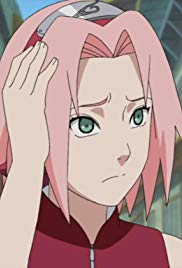
Sakura, if you don’t know, is one of the Main Characters of Naruto. She has the privilege of being one of the mosthatedcharacters in popular anime that I know of.
I’m here to look at the question honestly: Does Sakura really deserve it?
I’m going to make the case that Sakura as a character does indeed deserve to be hated, but it’s for a reason almost no one talks about, and it’s not the reason she gets dumped on by the fans the most for.
The charges leveled against Sakura are as follows:
She never does anything.
She never does anything and is useless
She never does anything and is annoying
She never does anything but smack Naruto around
…..Uh…what other character traits does she have?
Oh, yeah, being obsessed with Sasuke. The hands-down worst person on the show.
You get the idea.
According to my sister, the author himself was puzzled by the fan-hate toward Sakura after the initial seasons of the show were released, and decided to give her more things to do. Allegedly.
But his idea of fixing the problem was having Sakura begin hating on herself for being helpless, making a couple attempts to defend herself that ultimately ended in her still needing to be rescued; become a medical ninja, but still staying out of any plot relevant battles until the final season; and going from hating Naruto to loving but still treating him unfairly.
Sakura annoyed me and I usually try to like female leads. The females tend to bring more skills I can relate to to the table, like book knowledge, science, or emotional intelligence.
When Sakura was pitched to the audience, via the teachers, as a smarter character, I was down for that. I don’t think all team members need to be boss fighters to be cool. S
However, Sakura is not very helpful in the intelligence department. She has a few moments here and there, but I can’t say she ever came up with a plan, or did more than give a few helpful tips.
So, the tech support role was out for her. (She might have done better in a show with more technology based battles.)
The next option is usually emotional intelligence. The character who keeps everyone at peace and sane.
The show pitched Sakura as this also, but she has a short temper and is not paitent, so the role never really took hold.
It felt like Kishimoto was trying to figure out what the heck to do with her, and kept trying one plan after another
.
Finally, he had as stroke of genius–at least he clearly thought so–why not the healer? Everyone loves the healer characters!
Give Sakura some cool life-saving moments through medical science, and people will finally quite hating on her, right?
Wrong.
As a professed fan and analyst of sorts, I recognize what my sister refers to as “illogical salt” when I see it.
I have to say, I never liked Sakura except briefly in Shippunden between major plot point, but dang it, if I’m going to bear with her for the whole show, I’m not gonna hate on every little thing she does.
Since I’m taking a honest look at he character, it’s only fair to say she doesn’t deserve a lot of the hate she gets for the reasons I mentioned above.
An all fairness, Sakura is not useless. That charge is the biggest one, and one I said myself without even knowing it was what everyone else said, back in season 1 of the OG show. (Yeah, I’m not one of those people who states things other fans have said as if it’s my original idea, I just pick up on patterns really quickly.)
Sakura was useless a lot, but I don’t discount small contributions. Since I tend to like characters who get less screen time anyway, I’ve learned to appreciate little gestures, and my guess is Sakura’s supporters (there are a surprising amount) are the same kind of fans. There’s traits that come with characters who don’t get attention as much, and if you prefer those, you’ll prefer those characters, it’s just how it works.
One such fan commented under one of the episodes a lengthy defense of Sakura, I shortened it for this post and took out some rude jabs at the haters:
“.. have you forgotten she’s also a part of team 7 or team kakashi? have you forgotten that she stood up to those sound village ninjas when naruto and sasuke were passed tf out? have you forgotten that she herself dislikes how useless she’s been and therefore trained hard to be a medical ninja so that she can also be of use and not just stand in the way? have you forgotten that sasuke also considered her as a friend which is why he said “thank you” to her as a parting gift? have you forgotten that she’s long grown since hating on naruto and finding him annoying to actually admiring and caring for him?… like she isn’t supposed to represent a more casual ninja without all the sad and tragic backstory and dead parents, seriously what did you expect of her? girlie has hardly experienced any pain and yet she’s trained and worked hard to better herself.”
All this is fair, and what the show claimed it was doing with her. Some fans choose to accept the clumsy execution of these ideas.
I am annoyed that they never did it well, but I appreciate the attempt.
However, it would have been wiser to have her grow out of the traits that people hated the most. And that is where I think the author simply did not care enough to really give Sakura the kind of attention she needed to grow.
While characters complain about Sakura’s flaws, they never challenge her on them. In fact her teammates and teachers are always telling her to sit a fight out, and keeping her in the background. When challenged, she rises to the occasion, but you can count the times she’s challenged on one hand, and it’s never by her friends. Except Ino…yeah…that’s almost more painful. (I do like their friendship okay, but their fights are a joke.)
She’s never held accountable for her short temper so that she might have to learn to control it.
And unfortunately, that’s not even her biggest problem.
All this would render her annoying, but likable, if passes off the right way. There were a few arcs they succeeded in making her dynamic with the others work. One of the better ones is Guren and Yuukimaru.
I could forgive Sakura a lot, if she was a good person I could admire.
But I don’t think tenacity itself is admirable without a reason behind it, and that makes me a tough anime fan to please, if you’re intent on using willpower itself as a good thing.
To will is to do, but not necessarily to do right. You will to do evil too.
Sakura’s tenacity falls all on the side of not giving up on trying to get better, but never on learning more about people and life in general.
To be blunt: She begins the series as a fool, and she ends the series as a fool…and she continues into the next series as a fool.
Sakura may be brave, she has visitations of kindness and compassion, she’s not useless…but she lacks wisdom.
I said before that a show needs wisdom in order to be good. So does a character.
Sakura is not a bad character if you take bad to mean unrealistic, she’s very real.
She exemplifies real problems many women have.
She’s obsessed with someone who abuses her.
WHYYYY?
Sakura supposedly loves Sasuke because she can’t help it. She is like Nancy from OliverTwist. Nancy recognizes she’s with a bad man, but tells her friend that she cannot leave him anyway, she supposes its a judgement on her for being a prostitute. In the end, Sikes kills Nancy in a cruel way, Charles Dickens loved his tragic deaths for female (and male) characters. It’ll make you cry, really.
Well, Sakura doesn’t die, obviously. But Sasuke does attempt to kill her, on record, at least twice, could be more times, and puts her under a genjutsu that looks like it will kill her at first.
Sakura, surprisingly shakes this off in a matter of hours, and goes back to daydreaming about Sasuke.
Well…I really blame bad writing for that.
Sakura also has a counterpart, Karin, who likes Sasuke and displays the same traits, but she admits that they are abusive, in a sense, she can’t seem to help herself. However, Karin initially liked Sasuke because he saved her life when he didn’t have to. She admitted later that he was different, and appeared to be over him, but she wasn’t allowed to be because the author just hated to let any girl not be hot for Sasuke.
Anyway, Sakura later acknowledges her love for Sasuke makes little sense, but she just can’t help it.
What does not happen, however, is an acknowledgement that this is abusive. I found fans who said it was, but not that many.
And this is my real complaint against Sakura as a character.
(SPOILER ALERT):
She later marries Sasuke, and they have a kid. Sasuke is not around much for either of them, due to some dumb reason like guilt.
The message sent by this is that it’s okay to marry someone who neglects you, has always treated you like dirt, and has tried to harm you multiple times.
Sakura and Sasuke are never equals, as she can never make him listen to her, or do anything she says. There’s no give and take in their relationship, even early on before it was abusive.
Sasuke never encouraged Sakura during most of the show, so it was more of her doing it to herself, but at the end he eventually does, and it’s played off as romantic.
But it really is Sasuke treating her like a convenience who has to wait on his whim if he should happen to want attention. Whether the defense can be made that he feels this is better for her over all or not, I don’t really care, because neither option is a good relationship.
Perhaps is was never meant to be an example, but given that it’s one of the two main ships on the show, and given a lot of attention, far more than Hinata and Naruto’s is, and not called out for the issues it does have, it’s kind of like saying that’s okay.
And that’s a terrible message to little girls. I’m concerned about all the people who like the ship.
And believe me, I get it, emotional abuse is a real pain.
(ha ha, jk.)
Having experienced emotional and physical abuse myself, in different levels, I understand how it gets into your brain.
You just can’t believe a person close to you would do such a thing, and you try to come up with a reason.
Sakura does this when she says she made Sasuke hate her initially, and that she is always too weak to stop him.
And you try to believe they are better than that. That they have to care about you more than that, maybe they could snap out of it. Maybe they would stop if you met their demands.
The demands are always impossible to meet.
Sakura does this when she offers to go with Sasuke on his revenge quest. To join an evil maniac’s organization, if it means she can be with Sasuke. Sasuke is quite reasonable to turn down this offer, as he never wanted it anyway.
At this point, he really wasn’t abusive on purpose, as I said. But he was a jerk to her.
You try to forget each incident after it passes and focus on what you like about them, or, if they are complete jerks, you make stuff up.
Sakura does this a lot, she even calls Sasuke a kind person at one point…this is the guy who dumped her on a street, tried to kill his best friend, intends to wipe out her village, and can’t be bothered to even show remorse for any of this. To name some of what he’s done.
Sasuke is not kind. He’s barely human by the middle of Shippuden…and not really human by the end, he and Naruto both become demigods.
Finally, in abuse, you feel helpless, that’s why you pretend it’s not real. You don’t tell anyone about it. You don’t let anyone question the person you’re with.
Check and check for Sakura.
Abuse also comes with an obsession. You can’t stop living around the person.
Sakura’s whole life is trying to get to Sasuke. She and Naruto even discuss how they cannot stop thinking of him, hoping it’ll work. One of the myriad of times she fed Naruto’s own unhealthy obsession.
All this, and Sasuke didn’t even want it, and when he does finally go along with it, we’re supposed to be happy.
Ugh, gag me with the script.
Naruto, the anime that tells kids abusive relationships are true loyalty…yay!
All this is the real reason to dislike Sakura. Her personality doesn’t matter in the least, if her whole purpose in the show is deeply skewed, and it’s lying to the audience to tell them she should be admired for loving Sasuke.
Eventually, they attempt to make her seem less abused, because she tries to stop Sasuke in order to stop him from making himself worse.
However, as she fails before even making a move, and never tries to again, and doesn’t bother to make him pay any sort of price for it.
In the end, Sakura doesn’t change, just like the other two, she is stagnant.
Some might argue that doesn’t make her dislikable, and perhaps for them, it doesn’t. I won’t even say that’s wrong. But it is wrong to support such an example of toxicity.
That’s my honest look at Sakura, or Hot Take, as I think they call it now. She’s an ordinary girl, who shouldn’t be hailed as any kind of role model, but shouldn’t be hated as especially bad. She just is.
Okay…wow… that last post was one of the saltiest I’ve ever written.
Now to get to a more pleasant subject: The good things about the show.
The animation. yeah, that’s pretty good….
Kidding. This will be a Spoiler Heavy Post.
Fair warning, I’ll still be criticizing the show in this part, but I do like these characters.
I would say my top 5 characters on this show are Gaara, Shikamaru, Sai, Temari, and Kankuro. I like Hinata, but she is used so little and given so little to contribute that it’s hard to rank her at the top.
Though to be fair, all the female characters are underused.
After detailing why I hate so much of how the show handled it’s three main themes, I want to talk about the good themes it brought up and didn’t totally ruin:
Love versus hate, with loneliness
Learning to understand grief and love
Processing grief
Trust.
I talked about it a bit when I wrote about Gaara in my anime bondage series, but he is absolutely the best written character on this show. It was like he was a compass that kept getting magnetically drawn toward good writing decisions.
After he initially is introduced as a flipping scary monster, he is changed by Naruto’s determination to protect the people he cares about, Gaara is brought back to what his uncle once told him about love, and he decides to try to understand love after this.
He begins an off-screen journey of learning to value the people around him. We are not shown how or why he succeeds, but presumably part of the reason are his two siblings. Who did not treat him like a monster and accepted his remorse and resolved to help him find a new path. We are not shown much of them doing this, but we’re shown enough to tell us they really did care about Gaara and wanted him to be happy.
One of the better parts of the writing is how little needs to be said or shown to convey the Sand siblings dynamic. When we first meet them, Temari and Kanuro are jerks, but on the level of schoolyard bullies, with Temari slightly less so, but she doesn’t try to stop the more violent Kankuro. However, they are both terrified of Gaara and don’t dare to defy him. Later he threatens to kill them and they act very disturbed. Clearly it’s their assignment to protect him.
Still, they go farther than they necessarily need to, and risk their lives for him and Temari is shown to be clearly concerned when he injures himself and then loses control to the sand raccoon spirit inside him.
We are able to infer a lot that later gets confirmed, much, much later than it should have been, but with this show you had to take what you could get even if it was late. We are able to see that they loved Gaara but due to their inability to help him, they were too scared to try; and that Gaara himself did not understand that they loved him because he didn’t believe anyone could love him, since he was a monster. He interpreted their fear as fear of him, and not also fear of what he would do to himself, which was plain to the audience.
We find out later that as kids they were close at one time till their gem of a dad separated them by force and didn’t let them be friends, though he still let them guard their brother.
Kankuro warns Gaara that winning over Sand Village will be hard, but Gaara resolves to do it anyway, and Kankuro decides to help him out. In a few years Gaara becomes the Kazekage of his village, and his siblings both hold important positions. Kankuro is basically the only reason Gaara hasn’t been assassinated, and Temari handles relations between Sand and Leaf to keep the peace they forged, which clearly only still exists because of their efforts.
To consolidate it, Gaara develops into a strong leader during the war and wins the respect of the other kage, as well as the ninjas as a whole, by humbling himself to them and admitting they all need each other, even saying if they want vengeance they can take it out on him after the war. Temari and Kankuro continue to support him.
We see them change in smaller ways, though they retain their surface hardness, they become more merciful. Temari, who starts off as harsh and critical of anyone she perceives as weak later is able to acknowledge people have strengths that aren’t always obvious, we also learn that her harshness can be a from of trolling to challenge people to be better, and she is willing to acknowledge when they surpass themselves.
Kankuro we see go from being a bully to being a softie about his siblings, he makes a moving plea for Gaara’s life, and protects them vigilantly. Though he can be more practical about cutting his losses, and letting people face hard tests, he protects his troops well in the war.
At the very end of the show we get to see the three siblings cap off their growth by finally having something like a normal, jovial demeanor with each other, and softening toward their other friends also.
What makes this so very different from the love is better than hate message of the main plot is that we see results. Gaara grows in wisdom as he pursues love. He makes decisions that are merciful, he puts others needs ahead of his. While his siblings are less magnanimous, they respect his efforts and ultimately support him even when they think he’s carrying it to far. But they all grow, they all change. And what’s better is we also get to see that not everyone shows love in the same way. Kankuro shows it in actions, Temari in challenging people, and Gaara in being merciful and self effacing when he could with all rights be severe.
Gaara also purposely makes efforts to be a better friend, he puts thought into it we never see even Naruto himself put in. It’s clumsily shown in the very last arc when everyone is trying to get a wedding gift, while the others get caught up in the impressiveness of it, Gaara is thinking of how he can show his friendship the best way.
And to me that was what made it believable. While Naruto goes on and on about change, Gaara and his siblings actually implement it. We don’t see Leaf change at all, but Sand goes from being the scary, unfriendly desert village to being the kind merciful village that protects all the others. We see in the chunin exam arc that the ninjas in Sand have learned from Gaara’s example and his mercy toward them, and have begun to treat outsiders and each other with more kindness.
My sisters and I hailed Gaara, Temari, and Kankuro as the best trio, and the only people who know how to get crap done.
Shikamaru:
Shikamaru is the best written Leaf Ninja, and his good writing occasionally extends to his two teammate Ino and Choji like an umbrella of grace. By which I mean they are at their best whenever they are in an arc centered around him.
And amazingly, Shikamaru escaped the big curse of this show: Stagnation.
He actually grows over time from being a lazy, unmotivated character, to being a hard working, reliable one.
His ability to strategize, instead of making him stuck up, gives him the opportunities to be merciful where other ninjas lack the brain power to think of a better solution.
Shikamaru repeatedly is able to choose to protect his teammates, instead of what is considered the hard, but logical decision of leaving them to die if necessary. The one time Shikamaru chooses to kill, it is over a monstrous person who only he could figure out how to stop.
Let’s talk about that.
In the arc Shikamaru loses his teacher Asuma in, the subject of grief is dealt with. The show brought it up a lot, but from Sasuke to Naruto to every other villain in the dang series, people handled grief badly. Usually choosing revenge.
In this arc, Shikamaru is bottling up his pain, as is the usual way for ninjas, and his dad takes him aside and drives him to explode, then tells him to “let it all out and then decide.”
Shikamaru then breaks down and his dad leaves him to cry it out, finally Shikamaru is clear enough to come up with a strategy to take down the psychopath who killed Asuma and intends to kill more people.
The plan succeeds, and in a beautiful moment of good writing, Shikamaru tells the villain and the audience that he is not doing this for vengeance but because he, like his teacher, has the will to protect his village, and the people important to him.
He then finds peace in having brought justice.
The whole thing is later upstaged by Naruto getting involved when he shouldn’t have, but at least that part was well done.
Shikamaru becomes a good leader and is able to minimize damage to his team. Later he becomes the adviser to three of the Hokages. It was my opinion that he was the only reason Leaf survived long enough for Naruto to even become Hokage, because the previous Kages were idiots.
When Ino and Choji are with Shikamaru, they get shown to be more loyal, competent friends than they are the rest of the time. The friendship between Shikamaru and Choji is the most natural and believable one of the show. Shikamaru is able to work with whoever is with him, they don’t have to be the strongest. That is why he can always use Ino, who is generally even more useless than Sakura, thanks to no one being able to think of a way to use such OP powers as she might have, except Shikamaru.
And that brings me to the theme of Trust. It’s not brought up a lot, but Shikamaru is shown to trust his teammates, and that is why he is able to come up with such good plans.
At a later arc, he strangely doesn’t choose to trust his friends or the village alliance, instead wanting to handle something himself in order to protect Sai. He foolishly doesn’t give his allies enough credit for being able to understand. A fact that Temari gets furious at him over.
When Temari, being the best girl that she is, helps Ino and Choji find out where Shikamaru is, they bust in and rescue him and his teammates, and Sai, and slap some sense back into him–literally.
Shikamaru later tells Temari he’s counting on her to keep him accountable if he ever starts to lose his grip again…and then marries her… bringing his arc full circle. He went from being lazy and not liking to be challenged to realizing the importance of trusting people close to you to challenge you for your own good and help you improve into the best version of yourself you can be.
This supposedly is what Naruto’s story is supposed to be about, learning to trust and love making you better, but Naruto fails completely to show this message because he does everything alone, while Gaara and Shikamaru both actually do it, and they gather friends and family around them, and improve.
Shikamaru starts changing Leaf in small ways by leaning more toward loyalty and mercy and cooperation in the exams. Temari acknowledges this to be the best path, so her correction of him later makes sense. While highlighting the good thing about her character, that she makes other people try harder.
A solid dynamic that Ino and Choji get included in and become better because of.
Last but not least, I have Sai. And Hinata.
Sai is point number 3, learning to understand grief and love.
(I just noticed that the problems of this show are with the overall plot and MCs, and the good parts are with side characters and their personal journeys. Make of that what you will.)
When Sai was introduced, the characters kept saying he kind of looked like Sasuke and maybe acted a bit like him…which was funny, because Sai acted totally emotionless except for a weird fake smile.
In an astounding example of the lack of self-awareness where Sasuke was concerned, Naruto and Sakura didn’t like Sai, for displaying the same freaking qualities as Sasuke-kun.
He was just so detached, and didn’t seem to care if he hurt their feelings at all, I mean who could ever like someone like that…Sakura.
Sai also asked them why they cared so much about Sasuke when he had ditched Leaf and betrayed them by going to their enemy, Orchimaru, and aiding him. Sai didn’t even say Sasuke was a dirty rat–he said he was a traitorous cockroach, which was true. But Sakura and Naruto both acted like he’s spat on Sasuke’s grave or something.
Later Sai is touched by Naruto’s loyalty, and it helps him understand something about his own past.
Sai had a friend, it turns out, who he considered to be his brother. His brother dies of a sickness before graduating the underground training. We later learn that to graduate you had to kill the person closest to you in order to complete the emotion suppression requirement that the leader imposed…you know…like you do.
Sai didn’t have to kill his brother because he died before that point, but he couldn’t understand how he was supposed to look and feel over it.
Again the show used symbolism well here, Sai carries a book of his brother and himself, and the bond they have, in the end Naruto helps him know how to finish the book.
He chooses to try to help them capture Sasuke, instead of killing him, as was his original assignment. Of course they fail.
Sai sets out on a personal quest to understand feelings. He starts reading Self-Help books about how to act around friends, and taking notes on how the people around him interact. It’s uphill work since the ninjas are very dysfunctional, and most of them are not self aware about it, but Sai beats the odds and begins to learn anyway.
He later steps in to defend Naruto when Naruto is letting a woman from Cloud village beat him up instead of Sasuke, whom she hates for harming her teacher, Lord Bee.
Reality check time: At this point Sasuke has joined the Akatsuki, a group hell bent on capturing all the people with tailed beasts, including Naruto himself, and killing them to get their power. And our lovely Sasuke is helping them do this for his own personal reasons….yeah, Naruto, you take that beating for him.
Well, Sai, who is consistently the only sane person on this show, decides to step in. Then he and Shikamaru, the other sane person when the plot demands it, decide to tell Sakura enough is enough.
Sakura listens, and tries to convince Naruto to give up on Sasuke. But the point where it would have worked is long past. (A running theme on this show was good advice too late, past when the person might have listened.)
Sai gets blown off later when he wants to stop Sakura from doing something stupid, and also wants to know what happened with Sasuke after they confronted him under the bridge.
In the war Sai does make some more friends, and start to release more of his emotions, without losing control to them. He begins to really feel that he wants to protect his friends.
At the end of the show, Sai’s arc get capped off at the same time Shikamaru’s does. I thought the show would forget about him, honestly, but instead, we got to hear how he feels insecure about his place on team 7, now that Sasuke has switched sides, sort of, they no longer need a replacement for him…not that he’s on the team, but Sai was the emotional replacement too.
Sai quite justly feels that team 7 does not care about him as much…which he’s right about. And doubts whether he has friends who truly care. Ino is able to help him by telling him that they, team 10 and Temari, who came to save him, are his friends.
Sai snaps out of the daze he was put under by the villain of the arc. It was a touching moment to see Sai get to realize he had other people who cared about him besides those idiots on team 7.
Sai is basically the person Sasuke should have been if the show was going to work. Someone who realizes they have emotional problems, don’t really understand love or how to process grief, and set out to learn to do it in the right way, after Naruto inspires them.
The lack of self awareness of Naruto and Sakura was so glaring I would have sworn it was intentional, but there never is a Euraka! moment of them waking up.
Thank goodness Sai is smarter. He’s the only one on team 7 who never blames themselves for what Sasuke does, or seems to feel any real pity for him. He only wants to help his real friends. In the end he realizes who those people are,and there are more of them then he thought.
It’s a good ending for him. And a much better message of what learning to love is, and how you can understand grief and pain better by sharing it with other people.
As for Hinata, she doesn’t have a whole lot to do with the message of the show, but she does stand as the only other girl who can recognize real value of character, and she actually can support Naruto emotionally, and back it up.
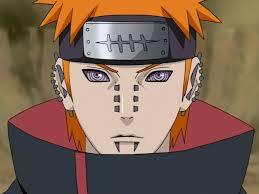
One of Hinata’s best moments is when she steps in to save Naruto from Pain. The symbolism that pain can only be defeated when we share the burden is heavy in that scene, she takes some of the weight off Naruto, and gives him love instead of blame. She does something no one else has the brain cells or courage to do, even when she was stupidly told to leave him alone to have the crap beat out of him because “he could handle it” (dang! I hate so many of the people on this show…)
But Hinata didn’t do it. Though she never gets a lot of acknowledgement form anyone that what she did was the right thing to do, Naruto later does say she saved him. The fans love her for it.
Hinata may not have the words to express it, but she does get it, more than most of the characters do. She provides the rare element of kindness, only a few characters on the show possess. She also supports everyone, not just Naruto, and tries to be kind as a principle, not just for one person, like Sakura does.
This is it folks, these are the good characters. (Who get any attention worth mentioning.)
(There is one other good arc, the Guren and Yuukimaru one, which I recommend watching, without seeing the rest of the show, because it was beautiful, just beautiful, but has no bearing on anything else in the plot, and no one learns from it. In fact it has the supreme irony of Naruto preaching a message of letting go of the wrong people that he never follows himself. But the arc itself is amazing. I can’t believe the same person wrote it.)
Thanks for reading my very long review of this show, and my fingers are tired, so I am going to end it here, until next time, stay honest–Natasha.
It won’t be especially sad though. Today I have more of a thought “Why does abuse happen?”
There are many, many reasons, I couldn’t possibly address them all.
But for a christian family like mine, I believe there is one reason that can be common. It’s not the only reason, but it’s an important one to understand if there’s ever going to be road to healing.
That reason is Idolatry.
Idolatry is a fancy sounding word for one of the most common sins to man, that of worshiping something other than the One True God.
Even if you are not a Christian, it’s probably no strength for you to agree that there are things worth devoting your life to, and that many people do not devote their lives to the right thing, so if the religious term throws your off, just think of it like that.
Idolatry is just easier to use for me, since it’s one word, but in Church we usually call it False Images, False gods, or just Idols themselves.
In my family the False Image was My Family itself.
My dad has long been obsessed with being a better person, but his version of better was rather vague and unrealistic. It usually involved ridding himself of his faults as a parent and husband.
But his biggest faults in that regard was simply focusing on the flaws. He didn’t prioritize us ourselves, but this idea of what our family should look like.
Our family should have its own ministry (one he approved of)
Our family should make music
Our family should be more hospitable
Our family should all go tot he same church.
Our family should be a witness to the extended family.
He never took into consideration that maybe it was not his job to decide how we should serve God.
I am aware of the Bible’s teaching about a whole household serving God. However, it never says everyone in the house should do the exact same thing. In the New Testament the control of family is a little lesser, since may early Christians did not have their whole family’s support.
It didn’t stop with Church stuff anyway. That was just what annoyed me the most.
Maybe you’ve had the same experience with your relatives.
My dad would also say repeatedly that our family was the most important thing to him and he got his happiness from us.
Which bugged me, I thought “We get our happiness form God, not each other.”
Not to misunderstand me, people can greatly increase our happiness, but it does not spring from them. If it does it’s fleeting, people die, they move, they move on, they ditch us, not all of them, but human based happiness is just not permanent.
It sounds like a Christian Cliche to say We Get our Happiness from God.
Oh, we’re so spiritual, right?
I know, but it really is true. It can be misused sure, to hide real problems, but so can most things.
It’s not that God makes me feel happy all the time, it’s that when Id o feel happy, it’s in God. I know it is from Him, and it is a gift.
By the way, there’s been a teaching in the Church that says the Bible never says “God wants you Happy”
Let me set you free if you’ve heard this: That is bull-crap.
No, you won’t find the exact words “God wants you happy” in scripture, the Bible prefers the words “Joy” “Rejoicing” “Praising” “Thankful” “Peaceful” “Exalted” and “Satisfying the desires of your heart.”
All that is stronger than happiness as a chemically induced fleeting feeling, though that too, because God also wants you healthy, and a healthy person will produce that physical feeling of happiness too.
I digress.
My dad used our family as a false god. Like all idols, it had to be removed from him for him to turn back to the real God.
And we had also to give up serving my dad’s happiness, instead of serving God’s. We wanted our dad to be happy, sure, but we could not keep trying to fill the void of God in his heart.
And we could not let him punish us with emotional abuse for inevitably failing to do the impossible.
It struck me what the Bible is talking about when it warns about idols.
You are what you adore, what you trust in, you become.
If you trust in a lie, you become a liar, and eventually, if you fall in with C. S. Lewis’s point of view in The Great Divorce, you become a lie itself.
If you trust in money, you become a miser.
If you trust in drugs, you become an addict.
All these states of being are merging you with the thing you worship. In the case of drugs it literally will get worked into you bloodstream, your DNA, and your brain engineering, and passed on to your kids.
“Their idols are silver and gold, The work of men’s hands. They have mouths, but they do not speak; Eyes they have, but they do not see; They have ears, but they do not hear; Noses they have, but they do not smell; They have hands, but they do not handle; Feet they have, but they do not walk; Nor do they mutter through their throat. Those who make them are like them; So is everyone who trusts in them.” Psalms 115:4-6
“They have mouths but they do not speak; eyes they have but they do not see; they have ears but they do not hear; nor is there any breath in their mouths. Those who make them are like them; so is everyone who trusts in them.” Psalms 135:16-18
That’s why we are all sinners, by the way. Adam became a sinner, and in a way, he became sin, and so we carry that in our DNA now. We are born in sin, as the Word puts it.
Jesus became sin for us, the Word also says, in order to finally get Sin out of us. He killed sin by becoming it, and then dying.
The Bible also teaches that the Spirit of God is able to divide soul and spirit, and that is how we are saved from sin. God can separate the sinner form the sin.
We ourselves cannot do that, except by loving the sinner. We cannot transform them. But loving people will help them choose to be transformed.
In summary, I think almost all abuse happens due to idols
Many abusers are addicts, after all. All of them put power above God, certainly. Abuse is all about feeling powerful.
It’s important to keep in mind that focusing too much on being abused also can be a form of idolatry. God wants us to be healthy, and if we focus on him, we’ll start to heal. If we are letting Him help us.
But don’t wear your sorrow like a badge of honor, Paul boasted of his weakness because God was glorified in it, not because weakness all on its own is a glory.
One last thought
All of us are meant to be at rest, and to rejoice. Abusers and abused alike. However you handle your past, whatever you went through, even if you were the abuser in some ways, don’t think it mean you cannot ever be happy,
Happiness is not what we deserve, desert does not come into it at all. It’s the naturalstate of things. You can’t earn it because you were created for it, it’s just like putting a key into a lock. No question of deserving it, it would be stupid to ask that.
So, it’s okay to move on. Really.
And that’s all I got for you today. Until next time, stay honest–Natasha.
Well, no one read the first part of this yet, but far be it form me to let that deter me from writing what I want.
Heck, I’ll read it if no one else will.
So…
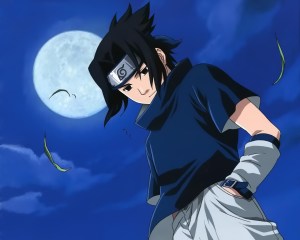
Sasuke is the worst. But I think he’s of a different kind of bondage than the other three I mentioned, so I’m reserving him for a separate post.
I’m still talking about how to deal with bondage you didn’t really choose, and with that, we have two characters left. (Probably not the only two on the show, but I like these ones, so let’s do this.)
Neji Hyuga:
Neji’s story is somewhat like Gaara’s. As a kid he was born into the Branch part of the Hyuga clan, he was branded with their special curse mark so that he would always have to protect Hinata, the daughter from the Head of the Clan, who was Neji’s father’s twin brother.
They’re cousins, if you’re confused.
Neji’s a pretty big jerk when he’s introduced, and goes on about destiny more than Pyhrra Nikos, and with a pretty twisted view of it. He thinks it cannot be changed, that we are stuck in certain roles, because the curse mark prevents the bearer from rebelling against the head family.
Neji’s a gifted Ninja, but feels he will never get to pursue that as he would choose, but as has been chosen for him. and resents that his father died to save his uncle.
It’s a messed up story, like most of the character’s are, and it wouldn’t be anime if people didn’t have daddy issues and tragedy in their past.
But Neji’s is resolved rather quickly, and he begins to become a better person, after embracing the path of forgiveness, and deciding to try his hardest to live his own life.
As far as spiritual matters go, that’s an excellent way to begin.
Neji’s story is a prime example of something called Generational Sin. Another anime, Fruits Basket, is pretty much devoted to that subject. And I know I mentioned it before in another post.
Generational Sin is a sin that passes from person to person in a family. The parents teach their children, who teach their children, who teach their children. Often the sin is started by one bad seed, and becomes a pattern over the course of just two or three generations.
Feuds start because of this.
And if it’s strong enough, the Sin can become a curse.
A curse doesn’t have to be bad luck, or even being forced to be evil, in fact, curses are far more often being given a tenancy to a certain self destructive behavior.
If you hear something enough times, and don’t actively resist it, you start to believe it.
Kids who grow up being told their stupid, and won’t ever succeed begin to live in a way that guarantees they won’t. It’s a self-fulfilling prophecy.
I think, really, almost all prophecies are self-fulfilling, what we speak effects what will happen.
Neji’s Curse Mark works as a visual representation of hos Family Curses operate. They are all about control, you can’t do a certain thing, you can’ be a certain things, you have to act a certain way.
And this has nothing to do with what class you’re in, all that’s superficial. I’m talking about things like holding onto a grudge, criticizing people constantly, addictions, anger issues, deceitfulness.
People used to get branded by what family they were. IF you read any book from the 18th or 19th century, chances are you’ll see references to someone from a family who’s known for dishonesty, or sluttishness, or pride. It’s all over L. M. Montgomery’s Anne of Green Gables series, for instance.
And if you try to break out of your family pattern, as C. S. Lewis points out in The Four Loves, the family will bring down all their force on you to get you to conform.
This has occasionally worked in someone’s favor. Pressure to be good is not always a bad thing, if the person retains their individuality even so.
Neji’s cousin Hinata is, despite her position, a kind person who doesn’t seem to blame Neji at all for his resentment of her. Though she eventually learns to stand up for herself.
Within families, there are usually a few individual who break the cycle. For whatever reason, they don’t fall prey to the temptations the other members do. Much might depend on how well they understand why those temptations work.
In the example I’m using, though so far it hasn’t been explained, one could infer that Hinata simply noticed how the Curse Mark and the system in place was cruel, and bred resentment. She noticed that hatred and mistrust were at the center of it, and she decided not to be full of those things. She’s far from fully understanding, but she’s not cruel.
Neji himself realizes that part of the Curse’s effectiveness is making you live by it, by hating people so much that you have to be forced to help. His own father realized that if he chose to protect his brother, then the Curse wasn’t making him do it by force, and so, in way, he was free.
In Spiritual terms, Family Curses are hard to break without self awareness. But once you realize the patterns in place, it can be simple. It’s not easy.
In my own life, I have a father who carried on the curse of resentment and fault finding with me that he learned form his own parents. Despite hating that they did it, and recognizing it was bad, he has not yet shaken it off himself, or come to really understand why it was so destructive, and so he put it on me. We do what we are taught.
But, I’ve chosen a different path. It’s no good to just vow never to be like your parents. You have to dig deep into your own soul, you have to learn why your parents fell to these sins, why you yourself are tempted.
It’s no good denying it, we like to think we’d never be like our parents, but we inherit their weaknesses.
The good news is, those weaknesses can become our strengths and our children’s strengths if they are exposes and turned around.
I have had tenancies to tear people down and take a negative approach to things, much like my father, and to wallow in self-pity instead of responsibility.
It’s been hard to break that, because if he got away with it, why can’t I?
But, I don’t want to be that person.
I’ve had to dig up the roots of why I do this, for myself, and not just blaming my dad for every bad habit. After all, it’s not his fault I’m tempted to bet he same way, that’s my own nature, wanting to take the easy way out.
And, the Curse, unfair as it seems, is the easy way out. Change is hard, and it’s often discouraged by your family.
When Christians address Family curses, we break them off, but we also focus on healing from the pain. Because the pain has to be healed if you’re going to start moving forward. Forgiveness is a big step to healing the pain.
Forgiveness isn’t just about letting your family off the hook, that’s not what it does, forgiveness is not hanging on to their actions, because that keeps you tied to them.
I forgive my dad, because he’s my dad, and because I will not let him dictate my life anymore by blaming him for everything. I don’t ignore what he did, but I don’t cherish it either.
Neji does, thankfully, realize this. For him, breaking the Curse would be a simple matter, since he’s already let go of it.
I’ll get more into what happens if you don’t let go when I tackle Sasuke, and a character from a different show also, but for now, thanks for reading–Natasha.