BPD, it’s not an excuse.

According to my therapist’s recommendation, I am reading a book about BPD, or Borderline Personality Disorder. Which my Dad clearly has.

My dad was once diagnosed with Bipolar Disorder, and ADD. But there’s now some clear differences between BD an BPD. With BD, mood swings last for days on end, and often come with manic bursts of energy.

I never saw my dad have bursts of energy, he was always tired, often depressed. His mood swings were by the day or hour, generally.

The rage, lashing out, and splitting (diving people into black and white sides of a question, with no room for nuance) are all part of BPD, but not BD.

ADD is part of it, or can be.

Perhaps this was all supposed to come as a shock to me, but I am not really astonished.

I figured he’d fit some category. Borderline is the borderline between neurotic and psychotic. A person who had really never grown up.

The book I’m reading “Talking to a Loved One with Borderline Personality Disorder ” is about learning to live with someone like that, and there’s another book “Stop Walking on Eggshells”. They might be helpful in the future.

But the book makes no mention so far of how someone with BPD could easily be abusive, usually they come from abusive backgrounds. With the outbursts of wrath, and manipulation, why not?

The books have almost a cavalier attitude toward the people stuck living with a child or parent like this (though, if the child id like this, it is usually is the parent’s fault, unless they’re adopted, it’s a learned behavior). Like “you can learn to manage this person.”

I could see some use for this in a day of arrange marriages, marrying for status, etc. In other countries where that’s still the case.

But if you have a choice, what self respecting person signs on for that kind of crazy. BPD people cannot maintain relationships, and should not be in romantic ones, the most intimate, challenging kind.

BPD, giving it a name, is kind of a self defeating thing to do. The Silence, by Bastille, describes it pretty well:

“Tell me a piece of your history that you’re proud to call your own Speak in words you picked up as you walked through life alone.

We used to swim in your stories and be pulled down by their tide, choking on the words and drowning with no air inside.

Now you’ve hit a wall and it’s not your fault my dear, my dear, my dear. Now you’ve hit a wall and you’ve hit it hard, my dear, my dear, oh dear.

“If you give it a name, then it’s already won. What you good for, what you good for? If you give it a name, then it’s already won.”


Bastille is right in a way, often when we give these personality traits a name, they win. Because it’s a human failing, to think once we compartmentalize and label something, it’s less powerful.

When really, we just take it less seriously.

That’s the power of stereotypes. You call someone a  hick, a diva, a geek, a nerd, a jock, and they lose some of their dignity. Between friends, being undignified is okay, even necessary, but when we do it in general, it’s to avoid thinking about the person, really, truly thinking about them. Understanding them.

You might argue, if we give it a label, people might be kinder. Like ASD, ADD, ADHD.

It seems kinder at first, but then people assume you have no choice, you become something less than human, if you have no control over the type of person you are.

I know that there are some things someone on the ASD spectrum cannot control, but those things are actually very limited. Almost all aspects of a condition can be temporary with enough years and effort. It depends on the severity.

Likewise, BPD is a condition people can grow out of, with or without therapy.

But if the person can grow out of it, could recognize it as immature, then they knew what they were doing was wrong. They might lack the self control to stop, but they knew.

I don’t like it when experts deny the obvious. That anyone with mental illness that they are somewhat conscious of has a choice. Good experts don’t deny it.

In my dad’s case, he did things the book hasn’t described so far. Threatening me physically. Being mean, on purpose, even when he was in a good mood, sometimes more so then.

My dad’s abusive nature colored most of his interactions. He had to be in control, even if things were good. So if he was having fun, he’d make you miserable so that it was in his power, he’d sometimes try to make you have fun, if he was in the mood.

Not everyone with BPD is like this. They are not all abusers. I actually have a few of the traits myself, but since I was raised in an abusive house, that makes sense, I don’t have it to the excess I’d be diagnosed with a condition.

But the temptation to always feel like the victim, to think every one hates you, and to desperately want them to love you, is part of my life. Also, the emptiness I sometimes feel.

Victims feels empty because we were neglected, and our expressions of love were usually tainted by manipulation so as to not be satisfying.

One thing that was interesting was the book said the BPD people with hug too tight and too long because they feel empty. My dad always hugged both too tight and too long…and oddly, both me and my youngest sibling hated being hugged and kissed by him, and even by anyone, as young kids. To this day both of us are hesitant to allow people to hug us, and I still don’t like kisses (I wish I did). We always wondered what made us dislike it, but the way he did felt off. My dad blamed us for not wanting to snuggle, thinking it wasn’t normal, but preditcatbly, he was the one who made it abnormal.

My aunt has excused my dad on the basis of being on the ASD spectrum, and having ADD, and BD. But I believe BPD is the correct diagnosis. The others all had holes in the theory, and he grew out of the ADD. He is still BPD.

Which brings me to my real point, my dad’s abuse is not explained away by BPD. It gave him issues relating, but it did not make him mean and controlling in the way that he was. It’s a choice to do those things.

Anyone who tries to say I should have stuck it out has not appreciated the danger of doing so on my mental, emotional, and physical health. My dad didn’t want to be helped anyway.

The bible has a passage about the same behaviors as BPD. Galatians 5:19-21 reads “Now the works of the flesh are evident, which are: adultery, fornication, uncleanness, lewdness, idolatry, sorcery, hatred, contentions, jealousies, outbursts of wrath, selfish ambitions, dissensions, heresies, envy, murders…”

Heresies, my dad believes some weird stuff about God due to his inability to let go.

The Bible does not complicate things. Theses things are from the flesh.

Does that mean these people are all evil? No… but some are.

It’s strong language to say my dad is evil, but his delight in doing these things seems like wickedness to me. I don’t see the point of sugarcoating it.

I think we are too wimpy now. We won’t say certain people are evil. But calling it that was helpful. Because evil can be repented from, how do you repent of a personality disorder?

The bible makes no mention of personality disorders. That is not because it was behind the times, written before psychology, the Bible has many verse about psychology, stuff modern studies are just starting to catch up to. The Bible knew the power of positive thinking, laughter, and power thoughts long before we officially proved the brain and body respond to those things.

Think about it, if the Bible was right about all that, way, way before we could even measure brain patterns, then isn’t it just possible that it’s right when it makes no excuses for evil based on personality.

True Mental Illness in the Bible exists in the form of either demonic oppression, or strong delusion. Otherwise, we are held responsible for our mental health.

Jesus told his disciples “Do not let your hearts be troubled.”

Meaning, we can choose to be troubled.

David said “Why so downcast oh my soul? Hope in the Lord” indicating he could turn his soul to hope, not despair.

There’s lots of others verses. I recommend “The Utter Relief of Holiness” or “Free to Live” by John Eldredge, for more on this subject.

In cases like mine, a lot of what we feel isn’t caused by our choices. But everyone has that problem. People can just be jerks.

Our culture encourages us to blame everyone else for how we feel, and not do a thing about it. Just to sit in it.

But while we can’t blame ourselves for being mistreated, we can’t just let those people control our lives. Think about it, you want the person who hurt you the most to be the one calling the shots in your life? Not me.

Maybe you can be classified with a disorder. Maybe some of it never goes away. It’s possible that we never forget what it was like to be abused. But that doesn’t mean we have to act like victims the rest of our lives.

If God gives me the time one day I will have lived longer not being abused than I did being abused. But even if I don’t, I’ll have an eternity of better than I can imagine.

One thing abuse forces you to learn, if you would be free, is that you can’t let people shape your idea of a good life. God is the only one who can give you that image. You will settle for less than you could have otherwise.

It’s not just optimism, people. I have to believe that if I want to ever move on.

A lot of trouble would be saved if people told each other one thing: You can believe what you want… but only believing in the right things will lead you to freedom.

And there are things that will free you if you believe them. The Bible calls them the right steps.

So, BPD or not, we decide what we will be.

Until next time, stay honest–Natasha.


Virtue vs. Holiness–Sister post.

By my sister, from a class we were taking.  3/1/2017:

Lack of morality is running rampant in our nation, today. One only need turn on the TV to see the promotion of drugs, sex, abortion, lack of responsibility, and lack of virtue in general. Still, do we need virtue? Is taking back our virtue, our standard of acceptable morality, the way to fix things? Will it help us, as individuals as well as a nation, to recover from this moral dryness?

One Webster’s dictionary definition of virtue is,

“Moral goodness; the practice of moral duties and the abstaining from vice, or a conformity of life and conversation to moral laws . . .”

Virtue is like a moral code of conduct or the action of living up to that code. People’s “codes” may vary, but a few suggestions come to mind. Generosity, kindness, decorum, temperance, purity, marital loyalty, honesty, etc. Our country could use a little of that, right?

This brings me to my next question: Was Jesus virtuous? 

Whoa, whoa! Stop. Of course Jesus was virtuous! He didn’t commit one sin–not one! I can’t even go one day without sinning. How much more virtuous can you get? 

“As obedient children, not fashioning yourselves according to the former lusts in your ignorance: but as he which hath called you is holy, so be ye holy in all manner of conversation; because it is written, Be ye holy; for I am holy.” (1 Peter 1:14-16 KJV)

You’ll notice the key word here is holy. Is there a difference between virtue and holiness? What is holiness?

John Eldredge talks about this in his book The Utter Relief of Holiness:

“For years I thought of holiness as something austere, spiritually elite, and frankly rather severe. Giving up worldly pleasures, innocent things such as sugar or music or fishing; living an entirely “spiritual” life; praying a lot; being a very good person. Something that only very old saints attain . . . Yet in order to make human beings what they are meant to be, the love of God seeks to make us whole and holy. In fact, the assumption of the New Testament is that you cannot become whole without becoming holy; nor can you become holy without becoming whole.”

He later goes on to cite Hebrews 12:7-13.

“‘Endure hardships as discipline; God is treating you as sons. For what son is not disciplined by his father? If you are not disciplined (and everyone undergoes discipline), then you are illegitimate children and not true sons. Moreover, we have all had human fathers who disciplined us and we respected them for it. How much more should we submit to the Father of our spirits and live! Our fathers disciplined us for a little while as they thought best; but God disciplines us for our good, that we may share in his holiness. No discipline seems pleasant at the time, but painful. Later on, however, it produces a harvest of righteousness and peace for those who have been trained by it. Therefore, strengthen your feeble arms and weak knees. ‘Make level paths for your feet,’ so that the lame may not be disabled, but rather healed.’”

Mr. Eldredge then says something very singular.

“ . . . Severity is not the point; discipline is not the point. The point is the restoration of your creation. Whatever holiness truly is, the effect of it is healing. That’s what it does to a person.”

When Jesus took our sins to the cross, He also gave us something in return: His holiness. Now God sees us not as we are, with our sin, but as we can and will be as He continues His work in us. Our accepting His gift of eternal life and salvation allows Him to gradually change our sin and chains to righteousness and freedom. It’s not that we don’t experience freedom and righteousness when we accept Him as our Lord and Savior. He helps us to live it out through His holiness in us. Adhering to a moral code doesn’t do that for us. It doesn’t change us; it doesn’t make us good on the inside. 

A nation’s society is made up of people. You can hold a standard up for them to follow, but that doesn’t help them to follow it. I may have a list of characteristics I want to live out; that doesn’t enable me to do so. 

Matthew 5:20 “For I say unto you, That except your righteousness shall exceed the righteousness of the scribes and Pharisees, ye shall in no case enter into the kingdom of heaven.”

Our righteousness has to be greater than the Pharisees’. They weren’t holy. They were concerned only with appearances, with outward shows of goodness. They adhered strictly to a moral code. They had virtue without holiness. Holiness is the true goodness that comes from God. God’s Spirit is called the Holy Spirit. The fruits of His Spirit are, “love, joy, peace, long suffering, kindness, goodness, faithfulness, gentleness, self control.” (Galatians 5:22-23) What does this tell us? Holiness is the wellspring from which true virtue comes. It cannot be the other way around. We cannot acquire holiness through virtue. Anything less than God’s holiness is flawed–Pharisaic–and it’s putting a load on people’s backs that they can’t carry.  

Here’s another reason why holiness is superior to earthly virtue. It’s a relief. Eldredge, in his book, says,

“Look at it this way: Ask the anorexic young girl how she would feel if she simply no longer struggled with food, diet, exercise–if she simply never even gave it another thought. . . . Ask the raging person what it would be like to be free of rage . . . Take the things you struggle with and ask yourself, ‘What would life be like if I never struggled with this again?’

“It would be an utter relief. An absolute, utter relief.” 

Jesus didn’t struggle with sin. It couldn’t touch Him. His virtue came from an inner holiness that drew people to Him. Giving people a list of dos and don’ts will not help them become free from sin. Jesus helps them. He gives them His holiness. I consider holiness–Jesus–the answer to society’s problems today. He is the only way to be free–free from wanting to sin–free from even being able to sin. That is what I want for my life. Jesus’ freedom. 

Thanks sis for letting me post this–Natasha.


Passengers

I just watched Passengers.

My reviews would probably be better if I saw these movies when everyone was still interested in them, but that’s what happens when you’re on a tight budget.

I find Space Movies weird. I like Interstellar, I watched Gravity one time, but there’s always a surreal feeling to it.

It’s the opposite of Star Wars, which makes space seem more normal to be in. These movies really empathize how weird it would feel to be in space.

It’s odd, because C. S. Lewis’es idea of space is that it is full. Vibrant. Not an empty vacuum.

And his idea, while seemingly ridiculous at the time, has now some scientific basis. Scientists think space is filled with kinds of matter we can’t identify. They are not sure what it holding everything together anymore. It just is.

Since they aren’t allowed to say God anymore, at least in secular textbooks.

One of the most annoying things about my astronomy class was that every time we got to something that couldn’t be explained, we were not allowed to say God.

Just like in this movie, when Jim is railing at the universe, he is not allowed to call it God.

Yet, the Universe has a sense of humor? How can a thing have a sense of humor?

You might just as well call it God.

If you look for God in nature, you will find Him. You may not find Him quite like how the Bible would describe Him, no one should take Nature as the ultimate authority on God’s character, Nature is fallen, like mankind, and subject to sin and destruction. That’s what Romans would tell us.

Christianity explains why Nature is both cruel and kind, light and dark, creative and destructive, wise and yet senseless. It’s because it reflects us, the same battles we find inside. Why we use nature for analogies, like having “stormy” feelings, or a “sunny” personality.

Space movies (and books perhaps) seem to capture the human feeling of being lost and overwhelmed by what we find around us. Yet, what we find is beautiful, terrifying, and full of wonder.

Without a personal touch, it seems empty and meaningless.

It’s not much of a stretch to say Passengers mirrors the Adam and Eve story, though it also adds the redemption story to it, self sacrifice, and the power of choice.

A chosen fate seems more bearable than one forced on us.

I don’t know if discussing Jim’s earlier actions in a moral light is what I want to do, they were bad, but not entirely unexpected. The important thing is, once he actually learned to love, he made the right choice. The same with Aurora.

The tree symbolism brings the Garden of Eden story into play too.

The message of the movie seems to be two-fold, that nothing happens without a reason, and that paradise is where you make it. That Love makes the difference between heaven or hell on earth–or in space.

I do not agree 100% with  the idea that we can make our own paradise, but I do agree that love makes even a bare spaceship into a garden of life, and that was a fitting way to show it.

It takes both the higher purpose of saving all the other people, and the smaller choice to stay with the other person to make the redemption complete.

A good metaphor for life, in it’s way. Two people united for the good of all is what marriage is meant to look like, and certainly what I hope mine will be.

It’s a sentimental movie, but that is by design. Not sure I would watch it again, I do not like sad stories, but it was worth checking out.

A closing thought from G. K. Chesterton: The only way to feel at home in the universe is to also feel like a stranger in it. (I paraphrase what he says in his book Orthodoxy.)

You could say, through this world, all of us are just passengers. On our way to either the worst possible disaster, or paradise. Our choice.

Until next time–Natasha.

The Cruelty of God–2: Polaroid

I talked about why God has the right to take things, but this does not exactly answer the question of whether it is cruel for Him to do so, only that it is not wrong.

And there are multiple reasons. But for the kind of thing I was talking about, the thing most precious to you, there is an answer that no one likes, but everyone needs to hear.

There is something fundamentally wrong with the way human beings tend to love things. While thinking about it, I started thinking of the song by Imagine Dragons, Polaroid.

If you haven’t heard it, the lyrics go like this:

“I’m a reckless mistake, I’m a cold night’s intake, I’m a one night too long, I’m a come on too strong.

Chorus: All my life I’ve been living in the fast lane, can’t slow down I’m a rolling freight train, one more time gotta start all over, can’t slow down I’m a lone red rover.

I’m a hold my cards close, I’m a wreck what I love most, I’m a first class let down, I’m a shut up, sit down.

I am head case, I am the color of boom, that’s never arriving, yet you are the pay raise, always a touch out of view, and I am the color of boom…

Chorus

I’m a midnight talker, I’m an alley walker, I’m a day late two face, I’m a burn out quick pace. 

I am a head case, I am the color of boom that’s never arriving, yet you are the opera, always in time and in tune, and  I cat he color of boom…

Chorus

I’m gonna get ready, for the rain to pour heavy, let it fall, let it fall, let it fall upon my head…”

What I noticed about this song was that the man compares himself to a bunch of negative things, and what they all have in common is this idea of falling short by going too far. He can’t stop himself. He’s reckless, too cold, he goes one night too long, he comes on too strong.

The whole image of a fast lane, and being a rolling freight train implies he is stuck on high speed. He even says “can’t slow down.” And when he start all over, he does the same thing. Which is why he’s alone.

Holding cars close implies he also goes too far with secrecy and caution. Leading him to wreck what he loves. Making him a let down, and someone people tell to shut up and sit down because he goes too far.

He then says this had made him a head case. The color of boom imagery ties in to how hard he tries, but int he end he just looks like he’s going to come through, and then he never does.

His frustration is that the person he’s singing to is out of his reach because he can’t get it under control.

The last verse suggests being alone and in the dark, and using up your life too fast.

Then, even more interesting, he compares himself to the other person, saying they are always in time and in tune. They have the self control he lacks, and it makes them beautiful.

Then, on a more hopeful note, he turns to rain. Something that he can’t control, but can save his life. The only thing with more than enough to satisfy him.

How does this relate? I’m glad you asked. (I hope you asked.)

What Imagine Dragons has hit upon with this song is the same thing in “Till We Have Faces” and “Hinds Feet on High Places.” When we love, we go too far, and not far enough at the same time. By not being able to stop and be satisfied, we ruin our chances. (Notice in the song, letting the rain fall on his head is the one time he stops moving.) God does not have that problem.

We cling to everything we can get our hands on. We have that one thing we stake all on, and if it is not God, he is, as that commentator scornfully said, a jealous God.

And only someone who scorned God could not see why He should be.

We destroy ourselves and each other in our mad quest for satisfaction. Or, in some cases, our absolute refusal to be satisfied by anything but dissatisfaction. (Apathy, pessimism, cynicism.) We hold our sins–and our virtues–so tightly, we become slaves to them.

“There is a way that seems right to a man, but it ends in death.” (Proverbs 14:12, 16:25.)

God is more than right to call us on this, but He does more than that. He will wrench the thing from our grasp.

If it’s a person, or if it’s our career, or if it is a thing, it usually doesn’t matter. It may not b e a death, it could just be a separation. It could be hospitalization for it. That’s not really the point.

We worship these things, when we should only worship God.

Frankly, it is our desire to have our cake, at all costs, that kills us.

You are addicted to TV, it breaks, you replace it.

My dad used to be addicted to a video game, it would break our computer. The computer would freeze up playing the game, but not doing other things. To us, the hint was clear, but he would just buy a new computer. Not that we could afford it.

I’m happy to say he has quit, but for years it was a problem.

God seems cruel to do this to us. But if he let us live in that, we would put ourselves into our own hell. We want to be left alone to ruin our lives, they are ours right? But God will not leave us alone.

People can hate Him for that, but for my part, I decided a long time ago that I love Him for it, I did not like how life under my idol felt.

When God takes something; sometimes, even often, He later gives it back, now redeemed; purified from our addiction, we can enjoy it for the good it actually was.

But in the end, it is more important to have God himself. And I will not apologize for saying so. The worst time of my life has been when I felt I did not have Him.

Until next time–Natasha.

Who is the answer?

In English Class they make you study the worst of humanity. But there are some interesting works covered, like William Blake’s Songs of Innocence and of Experience.

If you took any subject that involved poetry there’s a good chance you know about Blake already, but I’ll outline it for those who haven’ts. The Songs is a collection of poems covering multiple subjects from two perspectives, one of childlike innocence, and one of more mature (and cynical) experience.

Blake will talk something like a chimney sweep (back in the day, those were little boys because they could fit inside the stack;) a procession of orphans on Holy Thursday, a garden; or a lamb and a tiger; and look at it first how a child would, with simplicity and a rose tinted view of the world, and then switch int he corresponding poem to an adult’s perspective, aware of all the bad things in the world.

It’s a unique idea, and it brings to mind how many poets and writers turn more cynical in their later days anyway. I think one reason, among many, is that they realize their ideas aren’t enough to fix the world’s problems.

Humans have this odd notion that our beliefs and ideals are enough to inspire people to resolve the issues int he world. With our Civil Rights Movement, protests, charities, and speeches, and of course, art.

I believe in all those things, but I have no illusions that they’ll work for everyone, at all times. My professor was commenting on how sad it was that it took a full hundred years from the Civil War to the Civil Rights movement to really change how people felt about African Americans. My private reaction “A hundred years seems like a long time for human to change their culture to you? The world’s been around thousands of years and slaver and other evils still exists, they just shift around. It’s not like we’re getting rid of it altogether. Any progress a nation makes in eradicating an evil is a fight against the odds.”

I’m not cynical, I’ve just come to realize that mankind is not the answer to the world’s problems. At one time, perhaps we were, but since then we’ve become too much of the problem.

I don’t buy into that sci-fi super-villain mentality that mankind is a disease, by any means. I just consider us too much of a mixed bag. We undo each other’s work. We make progress for a century or two, and then we lose it. We ebb and flow. That’s okay. Because we aren’t the answer, we’re just part of the solution.

You can guess where I’m going with this, of course, Jesus is the answer.

Seriously, as often as we hear that, do we get it? Christians get all fired up over how we can change the world around us…I think “The Bible doesn’t say to change the world. The Bible says we need to change. We need to be different from the world. And then those in it will either come to the light, or they will shun it.” Jesus commanded us to make disciples, not to turn political tides.

I don’t have a problem with doing that. We are citizens on this planet and should promote its well being as much as we can. But at the end of the day, we don’t belong to the world, and the world won’t save us. And we can’t save it.

I pray for what goes on in the world, but I recognize that is is what is important to me that I can affect the most. I used to think my life wouldn’t be effective unless I reached a lot of people. I still believe that’s possible, but now I also see that numbers aren’t what’s important.

What is important is people, individuals.

“The whole course of human history may depend on a change of heart in one solitary and even humble individual – for it is in the solitary mind and soul of the individual that the battle between good and evil is waged and ultimately won or lost.”– M. Scott Peck.

This is the true battle.

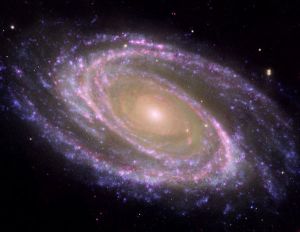
Spiral Galaxies Confirm Creationism (A Post from another author.)

I found this other blog post talking about galaxies that I thought was interesting. Check it out.

Michael's avatarNew Discoveries & Comments About Creationism

The stars were always an interest in my youth, learning about their range in color indicating their surface temperature for instance, the coolest stars are red while the hottest stars are orange. The temps in various stars range from anywhere 3,000 to 40,000 Kelvins.

Stars also have different brightness to them. The way scientists can determine how bright a star is, is by color and size of the star. Blue stars shine brighter than cooler red stars which are of the same size while giant stars shine more brightly than little dwarf stars.spiralgalaxyThe common elements which stars of made of are, hydrogen and helium gas. When you combine all the mass from these elements, it creates a gravitational field much stronger than earth’s which prevents the gas from dispersing out into space. Astronomers who embrace evolution, believe that stars randomly form from a collapsed nebula.

A nebula is an enormous…

View original post 355 more words