RAGE!

Okay, I normally stay away from two things when I blog: Politics and outright reprimands.

But I’ve had it!

This is not about Judge Kavnaugh, though that whole mess is partly what got me to thinking about this, but also what I’ve been reading about in my Logic and Contemporary Rhetoric book. It has a whole chapter devoted to how we justify our own bad ways of thinking.

The whole book has a liberal slant, but its not wrong.

But  my problem is not just with politics, but with how we as a culture and as a people are handling conflict. And I mean this is extremely personal, because I find it in myself. I see it in the people around me. Slapped on slogans, broadcasted over talk radio, and good gracious the  news network! For crying out loud, it’s even in our superhero movies and teen dramas.

That thing can be put into one word: Rage.

“Oh, it’s well beyond rage”–William Wallace, Braveheart.

Just take a minute and think about it, what word would you use to describe the way people talk about each other? The way they talk about policies?

What I hear and feel when I see the news is rage.

It’s mindless too. And I’ll admit my own political party is nearly as bad as the Left (clearly we’re not rioting and sending death threats.) I am disgusted by Conservatives who spend all their time blasting the left. While I wholeheartedly believe the left is wrong, and I can’t help but think they act abominably as a whole, even if as individuals I know plenty of decent liberals, but I have never felt the appropriate response was to return in kind.

Pointing fingers is not helpful, maybe we’re right, maybe we’re not, but playing the  blame game will not leave anyone innocent. In fact, it’s stupid for human beings to play this with each other.

It’s like how Adam and Eve pointed fingers in the Garden, both of them did wrong, did it help to blame others? We can argue for hours on who was more guilty, but it won’t change the past.

We can’t change the past.

I’ll tell you one thing, if tomorrow every democrat I knew of had a change of heart and started doing the right thing and standing up for the truth, then it wouldn’t matter to me what the party had done in the past. I don’t freaking care what the Clintons did, or Obama, because it’s in the past. What I care about is the future, if democrats were doing what I honestly thought was best, then I would vote for them.

My identity is not in my political party name, it’s in my morals. Conservatism lines up with what I believe in, that doesn’t mean conservatives always do things I like. I don’t support the party because I like all the people in it, but because I think the bad ones do less damage, and the good ones do more good overall.

Fixing the politics in this country would take a number of miracles, and both the left and the right are holding us back. I’m not ashamed for my party’s ideals, but I’m ashamed of the way we uphold them,

Rage is a virus. It’s contagious. And it’s all about returning in kind. The Left has been awful to the Right, no mistake, but being awful back…this bickering, name calling, mocking, and whining…I consider it beneath us.

Look, I’ll get frustrated with liberals just as much as the next conservative, but I do not hate them. I don’t consider them all to be the worst of humanity. (Some yes, but you’ll find those in every party.) I may get mad at what they do, but I do not want to let myself be consumed by rage every day. It has to be exhausting to do a talk show on politics.

Now, I know there would be protests here. Some would argue that conservatives have to be more aggressive because we own so little of the networks. True enough. I’m not against showing initiative. But, if we’re really as better at politics and morals as we claim, then we shouldn’t have to stoop to yelling and verbal jabs. Or generalizations.

What are we so mad about anyway? That evil exists? That in our mind it’s represented by the opposition? That people can be liars, thieves, abusers, backstabbers, accept bribes, and be unbelievably biased (the ironic thing here is that for some of you I just described my own party.) Did it surprise anyone? Why is that making us angry?

The Bible says not to fret over evildoers, and to not give way to wrath or let anger consume us because it only leads to harm.

I challenge you, whether you’re right or left, to take a long hard look at how your party acts toward the opposition. Ask yourself, is that how I believe people should be treated?

I admit, no. There, I said it.

I especially implore you college students and teens, many of you are liberal, and it’s easy for young people to feel anger over causes (I ought to know, I am one.) But, is this the legacy you want to leave? Rage? Ten years from now, will you be glad of what you did out of rage, or what you did out of mercy?

I’m not letting conservative young people off the hook, how cruel can we be to the others? What kinds of things do we call them on social media.

If there’s one thing I do agree with liberals on, it’s that human rights include not being disrespected and then having it justified because of prejudice. But that goes for them too. If you believe racism is wrong, stop labeling everyone who disagrees with you a racist…because that’s still being bigoted. Does that make you better than us?

Conservatives, stop accusing liberals of destroying the country. We’re all doing it. It’s not just them. And it’s not really the wisest way to change their minds either.

Lastly, everyone for your own sanity and relationship’s sake, please, for the love of all things holy, let go of your rage. It’s blinding us all to the truth. Blame is a waste of time. It doesn’t matter. At the very least, Christians should be comforted by the thought that God will judge in the end who is to blame. He won’t play favorites.

Until next time–Natasha.
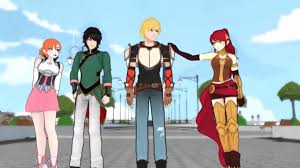
Thoughts on the RWBY team members.

Some of you older followers know me and how I get with show characters. I just can’t help myself, I have to delve into them. A year or two ago I did a post about characters from Ever After High and what I learned form them, I thought it might be fun to do the same thing with RWBY. Even if you don’t watch it (and I recommend it but do not read the comment section.) The show is rife with interesting life lessons.

Now, though I like most of the characters, I don’t get as much out of all of them. The thing that makes RWBY different form Ever After High (there are similar stylistic choices) is that Ever After High was very much character driven, the character’s individual perspectives were the main source of conflict. Which was great, and I have no complaints about shows like that. But RWBY is a different kind of show. It’s story-plot driven. The characters become more clear with plot development. Which means you love them more the longer you watch.

A lot of the lessons aren’t really spoken so much as implied. One would be the importance of forgiveness. Over seasons 4 and 5 especially, Yang, one of the main four, deals with bitterness toward her mom as well as her teammate Blake for abandoning her, in the end she realizes she needs to forgive Blake, and at least come to terms with how her mom is. At no point does anyone directly tell her to do this, but her sister and her friend both say different things that change her perspective, plus she learns a lot on her own.

That’s as good a theme as any to start with. The point of Yang’s arc, and Blake’s in some ways, is that forgiveness is not something people deserve, and it’s not something they can earn. Some fans have complained that Blake was forgiven way too easily, but they miss the whole point. You can never deserve forgiveness, so either it is given, or it isn’t. Yang could have waited, but it wouldn’t have changed what happened, it would have only dragged it out. I’m glad she saw that.

Blake has a hard time forgiving herself. I related to her a lot in season 4 when she talked about being tired of people getting hurt because of her. Girls especially tend to feel this way, though I’m sure boys can too, but that feeling that we bring more trouble than we’re worth. Blake’s checkered past of working with a terrorist cult (Before realizing what she was in) makes her pretty insecure about whether or not she’s really able to help people.It seems like she gets them hurt more than she saves them. There’s a very cool song “Like Morning Follows Night” that’s between her and Sun, her boy friend that illustrates what she feels and what his response is is that it hurts people more to be pushed away than it does to risk themselves for her. Blake slowly starts letting herself get helped.

Then there’s Weiss, another member of the main team. Her story is more complex than most of theirs. She is out of place in her family. As cliche as that sounds, believe me if you watch it, it’s real. I felt uncomfortable around her family as a viewer, something about them was creepy. Both Weiss and her older sister realized they needed to get away from their parents, their father especially. I normally find that story line annoying, because it’s just not justified, but in this case their dad really is evil and I can’t blame them at all. Aside from that theme, there’s an interesting side theme that children aren’t guilty for what their parents have done and shouldn’t be made to pay for it. Plus a good old crack at how the rich and indolent can live such empty lives. Which is well worn, but in this case fits.

Ruby, the team leader, was not my favorite. I liked her but she’s more young and quirky than I tend to favor. Over time I came to appreciate her though, she gives her teammates and friends some great advice. Telling Jaune, another team leader, that he’s not allowed to be a failure now that he has  a team to lead. It’s an important moment because everyone, even the fans, thinks he’s already failing and that’s kind of hard to help without him getting a serious upgrade. But Ruby turned it around to show that leadership can be entrusted to us whether we like it or not, and yet it’s still our responsibility to be the best we can.  Ruby inspires that in all the other characters.

And then there’s the other main team, JNPR (pronounced “juniper”) Aiiiy. SPOILERS!

download (3)

Seriously, I don’t know if I can bring myself to talk about it just yet. Suffice it to say they have some of the most emotionally wrecking arcs of the show.

But before and after and during that they have some of the best development.

All of them are introduced as a little quirky and unusual, and Jaune the leader, is shown to not be a very good fighter. Yet over time we see what makes them exceptional.

Jaune, though he lacks confidence, proves to be fiercely loyal to his friends and devoted to his team. Though he gets bullied and has issues with admitting he needs help, he eventually stands o]up to the bully for the sake of his team and then learns to accept help. He expresses his frustration at always feeling like the damsel in distress. Even as of season 5 he’s still the weakest fighter, but that isn’t really the point. There’s more to strength than being powerful, and there’s more to being a hero than strength. In fact what Jaune’s teammate Pyrrha shows him is that being a hero to someone is a lot more about believing in them and being there when they need help then it is about being able to kick rear. Thought that’s always fun to watch.

Ah Pyrrha, my favorite. I just love her, I can’t help it. No one can, I’ve yet to read a bad word about her.

Pyrrha was from the start easily the kindest character on the show. She and Jaune are alike in that they see someone in need and the aren’t shy about helping them. Pyrrha usually makes it look way cooler, but hey, if you can, why not?

Pyrrha’s theme ended up being about love. Something that I pinned down about her early on was that love wasn’t just something she did, it was who she was. Pyrrha is never seen doing anything mean or selfish. She inspires without trying to. Really you have to see it to understand, but you can’t watch any scene with her in it without thinking “Wow, she’s just so…nice, but like, she means it. How does she do that?”

Nora and Ren are the last two members of the team, and they’re a package deal. They balance each other out. Nora is peppy and a little crazy, but shows she is emotionally intelligent over time. Giving both Ren and Pyrrha advice that tells us she pays attention to what people are feeling. Ren is the opposite of Nora as far as personality goes and sees uncomfortable with emotions. Which is explained later, his theme ends up being getting closer and not letting anger make you do foolish and reckless things. Facing your demons and so on.

There’s even more, but this is long enough for one post. Until next time–Natasha.

We don’t understand Death.

My cheerful topic of discussion in class yesterday was Death. What is it? Why do we avoid it?

I’m starting to think the curriculum was designed to hit close to home for me since I’ve lost some people recently and been pondering the subject of death. As I wrote about in my last post I am a fan of Resurrection.

However if we go by what my classmates seemed to think, it doesn’t look like most people see much sense it the idea of resurrection. Many people embrace the idea that death is the end, and we should just accept that.

Everywhere from real deaths to fictional ones, I find this. Some folks are still holding out for their favorite character to come back to life, the soul crushing response by some other fans? “They’re dead and gone, deal with it.”

Well, ouch.

Seriously, is that really the most sensitive thing to say? Don’t stomp on my hopes.

Characters dying never bothered me too much as a kid, usually they were the evil characters. Of course I didn’t like Obi Wan Ken-obi, but then he comes back. And it’s sad in other stories too. Not a lot of examples come to mind. There’s Beth from Little Women, but I stayed away from sad books as a kid.

As for real life, I’ve only known four people who’ve died. Known them well. I remember my first brush with losing someone was a nice woman at my church who died. I didn’t know her very well, I just remember her always smiling at me. My mom told me she went to heaven. I believed it, and I still do, so I wasn’t bothered.

However since then the people I’ve lost have all been ambiguous at best, I’m not sure if they went to heaven. A few I really doubt.

It’s the worst part of being a christian, having to believe that not everyone gets to live happily ever after, and worse, that they could have if they’d opened their hearts. Rejecting God is a choice.

Yet Death is one of the things that makes it hardest to accept God. Especially a loving God. Though we all intellectually know death happens and the world goes on, when it happens to us it’s still a fresh shock. We are suddenly unsure f ourselves, and that makes us unsure of what we believe. This doesn’t happen to everyone. Some people handle death with peace. But they are the exception, not the rule. Most of us are left feeling uncertain. Some never recover from that, most of us do, but we never feel the same.

That’s not to say we are the worse for it. Death, like other ills, is a matter of how you handle it. It can make you stronger or weaker.

In my class my teacher brought up the idea found in some poetry on the subject, that love ends with death. There is no love between the dead and us. We love them, but it’s not a living, growing thing.

I’m not sure that’s true. Many people continued to feel connected to their dead family or friends. I don’t really myself, except at certain moments. The interesting thing about love is that it preserves your memory and therefore a little bit of yourself. When you’re gone, you’re not entirely, if someone loves you. A part of you, not your own consciousness, but your memory, stays with them.

It’s something science hasn’t been able to explain. Loving our lost ones is not biologically helpful to most people. yet we still do.

I am not sure that the dead no longer love. I believe that those who go to heaven love even more, but from afar. We can’t hang onto them, because they have no need of us anymore.

Most of grief isn’t really coming to terms with the dead, but with yourself. Asking how you can deal with this, how you can go on. Some decide hey can’t, but that’s not the right choice.

I think because we’ve removed the comfort of religion and core values, death has become too much for many people. Now  they have nothing to make it seem less terrible.

And the answer most come to is “We don’t know.”

There is no faith in saying “I don’t know.”

I’ll admit, I don’t know what happens to every person everywhere who dies. OR even to the ones I know. That’s my uncertainty, and that’s my grief. Not knowing.

But what I do know that I know that I know, is that Jesus is real. And that he is love. And though God does things I don’t understand, there’s a reason He holds the keys to life and death. I  know that I’m alive now in a way I never was before knowing Him. I know that He changes lives. I know that He enables people to die with courage.

You might wonder, why does God let people die at all if He really conquered death? The Bible says in 1 Corinthians that Death will be the last enemy to be overthrown at the end of time.  Why is this?

A couple of reasons might present themselves. If we never died our bodies would be pretty useless. At old age, death is a mercy if you will be transformed.

More than that, if death was overthrown now, all the evil people in the world would never die either. Can you imagine that?

Even more than that, God wants us to trust Him with our lives. It’s what sets us apart form nonbelievers. If we didn’t die, there would be no need of trusting Him.

We are promised the fruit of the tree of life when the new heaven and new earth are made. We will be eternal then, in fact we already are, in our spirits.

That sounds nutty to many people. The things of God are foolishness to the world. What else would you expect?

My conclusion: Either I believe the Bible, or I believe nothing…and that doesn’t seem to work out too well.

Until next time–Natasha.

The Resurrection Arc.

Hey fiction buffs! You’ve heard of character arcs before, but did you know there’s different kinds?

Yeah, probably if you read or watch any TV show that’s fictional, you knew that. I’m simply being dramatic.

You might know of arcs (and for you non-buffs, an arc is how a character or plot develops from one point, usually an immature one, to another, usually a better, wiser one. Typically the arc is what shows us the point of the whole story, but there are negative arcs that show one good guy turning bad, or a good guy slowly giving up on their cause. These are the bad example arcs that are meant to be a warning.) But have you heard of a Resurrection Arc?

Most arcs follow a pattern and this one does too. It’s actually pretty widely used, but since it is often misused, and people are now knocking it, I thought I’d write a defense of it.

All arcs are meant to change the characters and show them something they did not see before. Some arcs are a part of the plot and the characters learn by dealing with the challenges of that part. That’s what category I put a resurrection arc into.

A lot of things kick off arcs. The most famous is getting a challenge like being chosen for something, or the sadder common catalyst is a character losing someone close to them. Sometimes just witnessing a tragedy is enough to do it, other times the character has to lose their soulmate for their arc to begin.

However, there’s another really cool thing that kicks of some arcs. And it’s a resurrection. A resurrection can happen one of two ways. Either it’s a character literally coming back from the dead, or from being almost dead, or they just thought they were and it turns out they weren’t; or something else can be restored to a character that they felt they lost. In fiction especially this can mean a gift or power, or it can mean a belief in something they had lost faith in. It’s popular now for a memory to also be something that helps a character in this way.

In older stories resurrection is often just straight up someone’s coming back to life. This theme appears in fairy tales way more that we realize. Often it’s intertwined with redemption. Many of Anderson’s lesser known stories involve resurrection, and even his most famous ones that have had those elements removed in the retelling.

In modern fiction Death has an oddly compelling presence. Take “The Fault in Our Stars,” or almost any dystopia fiction now. Death is everywhere, often very young people are obsessed with it. (Funny that it’s often older people writing this stuff.) I always loved life, I was happy when nobody died. I considered “The Lion King” a sad movie, (and that part still is.) But of course, Mufasa isn’t really gone, and that can be part of a resurrection arc. Realizing that death isn’t so powerful. It’s why you won’t see this arc in the death-shadowed stories I just mentioned, unless it’s in some twisted, unholy way. Frankenstein’s monster is no example of resurrection, just to be clear.

Life wins out in the end, and love. That’s the message of resurrection arcs in a nutshell. But the complaint, which I’m sick of hearing, is that they don’t create lasting stakes.

Since the Avengers franchise took off, fans have been growing dissatisfied with happy, everyone’s alive, stories (like they don’t all hate it when their friendly neighborhood Spiderman gets knocked off, please.) While I find the constant whining about it to be stupid, I do note that there’s something to be said for making things a bit more realistic.

It’s not that no one dies that really bugs me, it’s that no one gets hurt for very long, no one loses anything in their lives, and no one seems to be affected for longer than two films by any traumatic experience. Also I fail to see character growth even when they are.

In truth, whether characters live or die has nothing to do with depth. Action flicks that kill off henchmen by the dozens aren’t known for being deep. And Chick flicks that don’t kill anyone, or else do it in a more drawn out, romantic way, aren’t necessarily shallow. The Notebook is dumb for most of the movie, but the ending always gets to me because it is saying something profound about love.

That said, I think people who knock resurrection arcs are missing their potential. It’s not always a cheap cop-out to have a character not stay dead. In fact, often it’s a very good catalyst for growth in both them, and everyone else.

When a characters is resurrected, everyone has to reconsider what life and death means to them. They have to ask themselves what they are willing to sacrifice, and what they aren’t. But most of all, it changes the dynamics of how they see the antagonists. Maybe there are things more powerful than whatever the evil stands for.

As for the character who comes back themselves, they get a chance to change things about their lives that maybe only losing them gave them the clarity to do. Or they impart some wisdom on the other characters that they couldn’t before. Resurrection means restoration.

If we no longer like that, it is because we have grown more hopeless. It’s more cool now to just accept the crap in you life and deal with it, then it is to hope for a change. People encourage you to give up on hoping for others to change, for things to turn around. Be the force, they say. Well, that’s fine in its place. But what about when your force isn’t enough?

What about when all the kick-rear skills in the world won’t save you? What about when you’re losing heart and nothing else will help? What about when someone simply can’t save themselves?

Resurrection is what solves this, and nothing else can. It’s a restoring of life and hope and faith to someone who had lost heart. It’s the only thing that makes redemption fully possible. Because though a death may redeem someone, it only sticks if life comes out of it.

Resurrection, in the end, is what breeds humility. What engraves the inevitability of our own need for someone to intervene on our behalf into our souls. By overcoming mortality, it reminds us of it.

It’s not cheap. It’s often the hardest thing to do well.

I for one will never get tired of this arc, until next time–Natasha.

A word to the wise.

Homo sapiens. Or homo sapien sapien. Do you know that that means wise man? Or wise wise man.

Do we seem wise to you? I see a lot of cynicism about that fact around me. No matter what political party or social group people are in, they don’t think we’re particularly wise.

Wisdom seems to be an elusive quality for man. Or woman if you want political correctness. Maybe that’s why its’ actually been an occupation to be a wise men. We call them scientists now, but back int he day, they were more like oracles of gods, or philosophers. People who had a special insight into the things of life who could advise kings or villages, depending on their status.

Some of us are lucky enough to still know people with that kind of reputation. But it’s scarce now isn’t it?

I think what made it scarce isn’t that wise people don’t still walk the earth, it’s that we stopped looking for them.

I don’t wish to harp on about how this generation is the worst. frankly, form what I’ve read, that’s what every previous generation says about the next one. And each of them are both right and wrong.

Mankind tends to destruction, and that does continue to worsen almost every generation. But the same follies and foibles are always present in mankind, whether as a whole or not we’re at a more enlightened state. And those have been short lived.

I realize I sound kind of defeatist, but I’m not really. I just have little faith in man’s ability to be true and virtuous without divine intervention.

Wisdom, if we read Proverbs, is one of the most important parts of being a righteous man or woman. Without wisdom, we have not the wit to do any good thing, except by instinct. And that only carries you so far. It’s no shock that every culture has its own set of sayings and fables meant to teach wisdom to the simple. Usually to children. Kids can be wiser than adults.

Proverbs 8 describes wisdom as crying out in the streets, and stnading on a high place, and at the city gates, imploring the sons of man to listen to her.

While the city gates were traditionally where the wise men of town would sit to solve problems and give advice, and a high place is symbolic for divine perspective, crying out in the streets can just mean an announcement. It’s not necessarily a dignified position. It was like doing a broadcast is today.

Wisdom thus puts herself in the expected place, the more divine place, and the place of anyone wanting to get some news across. Whatever works. The point is, Wisdom is everywhere, and it’s trying to get your attention.

I think of my college classes here. Whether or not my professors are wise is up for debate, but that we learn from wiser sources is pretty much a given. Wisdom also doesn’t come form the wise ,sometimes, like in the movie Forrest Gump, wisdom can come out of the mouth of the most innocent and simple minded people.

Wisdom might be found on social media, if you can dig it up. Wisdom can certainly be found in churches still, if people have open ears. It can be found in relatives. In friends. In what you read. In what you listen to. If it’s the right sources.

And a good way to tell is also provided in Proverbs 8. You’ll know wisdom by what it supports. Wisdom claims to love life, to hate deceit, to hate strife, Wisdom’s delight was in the sons of man, Wisdom is creative, Wisdom means to save live, not waste it. If something in your life encourages all that, it probably has wisdom in it.

If that sounded like the opposite of the things in your life…careful.

Being willing to hear wisdom is the first step toward getting it. All you have to do is look. That’s where the saying “A word out to the wise” comes from.

That’s all for now–Natasha.

What really matters.

Well it’s been quite the week for me. On Sunday my grandpa passed away. Now this weekend is his funeral.

I  never knew that loss felt cold before. But it does. I felt cold after I heard the news. I’d expected it for a while, he was not doing well right before. He hadn’t been doing well for a decade. Especially the past four years or so. In fact, that he lived as long a he did was a mystery to his doctors, and my family’s opinion, it was a miracle. He lived off prayer, so many people prayed for him.

The show I mentioned before, RWBY, has a song about loss titled “Cold.” It’s pretty sad. And pretty accurate. When someone dies, do you cease to love them? No.

To me it’s more like a connection was lost. Like your spiritual cellphone now is out of service. But I know some people don’t feel that way. They still feel connected to people they’ve lost. I’m not sure why that is. Losing people has not made me an expert on it. C. S. Lewis wrote about feeling his wife’s nearness in “A Grief Observed.” He knew she still continued to exist.

Some folk think you can talk to the dead and they’ll hear you. I don’t think that, but I understand the need to have final words. So few of us get to be with loved ones when they pass on. I felt like if I had had the chance, I would ahve felt better. Though I did get to see him the very day before, so that was a mercy.

I don’t have a lot of very close memories with my grandpa, he had such ill health, and lived too far away, and he was not very good at connecting with people. But I did get to go out with him on his boat once, which was fun. And he took us around museums and a fishing expo once. I think we went to an aquarium once also. Before his health got really bad. He also paid for my braces, so I owe the fact that I have good teeth now to him.

He was always kind to me. As I got older I found out he was not perfect. None of my grandparents are of course. But I always chose to think of him more as how he was to me. His best self. I prefer to see people that way.

I notice that families like to dredge up old stuff. And I’ve been there, and I’m getting really disillusioned with it. It’s such a waste of time, as my grandmother liked to say. We all do dumb things when we’re young and immature. I’m fortunate to have realized this now and not when I’m 80.

What really counts, as a couple of good songs I know “It happens in a blink” and “Give a little love”, both point out, is not the dumb things we’ve done, but the things we did to love other people. The Bible says that some of us will do little, some of us will do none, and some of us will do much. The parable of the Talents, or when Paul speaks of our works being tested by fire. The point really isn’t how much we do, but that we do things out of love.

Whatever else anyone could say of my grandpa (and all of us could have plenty of things said of us that we wouldn’t like, couldn’t we?) he did love me and his other grandkids and he did things for us that we couldn’t pay him back for. He did help out my parents when we were down on our finances. He did try to take care of my grandmother. And that’s what we’ll remember more about him, or at least that’s what I want to dwell on. No human being is perfect, if we focus on our mistakes, that’s all we’ll ever see. If we focus on the things we did right, at least there is love.


Until next time–Natasha.