Book Break Down: Till We Have Faces

So I’ve analyzed movies and songs on this blog, but surprisingly, I rarely ever talk about books, and I grew up being more of a reader than a watcher, we didn’t even have TV for years. [Honestly, I don’t watch TV itself now, I stream so I can pick the shows, but, who doesn’t now?]

Anyway, I still read, I try to read at least one book a month if I can, and I log the books to keep track.

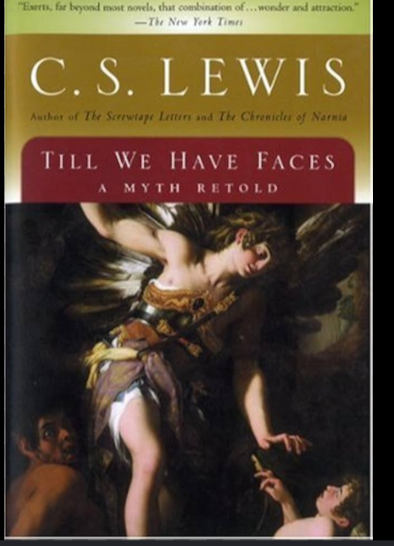
And one I read every year usually, is my all time favorite book “Till We Have Faces” by C. S. Lewis.

Lewis is my favorite author anyway, but this book is his best work of fiction in my opinion, and some other critics agree.

It’s not as novel as his space trilogy, but it’s far easier to read and had much deeper themes that are not as…theoretical as those books, (if you read them you’ll get what I mean, but I’m not talking about those ones.)

But you’re not here for me to just talk about Lewis, let’s dive into the book itself:

Plot and Concept:

In brief terms, “Till We Have Faces” is a re-telling of the myth, my favorite myth as it happens, of Psyche and Cupid, or Eros, if you prefer the correct name.

The myth itself has strong Christian undertones, considering it’s a pagan myth, as the symbolism of it is basically that our soul (which is what psyche means) must be united with Love (Cupid) to become immortal. There also a part when Cupid raises Psyche from the dead after she descends into the underworld to bring beauty to Aphrodite, the goddess who represents lustful love instead of true romantic love, or perhaps superficial love to be more accurate.

Psyche and Eros have a divine child whose name means ‘joy’ which shows how the product of the soul meeting love is Joy.

The story features two jealous sisters, so it is like a tweaked Cinderella story, but also a tweaked Beauty and the Beast. These kinds of stories run all over myths and legends across the world, makes me wonder if there was a common root that did actually happen.

Psyche is alone and unable to marry because people treat her as goddess instead of a person, so an oracle prophecies that she will marry a monster feared by both gods and man, but this turns out to be a riddle that means Cupid, since love is powerful enough to make both gods and humans do things they would normally do (and Greek myths are full of the God doing dumb things because of ‘love’).

A pretty cool story on its own, really, but Lewis’ retelling is masterful.

In Lewis’ retelling, Psyche is instead sacrificed to Ungit, the name he gives Aphrodite, the goddess who represents animal, profane love that only takes and takes and gives nothing back.

But Psyche is rescued by The West Wind god, and taken to the god of the grey mountain, who is Eros in this story.

They are wed, and she lives happy but Orual, her older sister who is uglier than any other woman in the world, finds out about it and is jealous of her, though she thinks it is not jealous.

To make a very complex story short, Orual forces Psyche, by her love, to betray the god of the mountain, and Psyche is sent into exile as punishment, while Orual is told that she “will know herself and her work, and she also shall be psyche.”

Orual is not sure what this means, and instead of being doomed, she becomes the Queen of her country, Glome, in the next week, and rules for many years, trying to bury the pain of the memories of Psyche and what the God told her.

The Conflict:

Finally, Orual hears the story of Psyche and herself retold, but in the original fashion of the real myth and it infuriates her, so she writes a book, which is the book we the audience are reading, of a complaint against the gods, putting it to us like a case to be heard, hoping that some Greek, who speak more freely of the gods that her own people, I’ll read it and judge.

After she writes the book, she begins to have mysterious visions from the gods of things happen to her, that also happen to Psyche, in the myth, only for her they are much harder and more painful.

She begins to also learn from the people around her that she’s lived her life devouring the lives of others, as she was always bitter that she was ugly and could never marry or have children, so she obsesses over a married man who she loved, and she kept her adopted father, the Fox, in Glome with her isn’t sending him home, and she abandoned her other sister Redival, in order to have Psyche all to herself. And she wanted Psyche to love her just as obsessively, instead of in a normal, healthy way.

One of the most striking moments of the book, early on, before all this, in which Psyche says to her

“You are indeed teaching me about kinds of love I did not know. It is like looking into a deep pit. I am not sure whether I like your kind better than hatred.” [Chapter 14]

Later, after seeing the visions, Orual is taken to the court of the gods and her case is read.

As she hears her own voice saying the true words of her soul, she realizes that she only ever wanted to devour Pschye’s love, to possess it all for herself, she never truly loved her unselfishly. The gods gave her chances to do so, but she rejected them all and instead blames the gods for luring Psyche away by their beauty and their goodness that she didn’t understand.

After this, she is shown all the thing Psyche suffered for her sake and then, she is taken to meet the god of the grey mountain, and Psyche also meets her and forgives her, and give her the beauty of death (but death to the profane love of Ungit, not literal death) and Orual sees her reflection changed to be beautiful, and then she hears the words: “You also are psyche.”

She then wakes up and writes in the book that she knows why the gods don’t speak to us face to face, because they can’t ’till we have faces?’ (A line that always gives me chills).

Meaning that, until we know what we really mean, and not just what we think we mean, they cannot be open with us, since we cannot be open with them.

She also writes that she knows now that the god of the mountain did not give her an answer, because he is the answer.

Christians will spot the characteristic that we assign to Jesus here, as that is the metaphor of the god.

Context:

I think you could understand this book without knowing anything about Lewis, if you have a good understanding of the idea of love, and real love versus selfish or toxic love.

However, I’ve seen many people review the book who said they did not fully understand the ending, or all the themes.

When I read it the first time, I understood it by the time I got to the end, and every time after that, when I read it, I understood it better. Especially after I read “The Four Loves” by Lewis also.

Lewis has a fictional version of pretty much all of his non-fiction books of theology and philosophy, which not a lot of people know. This book is his fictional version of “The Four Loves”, as well as some parts of “The Weight of Glory” and “Mere Christianity.”

You can find some of this in his fictional book “The Great Divorce,” but this book is his magnum opus of writing about love, so I always refer back to it the most.

To understand the ending of the book, as well as the conflict you need to know the Lewis believed that true love, charity or agape, as he called it (the Greek word for unselfish, unconditional love is agape) was the holy kind that has to come into every other kind of love to make it good.

And the human love, which is ‘need’ love’, he says, will become devilish, if left to itself.

He give examples of such, how things like affection (family love, also called storge), can keep people under the control of their family if they are left to themselves; how friendship love (phileo) can be snobbish and exclusive and also corrupt people because it puts the friendship above doing the right thing; and how romantic love (eros) can corrupt people even more by being so exciting that it makes them do things like cheat, lie, and steal, all in the name of love.

And some people are even cruel to the one they love, because they think love makes it okay.

In each case, he points out that the love doesn’t have to be evil, but when all other things are put aside, all moral and rational limitations to it, then all loves becomes evil.

Agape love can’t be evil because the basis of it is that it loves you freely, it doesn’t ask for anything back, it doesn’t need anything from you, and it doesn’t demand you do what it wants. It’s love free from the temptation to be possessive.

Obviously, he points out, no human being can perfectly live in that state of love at all times.

It’s not necessarily bad, to need each other. As in this life, we will need each other, and most people like to feel needed. Being completely independent of people is more selfish than needing them a little bit is.

But when that need becomes all we can think of, and we can never put it aside even if it’s hurting the other person, then the love is demonic. Or profane, as some people put it.

Now we usually say toxic. I like profane better.

Toxic love can be negligent in a relationship, if it’s not too big a part of it. We like to joke these days about toxic traits, but most toxic traits, in small amounts, won’t ruin a relationship. If the other person understands you and is willing to overlook, and you do the same for them, then it won’t really matter in the long run, though you should definitely still try to improve.

But profane love is where there is nothing but that. Toxic love that has poisoned the entire relationship, the kind narcissistic people have. They cannot ever love you with anything but that kind of love.

Even when they act like they’re doing something unselfish, they expect you to pay them back for it in some way.

To me, this book was life changing. I read “The Four Loves” I think after I had read this book, but when I went back and re-read it, I saw how brilliantly Lewis wove the themes of those principles in the story.

Orual, once you know how to look for it, is a huge example of profane love. Yet she’s not hateable. She had good points– he still made her believably human.

Her ugliness, which I saw complained about by some readers, is symbolic. It’s meant to show how her love is ugly and profane as her face is, and when she is freed from that love, she is freed form her ugliness also, at least, spiritually.

There are also other favorite themes of Lewis in the book, such as how important reason is, represented by the Fox’s character who is a Greek Philosophy lover.

Also some very sharp insights into how cruel men are often hiding insecurities, and bitter women are hiding jealously.

Not that it can’t go both ways, it can, and it does, sometimes.

There are also ideas of sin, and repentance in there. As Orual must die before she dies to escape Ungit, who represents carnal sin and love, and it’s said that even Psyche, who was a nearly perfect human, had to die and escape her as well. How they have to gather the beauty of the gods without effort, because no effort of theirs could get it, and how we have to resist temptation to give into the pressures other people put on us, even when we love them, if it means disobeying God, because God comes first.

Lewis goes into more detail on these themes in “The Four Loves”, but the book portrays this so poignantly, that it’s impossible not to see yourself in some of what Orual says and does.

Personal Impact:

I’m not kidding when I say that this book changed my life. I read it maybe a few months to a year after I became a Christian, and my relationship with my family was still a wreck at that point.

A lot of that was my dad’s fault, I certainly saw him in the abusive father in the book, but, the book showed me the things that I did and said that were like my dad, and things that weren’t like him, but they were still wrong. It made me see my relationship with God differently also.

C. S Lewis believed that we can never see ourselves clearly, or our sin, that we can never be fully aware of how bad it is, or how good God is, but only see dimly. This is probably true, as the Bible says similar things.

That idea helped me to be more humble when I prayed, not always, and I’m not always now, but at least I had the concept fully rooted in my mind that I could never fully know myself enough to know if God was wrong to do as He did. Also to question my motives for things whenever I started whining about not being treated fairly; sure sometimes, it’s valid to say you deserve better; but you have to watch to make sure yours not demanding something just because you want it, and not because it would be best.

The book didn’t make me neglect my own well being, as some people say Christianity teaches people to do, if anything I think it helps me understand why my father was wrong and I needed to cut ties with him as an adult. Other teachings I heard sometimes made me think I needed to put up with his abuse, but not this book.

It also always reminded me that the answers in God are often found more just by knowing him more than by mere logic. Not that logic isn’t good, Lewis loved logic and reason, but often we find it’s limited, since we are humans, and everything we do is limited. Sometimes you have to go beyond just pure reason to understand things.

Criticisms:

People have accused this book of being sexist because of the many things Orual says against women and as an ugly woman.

I think that’s because they don’t read Lewis’ other books. Lewis was not sexist (at least not for his era) and he had many women students and married a woman who he admitted often won arguments with him very easily. He actually liked that about her (and he dedicated this book to her, in fact, since she held him come up with concept).

He puts himself into the mindset of a bitter woman so well I’m often shocked when I read it, as mostly when male authors try to write how women feel, they fail miserably, in my experience, because they think of it as a woman instead of person.

As a woman, I could relate to Orual, though I’m not ugly, but as someone with a bad father, and who’s been rejected often for reasons beyond my control, I could still identify with her bitterness and sadness.

As well as her wish to assuage that by grabbing at whatever she could.

I don’t find this sexist. Men do it as well, and men can see themselves in this book just as easily as a woman can. The remarks Orual makes about women are from her own bitterness, and made because the character narrates the book, they are not Lewis’ actual opinion on things.

He was very good at making even characters who disagreed with him feel real and if you read his other books all of his characters feel like real people you could meet, except the ones who are sometimes wiser and more noble than humans usually are.

The other complaint is the themes are hard to understand.

Well, they can be. They were not as hard when he wrote it, more people had read the myth, and more people were writing other works with similar themes at the time.

I think it was still very complex, even then, but to our barely literate culture now, it is hard to understand.

That said, it’s still an easy read, full of fun language that’s not too old fashioned for most fantasy lovers to read, and fun characters.

I don’t recommend letting a child read it since it talks about sex more openly than his other books do, but he didn’t write it to be a children’s book.

I would say though, any child 12 and up could probably handle this book, since it’s not too explicit and that’s the age most kids start being more self aware about how they act, so that’s when it would help to read books like this.

I was about 14 when I read it the first time, and I understood it, but I was very literate for my age, so if parents are going to let their child read this, I’d say to use your own discretion.

Closing thoughts:

There are not many books like “Till We Have Faces” anymore. It’s a level of parody and fantasy writing that most authors just can’t achieve in the modern era, because they haven’t read enough books like it.

Its deep themes are timeless, and everyday problems, not ones that only intellectuals would care about.

The ideas of love within family and romantic relationships are ones we all can learn from, as well as how we isolate ourselves in our own minds, when we’re bitter and angry about our lot in life.

So I recommend reading it even if it’s not your usual thing.

You can find an audio book version if reading isn’t your thing, and I recommend doing that, because this book is too good to miss if you like fiction and especially if you like myths and symbolism.

I’d like to close with a few more memorable quotes:

“Don’t you think the things people are most ashamed of are the things they can’t help.”– Psyche.

“You must die before you die,”– the god.

“Who can feel ugly when the heart meets delight?”– Orual

“And in that far distant day when the gods become wholly beautiful, or we at last are shown how beautiful they always were, this will happen more and more. For mortals, you see, will become more and more jealous. And mother and wife and child and friend will all be in league to keep a soul from being united with the Divine Nature.”– The Fox

Thanks for reading, and stay honest– Natasha.

What books do I want to read?

Daily writing prompt
What books do you want to read?

Usually I don’t want to read, I do read.

But right now I am waiting on some books.

I’ve been curious about this book “Thy Kingdom Come” by Ariana Tosado. I haven’t read any of her stuff, but it sounds interesting.

I’ve also considered reading “Tears of the Wolfe” by Elizabeth Wheatley once it comes out.

I hesitate to read new books if I don’t know the author, often because I’m picky about quality.

I also am a lot busier than I used to be. Whenever I have more free time, I tend to start a new book if I can. Or I’ll read on my work breaks. I have several since I work at a school and there’s time between periods.

I also recently bit the bullet and downloaded Kindle and started reading on that. I prefer a physical book, hands down, but it’s hard to carry them everywhere, and they’re pricey, and Kindle is cheap,so if I’m not very liquid, buying it on Kindle works better for me.

And I listen to audiobooks on my long commute. I don’t think it’s the same as reading (and I read faster than they do anyway) but, it gets a little more books into my busy schedule.

I guess next to Christianity, reading is the closest to a second religion I have… in that I support it, preach it as a necessity, and find a way to work it into my schedule somehow no matter what I’m currently busy with.

Of course I read my Bible daily too, not usually for very long, but it’s something.

On Being your Own Hero and life goals

If I asked you what the answer to all your problems was, what would you say?

Probably you wouldn’t be able to answer. But if I pressed, you might admit that a lot of those problems could be solved with either more money, more time, more friends, or more will power on your part.

Today, I want to focus on the last one.

Will power.

Philosophical question: Is will power the real key to success?

Maybe that’s not even a philosophical question, maybe it’s more of a practical one. In real life, isn’t it all about grit? Courage? Persistence?

I’ve always been told that, from books and inspirational speakers, at least.

Everything is our choice.

You’ve probably heard or seen this on a plague or mug somewhere:

“Whether you think you can, or you think you can’t, you’re right.” — Henry Ford.

“You miss 100% of the shots you don’t take.” –Wayne Gretzky.

Or something like that.

One thing I hear a lot these days is to “be your own hero.” Or “I am my own hero.”

It’s even in the song “Roar” by Katy Pery.

I’ve always found that weird. I remember reading in a book (not sure what book now) that an author was commenting on how when he used to ask teens who their hero was, they’d say either a real person, or one in fiction, and that they wanted to be like them.

Now they don’t really have anyone they look up to.

I think that varies depending on the demographic and age group you’re talking to, but isn’t it concerning that high schoolers by and large no longer seem to look up to that many people.

Then again, many people may say that it’s better that way. That you should never meet your heroes. That people will always let you down.

I’ve wondered what it would be like to meet my own personal heroes. The kind of people I look up to are usually reported to have been very kind to their fans, and I’d like to think ah’t even if they didn’t immediately like me, they’d still have been the same people I thought they were. Flawed, but, not bad.

But then my heroes are always the ones who admit they are flawed and share their mistakes, so it’s hard to be as delusional about them.

I’m not one for hero worship anyway. I’ve disagreed with my favorite Author, C. S. Lewis, openly to other people, even though I think he was brilliant, because there are some topics he just didn’t understand. But he’d be the first to agree with me on that, it doesn’t take away from my admiration of him, just reminds me to think for myself.

I wonder if we just don’t teach this skill to our kids now. That you have to learn how to respect someone’s good points, and not imitate their bad ones. That you eat the meat, and spit out the bones. No one will ever match your ideal lifestyle, probably because for you, that lifestyle has to be personalized, so no one ever could match it. You have to take what you can from people and turn it into what works for you.

But I feel like we’ve got this weird cycle, in the West at least, where teens and young people idolize someone, or something, until it ends up doing one thing they don’t like, and then they turn on it. Even if that thing is not ever proven, or not even clearly incorrect.

I’ll give an example, and since I’m Christina, I guess it’s only fair to use a Christian one, since we do this too.

I’ll use the example of Switchfoot.

Switchfoot is a very popular Christian indi-rock band, and my personal favorite in that genre, so I was once watching a video about it on YT, and the lead singer (Jon Foreman) addressed one of their fans who was in the LGBTQ+ group, and told them they were welcome to come to a concert, as the fan had posted a video voicing doubt that they’d be welcomed there.

The video got so much backlash, it was astounding to me. I watched the clip from Jon Foreman and nothing he said was unbiblical, he was just trying to put this girl’s mind at ease and be kind and welcoming.

Sure if you twist his words, you could say he was endorsing her lifestyle, but he didn’t actually say that you’d have to read that into his acceptance. (I’m not even going to talk about where I personally stand on it, right now, as it’s irrelevant.)

My point was that so many Switchfoot fans were furious, and flat out mocking this guy and tearing the band to shreds for this short video.

I was surprised at how venomous their comments were. I would think they’d have given them the benefit of the doubt, as Switchfoot has always been a very pure band in their presenting of God and our beliefs, in my opinion at least. Which is why I would have found it hard to believe they were actually being unbiblical so openly.

But it’s not just Christians, it’s not even primarily Christians. This turnabout happens all the time with celebrities, politicians, entertainment, products, you name it.

Perhaps that’s part of the movement for being your own hero. If there is no other hero to be had, then you have to be your own.

I do love a good inspirational story about a self-motivated person achieving their goals. And honestly, I am a very self motivated person myself. I rarely wait for anyone else to tell me what I’m good at, what I should do, or who I should try to be. I’m the one who tells other people my opinion, at times, unnecessarily.

But that’s how I am, I want people to reach their potential, and to reach my own. Nothing is usually ever good enough for me to want it to stay the same forever.

So of all people, the ‘be your own hero’ mantra should appeal to me. And, it does, usually.

But I have come to question it in the last several years.

At first it sounded great, but, I realized what we all realize eventually, that it doesn’t work.

I went through my self help phase as a teenager, which is a lot sooner than most people do, but, I was ambitious. I started reading the books, watching the messages, planning out what I wanted to accomplish and change in my life.

And…I did have some success, but other things, I didn’t.

And all these books over simply it too. People who lead exceptional lives seem to assume it’s simple for everyone to do what they did.

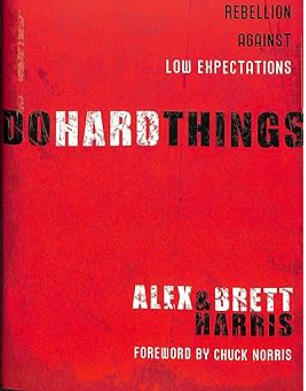
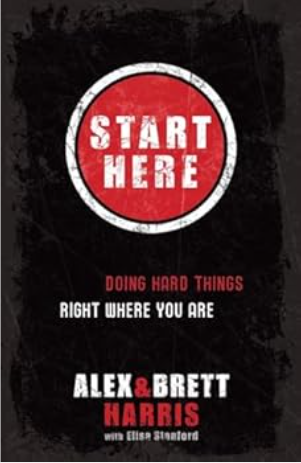
I read the book “Do Hard Things” when I was 13, and I later read the follow up book to it “Start Here” (both by Alex and Brett Harris.)

Then, inspired by a story in the second book, I tried to start my own fundraiser to send money to a charity I liked.

I thought people would do what they described, they would want to help me and that would make it happen. I had ideas…but, I never had a lot of support form others, and on my own, I didn’t have the means to raise the money. We raised some, but, not as much as I wanted.

One lady did try to caution me to be more realistic, and I dismissed her at the time, saying that I had enough faith for the big amount.

But, perhaps the Lord humbled me for that reason.

It wasn’t pure arrogance on my part, really, though. It was that I thought that’s how it worked. That God blessed everyone’s efforts if they were for the right reasons. I didn’t want glory for myself, I wanted to do something meaningful, something that would make a big difference.

Maybe I did want to accomplish something, in a way, to make myself feel important. But looking back, that’s more of something I think now that I’ve had time to examine myself, not what I thought at the time.

But it doesn’t matter if my motives we’re all selfish, or only partially selfish, or not selfish at all; whatever the case, I mistakenly assumed that a first try was going to succeed just because it was for a good cause and because the books made it sound that way.

The books didn’t share a lot of stories of failure. Probably because they didn’t think they’d be as inspiring. But the thing is, teens need to be told they will fail sometimes, even many times, before they succeed, because everyone’s path is different. And the odds are you’ll fail more often than you’ll succeed at anything that involves other people, because no one is likely to care as much as you about it. And even if you find that golden group of people who do, there is luck, or fate, or whatever you call it that has to line up, it can take years for that to happen.

For some people it does happen fast, but, that’s rare. And usually it’s not even the most talented people that it’s true of. It can be passing fad that they happens to hit at the right moment, it can be being in the right place at the right time, or it can be they do the wrong thing by accident, but it somehow works.

For me, it was very discouraging to realize no one else cared as much as I did, but now that I’m older and more experienced, I know that is not uncommon.

But I had the expectation that it would be simple for me. And maybe, for someone else, it would have worked, but the books didn’t cover what to do if you’re not that special person.

So I learned that you can’t do everything just on your own steam.

Other changes I tried to make I could do them, when it was just me. But not always as much as I wanted.

I’ve tried things like exercising regular for years, off and on, and it took till this last year for me to finally have the mental discipline and to know what works for me, enough to actually pull it off for months on end, so far.

I’m learning about what works for me, and I’m finding my footing. I’m 25. I Wish I knew what when I was 16.

But this is why it’s dangerous to tell kids to be their own hero.

The fact is, and if you are a teen or young adult, I say this with the greatest possible respect, but the fact is: You don’t know a lot yet.

I don’t mean that many of you are not smart, capable, and even independent.

But what I mean is that experience is what shows you what is going to work for you, and you just can’t have that figured out as a teenager. It takes months usually to test any thing enough to know if it’s a good fit, and we only have so many months in a year, and so many years of being old enough and capable enough to test out things. Especially in the West.

So the reality is, even for those of us lucky enough to be able to do what we want, and not what we must, as with most places in the world, it just takes time.

And kids can be really prepared with numbers, and figures and info, but still not be ready for the real world. But no one ever is ready. You just go for it, and you get ready as you do.

That’s the truth.

And I’m still in that phase, honestly, but at least, now I know I am. I didn’t before.

There’s another thing to consider:

The culture we live in is obsessed with personal success.

But, let’s look at some dark truths.

Statistically, not all of us will live to be old enough to be successful.

It takes most people till their 30s to be gaining more than they’re putting into anything, let alone a career.

It takes most people years to have kids, if that’s their dream, and to find a romantic partner. I’m still waiting for my first boyfriend in my mid twenties. It’s not that I haven’t looked, but I’v never found the right tone.

The Bible says we shouldn’t set our mind too much on earthly things. People have seen this as some hyper spiritual way of looking at life, that God just doesn’t want us to care about Earthly things that much.

But that’s not what the Bible means by that. In Ecclesiastes it even says you should enjoy what you do, and your marriage, and your life, as best as you can…but knowing that it’s all vanity. It all will pass. And that you may not live as long as you want to. But who’s to say you’d have been better off if you did?

It’s bitter wisdom, but it is still wisdom.

It’s not that God does not want us to try to succeed, He does, but that He is warning us to spare ourselves the heartache of pining all our hopes on one thing that is only temporary even if we get it.

What if we made a million dollars? We’ll spend it.

What if we have kids? They’ll grow up.

What if we get married? Both of us will die eventually, one before the other, probably.

What if we make a great piece of art? Well one day, it will be destroyed or forgotten about.

And this is not bad. It’s just the way time affects us. Nothing can last forever. If it did, new people would never have the chance to be successful also. Some works seem timeless, but even they will be destroyed one day, and new works will replace them.

This is not really bleak, it’s just the way the world has to be to give a constant new chance to the people who live on it.

And that said, whatever we do, while it may be good, is nothing to stake our whole life on.

I’ve seen people like my father who get so depressed they feel suicidal when they can’t do well at their job. A lot of men are like that.

Or who get so down when a relationship ends, because they put all their hopes into that.

I’ve never wanted that to be me.

Yes, I put a lot of myself into what I do and who I’m with, but, I know one day it will end. And while that’s not an excuse to slack off, it does mean I have to be ready to let it go, when it does.

Job, one of the most famous sufferers in the Bible, if not the most famous, said, when he had lost everything through no fault of his own. “The Lord gave me what I had, and the Lord has taken it away. Blessed be the name of the Lord.”

See, all success we have is borrowed.

Even if you didn’t believe in God, you have to just look at the world and see that things change all the time. Success will rise and fall for everyone in their life. A billionaire could lose everything and be a pauper, just as easily as someone could become an overnight success. Depends on the person, and the time they live in.

We get so focused on what’s in front of us, we forget that it will not always be in front of us.

Same goes for suffering.

So when it comes to being our own hero, our own answer, for things, we have to realize that it’s never that easy.

There is a lot we can do to help ourselves, but some things always depend on others and their actions.

For me, it’s hard to accept that because people have let me down a lot…yet, without the other people helping me, I wouldn’t have gotten to where I am now. I wouldn’t have learned more about myself and I wouldn’t have learned the skills I do have.

I resent it sometimes when people act like I need help, but, I do.

And I no longer think I can save myself, if I ever did.

And that’s the thing, you can’t save yourself.

That’s a lie they keep putting out there.

Even in that Titanic movie, they say Rose has to save herself.

It’s true that there will be times when it is just us against the world, that you must fight for yourself, and that is part of life.

But that’s more like a crisis moment than a regular thing. Rose didn’t even save herself, Jack saved her, as she even admits later.

And while I’ve had to think fast and act to save myself a few times, most of the time I’m teaming up with other people.

And for me, God has always been the thing that’s saves me the most, even when no one else is around.

If you look up only to yourself, and treat yourself like God, which is really what this self actualization and saving yourself and being your own hero crap is about, when it’s taken to its logical extreme, then when you run out of strength, as everyone does, you’ll collapse.

Why do so many people commit suicide who feel alone? Because you can only talk yourself out of something so many times before you start to feel like it’s just your empty opinion and you’re deluding yourself.

But if someone else is helping you, then it’s easier to believe it.

C. S. Lewis even observed that defending the faith for years might be a way to start having a harder time believing it.

Why is that? Because it was his ideas he was putting against consent opposition, and we start to doubt our own footing after a while. How can we be right? And everyone else be wrong?

But majority rule does not determine who is right. Even finding one or two other people who agree with us can be enough to encourage us to keep believing.

But we can’t all be right. For me, I still compare everything to what my faith teaches, because there has to be some way I can filter what everyone else says and what I think myself.

But if I was just alone with it, if I had no one and nothing to turn to, I couldn’t really believe anything. I’d have no way to test it.

So no, I’m not my own hero, or my own muse. And I think anyone who says they buy that, is kidding themselves.

Even if, at most, you could maintain that for a few years, the bubble bursts sooner or later.

And it should.

And what you find left after that point, that’s what your life really is.

So I guess I’m warning you all reading this not to put too much stock in your own character. Even if you are your best self, your best self will never replace the need for a perfect and flawless model to base our lives on. And we do need that, as humans, because we need to know where we come up short, so we can improve.

There is one recent modern example of this that most people will probably recognize, of the contradiction of saying you should be your imperfect self because that’s better.

In the hit movie “Encanto”, Isabel, the middle child in the Family Madrigal, sings a song called “What else can I do?”

In the song she says “It didn’t need to be perfect, it just needed to be, and they’d let me be!”

The song is about her letting herself go wile with her power.

Now, in of itself, that’s maybe not bad–though she does cause a lot of destruction and injuries by doing it, but the movie waves that off as just the result of her being able to be messy and free finally.

[What Else Can I Do?– Encanto]

But the film (and its reviews) missed the problem with what Isabel is doing.

If it’s truly better to be imperfect…how do we measure that? What are we comparing our imperfection to to say it’s closer to it than our attempt at perfection?

And the answer is usually ‘we don’t know’. There’s just this blind idea of a happier life that we think not trying to be perfect will get us.

[Because we all know it’s the people who try the least who are always the most satisfied with their lives…right? (Not statically).]

I am in favor of breaking the mold, but only because I think the model itself is never perfect, not because the idea of perfection is the issue.

See, when we say we can’t be perfect and we should be, we mean other people’s ideas of perfect, and it’s true, those are never accurate.

But if we ever saw true perfection, we’d see it was beautiful, liberating, and more satisfying than anything else. Because…that’s the definition of perfection. It has no flaws, no drawback.

Something can not be perfectly imperfect, that’s a contradiction.

And because we are not perfect, we always need to grow…but we need to realize we’ll never meet anyone else’s standards of perfection either.

And so we need to allow each other to make mistakes, but never assume that means making mistakes out of a callous disregard for any kind of standard is a god thing.

There has to be a balance to this.

And that’s part of the idea of not trying to be your own hero. If you are your own hero, you have to never mess up. But if you do, who will save you then?

Rather than being liberating, it’s horrifying, the pressure would be endless.

But if you are not your own hero, then you can save yourself, sometimes, but you can also be saved by someone else. Or something else.

And there’s nothing wrong with that. Experiencing things outside ourselves is why we’re on this earth. And to add our own flavor to it also. That’s the paradox of life, giving and receiving in a rhythm and often, doing it at the same time.

So to wrap it up, my thought is, we all should stop saying we’re going ot be the hero of ur own story.

You are a player, but you are not the game. You can be a hero, but you can’t be the only one. You can achieve greatness, but you can’t expect to be the pinnacle of all things.

We should aim high, but learn we’ll never reach heaven, to use the old Babel story metaphor.

And that’s good, because people who live that way are the most happy anyway. Because they know what they can achieve, and what they can’t.

And I hope to live this way myself.

Thanks for reading and please leave a like if this post resonated with you–

Until next times, stay honest– Natasha

Why I hate YA novels…but still read them.

Okay, this isn’t the most serious topic, but sometimes you just gotta blow off steam.

I don’t know if the people who read this blog are really the type to read Young Adult or Teen novels, but some of you watch anime, and that’s kind of the same crowd, so…

When I was younger, I didn’t really read these books, I actually hardly read any teen novels till I was already almost an adult. My mother wouldn’t have let me, to be honest.

I barely got to read Christian Romance novels. And those were mostly horrid.

I couldn’t even tell you the first teen novel I read now, that’s how little it stuck with me, they are more my sister’s thing anyway.

For those of you who aren’t familiar with the genre, it’s usually some type of romance, coupled wither with fantasy, action, or horror like plots, but they are more vanilla than the adult counterparts…but usually still pretty bad.

For whatever reasons, Twilight made vampires and werewolves a popular part of teen fiction, and so are witches, and fantasy things.

Or you have your typical high school story about popularity and being yourself.

A lot of YA novels are set around adult characters, but they still act like teenagers.

And most romance stories, even for older women, follow the exact same tropes as teen novels…but with more sex.

The whole hting disgusts me.

The only ones I generally read are fantasy ones that sound interesting plot wise until you actually read them, and it’s just more tropes and angst.

When I was still a teenager, I got a good look at how teens write because I joined this online forum called the Young Writer’s Workshop.

The stories I read there were total garbage for the most part, a few might have had potential.

What I found disappointing was that they were all exactly the same. I could understand bad writing from inexperienced writers, if it was in every genre, and had some diversity…but all the books had the same style, themes, and ideas in them.

I was shocked. My own writing had never resembled anything like this at all, even at its worst. I had more originally when I was 8 than these stories usually had.

And I’m not saying that just to brag. My early attempts at writing were not good, but I was at least trying to come up with my own story.

I’m aware that these young author probably did come up with the ideas themselves, they just executed them in the same way.

And I think I know why, most of what teens read now is either fan fiction, romance , or teen novels. They don’t read classics, or philosophy, or non fiction.

I grew up reading all of that, I was homeschooled. I knew C. S. Lewis’s writing better than I knew J. K. Rollings. And that’s not even a teen novel.

I have attempted to write some of these tee story plots in the past, I find them kind of interesting as a premise. A lot of the ideas have potential, if you don’t take them too seriously.

A lot of stories, for example, try to use fairy tale races to explore racial problems in our own world. The Hunger Games famously tried to reflect back our society’s superficial obsession with entertainment, no matter how morally bankrupt it is.

But the Hunger Games annoyed fans most when it became the most like a teen novel, and focused on a love triangle and teen drama when it could have focused on the more important elements.

There’s this assumption in teen or YA fiction that teenagers are not going to care about a story unless there’s some drama in it. That they are incapable of higher thought,, and higher aspirations, we just want to date and dress up and play games, and maybe save the world on the side.

A lot of teens buy into this.

When I was 12-13, my mom was encouraging me to read books like “Do Hard Things” by Alex and Brett Harris, and “A Thomas Jefferson Education for Teens” by Shannon Brookes. Books that told me that the teen years are a time to prepare for bigger things. That I could still take them seriously.

That had me trying to start my own ministry and teach people while I was still in high-school.

I didn’t succeed, but I learned a lot form trying and failing. I learned how hard it is to inspire people, and how hard it is to make them believe in something. And that coordination is difficult, and so is organizing something.

I also learned that people rarely take teenagers seriously when they say they want to do something serious.

I’m now in my 20s, and still getting disrespected by older people for being young. My generation is not looked highly upon…but then when are young people ever looked highly upon by older people? You’ll find accounts of older people knocking the younger generation in every part of history books.

I like what the Bible says “Don’t let anyone look down on you because you are young,” I live by that.

Anyway, to get back to my point, books aimed at people my age or a little younger, are really, really insulting.

To be fair, a lot of teens I knew in high-school were just about as basic as these books made them out to be, a lot were angry too. And would get mad at me if I said that things should be different.

I think I wasn’t that good at delivery back then, I was young and immature too. And while I’m not old enough yet to have all the perception of old age, I’m old enough to know better than I used to. I can now present myself much more clearly and politely.

However, I don’t think my lack of social grace was the real problem back then, teens don’t really notice that as much as adults do. You have to be old enough to expect to be treated with some amount of respect, before you get offended over it (think about that for a second.)

I think it was just I was raised a different way. And they couldn’t understand me, and I couldn’t understand the pressures of their lives. Now that I’ve been to college and gotten a taste of it…I frankly still don’t see the appeal, but I do understand the social pressure to blend in more. People are vicious when you don’t agree with them, and the younger they are the less they have empathy about it.

I’m so glad I was homeschooled, to be honest. I see what my public schooled cousins go through and I’m relieved I didn’t have to deal with it till I was an adult.

But even with those problems, the stories we feed kids are not helping anything.

I mean if all we give them to think about are superficial, light stories, that is all they will think about.

You know while I’ve been fasting this month, I’ve been thinking about all the ways we distract ourselves in the West.

What makes us different from other parts of the world–though not completely different– is how many ways we can distract ourselves.

We all can afford it, subscriptions, splurges, junk food. all of it. Even the poorest people in our society still have phones, often enough. And TV.

Despite what critics of our country like to say, we don’t really have it so much better than everyone else. I mean, as a whole we do, but within that framework, a lot of us don’t have easy lives. For personal as well as community reasons. You don’t have to be poor to suffer, and wealth doesn’t get your happiness. Just makes you run out of excuses for being unhappy faster.

Teens in the West don’t have easy lives, but they do have over-saturated ones. Over saturated with corruption, propaganda and lust, and vanity.

Every prosperous nation has turned into a corrupted one, in history. People get cocky whey they don’t have to live day by day to survive.

I know that I’m a part of all this, but at least I’m aware of it.

And the books we write, and read, and make movies out of, they feed this.

Our entertainment quality is plunging every year. “Representation” has replaced original, deep plots and the message of personal fulfillment has replaced any other message of meaning in life.

There are a few gems here and there that defy this, but they are getting fewer all the time. When I find them I want to re-watch and reread them over and over.

One thing I thought while I was viewing the 90s X-Men show was just how different they wrote heroes back then. It’s only been about 30 years since the first season dropped.

In 30 years, most of these characters would have just been angsty, morally grey individuals. Who would all question if what they were dong was worth it, and be mildly or heavily depressed. Even the live action movies veered more that way, and most of them weren’t made that much later than the show, until the reboots, which are somehow less depressing than the old ones, but also less well acted, so…

( I still like them better, but I like happy stuff.)

Watching that show was like going back in time, I can just barely remember from when I was a kid, shows and movies that used to try to make character real. They had emotions that weren’t all angst and sadness and anger and doubt. They had diversity of worldview’s, and unlike now, they could explain why they did.

I’ve written before about the lack of strong ideology in movies now, how good characters can’t defend goodness as well as evil characters defend evil.

I may be nuts, but I think it’s deliberate, it happens too often to not be on purpose. I think that Hollywood wants us to see goodness and hope as emotional, weak position that people hold just because they refuse to give up. And all of us root for because we prefer it to the alternative.

But the evil position is what really makes sense, and has factual evidence to back it up, and we just prefer no to face reality.

Movies and anime tell you that you don’t want reality, you want entertainment. You want sexualized content, and fluffy feelings, and drama. You don’t want something real.

You’re weird, in fact, if you don’t like that.

Funny, all the Youtubers I watch express disgust with this very aspect of media when they review movies and shows. They yearn for meaning. Even the ones who make fun of it the most.

Even Nux Taku, a rather famous anime YouTuber who likes hentai, openly, will get into the deeper themes of something, even when, in my opinion, they aren’t really there.

We like to find meaning.

Hollywood knows how to get people to watch things that are garbage just because it checks the right boxes for them, and book novelists know how to get teens and young adults to read their material by luring them in with superficial appeal.

But I for one get tried of the lack of depth. What’s the point of this stuff?

I know, someone is going to say “But it’s just for fun, to relax.”

And, I get it. I want that sometimes too, just a dumb movie or book to read.

That’s okay once in a whle.

But I’m talking about all the time, like, kids who never read anything else, or watch anythig else.

I was surprised entering highschool not only by what people did watch or read, but what they didn’t.

I had a huge library of books and movies I liked that no one else had ever heard of except other homeschoolers. And I was flabbergasted. Why would you only read one kind of thing?

But that’s how it was. The brainwashing worked.

I don’t think it worlds completely though. Some people still want depth, and if introduced to better things, will learn to like them. I have hope.

My concern is those people are fewer and fewer the more saturated we are in the bad stuff. We don’t foster that trait in people, it makes them harder to please, and for such a commercialized culture, we need people to be convinced to buy things, not think about them.

Because of how I was raised, I actually avoid products I see advertised. I have an aversion to commercials and ads, they make me not want to buy something. I prefer to read reviews by real people. The few times I’ve broken that streak, I didn’t like the result.

I won’t say it’s wrong to listen to ads, a few are probably true, I’m saying it’s unwise to be so pliable.

Once you learn how to see when people are buying and selling you something, you become a lot harder to fool.

I think I got off topic.

But all this is really on topic. Teen novels are just a product of what I’m describing. Buying and selling a lifestyle and moral standard to teens that is so much less than what they are capable of.

Teens have shaped history many times, most important historical figures started what they did in their teens. There are exceptions, but it’s not the rule.

We are capable of high thought, and high achievements…and yet we soak up this superficiality, like as sponge, and we thing that’s what we re.

It makes me sad.

I take every chance I get to introduce people younger than me, or my age, to deeper ideas. Sometimes I think I’m getting somewhere, other times I think I’m not.

But we have to try, adults. It’s a worse sin not to try, than to try and fail. Some of them are bound to get it, they are still human.

That one thing to remember too, teens and young adults may be exposed to a lot of crap, and dumbed down by society, but they are still human beings. Humans can change, grow, and adapt, that’s what makes us human.

You can be brought down to the level of a slug, but the same person can be elevated to a prince or princess. Our state of mind is not set in stone at any point in our lives.

Some people may just be dumb, but I think most of us are just untrained. I’ve seen little glimpses of depth even in the people I thought were mostly shallow in my social circles.

I think it’s getting people to believe that about themselves that’s the trick, and to care about it. WE all want meaning, deep down, but most of us hide from that desire and pretend it’s not there.

I’m not writing this to put down teens or young people, by any means, I still am a young person. I just know I’ve been blessed to have the chance to see all this at an early age. I started this blog for that exact reason, to inspire younger people to look for depth and truth in whatever areas we can.

You see embracing that is the key to wisdom in life. A wise person learns from everything around them, whatever is available, they can even learn form total trash, if they try. A foolish person avoids learning as much as they can. And they accomplish very little in life.

I know I am fighting an uphill battle, that people often don’t really want to be wise…but this is what I’ve got. This is what I do. I pray it resonates with someone out there.

Maybe that’s why I keep reading these books, I’m looking for signs of hope. That other people are trying, and looking, and succeeding.

One author I could recommend is Megan Morrison. She’s modern, but I have found all her books to have depth that shocks me, considering what I usually see in that genre. They hold up. The best one is “Grounded” which is just a better version of Tangled, if you ask me. (I like Tangled too, but this book is so full of imagination and depth that a short movie just can’t capture.)

I guess all this sounds a bit sentimental, but I don’t know, why do any of us teach or inspire if not to try to raise people up to a higher level? It’s frustrating, but the most rewarding when you succeed.

They say being an artist is hard, but being a teacher has to be the hardest job in the world just about for high risks and low rewards. Along with being a pastor, probably.

So in summary:

  1. I hate these books because they are shallow
  2. I read them to find hidden gems
  3. I think we need to expect more of young people
  4. I think we need to expect more of ourselves

I guess that wraps it up, until next time, stay honest–Natasha

Lyrics
Well I was young
Well I was young and naive
Because I was told
Because I was told, so I believed
I was told there’s only one road that leads me home
And the truth was a cave, on the mountain side
And I’d seek it out ’til the day I die
I was bound
I was bound and determined
To be the child
To be the child that you wanted
And I was blind to every sign that you left for me to find
And the truth became a tool, that I held in my hand
And I wielded it but did not understand
I was tired of giving more than you gave to me
And I desired a truth I wouldn’t have to seek
But in the silence I heard you calling out to me

One-Time
Monthly
Yearly

Make a one-time donation

Make a monthly donation

Make a yearly donation

Choose an amount

¤5.00
¤15.00
¤100.00
¤5.00
¤15.00
¤100.00
¤5.00
¤15.00
¤100.00

Or enter a custom amount

¤

Your contribution is appreciated.

Your contribution is appreciated.

Your contribution is appreciated.

DonateDonate monthlyDonate yearly