I’ve started working at an elderly living home, just in the dining room.
So far, it’s been going well, fingers crossed it stays that way. The residents like me, and my co-workers aren’t nightmares.
One thing I’ve realized, and this isn’t a new thought for m,e but it’s always reinforced by new experiences: People are the same.
Doesn’t matter how old you are, or how young.
People just want to be treated like they’re important, like they matter.
Elderly people are often crabby and unhappy… it can be annoying, but I can see why. They’re losing mobility, mental clarity, health… and friends and family.
It must be hard to be cheerful knowing that your usefulness in life is coming to a close, and much fewer people care about you when you’re not useful anymore.
I also work with children and youth often, and just last night I was having a conversation with some teens at my youth group.
I won’t go into the details, but they actually were listening to me, not because I was smart, but because I spoke to them like they were real people, like I could see theirs die, even though I didn’t always agree.
I personally hate getting written off as “too young” by people, though now that I’m getting close to 30, it won’t be a problem for much longer.
Yet, I’m mostly the same person I was at 15 that I am now, I’ve refined my style, and become more patient, more experienced with some things, but my values are the same, and so are my interests. My beliefs haven’t changed.
Essentially, I was who I was at 15, just as much as I would be at 30.
Things aren’t so complicated as we make them out to be.
I’ve never met any kid who totally changed as they aged, they might become more shy, or more bold, but part of who they are is always the same. They still wanted to be cared about.
My dad’s mom just passed away, and she was the same person, in many ways, at 90 that she was at 30.
When you work with people, you realize the key to service is caring about everyone, not to the point where you’re obsessed with people pleasing, but to see them as people with needs and wants and who could use a little more happiness in their day to day lives.
No matter who we are, we can provide that for someone else. It’s what makes the world run… All the cruel people who run our systems, and exploit everyone under them, they don’t hold the world up. They could never keep it going if not for the kind people who still go out of their way to do good.
Which is why every culture that eliminates good people collapses within 50 years. usually less.
The world will deny it, but, kind people are essential.
And if we treated each other like other people who have problems, just like we do in our own lives, and thought about that instead of brushing it off as unimportant when we’re in pain… well, we’d be a lot kinder.
It’s not a new thought. It’s not really a profound thought. It’s just true.
I can’t say anything new, as the quote goes, everything worth saying has been said (or something like that)
But I also think you can never hear (or read) this too many times. We all need the reminder everyday to focus on being kind and compassionate.
So that’s all I got today, folks, stay honest– Natasha.
So I’ve analyzed movies and songs on this blog, but surprisingly, I rarely ever talk about books, and I grew up being more of a reader than a watcher, we didn’t even have TV for years. [Honestly, I don’t watch TV itself now, I stream so I can pick the shows, but, who doesn’t now?]
Anyway, I still read, I try to read at least one book a month if I can, and I log the books to keep track.
And one I read every year usually, is my all time favorite book “Till We Have Faces” by C. S. Lewis.
Lewis is my favorite author anyway, but this book is his best work of fiction in my opinion, and some other critics agree.
It’s not as novel as his space trilogy, but it’s far easier to read and had much deeper themes that are not as…theoretical as those books, (if you read them you’ll get what I mean, but I’m not talking about those ones.)
But you’re not here for me to just talk about Lewis, let’s dive into the book itself:
Plot and Concept:
In brief terms, “Till We Have Faces” is a re-telling of the myth, my favorite myth as it happens, of Psyche and Cupid, or Eros, if you prefer the correct name.
The myth itself has strong Christian undertones, considering it’s a pagan myth, as the symbolism of it is basically that our soul (which is what psyche means) must be united with Love (Cupid) to become immortal. There also a part when Cupid raises Psyche from the dead after she descends into the underworld to bring beauty to Aphrodite, the goddess who represents lustful love instead of true romantic love, or perhaps superficial love to be more accurate.
Psyche and Eros have a divine child whose name means ‘joy’ which shows how the product of the soul meeting love is Joy.
The story features two jealous sisters, so it is like a tweaked Cinderella story, but also a tweaked Beauty and the Beast. These kinds of stories run all over myths and legends across the world, makes me wonder if there was a common root that did actually happen.
Psyche is alone and unable to marry because people treat her as goddess instead of a person, so an oracle prophecies that she will marry a monster feared by both gods and man, but this turns out to be a riddle that means Cupid, since love is powerful enough to make both gods and humans do things they would normally do (and Greek myths are full of the God doing dumb things because of ‘love’).
A pretty cool story on its own, really, but Lewis’ retelling is masterful.
In Lewis’ retelling, Psyche is instead sacrificed to Ungit, the name he gives Aphrodite, the goddess who represents animal, profane love that only takes and takes and gives nothing back.
But Psyche is rescued by The West Wind god, and taken to the god of the grey mountain, who is Eros in this story.
They are wed, and she lives happy but Orual, her older sister who is uglier than any other woman in the world, finds out about it and is jealous of her, though she thinks it is not jealous.
To make a very complex story short, Orual forces Psyche, by her love, to betray the god of the mountain, and Psyche is sent into exile as punishment, while Orual is told that she “will know herself and her work, and she also shall be psyche.”
Orual is not sure what this means, and instead of being doomed, she becomes the Queen of her country, Glome, in the next week, and rules for many years, trying to bury the pain of the memories of Psyche and what the God told her.
The Conflict:
Finally, Orual hears the story of Psyche and herself retold, but in the original fashion of the real myth and it infuriates her, so she writes a book, which is the book we the audience are reading, of a complaint against the gods, putting it to us like a case to be heard, hoping that some Greek, who speak more freely of the gods that her own people, I’ll read it and judge.
After she writes the book, she begins to have mysterious visions from the gods of things happen to her, that also happen to Psyche, in the myth, only for her they are much harder and more painful.
She begins to also learn from the people around her that she’s lived her life devouring the lives of others, as she was always bitter that she was ugly and could never marry or have children, so she obsesses over a married man who she loved, and she kept her adopted father, the Fox, in Glome with her isn’t sending him home, and she abandoned her other sister Redival, in order to have Psyche all to herself. And she wanted Psyche to love her just as obsessively, instead of in a normal, healthy way.
One of the most striking moments of the book, early on, before all this, in which Psyche says to her
“You are indeed teaching me about kinds of love I did not know. It is like looking into a deep pit. I am not sure whether I like your kind better than hatred.” [Chapter 14]
Later, after seeing the visions, Orual is taken to the court of the gods and her case is read.
As she hears her own voice saying the true words of her soul, she realizes that she only ever wanted to devour Pschye’s love, to possess it all for herself, she never truly loved her unselfishly. The gods gave her chances to do so, but she rejected them all and instead blames the gods for luring Psyche away by their beauty and their goodness that she didn’t understand.
After this, she is shown all the thing Psyche suffered for her sake and then, she is taken to meet the god of the grey mountain, and Psyche also meets her and forgives her, and give her the beauty of death (but death to the profane love of Ungit, not literal death) and Orual sees her reflection changed to be beautiful, and then she hears the words: “You also are psyche.”
She then wakes up and writes in the book that she knows why the gods don’t speak to us face to face, because they can’t ’till we have faces?’ (A line that always gives me chills).
Meaning that, until we know what we really mean, and not just what we think we mean, they cannot be open with us, since we cannot be open with them.
She also writes that she knows now that the god of the mountain did not give her an answer, because he is the answer.
Christians will spot the characteristic that we assign to Jesus here, as that is the metaphor of the god.
Context:
I think you could understand this book without knowing anything about Lewis, if you have a good understanding of the idea of love, and real love versus selfish or toxic love.
However, I’ve seen many people review the book who said they did not fully understand the ending, or all the themes.
When I read it the first time, I understood it by the time I got to the end, and every time after that, when I read it, I understood it better. Especially after I read “The Four Loves” by Lewis also.
Lewis has a fictional version of pretty much all of his non-fiction books of theology and philosophy, which not a lot of people know. This book is his fictional version of “The Four Loves”, as well as some parts of “The Weight of Glory” and “Mere Christianity.”
You can find some of this in his fictional book “The Great Divorce,” but this book is his magnum opus of writing about love, so I always refer back to it the most.
To understand the ending of the book, as well as the conflict you need to know the Lewis believed that true love, charity or agape, as he called it (the Greek word for unselfish, unconditional love is agape) was the holy kind that has to come into every other kind of love to make it good.
And the human love, which is ‘need’ love’, he says, will become devilish, if left to itself.
He give examples of such, how things like affection (family love, also called storge), can keep people under the control of their family if they are left to themselves; how friendship love (phileo) can be snobbish and exclusive and also corrupt people because it puts the friendship above doing the right thing; and how romantic love (eros) can corrupt people even more by being so exciting that it makes them do things like cheat, lie, and steal, all in the name of love.
And some people are even cruel to the one they love, because they think love makes it okay.
In each case, he points out that the love doesn’t have to be evil, but when all other things are put aside, all moral and rational limitations to it, then all loves becomes evil.
Agape love can’t be evil because the basis of it is that it loves you freely, it doesn’t ask for anything back, it doesn’t need anything from you, and it doesn’t demand you do what it wants. It’s love free from the temptation to be possessive.
Obviously, he points out, no human being can perfectly live in that state of love at all times.
It’s not necessarily bad, to need each other. As in this life, we will need each other, and most people like to feel needed. Being completely independent of people is more selfish than needing them a little bit is.
But when that need becomes all we can think of, and we can never put it aside even if it’s hurting the other person, then the love is demonic. Or profane, as some people put it.
Now we usually say toxic. I like profane better.
Toxic love can be negligent in a relationship, if it’s not too big a part of it. We like to joke these days about toxic traits, but most toxic traits, in small amounts, won’t ruin a relationship. If the other person understands you and is willing to overlook, and you do the same for them, then it won’t really matter in the long run, though you should definitely still try to improve.
But profane love is where there is nothing but that. Toxic love that has poisoned the entire relationship, the kind narcissistic people have. They cannot ever love you with anything but that kind of love.
Even when they act like they’re doing something unselfish, they expect you to pay them back for it in some way.
To me, this book was life changing. I read “The Four Loves” I think after I had read this book, but when I went back and re-read it, I saw how brilliantly Lewis wove the themes of those principles in the story.
Orual, once you know how to look for it, is a huge example of profane love. Yet she’s not hateable. She had good points– he still made her believably human.
Her ugliness, which I saw complained about by some readers, is symbolic. It’s meant to show how her love is ugly and profane as her face is, and when she is freed from that love, she is freed form her ugliness also, at least, spiritually.
There are also other favorite themes of Lewis in the book, such as how important reason is, represented by the Fox’s character who is a Greek Philosophy lover.
Also some very sharp insights into how cruel men are often hiding insecurities, and bitter women are hiding jealously.
Not that it can’t go both ways, it can, and it does, sometimes.
There are also ideas of sin, and repentance in there. As Orual must die before she dies to escape Ungit, who represents carnal sin and love, and it’s said that even Psyche, who was a nearly perfect human, had to die and escape her as well. How they have to gather the beauty of the gods without effort, because no effort of theirs could get it, and how we have to resist temptation to give into the pressures other people put on us, even when we love them, if it means disobeying God, because God comes first.
Lewis goes into more detail on these themes in “The Four Loves”, but the book portrays this so poignantly, that it’s impossible not to see yourself in some of what Orual says and does.
Personal Impact:
I’m not kidding when I say that this book changed my life. I read it maybe a few months to a year after I became a Christian, and my relationship with my family was still a wreck at that point.
A lot of that was my dad’s fault, I certainly saw him in the abusive father in the book, but, the book showed me the things that I did and said that were like my dad, and things that weren’t like him, but they were still wrong. It made me see my relationship with God differently also.
C. S Lewis believed that we can never see ourselves clearly, or our sin, that we can never be fully aware of how bad it is, or how good God is, but only see dimly. This is probably true, as the Bible says similar things.
That idea helped me to be more humble when I prayed, not always, and I’m not always now, but at least I had the concept fully rooted in my mind that I could never fully know myself enough to know if God was wrong to do as He did. Also to question my motives for things whenever I started whining about not being treated fairly; sure sometimes, it’s valid to say you deserve better; but you have to watch to make sure yours not demanding something just because you want it, and not because it would be best.
The book didn’t make me neglect my own well being, as some people say Christianity teaches people to do, if anything I think it helps me understand why my father was wrong and I needed to cut ties with him as an adult. Other teachings I heard sometimes made me think I needed to put up with his abuse, but not this book.
It also always reminded me that the answers in God are often found more just by knowing him more than by mere logic. Not that logic isn’t good, Lewis loved logic and reason, but often we find it’s limited, since we are humans, and everything we do is limited. Sometimes you have to go beyond just pure reason to understand things.
Criticisms:
People have accused this book of being sexist because of the many things Orual says against women and as an ugly woman.
I think that’s because they don’t read Lewis’ other books. Lewis was not sexist (at least not for his era) and he had many women students and married a woman who he admitted often won arguments with him very easily. He actually liked that about her (and he dedicated this book to her, in fact, since she held him come up with concept).
He puts himself into the mindset of a bitter woman so well I’m often shocked when I read it, as mostly when male authors try to write how women feel, they fail miserably, in my experience, because they think of it as a woman instead of person.
As a woman, I could relate to Orual, though I’m not ugly, but as someone with a bad father, and who’s been rejected often for reasons beyond my control, I could still identify with her bitterness and sadness.
As well as her wish to assuage that by grabbing at whatever she could.
I don’t find this sexist. Men do it as well, and men can see themselves in this book just as easily as a woman can. The remarks Orual makes about women are from her own bitterness, and made because the character narrates the book, they are not Lewis’ actual opinion on things.
He was very good at making even characters who disagreed with him feel real and if you read his other books all of his characters feel like real people you could meet, except the ones who are sometimes wiser and more noble than humans usually are.
The other complaint is the themes are hard to understand.
Well, they can be. They were not as hard when he wrote it, more people had read the myth, and more people were writing other works with similar themes at the time.
I think it was still very complex, even then, but to our barely literate culture now, it is hard to understand.
That said, it’s still an easy read, full of fun language that’s not too old fashioned for most fantasy lovers to read, and fun characters.
I don’t recommend letting a child read it since it talks about sex more openly than his other books do, but he didn’t write it to be a children’s book.
I would say though, any child 12 and up could probably handle this book, since it’s not too explicit and that’s the age most kids start being more self aware about how they act, so that’s when it would help to read books like this.
I was about 14 when I read it the first time, and I understood it, but I was very literate for my age, so if parents are going to let their child read this, I’d say to use your own discretion.
Closing thoughts:
There are not many books like “Till We Have Faces” anymore. It’s a level of parody and fantasy writing that most authors just can’t achieve in the modern era, because they haven’t read enough books like it.
Its deep themes are timeless, and everyday problems, not ones that only intellectuals would care about.
The ideas of love within family and romantic relationships are ones we all can learn from, as well as how we isolate ourselves in our own minds, when we’re bitter and angry about our lot in life.
So I recommend reading it even if it’s not your usual thing.
You can find an audio book version if reading isn’t your thing, and I recommend doing that, because this book is too good to miss if you like fiction and especially if you like myths and symbolism.
I’d like to close with a few more memorable quotes:
“Don’t you think the things people are most ashamed of are the things they can’t help.”– Psyche.
“You must die before you die,”– the god.
“Who can feel ugly when the heart meets delight?”– Orual
“And in that far distant day when the gods become wholly beautiful, or we at last are shown how beautiful they always were, this will happen more and more. For mortals, you see, will become more and more jealous. And mother and wife and child and friend will all be in league to keep a soul from being united with the Divine Nature.”– The Fox
This month I’ve been asking myself why, since this year started and it seemed like every thing that could go wrong did go wrong, I turned so much to doing things to improve my household life.
(By the way, my car had to get repaired again. The ABS, the other big Prius thing that tends to break, went out. I hope at least now that the two big ones already failed, every other issue will be much smaller.)
I’ve been a Christina for 13 years, but even I’m not immune to the temptation Job had to question why God is allowing all this. since the year became 2025, it’s like some line of dominoes was pushed over to make one thing after another go wrong, and as soon as I deal with one problme, another one emerges. Like getting the ear infection to go finally, but it getting slightly reinfected because of allergies and also the hole in my ear not healing the way we hoped.
All of these things might seem small enough, if each of them was the only problem, but all together, when the costs amount to over $8,000, and my family’s total income is less than 100,000 even if you combined all 3 or 4 of us who make income…
Well, we’ve scraped by, but we’ve gone through a lot of emergency savings to do it. I mean, I guess they are for emergencies, but still.
For me, the funny thing is, even a single one of the crisis I’ve dealt with this year would have, 3 years ago, laid me out for weeks. Being anxious and depressed and afraid of the future.
I’ve felt as if I just don’t have the time to dwell on it. I still had to go to work. Now that I’m on vacation (sort of) for the Summer, I worried I would fall into that anxious habit again.
I’ve set myself daily talks to make sure I have something to focus on, which helps.
However, I also find that pull to fall into anxiety is less than it used to be.
Maybe I got tougher, because of all the stuff I had to go through to get it his point. Not sure.
Another thing is maybe, I learned to redirect my enegery.
I think we often try to stop being anxious in the passive way, we try to block it out the anxious thoughts, using mediation, or self affirmation…
But taking action is often the best way to fight any bad mood, especially fear.
I think that’s why reading “The Happiness Project” helped me so much two years ago. Up till then I was kind of just trying to escape anxiety the same way I always had, and it sometimes would work. Prayer, worship, and distraction are all valid ways to treat anxiety, and I can say without God, I would have never got this far.
Yet, I think God himself points us to needing to do more to fight off fear than to just wait for it to go away.
Once I started taking some small actions in regard to my happiness and control over my life, I was shocked by how different I felt.
It’s not even always about me feeling happy so much as feeling less helpless. Which for me, is the biggest source of unhappiness in my life.
I’m the kind of woman who had to feel like I can do something about my situation, in order to feel at peace about it. At least, without divine help to not need that, which, to be real, doesn’t always come, because I think God does want us to take action ourselves.
Nothing stresses me out like having no solution.
Which, come to think of it, might explain why my parents were never much help to me dealing with my fears when I grew up.
My mom’s go-to phrase when I had a problem and told her was: “I don’t know what to tell you.”
Or “I don’t know how to help.”
My dad’s go-to was to tell me how much worse he used to have it, or that he had the same problem….with no potential solution. Unless it was to just make fun of it.
Which is how he deals with every problem.
I am glad both my parents do also take practical steps to solve some issues, so though they never told me how to do this, I was able to glean some things from their examples.
However, I didn’t realize how much their attitude had affected me till the last few years. Until I started trying to take action, I never noticed how little I ever did before.
I believe I could have solved my anxiety issues as a child, even, if I ‘d know it then, and had the relationship with God I do now. You need both, but I think I would have suffered less even if it was just with the practical steps.
I can’t go into every single thing I learned, but here’s the biggest one, and this an did start with a revelation from God, appropriately enough.
Everyday life is the place I will find the most happiness.
I was lamenting my lack of accomplishment of my goals to God a couple years back, I remember this clearly because, though it was in my head, I knew the thought was not mine, it was too far from anything I’d been thinking at that time to be my own idea.
God, finally getting tired of listening to this, I imagine (I had complained to Him many times already) finally shot back with “You have a beautiful life.”
I say shot back, but it was actually a very gently made a point.
(God does not talk to me in a harsh voice, ever. I know there are people He can be firm with, but I think I never perceive it that way because I want tho so much as a kid with harsh parents, and God knows it would only push me back into that cycle to be spoken to that way.
Perhaps this sounds crazy to you if you’re not a Christian, but I’ve heard many others say that God speaks to them the way they can handle, s it’s not just me.)
And if you think that means that we’re just making it up…well, I know I can’t persuade you otherwise, but it seems odd to me that if I made it up, it would be such a new, unlike me thing to think. Make of that way you will.)
Anyway, after that sentence, a bunch of memories of the things I have that other people don’t have came into my mind.
I remember that I felt something shift after that moment. I didn’t usually get over all of my issues–and I have now, but when I get down about my life I think of that statement and I reflect on my blessings, I guess you could say. I don’t like to call it that because I think the cheesy cliche makes me people turn off their brains, but I suppose it’s what I’m doing.
One thing I sometimes think about is that for all the things I had to complain about, I’m never starving, or homeless, or lacking even in electricity, and clean water or clothing. The fact that I even have enough money to chastise myself for spending more than I should, means I’m blessed.
My car has been a problem, but I’ve had one when I needed it, even if it breaks a lot,and that has let me at least still work and do my church activities.
I have books and more movies tan I can read. I have enough free time to choose how I will spend it.
I have a cat.
I have family who loves me, even if they aren’t always the most helpful to me about things, and I have friends now.
Sure, there are things I had that gave me disadvantages. I had a father who didn’t financially plan very well and so we ended up always struggling for money and losing our house. I had a father who also abused me emotionally enough to give me a ton of issues.
All in all, like most people, my life is a mixed bag.
I don’t think God was telling me to think that everything was beautiful in my life when He said that.
But he was pointing out that in the moment I was being so negative, I was ignoring the fact that I had a bed, a house, two loving siblings, plenty of other basic needs, and a few luxuries, and other things in my life were changed for the better. And best of all, I no longer live with apron trying to tear me down constantly and threaten my safety.
And even though this year has sucked in many ways, I won’t tell you that nothing good has happened in it. The good things have been smaller and quieter, but they have been there.
And while financially, I’m still struggling to figure stuff out, at least I know that my family can help me if I end up falling short, and someone have no one but themselves.
I know people would kill to get what I have, even when I feel down about it.
My personal values are a wish to be independent, but that has not gotten granted to me at any time in my life. Maybe it never will be. It could be that God knows I’m better off knowing I need people.
Or perhaps, one day He will answer that prayer.
I’ve been reminded of the bible verse “He who is faithful with little with be faithful with much” a lot since last year. [Luke 10:16]
Perhaps I’m starting small to learn responsibility.
And I have to admit to you all, I was not very responsible with what I did have before. I didn’t have a savings account with my job before my current one. I spent more than I should. And I didn’t do a lot to take care of my house or contribute to the family.
That has changed a lot. And I feel more ready to have a house of my own because I’ve been taking care of the one I do live in now.
And in that, I do find joy.
Everyday life seems boring or people who always want to move onto the next big thing. I know because, I’m one of those people. I always dreamed big.
I didn’t do a lot to get ready for those dreams though. I always thought I didn’t have enough money and I didn’t have the money to go out and try things. My parents kind of kept me from being able to do that.
Even when I wanted to do outside things, like sports, or drama,or writing workshops, they with the financial support because either we couldn’t afford it, or, it was too much of a hassle, or I didn’t do enough to earn the support.
I think they really could have found a way to support me, if they’d looked into it, but…
Well, blaming them is probably no good.
However, that helped me feel like I could never pursue anything I wanted to do without enough money.
There are ways that’s true, but it’s also true that people have made so many free resources now, more than has ever be available to anyone throughout history, that we don’t realize the gold mine we’re sitting on top of, in the current century I can learn almost any skill online for free, within reason.
Instead of noticing this, I just felt bad about not having money for so long.
And instead of doing anything to change my household for the better, I just complained about it being arranged in a way I didn’t like.
I also felt useless, because all my skills seemed to be purely academic and I had nothing else to fall back on, so when that didn’t yield the reason I wanted, I got depressed.
Now I know that I do have some other skills, even if they ‘re not huge money makers, it’s good to know I could probably have options, if I need them.
My point is, everyday happiness is something we shouldn’t take for granted
Sometimes the old saying are old because they are true and people find them to be true.
People complain about everything now, and always have, but now they can spread it much farther. If I complain to my family, I only bring down the moods of 5 people, but if I post it online, I could bring down the moods of 5 million people, if I had enough of a following.
T’hat not healthy to do to others. Or ourselves.
I feel like these truths are obvious, but as usual, humans are weak to the temptation to do that.
So I can’t give you a formula that will help you fix it if you have that problem, being formulaic doesn’t work.
My best advice is to find something that makes you happier, and try to do that instead of indulging in complaints and negativity, even challenge yourself for one week, or three days, to stay off the thing that brings you down and for someone else. If you don’t see a change immediately, then, try something else, because who wants to stay unhappy?
And we all have problems to focus on, I know that. And unlike me, maybe yours are not something you can ignore (at least for a short period of time).
I think there are still ways to make it better, but I don’t want to be flippant about that situation.
My point is that, for most of us, we have it better than we think. Those of us who really have it bad, we should support and help them to get to a better place. I’m thankful for all the people who helps me, the help wasn’t always perfect, but it was there.
Even my parents, will all our problems, have helped me many times. Even parent who add to your issues can sometimes be part of the solution.
So life is a mixed bag in every sense.
I hope some of this was helpful, I’m trying to make it a bit shorter and more to the point, one of my new resolutions is to try to improve my time management, and blogging shorter and more focused posts would help me with that.
I’ve been so busy with classes and work and other stuff, it always feels like blogging is at the bottom of my to-do list.
Might be a short post today anyway.
So…what should we talk about?
Something controversial?
You know me.
Well, since I’ve been working at my college, I’ve had plenty of opportunity to meet people who have views I don’t agree with…which is a constant source of frustration.
I know that we have to allow other people to have their opinions, but they don’t seem to feel the same way. It’s annoying to be silenced so quickly if I even start to poke the big balloon of hot air that is most of the opinion people spout off.
I know the truth is never popular, but the alternative is just scary.
I guess I confuse people. I’m 24 and half and I live in a Blue state. I shouldn’t have the opinions I do. I should prefer traditional teachings to progressive ones and I shouldn’t prefer the opinion of God to the one of Man.
But the thing is, before I ever cared about fitting in with my peer group, I cared about truth.
I feel sorry for my generation, and it’s not just because of the mental health crisis, or the total depravity of sex and everything else that can be corrupted.
It’s also because I can’t imagine being raised without truth being put first and seeking out the right way to live being a priority.
What shocks me the most often about other people my age is not that they’re wrong, isn’t that to them, it doesn’t matter whether they are good or not. They have some vague sense that there is astandabe, but they prefer not to care about it.
I know that’s not new, but that it is so prevalent and no one seems to even feel the need to excuse it now, that is what’s scary.
I remember when I read the Mr. Miracle Comics by Jack Kirby, one thing that stuck out was when the character in it who ends up waking Scott Free (Mr. Miracle) up to his brainwashed existence mentions to him that he doesn’t really think or have any right to be respected because all he does is have a programmed response to be angry when someone says a certain word or phrase to him, and he doesn’t question it.
It’s interesting to think of what Kirby probably thought was a dystopian view of society becoming almost the reality for many though not all, people.
It’s not new to the world, but it is new to us to see it happen in our lifetimes, and I think it’s always shocking to those outside it just how deep it goes.
Here’s the thing, Wokeism, or whatever you want to call it, is not new.
It’s not even a creative spin on old ideas.
It’s just slapping a bunch of new labels on things that have been around for thousands of years and have always tried to defend themselves with whatever words or excuses they could.
People think that being LGBTQ supportive is a new thing, but the Greeks would use it as part of worship to gods, they’d go even further than we do–at least I hope.
And rejecting religion is nothing new, it is the movement that has happened before every single fall of a country since history began to be recorded.
Not a popular fact to point out.
What always frustrates those of us who see this happen and warn people is that no matter what we do, they will act surprised when it happens. We always think we’re so right, till we’re so wrong.
“There is a way that seems right to a man, but its end is the way of death,”
But I am learning a few things about how to reach people like this from having to work around them.
While it’s only small changes for now, it’s good to learn.
See, I also find the approach that many people on my side of the politics and faith issue take to be unsatisfying.
We condemn the people who believe these delusions for believing them, but neglect to remember that they’ve been taught only this most of their lives. That media and schools are on the side of it, and that the government itself is in the back pocket of those groups.
Considering the weight of societal pressure to agree with them, and the inability to get away from it even in our homes often enough, it’s easy to see why so many people are afraid to disagree.
Even those who have questions are afraid to voice them.
And those who scream the loudest tend to drown them out anyway.
Public protests are our right as citizens I suppose, but I don’t think they work. They might get a few people thinking, but most will only scream louder.
And now for some truth that no one on my side is going to want to hear:
In the long run, it’s not going to matter how much we protest.
The vast majority of young people are indoctrinated by the schools and don’t know how to even reason at all about what they think, because they are not taught to do so.
I live in it. I would know.
Even the critical thinking and philosophy classes at colleges are always slanted one way, usually to the Left.
I notice how the examples they gave us to analyze for logical fallacies were always very weak incomplete or even inaccurate examples of right wing thinking that wouldn’t be what was present by the most educated or well thought out speakers for the side. Probably just college level stuff by people who haven’t learned how to argue yet.
Which is fine, but then on the Left side, there’s only a very small example of fallacious logic provided and if students aren’t that hard on it, the professors often don’t care.
And if you dared to ask for errors to be found in hot topic issues…oh forget it. You’d get fired.
So let’s be realistic people, we’re not going to be able to out yell them.
The older generation is going to die out and there’s only a minority in the younger one who has different opinions, and a lot of them are too neutered by the culture to even stand up for anything, they’re afraid.
(Which is so deeply unattractive in the dating pool I might add.)
But I also don’t think being angry is going to help anything in the long run.
I’d be the first to say we all have reason to be angry. There’s never any lack of reason to be angry.
But my question is will it help?
I think that often, Left or Right, we’d really rather just be able to point at someone else and say they’re stupid and it’s all their fault, then ever try to help them.
I don’t think we need to apologize for being right, either policitally or literally, and I hate it when people do that.
But we don’t need to be arrogant about it either.
Unfortunately, I find just as many poor thinkers on my side of the issue as I do on the other side. Many very smart people buy into the Left because they have never heard the Right presented in an intelligent or compelling way.
And then you have people who are too smart to really buy it, but too well aware of the consequences of disagreeing to dare to voice that thought to anyone who does support the Left Wing agenda.
All this together means I think that we really need to reconsider our approach.
Really on either side, what good is rage doing us?
The difference is that the Left outnumbers the Right now in America at least, so they don’t need to worry about getting the power, only about keeping it and that’s why they hold us in such contempt. They know we can’t beat them by sheer force. Though they are terrified of going anywhere where we might outnumber them and then they might need a therapy session to deal with the emotional stress of being talked down to.
(If I needed therapy after every time someone disparaged my worldviews, I’d never be able to work in this country.)
Anger is justified, but it is not helpful. Foolish people know all about anger, and if you stoop to their level, they’ll drag you down with them.
I think we should be striking where these young people are actually vulnerable.
Their opinions may be strong, though ill informed, but that’s about all that is.
Once you turn someone into nothing more than a mouth for your ideology that you’re pushing them to have no choice but to believe, you take out any kind of self reliance or self respect or courage.
Anger is a poor replacement for happiness.
What’s going to get to them is not our reason or logic, because they can’t understand that, they’ve never been taught to.
But what might get through is if we’re happier and more confident people.
I’ve stood out among my peers as the person who’s sure of herself, and while some of them have openly despised me for it, they know it’s not like them.
While I never set out to really be this person on purpose, once I realized I am that person for better or worse, I had to ask why.
I consider the way I live to be normal. Trying to come to the right conclusions about things and to live in a way that promotes the most happiness in myself and the least regrets about my actions.
In other words to do as I think God has said we should do, and hope for the best, while preparing for the worst when necessary.
I never thought that was novel till I heard other people talk about their lives.
I never realized that what I believe made me happier just because I really believe it, and conviction gives you a sense of purpose that other people don’t have.
And I think I’d like to ask this generation some questions now that I feel are going unasked.
Why do you believe what you do?
And I mean why do you really believe it?
Most of us who call ourselves born again Christians had a conversion experience where we had a realization that it was true and that we needed it or we wouldn’t be able to live freely, or live at all in some cases. So many of us are pulled back from the brink of suicide or self destructive lifestyle.
I would like to know where this is in the secular side of things. Why do you feel so strongly that it’s true.
If you had to pick a reason other than it’s what everyone teaches and supports and assumes it’s true what would you pick?
How does your belief make you a better person?
Do your beliefs prompt you to think about who you are? Do you make people’s lives better? Would you say you’re a more gracious or forgiving person? Do you do more nice things for others? Do you defend people who are being picked on, no matter who they are or what their beliefs are?
Do you try to be fair, do you try to be honest, do you have any ideals that are about personal excellence and ot public approval?
Because it is so easy to get by in the world if you just give it lip service. It doesn’t care about your heart. The world will not be there for you if you are miserable and downcast and in financial trouble.
There’s not one jot of charity in the LGBT movement to anyone but themselves, unless it’s just as a bonus because some people in it who care about other things too (and I won’t say it’s not good when there is, it’s just rare.)
The Pride movement doesn’t promote better grades or better understanding of hard subjects. They promote acceptance, but often can’t even define what it is.
It’s more like a void is trying to be filled with morals and ethics, but when you look at it, the actual guidance for ethical living is pretty small.
3. What in your worldview tells you how to be a good person?
I mean a really good one. Not just accepting and supportive.
What comforts you when you go through something hard? And what meaning is there in pain or suffering?
What is the best reason to believe what you believe in?
What should people care most about in life?
What world would you want to grow up in, if you could?
All of these questions are the ones that we really need answered.
My conclusion is that only by teaching people love and truth together can we really teach them at all.
Truth is precious but very little valued by people unless they think it benefits them.
And my generation is practical.
They know that deviating from the norm gets you insults, ostracized, and more and more often fired and failed, if people have enough power over you.
They know also you will be publicly flogged by the media who does not care about justice or fairness or spreading kindness.
Until they want something other than the security of the world’s favor, they will never want God or even man’s wisdom.
So our best defense is, as it’s always been, living to the best of our ability to embody the principles of God’s ways and our freedom in them.
Or, if we really think we are smarter, we must try to use that to benefit other people.
As a tutor/teacher I look at students a lot who seem like idiots to me, but my job is to make them as smart as possible. Sometimes it works. Sometimes I want to cry for this generation.
But it’s for the few who we can save that we have to try.
And at least, in my faith, I have the assurance that my fate does not depend on them anyway, and the longer I live, the more glad I am of that. The world is too fickle to rely on.
People will attack me for that, but I really care very little because I know that in the long run, the world will betray them, as it always does and always has, but God will never betray me, because He is what He is.
And no that does not mean I’m never discouraged, but thank God, all my hope is not in other people.
I can’t promise you that it will get better, things usually get worse before they get better.
But I can promise you that trying to live by the world or the culture is a useless exercise, and no one can keep up with it.
“For it is in passing that we achieve immortality. Through this, we become a paragon of virtue and glory to rise above all. Infinite in distance and unbound by death, I release your soul, and by my shoulder, protect thee.“
Pyrrha Nkos
It’s no secret if you’ve followed me for a while that I was originally a big fan of RWBY.
And that I’m still a fan of the first 3 volumes, at least. Possibly the 4-5 ones also.
I’m also a fan of the Justice League Animated show (and recently I watched the Snyder cut of the live action movie, and holy cow was it like watching a different film! One I actually lied. I think we should burn the theatrical cut and pretend it never happened.)
So I was talking to my sister about both these things and comparing the characters, and she specifically requested I blog about this topic.
So here we go:
What is a Paragon?
Let’s look at the web’s definition, though most weebs already know what it is, sort of:
“A paragon means someone or something that is the very best. The English noun paragon comes from the Italian word paragone, which is a touchstone, a black stone that is used to tell the quality of gold. You rub the gold on the touchstone and you can find out how good the gold is.” (vocabulary.com)
Most people acknowledge that the main character of any given kids show or movie is supposed to be the paragon. And if I name names, you’ll see a pattern.
Anime has a paragon almost as a requirement, with a few exceptions, like the Shield Hero.
Midoriya (My Hero Academia)
Naruto (Naruto)
Tohru (Fruits Basket)
Natsu (Fairy Tale, Erza would also be one)
Hiro (Darling in the Franx)
Not all of these are perfect examples, the first two are the closest. But you know the characters who stand above the rest, who everyone wants to be like, who they trust to lead them, who they think has some moral insight that they don’t.
Outside of anime, the paragon is less worshiped, but still present.
Captain America (Avengers)
Xavier (X-men, often Logan also fulfills this role)
Mickey Mouse (any Micky Mouse media)
Aang (Avatar the Last Airbender)
So you see paragons are everywhere. That’s why it’s considered a trope.
For a better explanation of how it is used in a story and the pros and cons, I refer you to Overly Sarcastic Productions excellent video:
Love Red’s videos about tropes
So, of course, the two paragons I wanted to talk about are Ruby, from the show RWBY, and Superman, from the DC Universe. Particularly his recent shows and movie renditions.
I’m going to argue that neither of these characters are good paragons, though they are treated like paragons by their writers and fellow characters, and the fans, by and large.
But my unpopular opinion is that they both suck at fulfilling this role, and that is because people lack understanding of what makes a paragon really work.
I think it goes back to our culture’s lack of understanding of what makes a righteous person to begin with.
(I’ve argued that Gaara should be the protagonist of Naruto also, and a protagonist and paragon do not have to be the same thing but they usually are in anime, however I think Gaara fulfills both roles better.)
It’s easy to see why Superman would be considered the best of the best, who can be better than Superman?
Yet, it’s interesting that in every version of the Justice League that’s written where they turn to the dark side, Superman is the first to fall.
I now the premise is that he is the only one holding the league together, so if he falls, they all fall.
I’m going to argue now that that is actually one of the signs of a bad paragon.
1. Instead of people being inspired by the paragon, they instead rely on them, both intellectually and physically.
Ruby is the bigger offender here, but so is Superman.
Lazy thinking is the bane of every group in real life, but it’s also one of the main things that kills fictional teams.
The whole team relies on thsi one person to know what’s right and to know what to do.
Sample:
Yang from RWBY: “She (Ruby) always knows what to do, so I’m going to follow her.”
Flash from JL animated series: We don’t do that to our enemies.
Diana: Speak for yourself.
Flash: I was trying to speak for Superman.”
This is just one of many examples from the shows where the other characters rely on the example of the paragon…to a point where it seems they may not actually agree with them.
I’m against murder, of course, but Diana stopping herself only because Superman would say to, and not out of any mercy of her own, seems like a red flag.
And it’s made more poignant when we consider that both in the Justice Lords episode of this show, and in the video game and movie versions of the Dark Justice League, Diana goes dark once Superman has led the way. Implying she never had any root in herself and her own ideals to resist the pull of power.
Diana’s weakness is not thinking for herself. Flash, who we learn died before the League went full on power mad in the alternate world, would have been the only person to resist the corruption, and he is the only one to stop Diana in the regular timeline.
J’onn, the Maritian, also expresses how he wonders if they can still be a league, how many battles did they win just because Superman was there, he asks.
[I actually think he’s less necessary than they think based on the show at least, but not in the movies.]
On RWBY, Ruby is followed by her sister, Yang, but also by Ozpin, who insists that victory is in the simpler things. Even the theme song says ‘victory is in a simple soul.’
The problem is, Ruby is not a simple soul.
Actually she is full of insecurities, questions, and later on, she resorts to deception and misleading her allies, just because she’s not sure what they will do with the truth, even though she was angry at Ozpin for doing the same thing.
Whereas Oscar, a much better character, is against ding this, but gets ignored because no one respects him.
And Superman, despite Flash’s well meaning optimism, is not the paragon of mercy Flash thinks he is.
Flash didn’t witness the two times Superman tried to kill Darkseid, a villain who humiliated him more than even Lex Luthor, who he just barely holds himself back from killing as it is. But Superman actually had zero hesitation to try to kill Darkseid, and was only stopped, one by Supergirl using reason, and once by Batman, who used brute force (sort of, he got lucky with a boom tube.)
The issue I have with both Supes and Ruby isn’t that they make these mistakes, while being the leaders, but it’s actually my second point:
2. The paragon lacks humility.
A good paragon has flaws, that’s not the problem. The problem is when they pretend that they don’t.
Ruby makes a crap ton of mistakes, but notably, she never once admits it.
As far back as volume 1, Weiss goes off on Ruby for being reckless and a show-off, but then admits that she herself can be a little ‘demanding’ and offers to compromise.
I might be missing something, but I don’t recall Ruby ever owning up to Weiss having a point. She’s just blindly confident that she’ll impress everyone with her skills. Which she does, but that doesn’t make her a good leader.
Weiss also complains that Ruby is the leader of their team, and offers some valid reasons, which in my mind were proven entirely right by Ruby herself several times, and then some, and while Weiss is hardly perfect, Ruby never tries to amend her actions to give Weiss more confidence in her, or acknowledge Weiss might have a point.
“I’m not perfect! Not yet, but I’m still a hundred times better than you.” Weiss, volume one. (I may have paraphrased slightly)
All the way up to Volumes 6-8, which were all horrible train wrecks, including the actual train wreck that happened in volume 6, where Ruby actually says she never needed her uncle’s help, after he saved her butt like 3 times just since his reintroduction in vol 4, and the other times people bailed her out.
Ruby, much like Naruto and Deku on their shows, doesn’t one off win nay fights on her own after volume 2, and that was a draw. Yet she has the idea that she’s independent somehow…why?
Let’s look at Superman for a moment.
In one of the worst episodes of the first JL show (but still far better than the last season of the Unlimited follow up show) Secret Society, Superman pisses off Flash and Hawk Girl by saying:
“At the end of the day, I’m the invulnerable one. Every hit I take is one someone else doesn’t have to.”
While they get mad at this, no one makes the pretty obvious come back: “Sure, until someone has Kryptonite or Red Sun Radiation.”
Something multiple people have had access to, in the show alone, and on his own show.
Superman may be tough, but everyone knows his weaknesses! He’s not invulnerable or invincible. Plus, even Lois Lane has had to save him, not once, but at least 2 or 3 times on his show, and the others saved him many times on the Justice League show.
So where does he get off suggesting that he’s somehow less subject to peril than they are? If he was less reckless about his own safety, they’d actually win their fights faster because they might employ this thing called strategy.
And this leads into point number 3
3. A paragon that never learns
Because of people worshiping them, and their big head, often bad paragons never learn anything from their mistakes.
The entire show of RWBY is proof of that for Ruby, but Superman is a little less obvious.
However, if we consider what happens in the Justice League show, it’s kind of unnerving.
One episode, PatriotAct, points out that after the League got called into question for having a weapon that was worse than a bomb would have been in their watchtower, and Cadmus has issues with them, instead of losing power, the League gains a second base on the earth, but doesn’t’ dismantle their watchtower.
And the only group that was capable of competing with them has been so publicly shamed that they are no longer a threat. Meaning the League is freer from criticism than ever.
Yet the League is still caught off guard by the villains unifying, and almost loses yet again to Darkseid. Superman, rather than show more caution, seems to be overly confident, and has to be saved, ultimately, by Lex Luthor, the most humiliating choice yet.
I can’t blame Superman entirely for that, but he didn’t really back off after the Cadmus incident. I don’t see how getting more power is learning his lesson about hubris and controlling things too much.
What really stands in the way of the League becoming the Justice Lords by the end of the show? Only Flash, anything could still happen to him. How have they learned and become stronger?
This is a problem with the show overall, but especially with Superman. Everyone else changes and evolves over time at least a little, but he stays the same. The same pride and anger under the surface, and willingness to compromise what he claims he upholds.
And finally, one last point
4. A paragon who is only an example when everyone is looking or they have something to prove.
What I detest about both Ruby and Superman, not because I’d hate them as people if it was true, but because they are hailed as such paragons of virtue, is their lack of consideration for anyone else.
If no one is looking, Ruby never gives a crap about helping anyboyd but herself, if shes’ not playint he hor.
Ruby herself is helped both by Blake and Jaune just on her first day at Beacon Academy, but we see her help no one else, nor try to.
While others stand up to the racism against Faunus, Ruby does nothing.
And when Oscar gets beat on for unfair reasons later in the show, Ruby only steps in one time, and that’s when it’s someone who she’d not get much flack for calling out, but not when her uncle or sister also abuse Oscar.
Ruby is nice to Oscar, because she has a crush on him, and once or twice she is nice to Jaune. So she’s not the worst, but she never goes out of her way to help anybody. Nor is she ever more open-minded than anyone else in the team.
But Superman has to be even worse.
I was reading someone else’s post about Wonder Woman the other day, and they brought up a scene where Diana teaches a little girl how to fight to help her have confidence about playing with the boys. The author commented that she couldn’t see Superman or Batman doing this.
I think Batman actually does demonstrate compassion more often, in his own way, when he helps Ace, one of the villains Cadmus created, as well as Baby Doll, one of his sadder villains, and many others. Actually it’s why he and Diana are good together.
But I agree, I can’t see Superman doing it.
Superman is the type of guy who’d say he has to focus on the big problems, fly around and help people, and the little things aren’t ones he can afford to spend time on.
Yet those things are what make us the most human and help us to stay grounded. If you’d take time to help a kid, even if it’s just over something small, then you will remember what’s really important.
He keeps Lois, the closest relationship he has, at arm’s length. At the end of the show, she still doesn’t know his real identity, that we know of. She knows freaking Batman’s, but not his!
I’ve never seen Superman help a kid, outside of his old comics, and then it was to prove a point, that he was Superman…he still helped either way, and I’m not saying he wouldn’t have anyhow, but he got invested primarily for that reason.
Contrast it with Flash, who is a great guy on and off the job, based on how his coworkers treat him. And is a great guy even to the other League members.
Can you see Superman getting Hawk Girl a coffee and blanket? Or giving an old coot an actual fair chance to explain his magic crystal and have a job later? Or painting someone’s fence?
Me neither. The fact that I wouldn’t even imagine it says a lot.
Oh and RWBY has an example of this too. Pyrrha freaking Nikos!
And that’s the perfect cue for me to launch into why Pyrrha is a way better paragon than Ruby, and why many people would be a better one than Superman.
Ironically, almost any member of the 7 would be better than Superman, but most of them lack the leadership drive to be so.
Good Paragon traits
Basically just turn all the bad ones on thier head.
Let’s star twith the last one and work backwards.
Instead of only dong good when it’s beneficial for them also, good Paragons do good when no one thanks them for it.
On Naruto, Gaara sticks up for the rights of people to have life, and for the ideals of mercy, long before he gets made the leader of the army. He works for years to reform Sand Village, to the point where assassination attempt on him by the elders who think he’s crazy or wrong happen so often that his siblings no longer even react to having to save him and each other’s lives at any given moment.
On RWBY, Pyrrha sticks up for Faunus though it gets her little thanks from her classmates. She also helps Jaune with his problems, even when it would get her the opposite of what she wants, or when he gets mad at her.
But what I love is that she’s got bit of a temper too. When Jaune forsakes his team because Cardin blackmails him, instead of coming to them for help, she makes her sentiment clear until he finally apologizes, but she still bails him out of a tight spot.
Pyrrha helps Jaune for his own sake, even when she’s not getting anyth out of it.
She also is nice to team RWBY, paying for their meal and is generally kind and caring to everyone.
Jaune also is a decent paragon, he has more of the traits of pursuing excellence that they have in anime, but he also sticks up for his team and helps people even when he doesn’t have to, as I mentioned above.
Turning back to Justice League, Wonder Woman is far more compassionate than Superman, and Batman is less arrogant. Flash however is the best example, since he combines both those traits at the same time.
Often the traits of a good paragon would be better if they rested on two or three character’s instead of just one, since few people are that virtuous, but if we want to find who’d be a better starting point, those are our choices.
Hawk Girl has the most integrity of everyone in the League, but lacks the confidence to lead, or she might make the better choice.
Point number 2, all of these other characters learn more than the actual paragon characters do.
Granted, not that much, in Batman’s case.
But Batman has a healthy respect for people with different qualities than himself, whereas Superman doesn’t.
Pyrrha is not given the chance to learn much since she (SPOILER ALERT) dies before she really can. But based on her overall humility, it seems like she would have.
Jaune we see does learn from his mistakes and improve, becoming more of a peacemaker in the group and a protector.
And of course, that includes having humility.
One of my favorite things about Pyrrha’s character, as I got more mature about looking at her, was that she isn’t above improving. She has a power that makes it easy for her to win fights by hardly doing anything, but only uses it to give her a bit of an edge, she still trains like crazy to hone her skills. She still thinks she needs to practice. Shes’ willing to team up with less skilled people like Jaune just because she likes his attitude, and to take orders from him despite his lack of experience, unlike Weiss’s attitude towards Ruby.
Pyrrha could roll her eyes😒at Jaune, but instead she builds him up. And he becomes the kind of leader she believed in, as he even acknowledges in vole 5 when he said she told him something once, and he believed her.
Pyrrha and Jaune
Pyrrha could win more on a different team, or if she asserted herself over Juane, but she doesn’t. Instead she embraces being treated like a normal person by him, and doesn’t see herself as the invincible, untouchable warrior.
And last bu not least, back to point 1.
A good paragon is not worshiped, they are imitated and respected.
Perhaps this is where Pyrrha, Flash, and the others I mentioned shine most clearly beyond their competition of the canon paragons.
While people talk about imitating Ruby, or Superman, no one actually does it. Or when they do, it’s usually the worst parts of them. Because people always copy your underlying attitude more than your professed one.
Flash copies Superman’s reckless actions more than his selfless ones, the Flash is selfless on his own, that’s why he can take that out of Superman’s example, but Superman never really has any interaction with Flash about this, nor do we see any one moment where Flash is inspired by him to be selfless when he’s actually there.
In contrast, Batman is moved by Flash’es compassion towards his foe the Trickster, in the episode about Flash. And tells Orion that he does not understand him.
Batman actually never talks Flash down, notably, and hes’ shown to be a closet fan of the Flash even in other renditions of the League.
So Flash inspires respect from people it’s worthwhile to earn the respect of, and he is looked up to by kids and regular citizens also just for being so good hearted.
Even if not everyone imitates Flash, they respect his heart.
Pyrrha on the other hand has admiration from her peers and superiors alike, but it’s interesting that in her closet ring of friends, she doesn’t inspire the hero worship that Ruby does.
People don’t look up to Pyrrha to lead them, they want to be like her, because she follows the right thing not just in her words, but in her actions.
Ruby and Superman tell people what the right thing is, Pyrrha and Flash show them what it is.
This doesn’t even mean that I’m arguing for Pyrrha and Flash to be the leader of their teams, I don’t think either of them are suited to that, in fact I thin paragons often don’t make good leaders because of their lack of putting themselves first. A leader ha to have some self confidence.
But like Jaune, and like Batman, the best leaders are the ones who are following the example of a paragon who isn’t the leader, but isn’t a blind follower either, who makes their own choices, but i willing to work with others also.
Pyrrha never turns down help, and Flash is the first to ask for it again after the League breaks up.
Every leader I know of who is also a paragon is the most boring and frustrating kind of protagonist, the most engaging leaders are the ones who learn from paragons as they go.
Like the show My Little Pony’s MC Twilight, who has to learn from all her friends in order to become the Princess of Friendship.
Pyrrha’s influence is felt in volume 4 and 6 especially when we see that Juane, as well as her other teammates, all want to be more like her, they do not say that about Ruby.
Ruby can lead, but she can not exemplify. That’s the problem.
Like Obi Wan Kenobi in Star Wars, Luke might be the leader, but he’s following Obi Wan’s example.
Once in a great while, a paragon may make a good protagonist, Twilight Sparkle sort of grows into being a paragon by the end of MLP, usually it’s done best when it’s like that, one character growing into being one over time.
Which is where Pyrrha having struggles and an arc in volume 3 made her much more like a protagonist than Ruby has ever been, fight me.
A paragon can also become a protagonist over time, it’s usually very satisfying to see that actually.
But the starting point has to be them working together, or it just doesn’t feel right, at least to me, it feels fake.
We are all protagonists in our own lives, but we all should want to be paragons, and if we find people looking up to us like ones, we should never forget to be protagonists also, always able to learn from others.
But when you divorce these two characters from helping each other, your story falls apart, because that’s not real life.
And with that, I think I’ll end this post, until next time–Natasha.
… But if you close your eyes Does it almost feel like nothing changed at all? And if you close your eyes Does it almost feel like you’ve been here before? How am I gonna be an optimist about this? How am I gonna be an optimist about this?
We were caught up and lost in all of our vices In your pose as the dust settled around us
The rough draft of this post got erased somehow…I guess I shouldn’t leave things on this site…
So starting over from scratch, what would be a good thing to write about?
I know that my original point was how well this song describes us now. I mean us in the Western World.
You know it’s funny how much depression runs rampant in our cultures, considering we have more benefits than we ever have.
But that’s actually something we have in common with animals.
A study was done on rats, where they were given everything they needed, all the time, never had to work for it.
The rats developed depression, as well as other unhealthy habits, for rats…and for humans.
But you might see the same thing with dogs. They’re bred for work, and when they’re kept as pets but not exercised properly or given any tasks to do, they will also get depressed.
And so do humans.
This life of staring at screens and working from home, and not getting outside and having to really work to solve problems that many of us have is making us depressed. We feel like we have no meaning, because there is no effort.
We don’t have to be fighting for survival, to feel accomplished, any creative goal can help, but most especially if it’s necessary.
I know each generation has its issues with how the younger one has it easier and isn’t disciplined.
I do think there’s some truth in that, though. Even I feel less invested in homework assignments since I had to do them digitally, and it’s just a little too easy now. I know it doesn’t prove I’m smart now, if I succeed, it just proves I knew what the teacher wanted. Many times I could have done way more if left to my own devices.
But the education system encourages me not to be creative, because my grade will suffer if I don’t meet the exact requirements of the assignment. Ever get in trouble for going over the page limit? Yeah…
But anyway, my point is, we don’t have to really work. There are people who do, but the ones who are the face and voice of our culture don’t.
And that is every race, gender, and whatever else.
i think that’s part of the reason we spend so much time fighting each other, really. While history shows people would fight each other no matter what, it doesn’t help that we really have all the time in the world to do it now, instead of having to set aside time to go to war.
All this has got me to thinking.
About how few people under 30 even know history now, they really don’t know that much period. Not science, or religion, or how people work.
You have your outliers, like my cousin, who like to do their own research, but they’re not the majority.
Not that this is unusual, in pampered societies, it’s pretty normal, actually…and then they crumble.
That’s what the song Pompeii is about, really. How when we’re left to ourselves, to follow our own whims, we get buried in our sins, until disaster strikes, and freezes us that way forever.
And how can you be an optimist about this? When there is only one outcome ever to societies in moral decay like that.
“In those days there was no king in Israel; everyone did what was right in his own eyes.” (Judges 21:25, 17:6)
Both those instance talk about someone doing something pretty stupid and wrong. And also it says:
“Be not wise in your own eyes: fear the LORD, and depart from evil.” (Proverbs 3:7)
We are wise in our own eyes now aren’t we?
Like all this prattle about not getting married and staying single that I wrote about before. What is that but being wise in our own eyes.
And we don’t seem to care what generations of humans before us said or thought. We’ve got it figued out now.
I mean because with zero experience, zero study, and only the corrupt examples of current culture to go by, clearly we’re well informed on these issues.
But the depression of this age has gone so far now, that a lot of kids don’t even care anymore if they’re right.
Case in point, just yesterday, I was in YT comment thread with someone who said that truth doesn’t matter tot ehm.
I was asking them why they bothered to watch the whole video of a debate if they didn’t care about the truth or what was right.
I got no answer to that so far. I probably never will.
At this point, admitting you hunger for a definitive truth is like a weakness to our relativistic young people–and some older people also.
Of course the dismissive attitude of older people isn’t helping.
I mean, who let the kids watch PBS and Disney Channel and Cartoon network? I noticed the bad messages of those channels when I was a kid. I’m not surprised the people who never questioned it have now swallowed it hook line and sinker.
I mean, you take a whole show like Dora the Explorer, and you go on a quest through a fake map, looking fora fake item, learn a few Spanish words…and you call that exploring?
Nothing against Dora personally, it’s an okay show for entertainment–but it’s not really educational. And it’s not even the worst one.
It’s hard to blame the young, they’re just doing what they were taught to do, and by the time they realize it wasn’t right, they’ll have a lot of regrets.
Still we have our own responsibility. And they do choose not to think, not to try, not to explore for real. And that’s on them.
I bring all this up, but do I have a solution?
I think the solution is the same as it’s always been.
Person by person, the only thing to do is try to get people to understand the condition they’er in.
Debate isn’t always the best way to do that, I admit. Though it works for some.
I’ve had most people just duck out of arguments when they realized I was going to win because I was better informed than them, or just straight up insult me.
But people can’t always be so quick to dismiss if you touch them on a personal level.
We need both.
But it’s hard, there’s so few people fighting these battles compared to the people who are casualties in them.
But that’s how it usually goes. We preserve a remnant of the people. The majority of them don’t want to be helped.
Some will literally say so, I have grandparents who would say that.
We love our sin so much.
We love being able to do what we wnat.
And now it’s not a secret, you’d even hear it hailed from the streets and the theaters and political campaigns that we’d rather die doing what we’d prefer to do, right or wrong, then live submitting to God’s will.
I saw this comment today, it was like this: I don’t believe in God because there’s nothing about same sex relationship in the bible and He’s not okay with them.
First: There’s actually plenty about homosexuality in the Bible, Sodom and Gomorrah, the books of the Law, and Romans 1 all talk about it. (It’s called Sodomy in the old Testament)
Second: I find that these types of objections completely misunderstand the nature of God’s existence.
You see, if God exists does not depend on our personal preferences. He either does, or He doesn’t.
If He does exist, He is the final say on what is right and wrong. You, as His creation, don’t get an opinion.
Sure, against other humans, you do. But not against God. If God was in front of you and He told you, that would be the last word. And if you saw God, in His Glory, the last thing you would dream of doing is arguing with Him.
See, the point of contention is not if God supports what we feel is right.
If God is the Reality, then that is the reality we have to deal with. Even if He was the bloodthirsty God of many religions, cruel and spiteful, which would be bad for us. But it would be Reality, there’d be nothing we can do about it.
Thankfully, God is not like that. But He’s still unchangeable. Your preferences donesn’t come into it.
You may not like it….and God has never said we have to like doing what He says…but He does say we need to do it.
As a Christian, I do find that the rewards of serving God is that if you do it long enough, you will start to like it, and then eventually, you won’t be able to do without it. But that’s sort of an insider bonus. The bible promises that one day everyone will have to submit to God’s will, whether they like it or not.
It’s a bit like Gravity. Many of us wish we could fly, and though we can sort of, using machines, we have to borrow that from things God made that can defy gravity, we ourselves can’t defy gravity more than a few feet in the air before it yanks us back down.
In the same way, we can’t defy God’s design for very far in our moral lives. Maybe if we had the “help” from the devil, we can go farther…gross.
But that’s short lived, and on our own, the consequences of our actions will always pull us back down to the ground eventually.
Christians believe that one day God will set us free form the law of Gravity, just as one day, we don’t need the Law of morality anymore…because we’ll become things that don’t need gravity, and things that don’t need law. We’ll have a new nature.
Like a caterpillar turns into a butterfly.
But until then, this is what we’ve got. We have to work with it.
I’m not an optimist about Mans’ ability to fix this world. I think we’re as doomed as Pompeii.
But I always knew that.
But I still have hope. I hope in God’s ability to always save some people, as He promises to do. And in that hope, we keep trying to be a part of that.
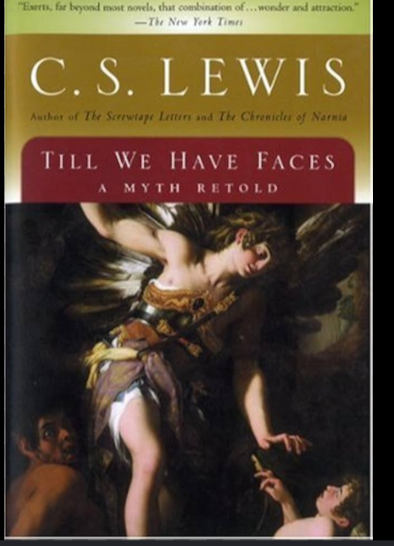

 drybonestruth