Feast?

Let’s talk about something new, at least as far as I can recall, I’ve never blogged about it.

I’m gonna do this a little differently, before announcing my topic, I’m going to list a few examples of it.

One: Watching a whole season of a show in one sitting.

Two: Eating a whole box of chocolates.

Three: Playing a game for half the day.

And what do these three things have in common? You got it, they all have to do with a thing we call bingeing.

There has got to be a more widespread problem than this, but it’s probably in the Top Ten of First World issues. It’s possible people would get defensive if I even called it a full on problem. We all find various ways to justify our indulgences.

But let’s just be honest, we all know doing anything in excess is unhealthy. I’ve done it yes, but I always pay a price. Too much of a show makes me feel cranky and it’s not even enjoyable after a certain point. Too much food, and sooner or later, you stop eating it because it tastes good, and just eat it because it’s your go-to comfort. Too much gaming and it becomes more and more about needing to conquer the game and less and less about fun and imagination. Now, these are only three things, there are endless examples.

Bingeing is not a 21st century invention, it’s as old as the hills, only it used to be called gluttony. Or luxury, by some. Or indulgence. sometimes we are disgusted with it even when it’s our own; other times we need to take a look at the bigger picture.

The most disturbing thing I saw recently was, I believe, Cloudy with a Chance of Meatballs. When I watched it a few years ago, I thought it was okay, weird, but with a good moral. But now that I’ve seen it as an adult, I think it actually has no real point. The best part is where Mr. T. (as a police officer) gives his speech. he’s the  most honest person in the movie. And the father of Flint is the most sensible. The whole plot turns around a machine that can turn water into food by mutating it. I realized that there is absolutely no way that could be healthy for a person but that is never discussed. However, what we see is that it is definitely harmful, people start getting carried away pretty quickly. A lot of them start eating constantly, the food is almost addictive to them. It is never said whether the food is actually addictive in its genetic make up, but there’s not much doubt of it from an emotional perspective.

In the end, the people’s greed becomes so great, the food literally almost destroys them. I would give the movie a pass if I thought the lesson here was intentional, and expounded upon, but it has to be read into for you to see what happened. Still, it’s a good metaphor for gluttony.

Flint, who created the machine, meant it to be a good thing, but he was motivated by a desire to be accepted by everyone, and have his genius appreciated. So he did not bother testing his product on anything beforehand, or considering what it would do to people if they could get food without effort. Or if it could have any real nutritional value. he also let his desire for appreciation get in the way of turning off the machine while he could, before it got to the disastrous point, or standing up to the people about making so many demands. How many creators of our own time give the consumers products, and never bother to consider whether it’s good for them or not.

See, people used to care about providing each other with quality, a lot still do, but many of us play off each other’s weaknesses to sell things. It’s selfish, and we’re paying for it.

But what’s more, why did no one except Flint’s dad ever think of the possible problems with the food? Why was he the only one who realized people were liking it too much?

Why did the mayor care so much about fame that he became a more and more reprehensible leader, as he became the biggest glutton of all, and embraced it. Encouraging the  people to keep it up.

Perhaps like those who write and act in shows and movies that are complete trash, just because there are a lot of fans addicted to the products.

In the end, their own greed nearly destroyed them all. And yes, gluttony is greed. We gorge ourselves on things out of fear that we’re left out, or alone, like Flint. Or we buy into the right shows and games because we get a sense of triumph from it. Or of belonging. And greed is what motivates a lot of screenwriters and producers.

This is not a nice subject by any means, but I can’t always pick nice subjects. I don’t like thinking about it, but after watching that stupid movie, I realized gluttony is a huge reason for our country’s decline. we want so many things, at no inconvenience to ourselves, that we’ve forgotten that sooner or later you have to pay the piper. Whether it’s with your health; your children ( see the original story;) your freedom; your emotional dependency; whatever.

If you ignore the red warning, you will suffer the consequences. That’s the hard truth.

On a final note, not everything we binge on we are addicted to, sometimes its’ a one time thing, it’s probably not a good idea, but that’s not being a glutton as a lifestyle.

Anyway, this has been a serious post, hopefully my next one will be about a
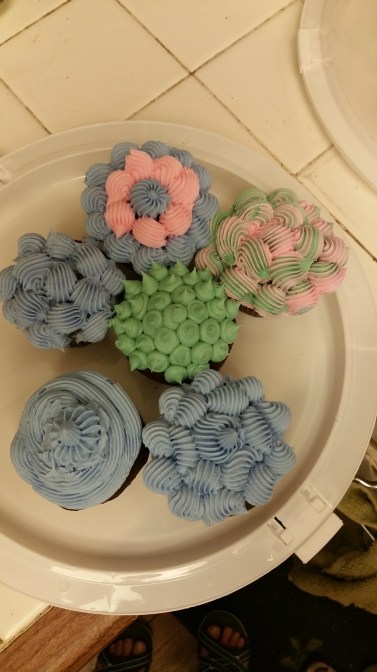
20160628_201011

Enough is as good as a feast

happier subject, until then–Natasha


Proudly Unpopular–Part 4

Even though the last part was more general, I still wanted to talk about why my faith is so unpopular, so you know what you’re in for.

You see, I think a lot of Christians have this idea that if we were just nicer people, more non-believers would be interested in our message. And to be fair, a lot of unbelievers do say that.

I won’t argue that Christians often don’t know how to live out the faith. Maybe to some that means it doesn’t work, but I’ve never felt that way.

When I was growing up in church, I always sensed this difference between myself and the other believers. I would think to myself that they had something I didn’t. I never knew what it was exactly. Some describe it as happiness, but I wouldn’t call it that. It’s not that I didn’t believe, I did, but I lacked something. Some meaning that my parents saw, and other adults saw, and I didn’t. After I became a Christian full on, I realized what it was.

Before I reveal it, I want to say something more. I’ve since noticed the same difference between other people I know, and between different families I know. You may have noticed that you feel different around different people. Some make you feel secure, some make you nervous, some make you focused, others distract you.

The reason I don’t think Christians themselves are an excuse to stay away from Christianity is that despite the difference I mentioned, I never found Christians to be any nicer, more friendly, or more inclusive than non Christians. They acted the same most of the time, except they prayed and talked about the Bible, and listened to a different kind of music. So what made the difference?

The faith itself. Maybe this won’t make sense if you haven’t seen it, but faith really is a part of your personality. It should be the most important part. And though I believed, I lacked the genuine, fulfilled faith that I saw in other people. Until I began to have it myself.

Until I did, I hated anything in Christianity that was outside my comfort zone of what I could trust. I had nothing to make me more ready for the harder parts of it.

And that is why people hate Christianity. It is not that Christians are jerks, religions of more violence and cruelty than Christianity are not knocked as often or as bitterly as it; it is because Christianity is scary. C. S. Lewis wrote that until he became a Christian, he was sometimes terrified that Christianity might be true. After he became one, he had sickening doubts that it might be false. The problem is, Christianity, if you understand it at all, is not something you can be half in and half out. You are either all in, or all out. The Bible gives no middle ground. I don’t say this to convince anyone it’s true. My point is that those who are concerned about being nicer about it to toher people have missed the point.

It is not a nice religion.

Now, I can already hear the protests from those of you who are Christians, telling me that we need to be loving. Oh yes, we do. We need much more of that, there never can be too much of love in the world. That is not what I mean. I mean that there is no easy way to become a Christian.

We’ve put way too much focus on nursing people into it. People come to church and leave unchanged, not because we aren’t loving, not because we aren’t teaching the Word of God, not even because we are making God too soft; no, no , no, you can’t exaggerate the kindness of God, as Amanda Cook said. People leave because they don’t share the faith. And they don’t see it in us because we haven’t been honest about it.

You see, real faith is fiery. It makes timid people bold, and foolish people wise. this actually is true of any genuine faith in a good thing, but especially in God.

Christianity is not meant to be popular. It shouldn’t be. Not because I don’t wish it was, but because the only way it ever becomes popular is by people neglecting certain parts of it. (Study Martin Luther, you’ll see what I mean.) It is a waste of our time to try to make it more appealing by selling it on the world’s terms. We just need to live it. And I don’t mean by loving others, though that’s a big part, but by loving God more than others.

People, until I loved God more than others, or myself, I couldn’t really believe on Him and trust Him. Whatever your experience with God has been, until it’s to that point, it isn’t actually faith yet. If you aren’t ready for that, that’s okay. I had to get there. I’m not making an altar call. I just want to set the record straight.

I really want my love for God to be the most important thing to me. I don’t care if it make me unpopular, because when you really get to know Him, you don’t care anymore. The Bible really won’t make sense to someone until they realize that it’s about God and the People who loved Him, not about rules.


Okay, this did get preachy, but I warned you; if you read his far, you wanted to hear it. So, thank you, and until next post–Natasha.

Proudly Unpopular–Part 3

Still continuing the discussion of unpopularity. I used to find being popular and appealing thing, even if I never thought it was something to revere. Now I think it would be exhausting to be popular. I’d rather have a few friends who really care about me and get me, than a bunch who I only hang out with for fun.

But being widely liked is nice. I’m one of those fortunate people who is liked by most who meet her, but I don’t know if that means much, other than I polite and well brought up by my parents.

To be widely liked you just have to meet certain expectations, and not fulfill other ones. If people expect someone my age to be obsessed with their image, always on some electronic, never interested in learning or real conversation, then when I don’t fulfill those expectations, they are pleasantly surprised, usually. Or they assume I’m just under fed on technology and they need to give me access to it. (? I don’t get that.)

This principle of popularity, or at least approval, doesn’t just apply to my life of course. It applies to everything. People have expectations about ideas, faiths, clothing, food, music, everything they care about. and if you just tap into those expectations, you can sellalmost anything.

If someone expects the worst of a lawyer for instance, all you have to do to convince them lawyers are dishonest is to point out one example, or point out something that looks dishonest to them if/because they don’t know the actual law, and boom! Their expectations are confirmed.

Now stay with me, this is part of unpopularity too.

The ideas that guide our culture our its most popular ideas. They aren’t popular because they are good, per sec, but because people have expectations they want fulfilled, and the trendsetters of our culture understand that and play to it.

Take movies. The adult ones are now, for the most part, sex obsessed; violence packed; and full of other ugly or profane things that seem to sell nowadays. Why do they sell? We just expect that from movies now. It doesn’t shock us anymore, and we continue to buy into it, so it shocks us less and less, until our culture has deemed it totally acceptable to allow those things.

To prove my point further, did you know words like “damn” and “hell” used to be never even used as interjections in polite company, around children, and certainly not in books, unless used by a character you were supposed to despise. Men perhaps used them when they were together and working, it was called “rough language.” Why, “heck” used to be as bad as “hell” is now. What happened? I haven’t researched it, but I’ll bet you a lot changed when movies started allowing those words in more and more often, and younger people started watching them, and eventually it stopped being shocking. in my own life, I never heard bad words (that I recognized as such) until I was older than 12. Then for some reason, people stopped censoring themselves around me. I still don’t use curse words, but it got a lot harder the more it seemed like no one else cared about it except me and my mother and siblings.

Multiply that times thousands of people and you get a culture shift. I don’t think words are really the issue, and honestly, neither is violence. Not in of themselves. The problems that the idea of what violence is, and what curse words represent, got to be more and more acceptable.

You know what’s acceptable now? Living a life of bitterness and hatred, and being haunted by a troubled past. That’s what movies and shows are promoting now. Always from the cool, but aloof good guys, whom you really like, but they are always unhappy. And what usually starts to fix them? Sex. Or they go off the deep end and start killing people.

Why do we like this now? Could it be because we started letting things like cursing someone for driving too slowly; or cursing someone in front of our kids; and releasing all our negativity on people who really didn’t deserve it, become okay? Could it also be that we kept saying the violence on TV was either not real (if you’re the type who feels better if it’s fake;) or like real life (if you’re the type who feels smart when you’re doing something that’s realistic;) and so eventually the violence that actually happens just  seems life  apart of life.

I’m as guilty of feeling this way as anyone. But I don’t like it. I don’t want to embrace it. It’s funny, the people I know who are apt to excuse the garbage on TV as being fake, tend to think I take things too seriously; but the people who talk about it being realistic, think I’m sheltered. Maybe some of you other bloggers can relate. (One reason we all like blogging is that we can express our real opinion without someone we know assuming they already know it, right?)

So, my way of seeing things is definitely unpopular. Even more so because the majority of the culture would side more with the idea that the stuff we condone as “harmless is really harmless. It’s not like we’re part of the problem, right? We just go and see the new movies because we’re curious. We don’t have to buy them all. (Heavy sarcasm.)

You get what you expect. But here’s the thing, I actually suspect that a lot of us are frustrated with the low standards. We go along with it, but deep down we wish we had better options. maybe we do and we just don’t utilize them because it’s easier to go along with everyone’s else’s standards. So you see what I mean? Ideas are either popular or unpopular. The question I’m posing is will we choose to be proudly  unpopular.

It’s a tough call, there’s lot of pressure to just go with the flow of the culture. Go see the next Star Wars Movie, check out that new show, rely on your phone apps to amuse you and do everything for you from photography to studying. It’s not like everything has to be quality right?

Wrong. At least I think so. Well, this is too long already, so adios. I think I’ll be doing one more installment in this series, so catch me next time–Natasha.

Proudly Unpopular–Part 2

In my last post I began talking about popular ideas, and I still had more to say, so I thought I’d make it a two-parter.

I established already my problem with what’s popular nowadays in my post Popular Stupidity. There’s plenty more to say about that. But something else has been on my mind lately.

As you all know, I’m a Christian. And sometimes I get a little preachy on this blog, because I am passionate about what I believe. Some of you may forgive me for it, some of you may not. This is not an apology. Anyway, if you’ll permit me to go off on a personal tangent, I’d like to talk about some of the misconceptions about Christianity that I notice people have.

Just to be fair, I will admit here that I had misconceptions about things Muslims believe that were altered when I read more about them. So, any faith can be misrepresented.

My main concern about western Christianity is that it’s gotten lost in the mumbo jumbo of pluralism.

Pluralism: A theory that there is more than one basic substance or principle.

I was watching a YouTube video that other day, talking about belief among other things, and I was unpleasantly shocked when I read in the comment section below people talking about the beliefs expressed in the video (and the material it was discussing) being “Obviously Christian.” This is why I was shocked. The views in question were that the Universe wants us to do the right thing, that Life knows what it’s doing, that  there is no right and wrong answer, etc.

All stuff I’ve heard before, but, it’s not Christian.

I fully expect my beliefs to be misrepresented by people who don’t hold them, and I’m not going to throw a hissy fit ever time they are. The problem this time was that people were calling something that was nowhere near Christianity “obviously Christian.”

I’ve probably already turned you off by starting a religious rant, you might say “just get over it.” And, hey, I will. But this isn’t about me.

You see, just because someone expresses a belief in a higher power on the air, does not make them a Christian. Even remotely. But the even bigger problem I have with it is that people actually think Universalism is compatible with Christianity.

Universalism: The doctrine that emphasizes the universal fatherhood of God, and the final salvation of all souls.

Universalism bears a slight resemblance to Christianity, in that it has a deity that directs us, and wants to see us all saved. Saved in what way I don’t know. I don’t know very much about the specifics of the belief, if it can be specific.

Let me say this clearly, Christianity does not teach that God is the Universe, or that all souls will be saved.

A clear contradiction of Universalism. Don’t get mad at me yet, I haven’t said which is better, only that there’s a difference.

A big difference. For one thing, if God actually was the universe, we, as part of the universe, would be a part of God, just by being born. Christianity teaches that we are not a part of God until we receive his son as our savior and our reborn. And then it is spiritual, not physical, as being part of the universe is.

For another, if all souls are saved, there is not need to be good, or to do right, or to seek truth, you are simply born into it.

I can see why this would be a very appealing substitute for Christianity. People may still hate it, but a lot fewer will, because it’s very inclusive, and a lot of different religions can identify with it.

Now to finally get to the unpopular part of this post. If you’re still reading by now, you must truly be interested, so thank you.

My Faith is not meant to be popular. If anyone who reads my blog hates it, that doesn’t bother me. It doesn’t even surprise me, because in our Bible, we are told “Don’t be surprised if the world hates you.” The world is anyone who is not a Christian, by the way. I’m sure people don’t like that Christianity is exclusive. Either you are one or you aren’t, if you aren’t; you’re lumped into the category of being in the “world.” I don’t judge you if you dislike that, it’s not a pleasant feeling.

But that doesn’t mean it’s a bad thing. What’s bad is when Christians ourselves lose sight of what it means to be not of the world but still in it. I don’t hate non-Christians, I don’t feel threatened by them.

Here’s the  thing, Hollywood and every other place movies and shows come from, I don’t care whether my faith is on the air or not. I care about the people watching. Millions of people, everyday, who won’t go to church because they can hear what it’s like from TV, and they know it’s not for them. Do you know why I’m angry? Because when people don’t know what they actually hate, and hate it anyway, that leads to the worst kind of prejudice. The kind that hurts the person who holds it more than the objects of it, often enough.

Hate me for what I actually stand for, if you like, but not for what I don’t. The real Christian Faith, it’s unpopular. That’s why it’s not depicted correctly. People know their ratings will go down. But the shows aren’t what bug me, they’re just shows, what bug me are the ideas they spread that aren’t accurate. That goes for any idea, not just ones about religion.

Call me old fashioned, but I still believe accuracy is a huge factor in measuring the quality of something.

There’s still more to say about unpopularity, but I’ll stop for now. Thanks for reading, until next time–Natasha.

Proudly Unpopular–Part 1

So,  a little fun fact about the past century: Though popularity has existed as long as civilization, the adjective Popular really became itself in the last hundred years or so. I think we’ve all seen the movies of the last couple of decades that focused on the pros and cons of being popular or achieving popularity.

There’s nothing wrong with those movies per sec, but I’m beginning to think they’re  a little outdated. Although I’m sure popularity is still a big motivator for people,  what we’re hearing about now, and being held up to, is Self Expression.

Frank B. Gilbreth once lamented that because kids wanted to be popular so much, they didn’t care about being smart or kind, or anything else. (Cheaper By the Dozen.)

Well, we should be glad that our culture has embraced new values, right?

You all knew that was a trick question. So I’ll say upfront that I don’t at all wish for a return to the obsession with popularity. That always stuck me as shallow, and a lot of movies still clichely make the popular people not at all relatable, or even like real people. (What surprises me is really that only us younger generations seem to think that’s a bad representation of them.) But I wonder, have we really lost our obsession with popularity?

The thing about embracing it, was, that it was honest. One freely admitted that they considered the approval of others the most important factor of life. And whether that was applauded or disdained, we were all on the same page. Now, however, popular ideas, opinions, and styles are no longer seen as what they are.

Let me elucidate. What I mean is, a popular idea is one held by a large portion of your society, maybe the majority, or one of the majorities. It is not usually a political idea, because those are more official, it’s more the background for political ideas. Popular thinking is nearly always framed as being a new way. (Though it used to be the old way was more popular, but that’s another story.)

Okay, so here’s my main point. We, as a people, have not actually ceased to conform to popular ideas. We just call it something else.

If you only casually observed our culture, you might think that our newer generations think more for themselves than the previous ones did. After all, we’re always talking about what our personal beliefs are; making up our own minds; following our own heart, or path, or road. (Pocahontas or Moana anyone?) But I dare to say this is all parrot talk.

There are no new ideas, just new names for them. And we are not making our own way, we’re simply choosing which of the old ways to go. Unless you’ve taken a cue from  historical figures like Buddha or Mohammad, you haven’t actually founded your own personal religion. (I’m not disrespecting them or endorsing them, I’m just making a point.)

But that’s what we’re pushing for isn’t it? Everyone needs their own way. And every way is equal, every way is good and bad at the same time. Only it’s really good, or we wouldn’t be advocating it.

There could be a million religions out there, and only one of them would ever be the right one. That’s not because I’m a Christian, but because I think it’s simple logic, there is a Great Truth out there that every religion is searching for and claiming to identify with, one of them must be the closest to it, if they’re all different.

I think we’ve largely forgotten that the purpose of faith is to get closer and closer to the truth. And then to hold on to it.

Self Expression if good, as far as it goes. We need an interesting world. But let’s never forget that the reason we express ourselves is not to benefit ourselves.

We were each given a gift to that will make the world a better place. And it will point other people to the good and beautiful things in Life. If we aren’t doing that then we are misusing our gifts, and if it destroys us, that is why. Yes, Self Expression is good for you also. But only if you’re sharing it. Because otherwise, who will you express it to, and why?

I think that’s a lot to think about, (and this isn’t even a really long post for me,) so I’m going to end it here. Thanks for reading and until next time–Natasha.

A day in the life

I spent yesterday at Disneyland.

Wahoo! Right?

Well, not so much. I didn’t exactly have a bad time, but I didn’t have a great time either. The reason I’m bringing it up is that I’m adding it to my list. I have an imaginary list of things I’ve done this year that were new and also scary or just hard. here’s a few:

  1. I went to another country.
  2.  I taught in Sunday School more than as just a one-time thing.
  3. I wrote a challenging saga about something I like, but found difficult to get onto paper.
  4.  I went to Disneyland with an almost total stranger.

Here’s how it went down. My aunt has a foreign exchange student living with her, and she wanted him to get the chance to see Disneyland. She thought I might like to go. And after some hesitation I agreed. It wasn’t a smooth ride, because then she wasn’t sure we’d actually do it, finally it was settled that we would. And yesterday she dropped us off there. Where I live it’s been almost unusually cold this month and it was freezing at Disneyland. (Were any of my readers there I wonder?) the place was packed. I’ve been four times before I think, and I don’t remember it ever being so packed, but I never went on a holiday. The line to get in and get tickets was over an hour’s wait of standing around. Then we finally got in, and started walking around. But we went on one ride total, and the lines were so long on the others that we both didn’t feel up to it. We were exhausted by then. We ended up leaving at around 5:00pm, though we were supposed to stay later than that. On top of this, I lost one of the two things I bought. And it was the thing I got for myself.

So, a total bust right?

But that’s not to say I totally regret it. I maybe did not have a good day, but that wasn’t the only point for me. I wanted to challenge myself.

I’m the type of girl who’s terrified of being around a guy, alone, for any length of time–let alone all day. Of course there were crowds, but that only makes you feel a little safer. But I did not spend the day feeling afraid. I felt bored, tired, sad, but not afraid. If you’ve read some of my previous posts about my life, you’ll know that’s a big thing for me.

I used to ruin every fun event I went to by being  a nervous wreck the entire time. I am by nature an introvert, but I used to have it on steroids. Until I was at home and safe, I wouldn’t relax. I literally felt ill every time I was in an unfamiliar situation. People knew I was shy, but they probably never guessed exactly how much agony I was in. Talk about painful.

But that’s a thing of the past. I almost can’t remember it anymore.  As bad as yesterday was, compared to how my life used to be, it was great. I went from hiding from new things to embracing them. As much as I could.

I still get nervous, but it doesn’t rule me anymore. That’s a day in my life, doing things I once was afraid to do, and doing them because I want to or need to. I don’t always look at it that way of course, but sometimes I just have to stop and look back to where I was and be glad I’m not there anymore.

You must have those moments too, I’d love to hear about them, until next time–Natasha