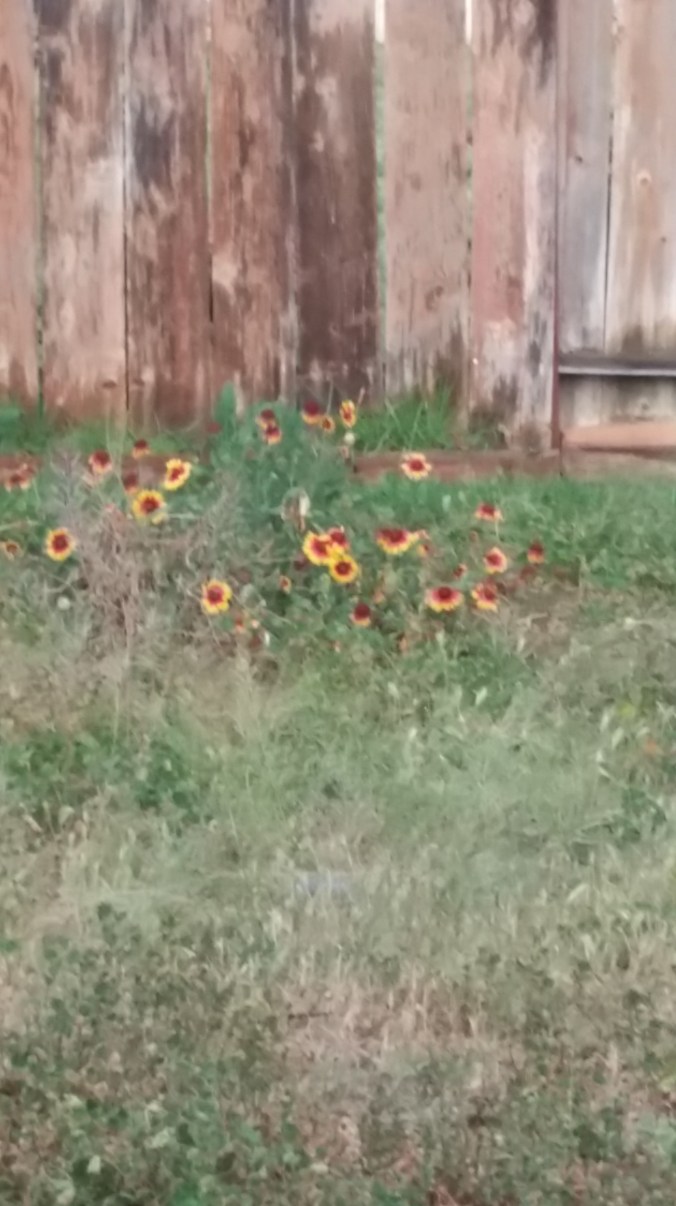
Down in the valley

You know what’s hardest about being a millennial is that we don’t like to wait.

Even if you have the gift of natural patience, you still have those moments when it seems like something is taking forever.

Welcome to my world. Ever since I was little, I always thought once I got to be a grown up I’d be able to do al the things I wanted to do now. Then when I got to be 13 or so, I started reading books that told me I didn’t have to wait for adulthood to do amazing things. That may be true. But it sure seemed like the amazing things I in particular wanted to do were limited by age. Now I’m finally old enough to do everything except drink and run for a Political office (and i don’t want to do either of those) and yet  I’m at one of those times in life where I’m still waiting for things to happen.

Once you get mature enough at one age to admit that you aren’t ready for certain things yet, you turn a bend, and think that you’re ready now, at this new age. Maybe you are, maybe you aren’t yet. You’re still raring to go.

But you’re stuck waiting again. I have those moments every now and then where I want to scream, to cry, to rant about how unfair it is. But when I calm down and return to my normal state of composure, I remember the other things those books told me. When you’re waiting, you need to make it productive.

It’s so easy to get lazy when nothing’s happening outside your own little world of household events. (Unless you’re the type who thrives on that, and good for you then.) But that’s the trap of boredom. I don’t believe any of us dreamers have never fallen into it at least once, if you’re lucky, the one time is enough to scare you into never being idle again; If you’re like me, you have to remind yourself over, and over,  and over.

There’s this song I used to sing all the time when I was having one such season of waiting.

This is my prayer in the desert, when all that’s within me feels dry, this is my prayer in my hunger and need, my God is the God who provides.

And this is my prayer in the fire, in weakness or trial or pain, there is a faith proved of more worth than gold, so refine me Lord through the flame.

What this means, if you put it in non-religious lingo, is that our attitude in times of waiting needs to be that we keep hoping for the better times to come, and that when the waiting is actually painful (and oh is it, at times) our hope and our patience then become worth something. Asking God to refine us is our way of saying we want this time to be one where we learn to deal with problems better, and become stronger.

To make something our prayer is the same as to make it our hope, to make it our creed, to make it the thing we stake all on. If you’re prayer is not like that, then you have not put much into it. A prayer is plea, and it’s a thank you at the same time.

So that’s what I want my prayer to be while I’m waiting. And it’s important to have seasons of waiting, because then it produces the humility of this last verse in the song:

This is my prayer in the harvest, when favor and providence flow; I know I’m filled to be emptied again, the seed I’ve received I will sow. (Hillsong, Desert song.)

“I really wish I could just stay on the mountain, but I must go back down into the valley.”–Martin Luther King, Jr.

–Natasha.100_1572

Good?

100_1572So here’s a deep question: do you ever doubt if you’re a good person?

I know I do. Quite a bit. Because people who care what the answer is will ask the question.

There’s a couple different ways to answer it, depending on your world view. Some might say we’re all good, we’re all not good. No one’s different from another.

I’m not saying this show is vein of good morality, but it works for this example, Phineas and Ferb has one minor character who actually believes evil does  not exist. The villain’s ex-wife, ironically enough. She deliberately sees no evil, no evidence of it, to the frustration of her daughter.

Unfortunately the show is realistic on this one point: that kind of thinking will lead to exactly the kind of confusion the daughter experiences. Her dad owns being evil, and pushes her one way, and her mom’s view doesn’t exactly have the backbone to resist the pressure. The daughter, Vanessa, has a whole personage that reflects the confusion between the two points of view.

The sad thing is, like most of us, she is not naturally a mean or insensitive person. Like all of us, she is confused.

Aren’t we? Can you imagine a generation of more confused people than us? Gender confused, race confused, morally confused, and doesn’t it all come back to what’s acceptable, or what should be?

One group denies that there’s any real boundaries, that we should all be whatever we want. Another group just seems to want to corrupt all of us. (I’ll leave you to think of who this is, we all think there is one.) And sadly, a lot of people don’t know of any other options. Like Vanessa, we have only the two. And it’s hard to imagine anything different.

But I don’t live this way. I live with the same struggle as everybody, that is of choosing good things over bad things, and growing my character instead of destroying it. Let me share with you a metaphor that a father gave his son once:

A  Man’s character is like a house. He can build on it, adding boards; but every time he takes away from his character, it’s like tearing boards of the house, till eventually there’s nothing left.

I’m afraid I couldn’t quote exactly what he said, but you get the idea. (I recommend the book, Little Britches.)

I struggled everyday with whether I was evil or not for a long time. And the thing is, the struggle won’t end by simply coming to the conclusion you’re good; that only makes it a little less, for a few minutes; then you do something bad, and it’s back on. Harder than ever.

Man’s search for goodness is the realest part of his earthly journey. Trying to pretend it’s null and void doesn’t make it go away, it only robs people of the awareness they need to find the answer. Honestly, only silly people believe that evil doesn’t exist. But that doesn’t mean I think we should focus on it, no , I think you all know me better than that.

Who of us started out wanting to be the villian? Who of us thought evil was the way to go when we were young? Why are we teaching our own children that?Is it to spare themt he dissappointment of realizing what we realized, that we can’t keep it up. Did we accpet being at elast partly bad, becuase we found no way to avoid it.

I accept that I’ll make mistakes, but I don’t accept that I have to be that person. Not because I am stronger than anyone else, but because I have someone who  took the burden of goodness off my shoulders. That’s what Christianity is really, it’s getting the goodness of another applied to you. A human court would not allow an innocent person to take the punishment for the guilty. Even if it was willingly.

This is interesting, the first skepticism I ever ran into, as a little child, was skepticism that God could really give up His own son, to die, for us. Why would He do it? What good human parent would do that? Aren’t we christians crazy, if for no other reason, because we think a Good God would do that?

Hey, if you think that is crazy, that’s okay. I won’t judge you. I don’t even blame you. But I do have this to say, Love knows no bounds. Human love can, at it’s best, forgive people for doing horrible things, and even lay down it’s life for someone. Take Batman as an example, or Superman, the represent the epitome of human sacrafice. They are wiling to die, even to save the lives of their enemies, because they value  life. And real life pilcie officers, fire men, soldiers, and everyday citizens make those sacrafices too. More often than the news lets on I’m sure.

But if you read any of the minor prophets of the Bible, (or watch the news) you’ll know that God has a laundry list of things against us. Whether you beleive in Him or not, you’d agree that the stuff He accuses us of is pretty heavy. Sometimes so much that you think “what is wrong with us?” Why would God stop accusing us, and actually make His son, the only sinless person ever to walk the earth, take the punishment for us?

Because as beautiful as the Greatest of human loves is, God’s love is greater. He loves not just His friends but His enemies. More than we love our own family, He loves His enemies. And that is the hardest thing of all to beleive.Many people will believe He exists. But to beleive in His love, even his own children have a hard time with that. I speak from experience.

This is what keeps me free.This is what I can say when I start to wonder about my own goodness. That I might not be good on my own, but God made me good, and He paid for it.

To all the Vanessas out there who are confused about life, and themselves, you don’t have to be. If you look for truth, eventually you’ll find it. As long as you don’t settle for second best.

Signing off–Natasha.

Sample: Gandhi and government.

I don’t know if any of you have ever wondered what kind of schoolwork I do, but this is a sample of the kind of essays I write for the class I’m taking on Leadership. This week’s topic was a speech by Gandhi given when he was being tried for his actions of inciting civil disobedience.

“But I hold it a virtue to be disaffected towards a government which in its totality has done more harm to India than any previous system…I consider it to be a sin to have affection for the system. And it has been a precious privilege for me to be able to write what I have in the various articles tendered against me.”–Gandhi

Why would Gandhi make a plea of being guilty? Because he considered it a sin to obey the law of the land in this instance. He adhered to this basic idea: If a government ever tells you to do something it would be wrong fro you to do as a citizen, then it is wrong, therefore you should not obey it.

I’ve read this idea in books and it makes sense to me because it’s not hard to see that the government functions like a person, in a sense. Civilization starts with one man making an agreement or partnership with another person. Hence the idea of citizen government: The kind of government run by citizens, that must be held to the same standard as an individual.  As a citizen you should not steal from; invade the privacy of; kill; maim; or in any way injure your neighbor. You should act with justice and mercy in doling out punishment to your children, your employees, or anyone under you; and never punish them for something they did not do, or more than fits the crime. So if the government condones or commands the doing of any of these things, it is in the wrong, and good people should not follow it.

Yet this does not draw the line clear enough. People have different ideas about what is right and wrong, our own country is pretty divided over it. I believe there is only one Right System of Values, though the living out of it may vary, and clearly, if two sides have completely different values, someone has missed the mark.

How can we know who is right? This is where the need for religion comes in. Yes, I mean it is a need. Gandhi himself believed religion is a part of politics, unquestionably. He believed that anyone who does not think this does not understand what religion is. I think what he meant was that religion shapes your world view. Your world view will certainly shape your political views. Your world view is not what you profess but what you truly live by; and the problem with modern politics is that we listen only to what people profess and do not examine what they’ve actually done. Gandhi’s whole life was an example of his world view and that was why people listened to him; and why he was so unashamed to state that he was guilty of the crimes they accused him of. Because, by his religion, they were not really crimes.

When we have a religion to go by, knowing what way to direct our politics becomes simpler. We have a right practice and a wrong practice, (any religion that does not have these is not worth believing in, it requires no effort.) It is best when the majority can agree about the right thing, but when the majority is in the wrong and hurting the minority, or vice versa, it is the duty of the other to stand up for themselves and change things. (As Thomas Jefferson so eloquently put in the Declaration of Independence.) Whether they use violence or nonviolence to do this depends on the people and on the situation, the important thing is for them to know that they have the ability and the right to do it.

Quality driven

Hello Viewers, sorry it’s been a few days. I didn’t have any inspiration.

I wonder if any one who read this blog might ask why I talk so much about right and wrong, to be honest, I think my dedication to it sometimes wierds people out and gives them the impression that I don’t have any fun.

Well, that doesn’t matter if I know my own reasons. But I have been too uptight before, and there are some reasons that I think other people relate to.

For one thing, when you want quality stuff (for whatever reason), of necessity you must start censoring the garbage around you. But most of us, when we first start caring about this, go overboard. We start to suspect everything. I think there’s an expression for that, goblins around every corner or something along that line. But, on the other hand, if we loosen up too much, before long we’re right back where we started. An illustration would be the infamous resolution to get in shape and stop eating junk food, never eating any sweet stuff seems extreme, and can make you a party pooper around the holidays, (or it would at my house,) but if you don’t watch it you’ll just fall back into your old habits. Pretty soon you’re not exercising either.

I’ve read that it’s important to keep promises to yourself, but I’ve also learned it’s better not to make them if you know you won’t do it.

So those are some fallbacks of trying to have a disciplined life. But it doesn’t explain why people want to. Some do because it leads to more self respect; others for the health benefits; others are content with simple things. But often there are religious reasons for the choice.

I think there’s a stereotype that Christians, or just Conservatives, don’t watch dirty movies, don’t drink, don’t smoke, and don’t sleep around, all because they want to be nice, good people. Well, maybe that is true, but it’s not the main reason. The fact is a lot of Christians do those things before they convert, so if being nice was the main concern, what made it happen all the sudden?

I’ve known plenty of Christians who watch movies I’d never even heard of till I started attending Youth Group, and who have more popular ideas about morality than the Conservative Ideal. (Nothing-at-all-edgy-ever.)  I was shocked that people who claimed to believe in the Bible bought into the stuff they did. I won’t name specific things, but believe me I can still remember it. I mention this because shock is getting rare nowadays when it comes to questionable things in the culture. I come from a home where quality was the main concern in entertainment, as in everything else, but I know people who just want it to be amusing, as long as it’s not straight up evil, they think it’s harmless.

I’m sure my followers, being the thinking type, don’t hold this view. We all must agree that there is a standard beyond “It’s harmless” even if we don’t agree on what that standard is.

I want to learn from something when I partake of it. I’ve never had fun when I’m trying only to have fun, and not do anything wholesome. The secret to fun is that you can’t demand it, you have to do something that’s good for you and the fun comes in. It’s true bad things can be fun, but there’s not a person alive who’ll tell you it’s the same kind of fun. (I hope. I’ve never met one.) Sports are fun for the exercise, teamwork, and discipline they bring. Games are fun when you have to use your brain. Art is fun because it is creative. It’s a simple fact that fun comes from doing things that are good.

Am I missing out because I believe I need to be careful about what I allow in my head? No. Frankly the argument that I am is without foundation, the only thing that can be used to justify it is other people’s standards of what is fun, and when those are lower than mine, of course they think I’m uptight. The test really is if I have fun at all, if I don’t, then, yes, I’m too uptight. And if you never have any fun, please, find something that you can do that you enjoy. But if I have fun doing what I do, and build my character at the same time, then what can anyone say to put it down?

All well and good, but can I really condemn what other people do, if it works for them.

Here’s the thing, define “works.” Does it make you a better person? Does it inspire you? does it make you healthier? Does it get you to loosen up when you should, and better your focus on what’s important? Then great, I’d say it works for you.

But if it weakens your resolve, leaves you feeling guilty, puts a barrier in relationships, and takes away from your life and energy instead of adding to it; then no, it doesn’t work for you. There is a reason quality is valued, because it’s essential to happy and healthy living. When I know my life is filled with good things, I am at peace. That’s all I have to say for now, toodles20160329_185243_001–Natasha


For freedom we are free.

I read an interesting idea from Abraham Lincoln, (I’ve been studying historical figures,) he said that God did not give Adam the tree of knowledge of good and evil so he could choose between the two, but so he could choose to not to eat of it. (I’m paraphrasing.) I’ve never heard this idea before. I’ve thought for a long time that Free Will means the ability to choose between right and wrong. Of course we know that it’s not right to choose wrong, but God won’t stop us.

But Lincoln gave me a paradigm shift. I believe whole heartedly the Good and Evil are real things. But what if freedom is not choosing between them, but simply choosing. It sounds like the same thing, I know. But let’s dive in deeper.

The thing about evil is, it depends upon the fact that the longer you allow it, the less you can resist it. The Bible says Sin makes us its slave. But I haven’t been the only one to think that it’s kind of unfair that Adam makes one choice, and screws up the rest of humanity. Yet that’s how it is. It’s called the Ripple Effect. Plus, every person re-enacts the scenario found in Genesis, we all have Good and Evil before us, we all at some point decide what we want to know.

Knowing Good and Evil is not the same as knowing it exists. Adam and Eve knew that tree was there, but they didn’t know what it was to be evil, to do evil, or to understand it. They were innocent. God made them good, but perhaps they didn’t know what that meant either. The choice they really had was God, or getting knowledge their own way. God didn’t set them up, the tree was not a bad thing, it was how it was used that was.

That’s another theory in of itself, but what I’m trying to get at is that Freedom to  Choose remains freedom only as long as you choose rightly. That’s the nature of choice, to be able to make the right decision, not just any decision.

It used to be that people would tell you what a bad decision was, none of this nonsense about it being up to you to decide what was right. People, there is a difference between choosing right, and choosing what Right is. I don’t mean that we can’t  decide what is the right course of action,  but we don’t set the standard.

If God really wants what’s best for us, then he want us to be free. Evil doesn’t make you free, it makes you evil. Stealing makes you a thief, drugs make you an addict, lying makes you a liar, etc. Once you are that, how can you ever not be that again? Your deeds stand. We do have a choice, we can choose God. That is the only choice we have, because he allows us to keep our choice. Evil doesn’t. You get in, it won’t let you get out.

But I don’t despair. Evil may trap us, but evil is not the most powerful thing in the world and we all know if you can’t free yourself, the only option is to be rescued by someone stronger than your captor. This is why the Word says Christ freed us, and “It is for freedom that Christ set us free.” You might say Christ freed us for our own benefit, or you might say he freed us so we could be reconciled to God, but the Christian knows those two things are the same. It’s true, we are described as slaves for Christ, but slavery to one thing is freedom from another.

Freedom is choosing God, that is just the fact. I know from my own experience that this is true. There are tons of reasons to back it up, but I suggest Mere Christianity as a resource if you’re curious.

(This post got preachy, but I want everyone to know that was unintentional, I was thinking as I typed. I don’t just say this stuff, I really think this way. So it’s no more preachy than anyone else sharing their thought. I’m only saying this to clarify that I wasn’t proselytizing.)

Whether you like my conclusion or not, this subject is certainly intriguing. Feel free to  comment with your thoughts. Until next post–Natasha.

Keep calm–it’s almost election time!!

First, ahhhhhh!

Okay, with that out of the way, let’s talk.

I know putting anything political in a post is seen as begging for attention by a lot of people. But believe me, I’m more scared of people reading it than ignoring it. However I’ve been fortunate to receive no hate comments so far and that may continue if I’m lucky.

I have my pick of candidates but I won’t be voting, (I can’t,) so I basically am joining every other underage concerned teen in rolling my eyes half the time, and praying for the adults to make the right choice the other half. I think we ought to get some credit for keeping our sanity this time of year. Okay, that was kind of a joke.

Actually it’s alarming how few of us seem really invested in our country. How many voters vote based off their own research and study of the way this country is meant to run? Don’t most of them just watch the news and figure it out based on that? (Imagine me banging my head on the wall.) But I’ll give them the benefit of the doubt, I think most voters do want the best for the country, but half of us are clearly confused about what that is, I won’t say which half.

Of course the pressure is on, the rest of the world is watching us closely. Even though it’s a popular theme in song lyrics to welcome the attention of the whole world, has anyone ever seriously thought about how terrifying that is? Then we have the fatalists telling us it’s all over, and we (the younger generation) are doomed to pick up the pieces. And the slightly too cheerful folks who think that times have never been better. (Really?) And then there are those who fall in the middle. I think honestly we’re all tired of hearing about change and never seeing it, and hearing about problems but never about them getting any better. I doubt that statistics are a reliable source anyway, problems get better one person at a time, one day at a time, one choice at a time.

The election is a formality, the problems are already there, and until the nation changes, the politics won’t. The real issue you won’t hear about on the news is that people are out of touch with America’s roots. We don’t know what we don’t know. We might all know something about the rights we were given. (Given by who? The government? Or God?) But do we know how those rights are preserved? Or how we decided who deserved them?

I don’t fear the election as much as I fear overall ignorance of the truth. I’ve always thought that a powerful leader is only powerful as long as other people follow them, when people stop following them there’s nothing much they can do anymore.

We need strong-hearted, large-souled, men and women of courage and character. That’s our fix.

So no, I won’t be endorsing a particular candidate, because it’s more important that we stop being selfish, and start thinking about what is best for everyone. That’s how we survive and overcome a crisis, every time. ( And faith is a huge part of that for many.)

This post was suggested by one of my siblings, and I’d been intending to write it anyway, so I hope it was enjoyed. Until next time–Natasha.