The lost Virtue

I got busy over the weekend and didn’t find time to post, but today I have.

SO, I’ll be working on a lot of writing projects over the next few months and I figure the subject matter is bound to overlap. One thing I’ll be thinking of this month is Virtue.

That word is very rarely used anymore, and I think I ought to know what it actually means. Let’s see what the dictionary says.

  1. Moral excellence; goodness; righteousness.
  2. Conformity of one’s life and conduct to moral and ethical principles.
  3. Chastity; virginity.
  4.  A particular moral excellence
  5. A good or admirable quality or property
  6. Effective force; power or potency  (all this from dictionary.com, love that website)

As you can see virtue is a noun and kind of a verb and adjective as well. It is a characteristic. No #6 may be a bit confusing, but it means virtue as the strength of something. It is used that way because virtue was once seen as the strength of one’s character.

Now that we’ve defined it, let’s look at it. Why should I care about virtue? How does this things affect me? Is it present in our culture. Here’s a big one: how can I possibly make virtue seem relevant to people who don’t even use the word often. If at all. Seriously, when was the last time you thought about it? All obstacles I must overcome to write anything worth reading on this subject.

It’s unusual to write a blog post this way, but that’s the point. Do you ever read blogs and think about how the author tries to catch your interest? Many bloggers don’t they just write whatever and don’t seem connected with their audience at all. That’s the virtue of their writing. (See what I did there.) Now this is not an attempt to get more readers on my own blog, but I do want them to know I think of them when I’m working on this material.

Of course Virtue has a huge place in my life, though I typically call it morality. My posts are geared to encourage people to virtue. I think about it a lot. I believe in the importance of it. And I almost daily feel the sting of a country that has thrown virtue out with excellence. It has embraced mediocrity, and it has shamed the wise and intelligent.

Case in point, I recently watched part of a movie that was based off “Pride and Prejudice.” No this was not the zombie version, don’t get me started on that. This was about a modern woman going back in time into the actual story. The movie quickly took the story, tore it to shreds, and said “screw you Austen fans.” It was the most blatant disrespect of an author I’ve seen. And of a story. They stopped at nothing, they sexualized, demoralized, vulgarized, and then changed the ending altogether.

The worst of it was the main character claimed to know and love the story, but she didn’t know a blooming thing about refinement. Or manners.

Virtue may be said to be the heart of something, and this movie missed the heart of the book so entirely I could hardly believe they read it. I think they just watched the BBC version and decided to learn absolutely nothing about good writing from it.

Jane Austen stands as a threat to cheap and sexualized romance stories, and those writers seem to have formed a committee to destroy her. And she is not the only one, what about the other good stories that are being changed? What about the historical figures whoa re being mocked? What about the books that are being censored from schools because the supposedly are racist? When is someone going to stand up and say “Enough!”

Well, even if you complain about it, people will quickly tell you you are just too picky. You are left wondering what happened to standards.

I’ll tell  you, it’s the loss of virtue. Less than a hundred years ago people began to reject age old morality, and to embrace a new kind that was in fact as old as the hills. Mainly this subsisted of sexual freedom (read: addiction.) And dispensing with things like manners and respect and tradition. To this day tradition is demonized by many sources. We’ve seen ups and downs since the roaring twenties, but we have yet to see a real restoration in our modern time.

There are people trying to restore standards. That’s one of the reasons for homeschooling. But we are still far outnumbered by the mediocre educators. Sorry if you happen to be in one of those schools. But I’m just telling it how it is, and believe me, I do know.

Virtue is something that must be cultivated, and that is why it was supposed to be incorporated into schooling. C. S. Lewis thought the purpose of education was to teach a student what he (or her) ought to feel about things. Not by brainwashing, but by teaching him to perceive value. But people began to say value didn’t exist, but being hypocrites (for they said that it was better to think that way, thereby ascribing value to their own philosophy,) all they really taught the children was to scorn everything that was not cold hard fact. Lewis called this “men without chests” and showed how such thinking would abolish mankind. It also abolishes virtue.

Without valuing things we cannot see, we cannot value virtue. This point was made in that show Girl Meets World, when Mr. Matthews pointed out that until you feel things, powerful things, you are not a full human being.

Until you feel, you cannot understand virtue. And that is why Apathy is plaguing our young people and our old people. There is a lack of virtue in the influences that surround us. Sadly, we have taught each other not to care. A vicious cycle.

But it is not too late. The first step is to realize the problem.

This is too long to elaborate further, so until next post–Natasha.

100_2639

Doves: Also a symbol of purity.

Not apologetics.

“Christianity is not a series of myths in the plural, but rather truth spelled with a capital “T.” Truth about total reality, not just about religious things. Biblical Christianity is Truth concerning total reality–and the intellectual holding of that total Truth and then living in the light of that Truth.”–Francis Schaeffer.

I found this quote in a book I’ve been reading. (I just finished it. Shooting for over 6o books this year.) I liked it because this is just what I think.

You know, I just read a comment section conversation on YouTube about religion being used as a reason to do anything. These random people I don’t know stated that it should never be used as the only reason to do something.

I guess if you’re coming at it from the point of view that no religion encompasses the Total True and Right way to live, that make sense. But I’m not going to be mean and say these people don’t have a point. A lot of religions have traditions that don’t make any sense.

I’ve heard a belief in Christianity defended on the grounds that it makes the most sense; and while I agree that, out of all religions, Christianity is the most sensible, I would not say all of it makes sense from a  rational, logical perspective.

There’s a reason people have for centuries thought we were a little out of our minds. Christianity requires a lot of faith in the unseen. I don’t just mean the invisible, I mean the unseen results. Often people can believe in an invisible God just fine, but they can’t believe in a God that lets the things happen that happen, and that seems to leave His followers in difficult or fatal positions.

Even C. S. Lewis, one of the greatest Christian minds in the past hundred years, he himself admitted that there were things he could not grasp about God. He didn’t have to. he just had to have faith. Why would such a man of reason admit that God can be puzzling.IT seems crazy then to still believe in Him.

In one of Lewis’ books, Till We Have Faces, there is a character called the Fox, a Greek Philosopher. he spends most of the story trying to understand the Divine Nature by pure reason, he teaches the main character Orual to discount any other method of understanding, but in the end he sadly admits “I never wanted her to ask…why the Priest something from (his faith) that I never got from my sayings.” Admitting that there was something lacking in his “Pure reason.” And that is so, because reason without faith is not actually pure.

We were not made with just our minds to guide us, we have feelings too, and those feelings are often more right than our thoughts. Now, the reverse is also true. Many people never think at all, and run on emotion. But this post is not about that, I’ve laid all this out to make a bigger point:

When you accept that something is “The Truth.” You stop trying to reason with it. No more debate. No more second guessing. This is the hill you will die on. You may literally die too, but it doesn’t make a difference.

Jesus explained it like this, the Kingdom of Heaven. (Truth.) Is like a precious pearl, that when someone finds it in the marketplace he will go and sell everything he has and buy that one thing. Why? Because the Pearl was worth all the rest. We’d call that crazy, the Pearl won’t feed you; it won’t clothe you; it won’t warm you; unless you sell it, and then what was the point. Just to have it?What was that worth? What is mere beauty and rarity worth? Any number of old fables about greed and the vanity of owning precious things and losing everything else come to our minds. Why would Jesus of all people use such an outrageous analogy?

Because; it’s true.

Truth, when you find it, requires that you give up all the lies you subsisted on till now. You must give up even your life, or your family, in order to get that truth. Nothing can stand in your way, because it’s not cheap. When you have it, people wonder why you would sacrifice so much for something that seems to be just an idea. “Things only have value in you mind,” we say, “There’s no such things as inherent value.”

But that is simply wrong. Just like a Pearl is a natural treasure, Truth is naturally the most valuable thing we can have. Unlike the Pearl, it may not always be pretty. Like in the book I mentioned, where the god is an ugly stone. (It’s only a symbol.)

Until you can put practicality aside, you can never accept Christianity. Face it, human beings are not, at core, practical creatures. And that’s a good thing. Practicality only deals with our physical life.

Truth says that there is a point in doing things that make no sense. because  if yo do them, you’ll find a whole new layer of what makes sense. Just like Orual digs and digs to find the kind of reason that is compatible with faith, so must we all. If and when we succeed, we’ll look back on how we used to rationalize (as Alex and Brett Harris say “rational lies.”) and shake our heads at how blind we were.

So what if it doesn’t make sense always? It doesn’t have to. How could we finite beings ever understand all of the Divine Nature anyway? It doesn’t take a Christian to admit that, lot’s of people have.

Let me tell you, the wisest thing you can ever do is to stop trying to fit God into your reason, it’ll never happen. He won’t allow it. He wants your faith.

“Without faith it is impossible to please God.” Hebrews 11:6.

That’s all for now–Natasha.100_3137

Ladylike.

Here’s something I heard a girl say last week. “I am not a lady.” And I immediately thought. “I am.”

Of course, I realized at once that being a lady is not seen as a very good thing nowadays. It’s got a bad rap.

I think that girls look at the term ladylike as being restrictive. It means you can’t do a  bunch of things that you like, that guys can do, just because you’re a girl.

I get it. But I’ve never seen being a lady as being restrictive.

It’s true that there are some rules, you can’t just decide to be one and then act however you wish. And it’s also true that being a lady did become something confining after awhile.

You see, what a lot of us don’t realize anymore was that Lady used to be a title. It meant you had some relation to a king or queen. That’s where the term lady-in-waiting came from. Ladyship was part of being nobility. It was a little different from gentry, (gentry are people who don’t have to work and live off their estates usually. Read Pride and Prejudice.) Being a lord or lady meant power as well as money. It meant class.

Eventually being a lady came to mean anyone who demonstrated the qualities a lady was supposed to have. And that’s where the modern era got persnickety.

Being a lady is shown in you taste. What you wear, how you wear it. How you walk, and how you talk. It is called being well-bred.

But as authors like Jane Austen have so candidly pointed out, being well-bred has nothing to do with your wealth, status, or how fine your clothes and house are. It has to do with how you treat people and how you conduct yourself.

A well-bred woman would be one who is gracious to guests and hosts alike, treats everyone as if they are worth being kind to, and does not discriminate between race or class. She does not throw herself away because she  had been taught that she is worth being earned. She ignores vulgarity and certainly won’t participate in it. She strives to shoe her children or any children around her that they need to conduct themselves with dignity.

A lady will not use vulgar language because she will not need to, she ha the ability to make her point using the words everyone can understand.

It may sound by this point like I’m creating an impossible standard. But that is kind of the point.

Not many women achieved being a lady, even in the day and age when it was a title, because it rests on the heart and not the training. It is hard to be really kind, really classy, really set a good example.

And I don’t always. but I want to. So even if the standard seems impossible, I think it is better to reach for the impossible than to settle for being mediocre.

We keep telling girls not to hold back and to reach higher, but we are not telling them that that starts with their character. If you want to excel in life, you need to excel in you soul. You need to be kinder than people expect; braver than they expect; more merciful than they deserve; and stronger than the kind of strength that comes from being uncouth.

If I may be so blunt, why do you deserve to succeed more than men if you treat men worse than you’d treat a dog?

Now I’ not saying you personally do, (I’m sure you don’t,) but you’ve seen examples of it before. Women are told to be ruthless now, and to trash all hint of being at all feminine.

I saw a commercial for a kid’s show that defined being equal with men as being as good at sports and “just as gross in the bathroom.”….?

I mean, seriously? I’m bringing up equality only because I know just talking about being a lady is enough to get a fight going about gender roles.

Here’s the deal, guys need to have the same qualities that I’m talking about. I’m just saying that it’s ladylike because I feel like girls are taught to be ashamed of possessing a lot of the gentler virtues. The fact is, all of us need them. because it’s part of being a full human being to be a kind, forgiving, brave, and strong person.

However, strength is not always force.

I can be a bit rough it’s true, but I never try to  be unkindly so. And girls, I don’t mean that if you have a fiery personality that’s a bad thing. I have one myself, and I don’t think it has anything to do with being a lady. Like I said, it’s a matter of the heart.

But I think we’d all be surprised at how much power there is in the thing that used to be call ladylikeness, and also class. It doesn’t matter really what kind of music you like, or if you can speak proper grammar, or if you know how to behave at a fine restaurant. Your class shows in how you use the things you already have.

This is running long, so I’ll end on that thought. Until next post–Natasha.

045

Like a lily among the thorns.

Thorns and Stones.

I was away for the weekend and couldn’t post. But here I am again.

So, I was at church camp, something just about every Christian kid has heard of or been to; and a lot of us love it; but some of us have skepticism about the results.

Maybe you can relate, people have an amazing, emotional experience, they say their life will never be the same, and in a month or so they start acting like they always have. and you think “Well that was a lot of nothing.”

This is not just a Christian thing, everyone from pop stars to homeless people knows these kinds of experiences. Those of us who just know people who’ve had them can get pretty skeptical. So why? Is it really true that people just don’t change? And religion, or at least epiphany, is just emotional hype.

I’ll tell you that everyone from public school teachers to youth group counselors are puzzled about this problem. Why? they ask, can’t kids stick with change? Then they sigh and shrug it off and say, oh well. Back to the drawing board. Hey, I admire they’re perseverance, I just wish they didn’t relinquish they’re expectations.

The Bible sums up this problem perfectly in a parable Jesus told, famously called the Sower. The Sower is sowing seeds and they keep falling in the wrong places, some on the road, some among thorns, others among stones, and some on good soil. The ones on the road get eaten by birds. But the ones among the thorns and the stones sprout and grow for a time. But then the thorns grow up and choke the wheat, and the wheat on the stones withers because of the sun, since it has no deep roots.  Jesus then explains that those seeds represent people who hear the word and rejoice but then the cares and troubles of the world (the weeds) choke them, and they fall away. Others rejoice and grow for a time, but they have no root in themselves, and when trouble comes because of the word, they fall away.

I want to point out that the two enemies here are distraction and difficulty.

This camp I was at, the preachers warned us, don’t get distracted when you go home, and not live out what you were taught. Do you know what I started thinking about before I even left?  The things I wanted to do when I got home, and how I wanted to eat a decent meal. (Camp food is okay, but I’ve never eaten much of it. I have low appetite in high altitude.) And do you know what met me when I woke up this morning? The buzz of the TV in another room, and the things I wanted to  get done today.

Distraction.

There maybe not a single thing that more quickly kills passion. And not just spiritual fire, I mean any kind of passion. Except, you’ll notice, the unhealthy kinds. Like addictions to substances, electronics, or gaming, or whatever. Because those things are effortless.

You’ve heard the saying anything worth doing is worth doing right, but there’s another saying, it goes something like “nothing worth having comes easy.”

And it’s true. Experience and Success at worth having, but they aren’t easy. Even if they are, in rare cases, an overnight sensation, it doesn’t last without hard work. And what’s worse is the people who succeed quickly often don’t have the character or the know how to keep on succeeding, and when trouble comes, they fall under.

Think of Luke Skywalker in “The Empire Strikes Back.” He’s all set to take on the enemy, but he’s warned by Yoda about his anger. He also fails because he doesn’t believe enough in what is possible. In the end he recklessly tries to rescue his friends, and receives a major setback, it literally costs him a limb (well, a hand.) Plus, he doesn’t help his friends, they have to endanger themselves to go back and rescue him. In the end, he has a burden he was not ready for, the knowledge of who his father is.

In the end Luke’s mistakes do end up helping him, after he learns from them. But he demonstrated a lack of maturity in making them in the first place. Like the seeds on the stony soil, he hadn’t enough root.

It’s good for us that you can change the kind of soil you are. Weeds can be pulled out, rocks can be removed. If someone else puts the time and effort into doing so.

And the thing is, usually we do need help. It’s rare that we change without receiving a wake up call from someone or something. Usually it has to be their intention to stir us up. Some of us can just go to a camp, or a conference, and that’s enough. Others need a person to walk with them and encourage them.

But sadly, a lot of young people don’t put out the effort to find such a person, and even if they do (as I have) it can be hard to find anyone who really believes you can handle being pushed. And if they don’t, they won’t do you much good.

My last resource, as I have explained in recent posts, is also my first: I go to God. He’s the sower and He knows how to tend the soil to make it better. I used to be poor soil, but I finally caught the fire, and I haven’t lost it yet. But I’m aware that it is not my own ability but God’s careful leading that is responsible for that.

Maybe you have a parent like that, or another mentor, like a teacher or more distant relative. Maybe you don’t, but I encourage you anyway to do your part. Distraction and difficulty are hard obstacles to overcome, but it is possible if you don’t quit.

That’s all for now, over and out–Natasha.

20160330_121452

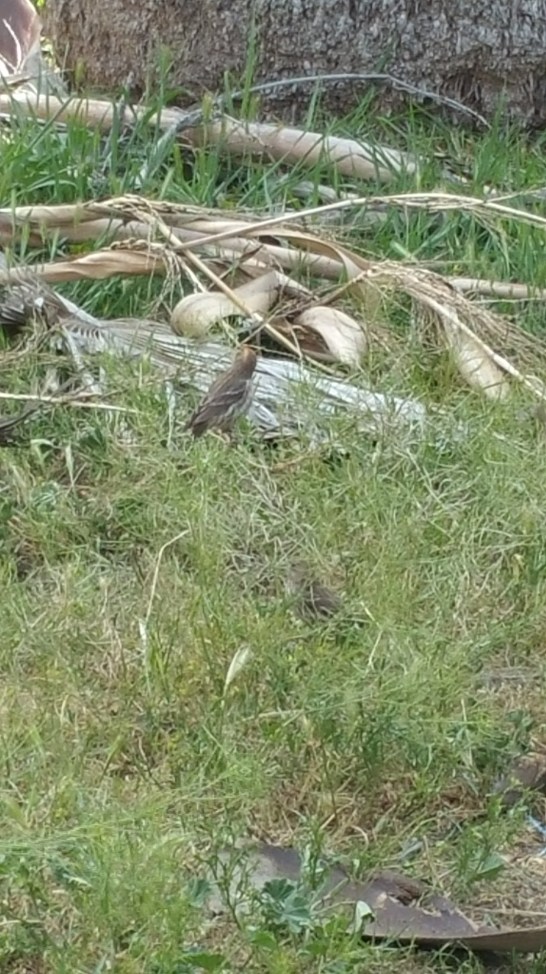
Weeds, a bird, and clutter.

How I became a rebelutionary–Part 2.

To continue from my previous post:

So, I left off at the point I decided to just direct myself. How did that work out for me?

As you can probably guess, not so well.

I lacked discipline, and to be honest, I still do.

Not too far into this phase I became a full Christian, and I had to ask myself how God affected my wish to change the world. God does not lower the bar, whatever you think you can do, He can do more with you.

The first thing God did was have me stretch myself in the areas I was weak. I was still a very fearful person then, in spite of my dreams. Once my fear started to become less of an issue, I though I was finally ready to tackle a really big Hard Thing. I tried to complete a big project. To raise $10,000 for a cause I believed in. The idea was inspired by the sequel to “Do Hard Things”, “Start Here.”

Yeah, I didn’t start small. I ignored the people who cautioned me about this, and I also didn’t wait to be sure God was on board with it. I never even made it to a tenth of the sum.

However, there is no such thing as a wasted experience. I did get my first taste of public speaking, speech writing, and fundraising through that process. I learned stuff the hard way, but I also discovered strengths I didn’t know I had.

You see where I still had growth though, as I said in my last post, I do tend to rush into things.

I did a little bit of teaching through my youth group after that, but low expectations continued to infuriate me on a regular basis. Worst of all was that all of my peers bought into them and despite our youth leaders honest efforts to inspire us, they didn’t seem to get it. Again I kept getting told that I was the exception, not the rule. My attitude began to be “Well, dang it! Why not?”

Frankly, that’s still my attitude. I am an extremely gifted person, I have accepted that; but I am not a person who’s really done that much more than anybody else. The difference is, I’ve been looking for ways to change, and learn, and effect my world since I was a young teen. That has sculpted my character. Plus, I figured out something else really important.

You let God lead. Even if you don’t like where He’s leading. If you had told me three years ago that I would do the things I have down in the past two years, I would have been dubious at best, terrified at the worst. I have face things that were huge obstacles in my life only a short time ago, and now, I could face them again, and know it was possible to overcome them because I’ve already done it.

Some things I can’t share because they are too personally, but here’s an example of what I mean:

Going to another country, where getting sick was a distinct risk, and where I wouldn’t know anyone, even the people I was going with. And I couldn’t call home. I couldn’t quit in the middle. I couldn’t do anything except rely on god to get me through.

And oh my gosh, did it work! God is amazing people. That terrifying choice ended up being the best experience I ever had next to becoming a Christian in the first place.

I began to be a rebelutionary the first time I decided not to be satisfied with what the world expects of me. But I didn’t finish becoming one until I’d gone through the process of being refined (that is groomed) for the challenges of that lifestyle. I still am in the process. I always will be growing and changing, for the better I hope and believe.

So that’s my story. I may not be able to contribute to the books about Doing Hard things, but I can se the one platform I do have and the small circle of influence I currently hold, to be a voice for it.

So, if I could learn, you can. You may be like me, or you may be completely different. I just want you to know that the journey starts with your perspective radically changing. You could very well be on that journey already, if so, I’ll see you at the finish line.

The important thing is to start, and not to quit. Use every experience as fuel for the fire, even the negative ones. Don’t listen to anyone who puts you down because of your talents or age or history. This is turning over a new leaf. Even if you failed yesterday, the next day you can start again.

This is really a lot of points in one post, but it’s what I’m learning from becoming a rebelutionary.

Until next time–Natasha.

SAMSUNG CSC

Reach higher.

How I became a rebelutionary

I don’t think I’ve ever talked about this, at least not at length, but I am something that’s known as a Rebelutionary.

It’s not a word, you say. Well, not yet, but it will be. It’s already being used by a lot of teens. I can even define the root word.

Rebelution: 1. A teenage rebellion against low expectations. 2. A rebellion that is also a revolution. (Take the Revolutionary War for example.)

Okay, so why am I telling you this? Well, because it’s an interesting story. As I was telling some friends of mine just last week, until I was around 13, I didn’t start reading a lot of those inspirational books you might have guessed I read now. My mom read them, she even encouraged me too, but I tried and I just wasn’t ready.

I still remember the first time I opened the first one of these books, called “Do Hard Things.” I was sitting on the landing of the house we used to live in. I remember even then I was caught by the tag line of the book:

Most People don’t expect you to understand what we’re gong to tell you in tis book. And even if you understand they don’t expect you to care. And even if you care they don’t expect you to do anything about it. And even if you do something about it, they don’t expect it to last.  WE DO.

Boom! I was hooked. Yet I wasn’t at the point where I did care the first time. As a kid I always knew I wanted to do something big, but I didn’t feel it was time or that I was ready. Or old enough. Finally, at 12-13, this started to make more sense. even before then, I was challenged by books such as these, but at 13,I actually began thinking I could take action about it.

Did something huge happen? Yes…and no.

I am definitely the type of person who gets an idea and runs with it. I now have learned to  control that because otherwise I go off half cocked because I don’t take time to calm down and think things through. That was the problem, I would read a book, and love its message, but I would be frustrated when, as a homeschooled, small circled, barely young adult, I lacked the resources or know how to do any of the things I thought sounded cool.

See, I loved the part about being able to accomplish great things, I didn’t get the part where it was actually hard.

And what ended up being hardest for me was waiting.

I had to wait and wait and wait.

So, when did I become a rebelutionary?

Well, it turns out, waiting isn’t actually exclusive of that lifestyle. God’s plan ends up being different for everyone. It turns out that I had a lot of things I needed to learn on my own time, that would have been major problems if I’d rushed into doing a lot of big things. I’ve blogged about some of those things.

Also, I did try to accomplish things, even from my limited space. I was always better at seeing the problems around me than right in front of me. Unfortunately, I was not so good at knowing how to solve them.

You see, it turns out I lacked the people skills to solve problems. simply because I was not around other people often enough, and when I was I suffered from shyness. I got more passionate about things, but I didn’t knw how to express it. I shudder when I remember some stupid mistakes I made. Not stupid, actually, just inexperienced.

Now, it wasn’t totally my fault, I did the best I could on what I did know. Nobody ever showed me how to do better. They told me to, but they never demonstrated what that looked like. I write this to say if you’re going to try to help someone, actually help them. No one likes to be told to improve by  a person who doesn’t follow their own advice.

I think my lack of mentorship actually demonstrates the problem, the reason “Do Hard Things” was written. When I became one of the people rebelling against low expectations, naturally the first obstacle I ran into was–Low Expectations.

I could meet the expectations of the church in my sleep. Literally. All I had to do to impress people was repeat what I’d heard a bajillion times, keep my mouth shut the rest of the time, and play nice with the other kids. even when I failed at that last one, I was still a good kid. My parents trained me well, and I’m glad they did. But my parents ever meant for it to end there, and it baffled me that other adults couldn’t seem to care less whether I wanted to accomplish more or not. Since I was already in shape, they focused on the people who weren’t.

Why? I didn’t know, I think they thought it was their job. Me? I was fine. I’d be okay.

Well, I eventually decided I’d just have to lead myself. No one else was gonna do it.

If you want to hear the rest of the story, read my next post, but this one is already plenty long.

Until Part 2–Natasha.

SAMSUNG CSC

Reach higher.