On Being your Own Hero and life goals

If I asked you what the answer to all your problems was, what would you say?

Probably you wouldn’t be able to answer. But if I pressed, you might admit that a lot of those problems could be solved with either more money, more time, more friends, or more will power on your part.

Today, I want to focus on the last one.

Will power.

Philosophical question: Is will power the real key to success?

Maybe that’s not even a philosophical question, maybe it’s more of a practical one. In real life, isn’t it all about grit? Courage? Persistence?

I’ve always been told that, from books and inspirational speakers, at least.

Everything is our choice.

You’ve probably heard or seen this on a plague or mug somewhere:

“Whether you think you can, or you think you can’t, you’re right.” — Henry Ford.

“You miss 100% of the shots you don’t take.” –Wayne Gretzky.

Or something like that.

One thing I hear a lot these days is to “be your own hero.” Or “I am my own hero.”

It’s even in the song “Roar” by Katy Pery.

I’ve always found that weird. I remember reading in a book (not sure what book now) that an author was commenting on how when he used to ask teens who their hero was, they’d say either a real person, or one in fiction, and that they wanted to be like them.

Now they don’t really have anyone they look up to.

I think that varies depending on the demographic and age group you’re talking to, but isn’t it concerning that high schoolers by and large no longer seem to look up to that many people.

Then again, many people may say that it’s better that way. That you should never meet your heroes. That people will always let you down.

I’ve wondered what it would be like to meet my own personal heroes. The kind of people I look up to are usually reported to have been very kind to their fans, and I’d like to think ah’t even if they didn’t immediately like me, they’d still have been the same people I thought they were. Flawed, but, not bad.

But then my heroes are always the ones who admit they are flawed and share their mistakes, so it’s hard to be as delusional about them.

I’m not one for hero worship anyway. I’ve disagreed with my favorite Author, C. S. Lewis, openly to other people, even though I think he was brilliant, because there are some topics he just didn’t understand. But he’d be the first to agree with me on that, it doesn’t take away from my admiration of him, just reminds me to think for myself.

I wonder if we just don’t teach this skill to our kids now. That you have to learn how to respect someone’s good points, and not imitate their bad ones. That you eat the meat, and spit out the bones. No one will ever match your ideal lifestyle, probably because for you, that lifestyle has to be personalized, so no one ever could match it. You have to take what you can from people and turn it into what works for you.

But I feel like we’ve got this weird cycle, in the West at least, where teens and young people idolize someone, or something, until it ends up doing one thing they don’t like, and then they turn on it. Even if that thing is not ever proven, or not even clearly incorrect.

I’ll give an example, and since I’m Christina, I guess it’s only fair to use a Christian one, since we do this too.

I’ll use the example of Switchfoot.

Switchfoot is a very popular Christian indi-rock band, and my personal favorite in that genre, so I was once watching a video about it on YT, and the lead singer (Jon Foreman) addressed one of their fans who was in the LGBTQ+ group, and told them they were welcome to come to a concert, as the fan had posted a video voicing doubt that they’d be welcomed there.

The video got so much backlash, it was astounding to me. I watched the clip from Jon Foreman and nothing he said was unbiblical, he was just trying to put this girl’s mind at ease and be kind and welcoming.

Sure if you twist his words, you could say he was endorsing her lifestyle, but he didn’t actually say that you’d have to read that into his acceptance. (I’m not even going to talk about where I personally stand on it, right now, as it’s irrelevant.)

My point was that so many Switchfoot fans were furious, and flat out mocking this guy and tearing the band to shreds for this short video.

I was surprised at how venomous their comments were. I would think they’d have given them the benefit of the doubt, as Switchfoot has always been a very pure band in their presenting of God and our beliefs, in my opinion at least. Which is why I would have found it hard to believe they were actually being unbiblical so openly.

But it’s not just Christians, it’s not even primarily Christians. This turnabout happens all the time with celebrities, politicians, entertainment, products, you name it.

Perhaps that’s part of the movement for being your own hero. If there is no other hero to be had, then you have to be your own.

I do love a good inspirational story about a self-motivated person achieving their goals. And honestly, I am a very self motivated person myself. I rarely wait for anyone else to tell me what I’m good at, what I should do, or who I should try to be. I’m the one who tells other people my opinion, at times, unnecessarily.

But that’s how I am, I want people to reach their potential, and to reach my own. Nothing is usually ever good enough for me to want it to stay the same forever.

So of all people, the ‘be your own hero’ mantra should appeal to me. And, it does, usually.

But I have come to question it in the last several years.

At first it sounded great, but, I realized what we all realize eventually, that it doesn’t work.

I went through my self help phase as a teenager, which is a lot sooner than most people do, but, I was ambitious. I started reading the books, watching the messages, planning out what I wanted to accomplish and change in my life.

And…I did have some success, but other things, I didn’t.

And all these books over simply it too. People who lead exceptional lives seem to assume it’s simple for everyone to do what they did.

I read the book “Do Hard Things” when I was 13, and I later read the follow up book to it “Start Here” (both by Alex and Brett Harris.)
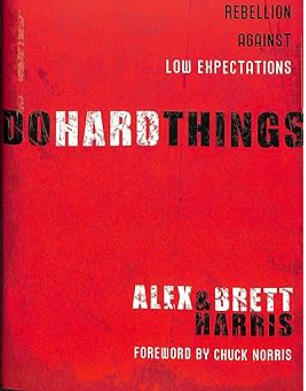
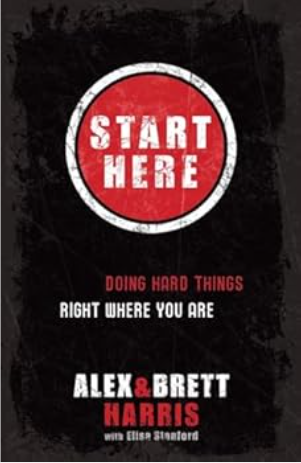
Then, inspired by a story in the second book, I tried to start my own fundraiser to send money to a charity I liked.

I thought people would do what they described, they would want to help me and that would make it happen. I had ideas…but, I never had a lot of support form others, and on my own, I didn’t have the means to raise the money. We raised some, but, not as much as I wanted.

One lady did try to caution me to be more realistic, and I dismissed her at the time, saying that I had enough faith for the big amount.

But, perhaps the Lord humbled me for that reason.

It wasn’t pure arrogance on my part, really, though. It was that I thought that’s how it worked. That God blessed everyone’s efforts if they were for the right reasons. I didn’t want glory for myself, I wanted to do something meaningful, something that would make a big difference.

Maybe I did want to accomplish something, in a way, to make myself feel important. But looking back, that’s more of something I think now that I’ve had time to examine myself, not what I thought at the time.

But it doesn’t matter if my motives we’re all selfish, or only partially selfish, or not selfish at all; whatever the case, I mistakenly assumed that a first try was going to succeed just because it was for a good cause and because the books made it sound that way.

The books didn’t share a lot of stories of failure. Probably because they didn’t think they’d be as inspiring. But the thing is, teens need to be told they will fail sometimes, even many times, before they succeed, because everyone’s path is different. And the odds are you’ll fail more often than you’ll succeed at anything that involves other people, because no one is likely to care as much as you about it. And even if you find that golden group of people who do, there is luck, or fate, or whatever you call it that has to line up, it can take years for that to happen.

For some people it does happen fast, but, that’s rare. And usually it’s not even the most talented people that it’s true of. It can be passing fad that they happens to hit at the right moment, it can be being in the right place at the right time, or it can be they do the wrong thing by accident, but it somehow works.

For me, it was very discouraging to realize no one else cared as much as I did, but now that I’m older and more experienced, I know that is not uncommon.

But I had the expectation that it would be simple for me. And maybe, for someone else, it would have worked, but the books didn’t cover what to do if you’re not that special person.

So I learned that you can’t do everything just on your own steam.

Other changes I tried to make I could do them, when it was just me. But not always as much as I wanted.

I’ve tried things like exercising regular for years, off and on, and it took till this last year for me to finally have the mental discipline and to know what works for me, enough to actually pull it off for months on end, so far.

I’m learning about what works for me, and I’m finding my footing. I’m 25. I Wish I knew what when I was 16.

But this is why it’s dangerous to tell kids to be their own hero.

The fact is, and if you are a teen or young adult, I say this with the greatest possible respect, but the fact is: You don’t know a lot yet.

I don’t mean that many of you are not smart, capable, and even independent.

But what I mean is that experience is what shows you what is going to work for you, and you just can’t have that figured out as a teenager. It takes months usually to test any thing enough to know if it’s a good fit, and we only have so many months in a year, and so many years of being old enough and capable enough to test out things. Especially in the West.

So the reality is, even for those of us lucky enough to be able to do what we want, and not what we must, as with most places in the world, it just takes time.

And kids can be really prepared with numbers, and figures and info, but still not be ready for the real world. But no one ever is ready. You just go for it, and you get ready as you do.

That’s the truth.

And I’m still in that phase, honestly, but at least, now I know I am. I didn’t before.

There’s another thing to consider:

The culture we live in is obsessed with personal success.

But, let’s look at some dark truths.

Statistically, not all of us will live to be old enough to be successful.

It takes most people till their 30s to be gaining more than they’re putting into anything, let alone a career.

It takes most people years to have kids, if that’s their dream, and to find a romantic partner. I’m still waiting for my first boyfriend in my mid twenties. It’s not that I haven’t looked, but I’v never found the right tone.

The Bible says we shouldn’t set our mind too much on earthly things. People have seen this as some hyper spiritual way of looking at life, that God just doesn’t want us to care about Earthly things that much.

But that’s not what the Bible means by that. In Ecclesiastes it even says you should enjoy what you do, and your marriage, and your life, as best as you can…but knowing that it’s all vanity. It all will pass. And that you may not live as long as you want to. But who’s to say you’d have been better off if you did?

It’s bitter wisdom, but it is still wisdom.

It’s not that God does not want us to try to succeed, He does, but that He is warning us to spare ourselves the heartache of pining all our hopes on one thing that is only temporary even if we get it.

What if we made a million dollars? We’ll spend it.

What if we have kids? They’ll grow up.

What if we get married? Both of us will die eventually, one before the other, probably.

What if we make a great piece of art? Well one day, it will be destroyed or forgotten about.

And this is not bad. It’s just the way time affects us. Nothing can last forever. If it did, new people would never have the chance to be successful also. Some works seem timeless, but even they will be destroyed one day, and new works will replace them.

This is not really bleak, it’s just the way the world has to be to give a constant new chance to the people who live on it.

And that said, whatever we do, while it may be good, is nothing to stake our whole life on.

I’ve seen people like my father who get so depressed they feel suicidal when they can’t do well at their job. A lot of men are like that.

Or who get so down when a relationship ends, because they put all their hopes into that.

I’ve never wanted that to be me.

Yes, I put a lot of myself into what I do and who I’m with, but, I know one day it will end. And while that’s not an excuse to slack off, it does mean I have to be ready to let it go, when it does.

Job, one of the most famous sufferers in the Bible, if not the most famous, said, when he had lost everything through no fault of his own. “The Lord gave me what I had, and the Lord has taken it away. Blessed be the name of the Lord.”

See, all success we have is borrowed.

Even if you didn’t believe in God, you have to just look at the world and see that things change all the time. Success will rise and fall for everyone in their life. A billionaire could lose everything and be a pauper, just as easily as someone could become an overnight success. Depends on the person, and the time they live in.

We get so focused on what’s in front of us, we forget that it will not always be in front of us.

Same goes for suffering.

So when it comes to being our own hero, our own answer, for things, we have to realize that it’s never that easy.

There is a lot we can do to help ourselves, but some things always depend on others and their actions.

For me, it’s hard to accept that because people have let me down a lot…yet, without the other people helping me, I wouldn’t have gotten to where I am now. I wouldn’t have learned more about myself and I wouldn’t have learned the skills I do have.

I resent it sometimes when people act like I need help, but, I do.

And I no longer think I can save myself, if I ever did.

And that’s the thing, you can’t save yourself.

That’s a lie they keep putting out there.

Even in that Titanic movie, they say Rose has to save herself.

It’s true that there will be times when it is just us against the world, that you must fight for yourself, and that is part of life.

But that’s more like a crisis moment than a regular thing. Rose didn’t even save herself, Jack saved her, as she even admits later.

And while I’ve had to think fast and act to save myself a few times, most of the time I’m teaming up with other people.

And for me, God has always been the thing that’s saves me the most, even when no one else is around.

If you look up only to yourself, and treat yourself like God, which is really what this self actualization and saving yourself and being your own hero crap is about, when it’s taken to its logical extreme, then when you run out of strength, as everyone does, you’ll collapse.

Why do so many people commit suicide who feel alone? Because you can only talk yourself out of something so many times before you start to feel like it’s just your empty opinion and you’re deluding yourself.

But if someone else is helping you, then it’s easier to believe it.

C. S. Lewis even observed that defending the faith for years might be a way to start having a harder time believing it.

Why is that? Because it was his ideas he was putting against consent opposition, and we start to doubt our own footing after a while. How can we be right? And everyone else be wrong?

But majority rule does not determine who is right. Even finding one or two other people who agree with us can be enough to encourage us to keep believing.

But we can’t all be right. For me, I still compare everything to what my faith teaches, because there has to be some way I can filter what everyone else says and what I think myself.

But if I was just alone with it, if I had no one and nothing to turn to, I couldn’t really believe anything. I’d have no way to test it.

So no, I’m not my own hero, or my own muse. And I think anyone who says they buy that, is kidding themselves.

Even if, at most, you could maintain that for a few years, the bubble bursts sooner or later.

And it should.

And what you find left after that point, that’s what your life really is.

So I guess I’m warning you all reading this not to put too much stock in your own character. Even if you are your best self, your best self will never replace the need for a perfect and flawless model to base our lives on. And we do need that, as humans, because we need to know where we come up short, so we can improve.

There is one recent modern example of this that most people will probably recognize, of the contradiction of saying you should be your imperfect self because that’s better.

In the hit movie “Encanto”, Isabel, the middle child in the Family Madrigal, sings a song called “What else can I do?”

In the song she says “It didn’t need to be perfect, it just needed to be, and they’d let me be!”

The song is about her letting herself go wile with her power.

Now, in of itself, that’s maybe not bad–though she does cause a lot of destruction and injuries by doing it, but the movie waves that off as just the result of her being able to be messy and free finally.

[What Else Can I Do?– Encanto]

But the film (and its reviews) missed the problem with what Isabel is doing.

If it’s truly better to be imperfect…how do we measure that? What are we comparing our imperfection to to say it’s closer to it than our attempt at perfection?

And the answer is usually ‘we don’t know’. There’s just this blind idea of a happier life that we think not trying to be perfect will get us.

[Because we all know it’s the people who try the least who are always the most satisfied with their lives…right? (Not statically).]

I am in favor of breaking the mold, but only because I think the model itself is never perfect, not because the idea of perfection is the issue.

See, when we say we can’t be perfect and we should be, we mean other people’s ideas of perfect, and it’s true, those are never accurate.

But if we ever saw true perfection, we’d see it was beautiful, liberating, and more satisfying than anything else. Because…that’s the definition of perfection. It has no flaws, no drawback.

Something can not be perfectly imperfect, that’s a contradiction.

And because we are not perfect, we always need to grow…but we need to realize we’ll never meet anyone else’s standards of perfection either.

And so we need to allow each other to make mistakes, but never assume that means making mistakes out of a callous disregard for any kind of standard is a god thing.

There has to be a balance to this.

And that’s part of the idea of not trying to be your own hero. If you are your own hero, you have to never mess up. But if you do, who will save you then?

Rather than being liberating, it’s horrifying, the pressure would be endless.

But if you are not your own hero, then you can save yourself, sometimes, but you can also be saved by someone else. Or something else.

And there’s nothing wrong with that. Experiencing things outside ourselves is why we’re on this earth. And to add our own flavor to it also. That’s the paradox of life, giving and receiving in a rhythm and often, doing it at the same time.

So to wrap it up, my thought is, we all should stop saying we’re going ot be the hero of ur own story.

You are a player, but you are not the game. You can be a hero, but you can’t be the only one. You can achieve greatness, but you can’t expect to be the pinnacle of all things.

We should aim high, but learn we’ll never reach heaven, to use the old Babel story metaphor.

And that’s good, because people who live that way are the most happy anyway. Because they know what they can achieve, and what they can’t.

And I hope to live this way myself.

Thanks for reading and please leave a like if this post resonated with you–

Until next times, stay honest– Natasha

Back to talk about Anxiety (and change).

I’m back!

Whew, it has been a while.

What can I say? Life happens.

Since I last wrote on here, I’ve changed jobs, finished my interpreting course, started volunteer interpreting, and completed a few more fan fic. (Check them out on Wattpad, @worldwalkerdj. If you’re interested in my fiction. Which is probably better than my non fiction in my opinion, but I’m biased towards fiction.)

What to talk about today…

Maybe I should talk about Anxiety, that’s always a popular topic.

With all the changes listed above, I’m sure some people already could imagine how anxiety inducing it could be… and you have no idea.

Anxiety is something I’ve struggled with since I was a kid. Unlike many people, it was not triggered in my teen years, or by poor health and life habits, though, I’m sure that plays a part.

For me, anxiety was just how my life was, after 5 or 6. Before that, I don’t remember having it, I was a pretty bold kid at 3 and 4, the earliest I can remember.

My anxiety surfaced partially because of an overactive imagination, and partly because I think of things my father told me as a young kid. But also, as a Christian, I’ve always assumed it’s spiritual too.

Whatever the case, it was quite crippling from age 11-13, and since then, I’ve been battling it.

The interesting thing is that, no one ever suspects this about me.

I know because people have told me many times that I seem confident, even courageous (more of a church word), and tough.

I have not seen myself this way for very long, I never understood what they saw in me.

While I was bold enough about some things, I know myself and my fears so well, that I assume they are obvious to other people.

But perhaps that’s not the case. Honestly, I’ve found with others, I often can’t see their fear of something until they tell me, because they’ve learned to mask it, and I suppose I’ve learned the same.

Also, like many of us, I was taught to overthink about my actions and behavior and personality, by mean spirited people who told me I was wrong for being the way I am.

(I certainly don’t believe that I’m perfect, or that I don’t need to improve, but the way some people tear you down, you know they’re not really trying to help you, just make you feel bad.)

I was thinking after I logged on here, that I was 16 when I started this blog, and I’m 25 now. I haven’t kept it up consistently.

Anxiety probably had something to do with that also, I started to feel like no one would care what I have to say. After all, I have no degree (yet), and I have no big success story to tell to prove I’m credible.

Personally, I even get annoyed with all these bloggers and YouTube influencers who act like they know what they’re talking about, but they really don’t. How am I any different than them?

Well, I can’t prove to you all I am. But one thing I will never do here is lie about where I’m at, or how successful I am. I figure it won’t do anyone any good for me to be fake, and it won’t help me either.

And if I do know what I’m talking about, it’s because I’ve had to walk all this out, as a regular woman, living in this century, with the same challenges as many others. I might be young still, but I’ve had plenty of difficulty for my age.

I’m not entitled, and I’m not angry at everyone, but I have my frustrations, and issues.

I used to write this blog with the assumption that my ideas were usually right, and that I was explaining them well. Now if I read my old posts, I’ll cringe. But it’s not really my fault, at 16, all of us are unpolished, if I was reading someone else’s writing, I’d be judging it by how good it was consider how little experience they ahd, and I Think I wasn’t too bad, then, for my age.

But I’m too old now to use that as an excuse, even if I wanted to do mediocre work, here or anywhere else.

I’ve learned a few things since then.

One: I write way too long posts.

I wish I could say I was just that self aware, but it’s really because since I started working more, I realized how time consuming it is to read something 4,000 words long. I’ve been blessed with the ability to write thousands of words daily, easily, but, then, I’ve also been blessed with the free time to attempt that, and not everyone is.

Two: I should branch out what I write about.

It’s honestly nice that I could actually share work stories and other stuff now. Though I still like analyzing content and may do that still.

What does this have to do with anxiety?

Well, see, I get worried about all this. I figured I’d never be a popular writer or blogger because I like unpopular topics. But, you know, in a lot of ways, blogging was more to help me grow as a writer than it was because I thought I’d be a popular blog.

I figure, it doesn’t matter anymore. I should just write what I know.

And hey, I know a lot.

I’m the type to always feel like I’m not doing enough with my life (one of the things I’ve been anxious about).

And hey, adding the pressure of blogging again may not even be necessary, but I’m taking a break from classes, so I should have something to do when Im’ not working on creative stories and job stuff, right?

But, the thing is, for someone with a lot of free time, I do keep pretty busy. And I think the pressure I feel is because I was always told I was special and smart growing up, and I always wanted to do something meaningful to impact the world.

Whether it’s being the first writer to really commit to making Christian fan fiction a thing.

Or it’s finding a career that’s meaningful and personally, one on one.

Whatever it is, I wanted to feel like I did something really important with my life.

And all the cliches about small things mattering, they are true, but they aren’t always comforting.

I can’t say I’ve figured out yet how to be satisfied with everything, but, I’m getting better at it. And as I do, my anxiety has decreased.

I could devote a whole separate post to how my social anxiety has changed or grown or shrunk over the years, but that would take a lot longer to delve into.

The point I’m making is, in 9 years, I’ve changed a lot, but in many ways, I have not changed at all. I still want most of the same things I did then, and I still believe the same things I did, I just have a deeper understanding now.

And my fears have changed, they have not gone away, and some of them are the same, and some, I hope, are mostly gone.

It’s also been 5 years since I started recovering from the abusive situation I was in with my father. My father and I have spoken more times, and we’re on fairly good terms considering.

The reason I reopened community with him, was, other than God told me to, also that I knew I would never lose my fear of what happened, if I didn’t face it.

The same reason, maybe, that though I have mild to moderate acrophobia (fear of heights), I somehow always want to climb a mountain, do an obstacle course in the trees (Treerunner, it’s in Michigan, check it out if you ever go that way), or otherwise rock climb in higher spots. Sure, it scares me and I hate it at first…but eventually, I feel stronger because I faced it.

This is old advice, but in a day where we’re told to coddle ourselves and that our fear is an excuse to quit because something is too hard, old advice about it is the best advice.

Let me tell you all, I would never have the job I have now, have finished the stories I did, or done any of the other things, if I listened to my feelings and if I told myself “it’s okay, it’s too hard right now for me.”

It’s just the truth.

You may feel that you’re too afraid to do something now, but, I promise, it does not get easier if you put it off. Honestly, I dreaded those things more the more I put them off.

I also found that once you commit to doing something, you can find ways to make yourself feel better about it.

Like when I first called my dad, I had other people with me for morals support.

When I had to job hunt again, I finally used a website to help me make my resume better, and I watched a YouTuber for advice about how to interview. (Advice with Erin if you want to know.)

Or how I was anxious about making new friends, but I still invited people to hang out with me and join the life group I’m in at my church, and it worked out.

It’s still hard sometimes, and nothing is perfect…and that used to scare me. Sometimes it still does, but I’ve learned that I can press on through the disappointment, and eventually, it gets better again.

If I quit because I didn’t feel ready, I’d never have even tried. And I wouldn’t have succeeded. I don’t win every time, but I win more when I try to then when I do nothing.

All this is, again, old advices, but I’m telling you, it works. Probably why i’ts such old advice.

And no, that doesn’t make it easy to follow. I’ve realized that all this has to be walked out individually.

I had all the advice about conquering fears in my head from a young age, but you have to build up your strength. I figured that out finally. What works for me may not work for everyone as quickly or completely, but it does work.

What does not work, is excuses. And I’ve used plenty, but they never made me feel better. Actually, they lowered my self esteem. You start to feel damaged, and like you’ll never be whole and able to live the way you want.

But that’s the fear talking, and fear, as Dostoevsky said, “is a lie.” (The Brothers Karamazov).

Or as the Crane Wives sang in their song:

“No amount of waiting will make you brave, no amount of fear will keep you safe.”

[Keep you Safe– The Crane Wives.]

It’s all true, but it’s hard to live by.

But that doesn’t make it okay for us not ot try.

Things are hard…all things are hard if they’re important. At least some of the time. But they are not always hard, for all of the time.

Some things that used to be hard for me, are not hard now.

Like saying “I love you.” It was hard, but now it’s mostly easy.

Or talking to boys. That’s been easy for years, but it wasn’t for a long time.

Or driving. I’ve been afraid of it a lot of times, but I’ve always kept getting behind the wheel, and now it’s much easier.

These are small things, but I think big things have also gotten less hard for me. Anyway, what’s a big challenge is relative to everyone.

So yeah, I practice what I preach.

I think that’s about all I got for now. If you’re back, thanks, I know it was a long wait.

Or if you’re new, welcome.

And as always, Stay honest– Natasha Queen.

What Your College Doesn’t Tell You…

I have an anecdote for you today, as some of you may recall, I work at a college, as well as attend classes (online mostly now) to get ready for certification in ASL Interpreting.

Which is a whole ‘nother story in of itself, but not my focus today.

I currently work in the writing center, as many colleges have one, as a student tutor.

The job can be boring when people just want grammar checks and assignments to be signed off, but every so often I get a real zinger that reminds me why I love my job–or hate it, depending how you look at it.

Just such an occasion happened last week for me during finals. A student was doing an assignment on the topic of banned books.

He titled it “the war on books.”

Banned books are an interest of mine, so I was eager to read his paper.

Until…

Turns out the student had haphazardly researched what the leftist news cites had to say about parents’ objections to the many LGBTQ+ and political agenda books that are being presented to students.

Also the objections against Harry Potter and other books that include topics religious people don’t like.

I was surprised to see “To Kill a Mockingbird” on the list. Usually conservative, the group this student was rather biasedly targeting in his paper, don’t object to that book. I was skeptical that it was them. Mostly it’s the liberals who don’t like Huck Finn or Uncle Tom’s Cabin, other famous books that include some touchy race words and aspects of life, just because they are realistic about it.

Some people don’t understand the value of historically accuracy when teaching kids about race issues.

I asked my student about why he targeted only conservatives, and his basic answer was it was what the articles mentioned.

Not sruspi, they were form liberal owned papers.

Which is bad journalism, because all political parties object to certain books, not just conservatives, they’re just trying to make it seem like it’s a political party issue, but it’s a issue parents of all backgrounds have.

I’m not supposed to lecture students, so I had to be careful how I worded my objections, I causally pointed out that the paper had a clear bias ad that it’s not considered responsible writing in college to target people groups.

“We target ideas not people,” I explianed.

(This is true, whatever side you’re on you’re supposed to keep it professional in college classes.)

I learned this myself, and I think it’s helped me as a blogger to not try to call out specific people, though I do complain about the left, on a blog it’s okay to do that, it’s not considered professional formal writing and people expect you to be biased in a blog. I do refrain from slinging insults though.

The student took this point pretty well from me, so I dared to, after going over some of his professor’s feedback also, broach the subject of his argument itself.

I asked him “is your position that parents should not be deciding what their children read.”

“Yes.” he said.

I had a silent moment of disbelief.

But I didn’t show it.

Instead I said that it was good to make his solution clear then, so I asked him “then who should decide it?”

I kid you not, he went quiet for at least 1.5 seconds, then he said “I didn’t really think of that.”

I did not say “I could tell from you paper that you didn’t think about it.”

I just thought it.

I patiently explained that if you say one person should not decide something, your implicit argument is that someone else should. In this case it would be the school (or perhaps the child themselves, but we were talking about 5th graders, so that was doubtful).

This student didn’t know it, but I have a pet peeve with college courses about the vial stories they make students read, and many students I speak to agree with me that the stories are awful and they don’t enjoy them. Some of them are borderline pornographic, and I told my English professor they made me uncomfortalbe to read.

I think college students should sign some kind of waver saying they’re okay with explicit content, or else be allowed to read a story with a senl theme, but less graphic depictions.

So I’m with parents about objecting to books I would never read myself being shown to kids not even old enough to drive yet.

The student agreed with my point, and said he hadn’t thought about it that much and he’d have to fix that later. And that he’d fix the biased part.

Since he seemed openminded, I decided to risk one more point, once we’d gone over some more technical stuff, and our session was nearly over.

I mentioned that I’d had one of his classmates with this paper subject in earlier in the semester, and we’d talked about it too. And I had asked them if parents should never be able to decide what their kids read, and their answer was kind of noncommittal.

For context, one of the books mentioned in the article was one that showed sex positions between two gay men–and it would be horrifying if it was between a man and owman also, being shown to kids under 18, the legal age of consent, there is no reason to be showing a book like this, and it wasn’t even to teach sex education, that I understood.

The article openly admitted this book was objected to because of that, but insisted that the parents were at fault.

I wonder what they would have said if the teacher had shown the kids a R-rated movie instead.

I decided to give the student an illustration.

“For example,” I said. “Would you object to a child whose parents were atheists being forced to read a religious text in school?”

[The funny thing about this is that’s not even as overt, because plenty of atheists can acknowledge the lessons of religious texts are beneficial, as long as the content is not too explicit. And not all religious texts are about God only, plenty are about people and have useful life lessons.But on principle the parents can object to it if they want.]

The student immediately said “Yes.” Just like I thought he would.

But impressively, he also said “I get it, because that’s the same thing.”

He might have been bad at doing research for his paper, but he wasn’t stupid.

I agreed that it’s basically the same thing if religious parents don’t want their child taught stuff that goes against their religion.

And as a Christian, of course I would prefer everyone to learn about the Bible, but I wouldn’t force a Muslim child to read it against their parent’s will. Because I want the same rights to protect my child as they do, and if an exception can be made for me, it can be made for anyone, that’s the danger of hypocrisy.

As Portia piontes out in Shakespeare’s “The Merchant of Venice”, once you make an exception for one person, no matter how much you like them, it’s a problem because it becomes a precedent for less scrupulous people to use as a loophole to get out of their punishments.

So why did I share this story?

Other than I thought it was funny, I also thought it was a good example.

I’ve been in college for 5 years (because a certificate program takes a long time) and I’ve noticed how the courses are trying to chip away at students’ integrity.

I know one class that make its student defend the idea that eating someone is okay if the person agree to it, and was drugged so as not to feel it.

I hope that shocked you and not that you’ve already had to study that case in your class.

I almost got physically sick when I went over that assignment.

But I learned something very important, and kind of diablocial, about psychology.

If you make someone argue for something, even if they hate it, it forces their mind to become a bit more open to it, just by dint of practice.

It’s like drinking alcohol, at first it’s really bitter, but then you get used to it, and your tastebuds go numb.

Now if it’s a harmless subject, that’s fine.

But what if it’s a subject the person really object to morally at first, but by practicing arguing for it, they become more amenable to it.

You might say “They probably didn’t really object that much then.”

But that is not true.

That is exactly how brainwashing works, you make someone accept part of something that is not true, and then you build off of it, till they don’t even realize you changed their mind.

The real art of counseling is to help people realize that they really think, deep down under the lies they tell themselves.

The art of brainwashing it to make people believe that they really agree with what you think, deep down, despite their misgivings initially.

Also the art of gaslighting works that way. Though in both cases, you may not actually believe what you want them to believe.

Some amount of manipulation goes into all forms of teaching, but a responsib;e teachers knows where to draw the line, just like a responsible parent knows that tricking your kids into eating more greens is very different than tricking them into a career choice they didn’t want. One of these things will not do lasting damage, and the other will.

And convincing someone to do what  you want willingly, instead of jamming it down their throat, like my mom used to do with food I didn’t want to eat, is a very different skill.

However, if you force feed someone poison it will still be poison, and it’s still harmful.

I think the college classes are a mix of both. They force students to read about topics no one should ever be forced to read about.

Then they have them argue about it, till the students are willing to look at it more laxly.

Some professors hate this curriculum as much as the students do, but are required to teach it. Their silent protest is making the assignments as short and worth as little points as they can.

Others love it, because they’ve drunk the Kool Aid that says this is somehow becoming more progressive.

To go back to my student with the book banning, it’s really not so surprising the poor chump didn’t question his position till I pointed it out. After all, he’s being taught the exact same way by his professors, and it doesn’t occur to him to question it, because in his highschool days, he just had to do whatever the teachers said.

This is how I think public school teachers kids to be blind followers. Don’t object to anything or you fail the class.

At least in college our paper can criticize the material if you’re creative about it, so some vent for these feelings is allowed.

The thing I’ve noticed that’s key to brainwashing, is to make sure no one ever asks why you think this issue is so important.

As soon as I asked my student who he thought should be making the decision for what kids read, he hesitated. Because maybe deep down, he know that saying it should be the school and not the parents is a very problematic thing to say, without some parameters. Once I pointed out how he’d object to one situation but not the other, he began to see that he had a double standard, or better yet, the articles he read did.

Not every student can even admit this, some are very stubborn about not thinking out their position. I’ve had a few end our session as soon as they could because they didn’t like what I was saying.

I admit I’m not perfect as a tutor, but I do hold up students with views like mine to the same standards. I’ve told them plenty of times to be more careful about how they write their argument.

Even more so because I know professors with leftist leanings, like some I had, will tear their paper apart if they give any opening to do so by sloppy arguing, and they need to be better than the other students, not worse, at being unbiased.

What your college doesn’t tell you about these issues, like boko banning, or pride, or equality, is that the very first thing you need to ask before you teach anything about this, is why you think it matters.

See, the assumption that equality is the most important value of life permeates our culture, and most people don’t actually question if it’s valid.

As long as they don’t, the argument is always going to be on uneven footing, because you’re automatically forced to concede points to the other side.

And suggesting that there are higher goals than equality gets you a weird look, like that’s crazy, because it is so assumed.

I do believe in equal rights, but I don’t share the definition of rights that many people do, and I don’t like to argue on their turf until we’ve established what we really think.

Often my view surprises them because it’s not taught in school.

Which is my point, school doesn’t teach this stuff.

Chesterton said that a boy is only sent to school when it is too late to teach him anything. [Orthodoxy, chapter 9]

The angle in schools is very narrow. It doesn’t teach you all sides of an issue, or even the underlying assumptions of the side it is teaching.

The point is to teach yo uto spit out the same rhetoric they use, and not think any deeper, or any longer, about it than absolutely necessary.

And you wonder why the internet is such an echo champ of inane chatter and trolling.

I wish I could tell you the Left is the only offender, but I’ve seen just as much of it on the Right, only the Right tends to at least hold up the idea of unbiased thinking more than the left does, but often only in name, not practice. And often their approach to issues is just as surface level. Just because I happen to agree with their side more doesn’t mean I don’t see the flaws in their approach.

I was talking to my sisters and a friend about this earlier this week, and telling them that as much as we like to appeal to rationality for our side, we forget that people do not usually want to be rational.

They believe things because they are comfortable believing them, and because it’s what everyone else says, and most people don’t go against the flow. If our view was popular, they’d take it, but it’s not.

In fact on of my favorite tests of faith is to ask if your faith makes you comfortable.

Mine doesn’t. Some things about it are comforting, but many are challenging and unpleasant, but I’m firmly convinced of their validity despite that. Which shows I do not believe it just to suit my own fancy.

Granted, I may be ore afraid to stop believing it than I am to accept the unpleasant things, but that also shows genuine faith.

What is not genuine is when the only fear you have is to consider a different perspective that makes you uneasy period. Not because it’s one that would shake your entire world. People can be just as stubborn about not trusting new companies as they are about new religions, but either might be better than what they currently use, they’ll never know if they can help it.

What college does not tell you is that sometimes it’s in losing those beliefs that make us comfortable that we find what’s really right for us.

Stores stopped carrying a coffee brand I liked, which bothered me for months as I had to use a cheaper, much less tasty variety.

But this dissatisfaction led me to try a new kind of organic coffee that tasted even better than the brand I first lost.

The point is, someone losing one good thing, and being dissatisfied with the available replacements, leads you to find a better thing in the end.

Ideas can be the same. Humans are terrible at knowing what’s best for us, and the wisest of us keep that in mind all our lives and are flexible, the foolish of us try to make everyone else agree with our definition of what’s best at all times.

And I think any religion that doesn’t challenge your idea of what’s best isn’t really a religion, it’s your preference that you put a religious face on. And Christains do this just as much as other religions.

But the bible at least is clear that it’s not the purest form of our religion to do this, that the best way is to be teachable.

Now, even so, even an idiot who’s right by sheer accident is better than a genius who’s wrong by deliberately pursuing the wrong thing.

So I still think it’s better to be a stupid Christian than a smart atheist, because intelligence is not everything, and anyone who thinks it is is already missing a big chunk of their heart.

Our intelligence, as we call it, is so very small compared to the complexities of the universe, that to feel proud of it is kind of ludicrous. The smartest person in the world can’t explain the real mysteries of life any easier than a stupid person can. Sometimes they have more trouble because they think they can.

Our intelligence, as we call it, is so very small compared to the complexities of the universe, that to feel proud of it is kind of ludicrous. The smartest person in the world can’t explain the real mysteries of life any easier than a stupid person can. Sometimes they have more trouble because they think they can.

Even so, I feel compelled to still get involved in these debates.

It seems small, but the Bible does say, “casting down arguments and every high thing that exalts itself against the knowledge of God, bringing every thought into captivity to the obedience of Christ,” [2 Corinthians 10:5]

Which is why I write about it also.

I think it’s about time to wrap this post up (and I’m still recovering from a head cold anyway, starting to feel sleepy), and I think that’s a good closing thought.

I might write more about this in the future, but I think my overall takeaway is that you can’t let school be your only education.

You have to dig deeper, school plays to the bare minimum, unfortunately, to the lowest common denominator, and that’s encouraged by a lot of educators now, because no one should ever be made to feel inferior. Even if realistically, some people are not as smart or skilled as others.

Most people who hate learning, hate it because school does it the wrong way, and would enjoy it if they tried a different approach.

I believe in learning and self improvement if you can improve. And in growing.

So yeah, that’s it for today on what your college doesn’t teach you, though some professors, bless ‘em, do try, and I love them for it, but it’s just not enough without the student trying too.

Until next time, stay honest, –Natasha.

Well, I was young I was young and naïve Cause I was told Cause I was told so I believed I was told there’s only one road that leads you home And the truth was a cave On the mountain side And I’ll seek it out until the day I die…
One-Time
Monthly
Yearly

Make a one-time donation

Make a monthly donation

Make a yearly donation

Choose an amount

¤5.00
¤15.00
¤100.00
¤5.00
¤15.00
¤100.00
¤5.00
¤15.00
¤100.00

Or enter a custom amount

¤

Your contribution is appreciated.

Your contribution is appreciated.

Your contribution is appreciated.

DonateDonate monthlyDonate yearly

So I watched Encanto…

One of the unsung perks of babysitting in this country is that you get to use people’s streaming accounts even if you don’t have them. I’ve watched a crap ton of Netflix and Disney Plus because of babysitting.

That’s how I watched Vivo…which is a better movie than Encanto, bite me.

Funny because Lin Manuel Miranda worked on both, I just think Vivo’s plot and themes suited his talents better than a Disney Girl musical (since now we aren’t even pretending they’re princesses…although this movie might as well have been about a princess.)

I’m not going to hate on Encanto, it was an enjoyable ride, but after watching it, I do think it is inferior to its predecessors.

I’m sure all of you are too nice to hate on me for saying that, but if I went on a different platform, I think I’d start a riot. Everyone seems to love this movie.

Well, it’s mediocre, sorry, not sorry.

I won’t deny the animation was gorgeous, a joy to watch. The songs were…predictable. The only one I thought really stood out as creative lyrically was the “Pressure” one. Then, Imperfect was okay, and “WE Don’t talk about Bruno” was impressive editing-wise, but lyrics were a little weird, I thought.

But I’m not much for modern musical movies, to be fair. I like old ones better.

i have before unashamedly said that I like Disney movies–some of them–and that Frozen is actually my favorite movie, for personal reasons. See: Why a DP movie is my favorite. Why a DP movie is my favorite part 2. I don’t think it’s the most amazing movie ever made, but it stands out form other Disney films, I’m not the only one who thought it has a different vibe, wrapped up in a Disney package, it still somehow felt unique. Thought he haters will never admit it.

Encanto is a beautiful mess, that is my honest opinion. I was interested in the plot while watching it, and the 3 year old I was watching it with loved the music. But I kept waiting for the movie to make its point…and by the end I was just…non plussed.

Encanto basically has two or three over arching themes, and it tries to bring all of them together at the end, but it doesn’t finish any of them. The ending was one of the most rushed I’ve seen in a Disney film, and the characters were not well flushed out. We only get depth on Luisa and Isabel, and it’s dropped after one song.

Abuela’s character being the cause of the magic disappearing was predictable, I called it form the beginning. But that wouldn’t have been bad. I thought it actually added to the idea that families often miss the obvious when it comes to their problems. It’s true in my family, for sure.

I actually thought they were going to do a Brave thing, and make it both the older and younger women had pride and selfishness, and that was the cause of the rift. And the magic of the family was tied to their unity.

The movie implies this, but doesn’t say it.

I could put that down to a wish for subtlety, except every other theme in this movie is blatant and shoved in your face, as with most kids’ movies, so why they would hesitated to spell it out for us, if they actually intended it, I don’t know.

I don’t necessarily mind blatant messages, I think kids need things to be spelled out for them, and adults who watch kid content should be prepared for that. But I think you can do it tastefully and creatively. Just singing it to save time is not tasteful.

The imagery in this movie is probably its best feature. The lights, the candle, the sand, the cracks.

I kind of thought Bruno’s character was less impressive than he could have been, he was exactly what I expected, and the goofy, kooky character seeing the future and then hiding…well, it’s a little old. But it’s not bad, so it’s more of a personal wish than a criticism.

What actually made me mad about this movie was the ending. The first half was quite good, but it was like they ran out of run time. Isabel and Mirabel get over 20 years of disagreeing, (or 18, or whatever it was) and it takes 2 minute of one song for them to suddenly understand each other?

I was the scapegoat and my sister was the golden child, it took us months of disagreeing, and years of tension before that, to work out our differences. Especially when our dad poured gasoline on the fire.

And another thing, I found it stupid that only Mirabel was yelling at Abuela at the end. If Luisa and Isabel were really that miserable, seeing Mirabel do that should have just burst the dam. Especially for Isabel.

Also the magic was so poorly explained.

I know that magic does not always need to be explained in a story, I actually don’t like it when it is, like, We didn’t need an explanation for Elsa’s magic–and the one we got made no sense.

But in this movie, the magic disappearing is the whole point, so that is the time to explain how it works, the entire point of most of the film is Mirabel trying to understand the magic, so explaining it was totally necessary.

And what is explained…nothing!

I mean, I guess the magic relies on the family’s…bond? But then why doesn’t it crack every time one of them fights? The one lady with the weather powers should be having cracks every 10 minutes. Isabel and Mirabel should have been causing issues all along. Then Abuela’s obsession with perfection might actually make more sense.

Or how about this, make the fact that Abuela herself actually has no gift, and just guards the candle and house the reason she doesn’t like Mirabel. Mirabel reminds her of her own mortality, and humanness, and we tend to project our insecurities onto other people. So when she’s yelling at Mirabel, she’s really upset at herself. And Mirabel annoys her by not being as stressed about it as she is. I’ve known that to happen to many people in real life, myself included. Misery loves company.

This is almost implied in the movie…but never enough to be sure it’s actually what it’s saying.

Also, the conflict of this movie is set up poorly.

We’re supposed to be wonder why Mirabel has no gift, right? Well that question is never answered. Ever.

Then we’re supposed to wonder if the gift is becoming a curse…

But the thing is, Mirabel’s mom is a really nice lady, and supportive of all her daughters, and so is their father. Isabel is so driven to be perfect…why?

I can’t recall her ever actually being told she was doing something wrong. Maybe she just wanted to avoid it ever happening, but most people aren’t afraid to fail until they have failed in a painful way, and we never see her do that. Perfectionism comes from not being able to control things when you were a kid, but we get no such story with Isabel.

We never see Luisa told it would be selfish to take a break. She just assumes it.

We’re meant to think Abuela made them think this way just by her example…but even if that is true, no one ever questioned it before? And why do none of the men feel this way? They seem carefree, and happy-go-lucky. No pressure there.

And while the townspeople take advantage of the family’s gifts, they aren’t ever pushy about it.

So why are these two girls so driven? Isabel says she was going to marry the guy for the family…but they never push her to do it, they just assume she wants to marry him. If she’d ever spoken up about it, I’m sure they’d have been happy to push Dolores forward instead. Why does it need to be Isabel?

And by the way, Dolores character had the potential to be so much more compelling. Imagine if you could hear everything? Everything anyone ever said about you? That sounds like a curse to me. Maybe that’s why she tries to be invisible, so people won’t talk bad about her.

Would make relationships difficult, and relaxing. She’s shown to be jumpy, but she doesn’t get her own song, and she doesn’t ever get a moment to explain it. A total waste of potential. I’d say her life is way harder than Isabel’s.

I mean, when the main conflict of your story is your MC just isn’t special enough….what the heck movie? Is that what counts as drama these days? Her family loves her, and the one person who actually is hostile to her, Isabel, is not even in most of the movie, and resolves the conflict in 3 minutes…yay!

Mirabel is all like “I can’t embrace Isabel!” and then 5 minutes later “Oh my gosh, I was so wrong about her!”

Uh…you weren’t really, you just didn’t know why she acted that way, she still acted like a b-word. And perfectionism is no excuse to bully your sister, Isabel. How about an apology?

Nope…nothing.

I mean Isabel could have said she envied Mirabel her freedom to do whatever she wants. Built on the trapped by your gift thing…but nope.

And another thing, if Isabel is so stuck…why doesn’t she want to try something other than growing flowers? Her whole rebellion is spraying herself with colors and growing cacti…who in the heck said she couldn’t grow cacti? Cacti are useful, heck her mom could use aloe to cure people, everyone would be all over that. And she has a whole room to experience with crazy flowers in, and no one else seems to care…what exactly is holding her back?

I mean, Abuela only cares when it becomes convenient for the plot, she never reprimands Isabel before then.

Movie, stop expecting me to assume domestic abuse, actually show it if you want to use it, you coward!

You now that just ticks me off about this film, and every other kids’ media I watch these days. Domestic problems are assumed. No on’es family is actually good, no one is actually happy, it all hast o be fake. You can bet if I see a nice character, I’m going to find out they have skeletons in their closet later in the story.

And while no human is perfect, not all of us are as royally fricked up as the movies imply. Sometimes we just get frustrated once in a while, and guess what, we move on! Some of us actually deal with it in a healthy way. Geez! What is the problem Hollywood?

I think it’s on purpose, the idea of contentment just doesn’t sell, so every character has to have a dark side.

Frozen kicked off this trend–but you know how Frozen made it work?

Because we actually see Elsa’s powers backfire, we see her parents tell her bad advice, we see her fear of herself grow–the movie accomplishes this in 10 minutes. We all perfectly understand why Elsa is afraid, how it affects her, and that Anna is unaware of it.

Then when Elsa goes berserk, we know why. It’s not random, we see the causes.

And her problems instead of being over in 5 minutes, take a whole movie to work through. And are revisited in the shorts and the sequel–which are not great, but at least they aren’t delusional enough to say Elsa is never going to doubt again. Of course she will, but she now lets herself be helped, that was the difference.

Where is this in Encanto? Or should I say Donde esta en la cinema Encanto? (Pretty sure I said that wrong, but my Spanish is not great, and the constant switch in the movie was not as charming as they thought it was. I was just left feeling like the whole thing should have been in Spanish, or English, pick one.)

Nada! Nunca! It’s not there. You won’t find any deepening, or further introspection of any of these characters. One song, that’s it.

That’s one of my problems with the movie.

The other one is the Magic itself, and the Miracle. It’s never explained.

And why Mirabel does not have a gift. She wanted to know.

I think the movie’s biggest mistake here was that when Mirabel went to get her gift, the door began to form…but then it stopped.

If she was truly just not meant to have one, fine. But then why did she start to get it and then it stopped? The candle changed its mind? Hmm?

Sure seems like something went wrong, not looking at Bruno’s excommunication or anything.

And if the family splitting is what lead to the magic cracking, than it would have made perfect sense that Mirabel’s lack of gift was because it weakened after they sent Bruno packing. Like, it literally seems like that’s what they are implying.

Mirabel even sees the same cracks as Bruno. Which could have been taken as maybe she was going to have the same gift as him, because he wasn’t around, but because he still is, she couldn’t get it, and it broke.

Then restoring Bruno the family, and fixing the house should have fixed her problem. But she still has no gift at the end…even though she restore the magic, so she has magic, but no gift….because logic….

You have all the set up to make this make sense…but no pay off? Nothing.

Because oh she’s just special enough without a gift…

(How can not being special be what makes you special? It’s a logical fallacy.)

Well if that’s true, why restore the gifts at all. If it really had become a burden, then just let it go, accept change.

Wasn’t that the message? If you hold onto the past too tightly it crushes the very people you were trying to protect…I thought that’s what they were saying.

But I mean, i’s Disney, so of course the Magic shouldn’t have disappeared at the end…but Mirabel still can’t have a gift because reasons.

Even though it clearly show she didn’t get a gift because something went wrong, setting it right doesn’t give her one…why? She doesn’t want one anymore?

I fail to understand you movie.

I thought they all should have either lost their gifts for good, or never lost them at all. Maybe they just could have corrupted, been twisted, like in Frozen. Because they were used wrong. That’s more true to real life anyway. We don’t lose our talents because of stress, but they do become less pure.

So in the end, this movie has two messages. Or three really. 1. You don’t need a gift to be special, because not being special is what makes you special. (Cure the Incredibles rant about celebrating mediocrity) 2. If you put yourself into one box, it will crush your spirit, it’s okay to have more than one interest and to take a break. 3. Holding onto the past is bad. Embrace the future. (As long as you do it by not forgetting what made your family special in the past and reigniting that flame….get it? Because it’s a candle, we’re so clever).

How did anyone like this movie’s ending? I get liking the songs and story, but the ending? It makes no sense. None few these three messages is finished. Nothing is explained, and there is no truth. Everything goes back to being exactly how it was, except that Isabel goes disco tech, Luisa takes naps, and Dolores gets with the guy who’s about as deep as a kiddie pool.

Mirabel is not a different person than before. And the town is the same…so yeah…

I really thought there could have been something really good there. Heck, even all three of those message together would have been okay, if they were finished. But they aren’t. There is no point of resolution.

An apology is not a resolution if the problem is that complex. That worked in Brave because the mother -daughter conflict is present in the whole movie, shown to be the core of its problems, and is explained as the way to resolve them. Merida humbling herself makes sense, because Pride was her problem.

But the whole family conflict in this movie is so shaky. Not everyone is unhappy. The problem are so minor that literally two conversations fixed them, and Bruno comes back with no fanfare whatsoever, and Mirabel isn’t even the reason.

Mirabel was actually mostly useless, she spends most of the movie making the problem worse, and in the end is the reason the magic goes out…so way to defy negative expectations there, movie.

Guess she really was the bug in the system…and maybe it deserved to crash and burn…so show that. Don’t just make it all go away because apologies!

Ugh…

Perhaps I am oversimplifying. But it was still poorly done.

Encanto is, in my opinion, a product of our culture.

Fewer and fewer movies and show have any definite meaning now. And fewer and fewer people seem to notice it. We are becoming incapable of discerning structure and payoff in a story.

As long as the label diversity is stamped on something, we swallow any amount of lazy writing, and Hollywood knows we will.

Encanto is a badly written movie that would not have stacked up to a 90s Disney Movie, and they have very weak conflicts usually, but at least hey are clear. Ariel may be kind of a bratty teen, but at least I know why. I know why Aladdin wants to be a prince, even if he’s a liar. I know why Mulan is going to war ( and that is one of the best Disney movies there is).

I don’t know that with Encanto. It would have taken like 1 extra song, and 5 minutes to explain, but it’s not there. They could have cut the unnecessary songs and put in actual story, they could have not rehashed the begging like 3 times for padding. It was fixable. How did someone not say “Uh guys, we didn’t answer any of our own questions in this script…can we like…fix that?”

But no one cars, becuase diversity!

I can’t say I see what a magic house really has to do with Columbian culture. Or how themes that are so clearly modern are really representing what makes it special. Kind of the running joke of representation in Disney is that it’s…you know, based in fictional countries, so you can’t really represent real ethnic groups…

I mean, people complain about how all the old movies had white characters…but they were stories form Europe, of course they could have white characters. Whenever the movie were set in other countries, they changed the ethnicity…I never really saw the issue. People just like to complain.

And I don’t mind if a movie is set in a Mexican, or Colombian culture, if it’s good. I enjoy movies like that.

But I won’t approve bad writing just because it was packaged in a nice look, and fun songs.

I’m sure it would be fun to watch Encanto, but it has no meaning. It is gutless, it doesn’t commit to any one message, because it doesn’t have to to be liked, and the creators knew that.

But I think this in underminding our chilrend’s abilty to tell when there even is a emssage in osmeitng.

Implied messages that are not stated are usually called propaganda. Subtle, but propaganda. When a message is boldly stated, it opens itself up to criticism.

But if it’s vague, you can’t really criticize it. So it is gutless, but the implicates are enough to squeeze it by the virtue signalling SJWS, so they think it has meaning.

If you still think I’m being too harsh, I challenge you to take Encanto, Raya and the Last Dragon, and Moana, take a pen, and write down each main element of those movies. each character’s conflict…and then how the movie resolved it.

I defy you to find a way it really was fleshed out. It’s implied, that’s all. Implications don’t help us in real life. People need actual ideas if they will change.

But if you can feed yourself with colorful, but empty visions of meaning, you can fool yourself into thinking you’re being cultured, but you are really being conditioned.

Encanto is not evil or bad in of itself, so much as it is just lazy, but what scare me is it never would have been praise so much a few decades ago, and now it’s haled as top tier.

A Goofy Movie did family conflict better, sue me.

Well, I think I have ranted enough, this movie is not horrible to watch, but I can’t endorse anything it says, as it says nothing whatsoever. That’s my verdict. Watch it for a good time, but don’t expect any substance, and you’ll be fine.

Try Brave or Frozen if you want the exact same message but with an actual message. Or any of the renaissance era movies.

Until next time, stay honest–Natasha.

Why I hate YA novels…but still read them.

Okay, this isn’t the most serious topic, but sometimes you just gotta blow off steam.

I don’t know if the people who read this blog are really the type to read Young Adult or Teen novels, but some of you watch anime, and that’s kind of the same crowd, so…

When I was younger, I didn’t really read these books, I actually hardly read any teen novels till I was already almost an adult. My mother wouldn’t have let me, to be honest.

I barely got to read Christian Romance novels. And those were mostly horrid.

I couldn’t even tell you the first teen novel I read now, that’s how little it stuck with me, they are more my sister’s thing anyway.

For those of you who aren’t familiar with the genre, it’s usually some type of romance, coupled wither with fantasy, action, or horror like plots, but they are more vanilla than the adult counterparts…but usually still pretty bad.

For whatever reasons, Twilight made vampires and werewolves a popular part of teen fiction, and so are witches, and fantasy things.

Or you have your typical high school story about popularity and being yourself.

A lot of YA novels are set around adult characters, but they still act like teenagers.

And most romance stories, even for older women, follow the exact same tropes as teen novels…but with more sex.

The whole hting disgusts me.

The only ones I generally read are fantasy ones that sound interesting plot wise until you actually read them, and it’s just more tropes and angst.

When I was still a teenager, I got a good look at how teens write because I joined this online forum called the Young Writer’s Workshop.

The stories I read there were total garbage for the most part, a few might have had potential.

What I found disappointing was that they were all exactly the same. I could understand bad writing from inexperienced writers, if it was in every genre, and had some diversity…but all the books had the same style, themes, and ideas in them.

I was shocked. My own writing had never resembled anything like this at all, even at its worst. I had more originally when I was 8 than these stories usually had.

And I’m not saying that just to brag. My early attempts at writing were not good, but I was at least trying to come up with my own story.

I’m aware that these young author probably did come up with the ideas themselves, they just executed them in the same way.

And I think I know why, most of what teens read now is either fan fiction, romance , or teen novels. They don’t read classics, or philosophy, or non fiction.

I grew up reading all of that, I was homeschooled. I knew C. S. Lewis’s writing better than I knew J. K. Rollings. And that’s not even a teen novel.

I have attempted to write some of these tee story plots in the past, I find them kind of interesting as a premise. A lot of the ideas have potential, if you don’t take them too seriously.

A lot of stories, for example, try to use fairy tale races to explore racial problems in our own world. The Hunger Games famously tried to reflect back our society’s superficial obsession with entertainment, no matter how morally bankrupt it is.

But the Hunger Games annoyed fans most when it became the most like a teen novel, and focused on a love triangle and teen drama when it could have focused on the more important elements.

There’s this assumption in teen or YA fiction that teenagers are not going to care about a story unless there’s some drama in it. That they are incapable of higher thought,, and higher aspirations, we just want to date and dress up and play games, and maybe save the world on the side.

A lot of teens buy into this.

When I was 12-13, my mom was encouraging me to read books like “Do Hard Things” by Alex and Brett Harris, and “A Thomas Jefferson Education for Teens” by Shannon Brookes. Books that told me that the teen years are a time to prepare for bigger things. That I could still take them seriously.

That had me trying to start my own ministry and teach people while I was still in high-school.

I didn’t succeed, but I learned a lot form trying and failing. I learned how hard it is to inspire people, and how hard it is to make them believe in something. And that coordination is difficult, and so is organizing something.

I also learned that people rarely take teenagers seriously when they say they want to do something serious.

I’m now in my 20s, and still getting disrespected by older people for being young. My generation is not looked highly upon…but then when are young people ever looked highly upon by older people? You’ll find accounts of older people knocking the younger generation in every part of history books.

I like what the Bible says “Don’t let anyone look down on you because you are young,” I live by that.

Anyway, to get back to my point, books aimed at people my age or a little younger, are really, really insulting.

To be fair, a lot of teens I knew in high-school were just about as basic as these books made them out to be, a lot were angry too. And would get mad at me if I said that things should be different.

I think I wasn’t that good at delivery back then, I was young and immature too. And while I’m not old enough yet to have all the perception of old age, I’m old enough to know better than I used to. I can now present myself much more clearly and politely.

However, I don’t think my lack of social grace was the real problem back then, teens don’t really notice that as much as adults do. You have to be old enough to expect to be treated with some amount of respect, before you get offended over it (think about that for a second.)

I think it was just I was raised a different way. And they couldn’t understand me, and I couldn’t understand the pressures of their lives. Now that I’ve been to college and gotten a taste of it…I frankly still don’t see the appeal, but I do understand the social pressure to blend in more. People are vicious when you don’t agree with them, and the younger they are the less they have empathy about it.

I’m so glad I was homeschooled, to be honest. I see what my public schooled cousins go through and I’m relieved I didn’t have to deal with it till I was an adult.

But even with those problems, the stories we feed kids are not helping anything.

I mean if all we give them to think about are superficial, light stories, that is all they will think about.

You know while I’ve been fasting this month, I’ve been thinking about all the ways we distract ourselves in the West.

What makes us different from other parts of the world–though not completely different– is how many ways we can distract ourselves.

We all can afford it, subscriptions, splurges, junk food. all of it. Even the poorest people in our society still have phones, often enough. And TV.

Despite what critics of our country like to say, we don’t really have it so much better than everyone else. I mean, as a whole we do, but within that framework, a lot of us don’t have easy lives. For personal as well as community reasons. You don’t have to be poor to suffer, and wealth doesn’t get your happiness. Just makes you run out of excuses for being unhappy faster.

Teens in the West don’t have easy lives, but they do have over-saturated ones. Over saturated with corruption, propaganda and lust, and vanity.

Every prosperous nation has turned into a corrupted one, in history. People get cocky whey they don’t have to live day by day to survive.

I know that I’m a part of all this, but at least I’m aware of it.

And the books we write, and read, and make movies out of, they feed this.

Our entertainment quality is plunging every year. “Representation” has replaced original, deep plots and the message of personal fulfillment has replaced any other message of meaning in life.

There are a few gems here and there that defy this, but they are getting fewer all the time. When I find them I want to re-watch and reread them over and over.

One thing I thought while I was viewing the 90s X-Men show was just how different they wrote heroes back then. It’s only been about 30 years since the first season dropped.

In 30 years, most of these characters would have just been angsty, morally grey individuals. Who would all question if what they were dong was worth it, and be mildly or heavily depressed. Even the live action movies veered more that way, and most of them weren’t made that much later than the show, until the reboots, which are somehow less depressing than the old ones, but also less well acted, so…

( I still like them better, but I like happy stuff.)

Watching that show was like going back in time, I can just barely remember from when I was a kid, shows and movies that used to try to make character real. They had emotions that weren’t all angst and sadness and anger and doubt. They had diversity of worldview’s, and unlike now, they could explain why they did.

I’ve written before about the lack of strong ideology in movies now, how good characters can’t defend goodness as well as evil characters defend evil.

I may be nuts, but I think it’s deliberate, it happens too often to not be on purpose. I think that Hollywood wants us to see goodness and hope as emotional, weak position that people hold just because they refuse to give up. And all of us root for because we prefer it to the alternative.

But the evil position is what really makes sense, and has factual evidence to back it up, and we just prefer no to face reality.

Movies and anime tell you that you don’t want reality, you want entertainment. You want sexualized content, and fluffy feelings, and drama. You don’t want something real.

You’re weird, in fact, if you don’t like that.

Funny, all the Youtubers I watch express disgust with this very aspect of media when they review movies and shows. They yearn for meaning. Even the ones who make fun of it the most.

Even Nux Taku, a rather famous anime YouTuber who likes hentai, openly, will get into the deeper themes of something, even when, in my opinion, they aren’t really there.

We like to find meaning.

Hollywood knows how to get people to watch things that are garbage just because it checks the right boxes for them, and book novelists know how to get teens and young adults to read their material by luring them in with superficial appeal.

But I for one get tried of the lack of depth. What’s the point of this stuff?

I know, someone is going to say “But it’s just for fun, to relax.”

And, I get it. I want that sometimes too, just a dumb movie or book to read.

That’s okay once in a whle.

But I’m talking about all the time, like, kids who never read anything else, or watch anythig else.

I was surprised entering highschool not only by what people did watch or read, but what they didn’t.

I had a huge library of books and movies I liked that no one else had ever heard of except other homeschoolers. And I was flabbergasted. Why would you only read one kind of thing?

But that’s how it was. The brainwashing worked.

I don’t think it worlds completely though. Some people still want depth, and if introduced to better things, will learn to like them. I have hope.

My concern is those people are fewer and fewer the more saturated we are in the bad stuff. We don’t foster that trait in people, it makes them harder to please, and for such a commercialized culture, we need people to be convinced to buy things, not think about them.

Because of how I was raised, I actually avoid products I see advertised. I have an aversion to commercials and ads, they make me not want to buy something. I prefer to read reviews by real people. The few times I’ve broken that streak, I didn’t like the result.

I won’t say it’s wrong to listen to ads, a few are probably true, I’m saying it’s unwise to be so pliable.

Once you learn how to see when people are buying and selling you something, you become a lot harder to fool.

I think I got off topic.

But all this is really on topic. Teen novels are just a product of what I’m describing. Buying and selling a lifestyle and moral standard to teens that is so much less than what they are capable of.

Teens have shaped history many times, most important historical figures started what they did in their teens. There are exceptions, but it’s not the rule.

We are capable of high thought, and high achievements…and yet we soak up this superficiality, like as sponge, and we thing that’s what we re.

It makes me sad.

I take every chance I get to introduce people younger than me, or my age, to deeper ideas. Sometimes I think I’m getting somewhere, other times I think I’m not.

But we have to try, adults. It’s a worse sin not to try, than to try and fail. Some of them are bound to get it, they are still human.

That one thing to remember too, teens and young adults may be exposed to a lot of crap, and dumbed down by society, but they are still human beings. Humans can change, grow, and adapt, that’s what makes us human.

You can be brought down to the level of a slug, but the same person can be elevated to a prince or princess. Our state of mind is not set in stone at any point in our lives.

Some people may just be dumb, but I think most of us are just untrained. I’ve seen little glimpses of depth even in the people I thought were mostly shallow in my social circles.

I think it’s getting people to believe that about themselves that’s the trick, and to care about it. WE all want meaning, deep down, but most of us hide from that desire and pretend it’s not there.

I’m not writing this to put down teens or young people, by any means, I still am a young person. I just know I’ve been blessed to have the chance to see all this at an early age. I started this blog for that exact reason, to inspire younger people to look for depth and truth in whatever areas we can.

You see embracing that is the key to wisdom in life. A wise person learns from everything around them, whatever is available, they can even learn form total trash, if they try. A foolish person avoids learning as much as they can. And they accomplish very little in life.

I know I am fighting an uphill battle, that people often don’t really want to be wise…but this is what I’ve got. This is what I do. I pray it resonates with someone out there.

Maybe that’s why I keep reading these books, I’m looking for signs of hope. That other people are trying, and looking, and succeeding.

One author I could recommend is Megan Morrison. She’s modern, but I have found all her books to have depth that shocks me, considering what I usually see in that genre. They hold up. The best one is “Grounded” which is just a better version of Tangled, if you ask me. (I like Tangled too, but this book is so full of imagination and depth that a short movie just can’t capture.)

I guess all this sounds a bit sentimental, but I don’t know, why do any of us teach or inspire if not to try to raise people up to a higher level? It’s frustrating, but the most rewarding when you succeed.

They say being an artist is hard, but being a teacher has to be the hardest job in the world just about for high risks and low rewards. Along with being a pastor, probably.

So in summary:

  1. I hate these books because they are shallow
  2. I read them to find hidden gems
  3. I think we need to expect more of young people
  4. I think we need to expect more of ourselves

I guess that wraps it up, until next time, stay honest–Natasha

Lyrics
Well I was young
Well I was young and naive
Because I was told
Because I was told, so I believed
I was told there’s only one road that leads me home
And the truth was a cave, on the mountain side
And I’d seek it out ’til the day I die
I was bound
I was bound and determined
To be the child
To be the child that you wanted
And I was blind to every sign that you left for me to find
And the truth became a tool, that I held in my hand
And I wielded it but did not understand
I was tired of giving more than you gave to me
And I desired a truth I wouldn’t have to seek
But in the silence I heard you calling out to me

One-Time
Monthly
Yearly

Make a one-time donation

Make a monthly donation

Make a yearly donation

Choose an amount

¤5.00
¤15.00
¤100.00
¤5.00
¤15.00
¤100.00
¤5.00
¤15.00
¤100.00

Or enter a custom amount

¤

Your contribution is appreciated.

Your contribution is appreciated.

Your contribution is appreciated.

DonateDonate monthlyDonate yearly

Killing God With the Power of Friendship: an anime conundrum.

Okay weeboos, let’s do this.                              image (27)

If you’re not into anime, stick around, this should still be interesting.

You know the famous (and depressing) philosopher Nietzsche? The guy who reputedly said “God is Dead.” Or, that God never existed and the idea of Him is what is in fact dead.

I am starting to think almost every single writer in Japan is with Nietzsche on this one.

Since I got into anime about a year or two maybe ago, I’ve seen maybe 20, not nearly as many as die hard fans, but a fair amount, and I’ve heard the plot of other ones from reviewers and my sisters.

And I started noticing a really weird common thread in Shonen or sometimes Isekai anime.

Shonen anime is basically superhero/special power adventure type shows.                                                                   katsuki-bakugou-my-hero-academic-4k-3o

Isekai is AU, or other world based shows, where the premise usually starts with an ordinary guy or girl somehow being transported to another world, sometimes through reincarnation, sometimes a summoning, etc.                                                          HappyColor_19332

There’s a few anime that are kind of a combination of genres that also would fit what I’m about to describe.

Nearly every anime of this sort that I’ve seen ends in, or has some plot at some point, that involves defeating a character that is said to be either a god, or basically the equivalent of a god, or maybe even The God.

The character is typically a villain, of course, and usually cruel and power mad and ready to wipe out or enslave the human race.

An then the protagonist will either use paragon powers, or the power of friendship to do what everyone swore was impossible for the whole show, and kill this god character.

If you think I’m wrong…well…

Naruto, easily one of the most popular anime of all time, ends (SPOILER ALERT) with Naruto and his team effectively killing or defeating at least, a god and…maybe another god? It was unclear (honestly most of the fans agree it was bizarre).

Fairy Tail, another really popular and really lengthy anime, also ends with a character who had basically become a god (or was cursed by the gods) being killed. Two characters, actually. Along with a host of other very powerful, god like people. There were even “godslayers” in the show.

I recently started Katana Maidens, it ended the first half with defeating an evil goddess.

What’s funny is if the show doesn’t kill the god, they end up subduing it to the hero’es side. Like, the heroes will still beat it, it’ll just become their friend then.

Examples include Dragon Ball when it got to Beerus (weird but funny)

Probably Fruits Basket, so far it hasn’t concluded.

Freaking Boruto advertised the killing god ending in the first episode

Full Metal Alchemist, from what I hear.

Not to mention a crap ton of video games made in Japan also have you fight gods or fate, and defeat it.

Speaking of Fate, if we counted the amount of anime that have people declaring they’ll change or resist Fate, we could count a lot of  Rom Com or slice of life or sci-fi anime also.

And it’s starting to trickle into American Media influenced by anime.


she-ra-season-5-netflix     NetFlix’es She-Ra ends with a character who claimed to be like God dying.
The freaking Guardians of the Galaxy kill a god in their 2nd movie. Thanos gets killed in Endgame.

But those examples are a bit more shaky, Anime is what has the gods actually have followers, and a lot of power and they are almost always evil, or else stupid or lazy like Konosuba’s (I suppose that beats evil.)

Personally, I prefer anime that just stay off the subject, because once they introduce a god, the show always gets much, much darker.

Oh, yeah, that new BNA Netflix show also has a god battle in the end… I guess I won’t spoil what happens (I think the show really wasn’t that good but some people like it.)

I’m sure a hardcore weeaboo could name a bunch of stuff I’ve missed too. But I think you get the idea.

What the heck is with this trope? No one ever talks about it, but it’s everywhere.

And if we extend it to how many anime have a weird Catholic-garbed religious sect as the evil villains in at least one arc, then pretty much every shonen and isekai would now be on the list.

As a Christian, I find it pretty creepy when elements related to my religion are turned into some weird cult thing on a show. I hear that most people in Japan don’t even know much about the Church, they just think the outfits look cool, and the symbolism. Ever wonder why so many anime villains wear crosses? Yeah… I don’t get it.

Personally, I really think the writers could bother to look it up before using it, a lot of Christians watch this stuff. Why be insensitive?

Not that Christianity being villainized is anything to be surprised at.

As I noticed this trope, I began to wonder why it was so prevalent. My sister told me that in a video about Christianity in Japan, people admitted that it was rare, and that people there are often afraid of religion. They might acknowledge Buddhism a little, but they don’t have deep beliefs in it.

Kind of how many people treat yoga and other Eastern teachings and practices. Like a buffet you can pick and choose from.

I think that it’s interesting that anime comes from a culture of not very serious religion, and it itself often treats God as the problem, an obstacle in the way of harmony, peace, and our own human happiness.

It makes me kind of sad actually. God is so different to me.

Many people, even Christians, think of God as distant, angry, or cruel. Unwilling to help us. Thwarting our plans, etc.

God does do that.

But I don’t think most people stay away from God because they think He’s cruel.

I don’t think, at the heart of anime and possible Japan, if one could know that from its media, is truly the fear of a cruel God.

What the real fear seems to be is of the all consuming nature of God.

We, in general, are okay with dipping our toes into religion. Maybe trying church once in a while, maybe reading a little about it, maybe praying to God, maybe not any specific god.

Even Christians live distant from God. Many religions teach that God or the gods are distant on purpose, only a few enlightened people can get close to them, only a few should. The rest of us should just live ordinary, good lives.

Generally, only the best and brightest of us humans can approach the gods. See Greek Mythology, Egyptian Mythology, any mythology…

Christianity shocks people, and scares them, by bringing God too close. It slaps you in the face with it, and pins you down till you squirm.

We’re told that God searches the hearts of men.

David even prays for God to strike his enemies in the face, a very personal kind of blow compared to just “smite them”.

And the story of the Israelites at Mount Sinai, when they begged Moses to go speak to God for them, and they wouldn’t themselves, they were afraid they would die.

God’s might and power and holiness are what scare us the most about Him.

In my own life, I grew up knowing God was good, but the sheer greatness of Him frightened me. I thought God would control me in a way I would hate, and I could never escape it, so I hid from Him. (Sounds like an anime to me.)

Later I found out God doesn’t force us to do things in that way. Not when it comes to accepting Him.

God can be puzzling to people. Eastern religion tries to reconcile the good and evil in the world by saying there must be an equal amount for balance.

The God of the Bible can seem like a collection of contradictions. He is Just, He is Merciful. He is a still small voice, he is in a whirlwind. The list goes on. But always, He is Good.

It’s overwhelming all right.

I understand fearing God. But I don’t know how anyone could believe God was defeatable.

The arrogance of anime is astounding. Especially since it comes with a lot of very wimpy messages.

They go to great lengths to kill the god characters…and ironically, they kill their own moral standing.

If you think about it, if God is real, or the gods are real, and they are in control of the world…then if you kill them, you’ve kind of doomed us all.

I find many endings to promising animes unsatisfying. They can’t commit to a message. Naruto most infuriatingly ended the show still never answering Pain’s excellent question about how he intended to heal the world.

s3uddaqxa6001

I think the writers must know deep down it’d be ludicrous to say one human could do all that, but they have cut off their only viable option, a Divine Being… so they are forced to just leave the question open ended.

Think about how many anime end with “basically everything went on the same way it always had” That’s not an ending. That’s… stalling.

Characters usually talk like this “I think maybe this…” or “I have hope that somehow…” Like, they never know anything. They never have logic, or an argument, or proof. Just blind hope in… nothing. They hope for hope’s sake.

It just doesn’t work for me.

Don’t get me wrong, I still enjoy many shows, and I like the more pure characters and romances. Those can be done decently well.

But the moment any major statement about the world is made, it’s weak.

The reason is obvious. Without God, there is just no moral standard anyone can possible be made to conform to. Maybe you can just pick one out of thin air (I doubt it) but you have no right to complain if other people disagree with you. Meaning Unity is virtually impossible.

People complain about organized religion without realizing it is the only reason society can even exist. Religion decides morals, morals decide the justice system, and no society of 5 people, let alone 5 million, can survive without a justice system.

Without God, what gives our lives meaning? There’s a sadly high suicide rate in Asia, Japan is no exception.

A lot of anime try to encourage kids not to kill themselves over failed work or grades or goals, to keep trying.

As if trying ever cured depression.

I appreciate the effort, but it’s hopeless. It’ll never work.

The ones that say love is the reason to hang in there are much closer to the truth.

I’ve mentioned that I deal with depression, sometimes suicidal thoughts. Though, I more of mean, I wonder why I don’t give up. I wonder what keeps me going. When so many people take that way out, what gives me any reason to believe I won’t or can’t?

It’s weird, but my dad often got depressed over work and feeling useless, so anime can be very familiar to me. And it make me sad the same way my dad would make me sad. It causes me to wonder, what will my answer be to the same failures and disappointments? Will it be his, or will I have a better one.

Slowly, God is helping me answer that question.

The more I learn, the less I think the “Try harder” message will work.

And the less the “killing God” message seems like anything but emotional suicide to me.

I know I can’t assume Japanese people really think that way.

But, if they did, I would feel very sorry for them. It’s all about being strong enough yourself to face life, not needing anyone, not needing help. Definitely not needing God.

(The implied message often is, no one will be there to help you anyway.)

But what other foundation could someone find their worth in? God made you, God put you here for a reason.

In the end, trying to protect yourself from God is like trying not to breathe. It’s the very thing you need to live, and you can’t get away from it.

God can be like water. Try to block him out and the pressure will build up until something explodes. But accept Him, and it’s like going into a pool. At first it’s a shock, but then it’s a relief.

Anyway, that’s enough for now, maybe I’ll explore this more in the future. Until then, stay honest–Natasha.