I’ve started working at an elderly living home, just in the dining room.
So far, it’s been going well, fingers crossed it stays that way. The residents like me, and my co-workers aren’t nightmares.
One thing I’ve realized, and this isn’t a new thought for m,e but it’s always reinforced by new experiences: People are the same.
Doesn’t matter how old you are, or how young.
People just want to be treated like they’re important, like they matter.
Elderly people are often crabby and unhappy… it can be annoying, but I can see why. They’re losing mobility, mental clarity, health… and friends and family.
It must be hard to be cheerful knowing that your usefulness in life is coming to a close, and much fewer people care about you when you’re not useful anymore.
I also work with children and youth often, and just last night I was having a conversation with some teens at my youth group.
I won’t go into the details, but they actually were listening to me, not because I was smart, but because I spoke to them like they were real people, like I could see theirs die, even though I didn’t always agree.
I personally hate getting written off as “too young” by people, though now that I’m getting close to 30, it won’t be a problem for much longer.
Yet, I’m mostly the same person I was at 15 that I am now, I’ve refined my style, and become more patient, more experienced with some things, but my values are the same, and so are my interests. My beliefs haven’t changed.
Essentially, I was who I was at 15, just as much as I would be at 30.
Things aren’t so complicated as we make them out to be.
I’ve never met any kid who totally changed as they aged, they might become more shy, or more bold, but part of who they are is always the same. They still wanted to be cared about.
My dad’s mom just passed away, and she was the same person, in many ways, at 90 that she was at 30.
When you work with people, you realize the key to service is caring about everyone, not to the point where you’re obsessed with people pleasing, but to see them as people with needs and wants and who could use a little more happiness in their day to day lives.
No matter who we are, we can provide that for someone else. It’s what makes the world run… All the cruel people who run our systems, and exploit everyone under them, they don’t hold the world up. They could never keep it going if not for the kind people who still go out of their way to do good.
Which is why every culture that eliminates good people collapses within 50 years. usually less.
The world will deny it, but, kind people are essential.
And if we treated each other like other people who have problems, just like we do in our own lives, and thought about that instead of brushing it off as unimportant when we’re in pain… well, we’d be a lot kinder.
It’s not a new thought. It’s not really a profound thought. It’s just true.
I can’t say anything new, as the quote goes, everything worth saying has been said (or something like that)
But I also think you can never hear (or read) this too many times. We all need the reminder everyday to focus on being kind and compassionate.
So that’s all I got today, folks, stay honest– Natasha.
I try not to complain too much, but I have the usual things. Traffic, weather.
I have cut down on complaining by listening to stuff during traffic, so I don’t get as impatient. Sometimes when I’m in the groove, I’m almost sorry it’s over.
I think though, that my biggest complaints have been about people treating me in a belittling way, or like I’m wrong.
I have fairly good judgment (with some exceptions) and it annoys me to no end when people act like I’m not informed on something or not thinking about it the right way.
The car incident being the latest example of this.
Everybody said I was overthinking the problem. That it was fine. That it was just the car’s quirks.
Even the mechanic said that.
But they were wrong. And I almost listened to them.
Taking people’s advice is nothing I have a problem with. I ask for it all the time. But I always weigh the different advice I get against my own judgment and what sounds right. What feels right. Or what matches my faith.
I’m not really the type of Christian who takes the “It will all work out in the end even if we do nothing” approach to life. I don’t really think it’s a biblical approach, in most cases. Religion is not an excuse to be inactive.
I do recognize some things are out of my control.
But here’s one hard truth that not everyone is ready to hear:
Sometimes, you assume things are outside your control because you’ve grown up around people who just accept problems and never change them.
I realized the difference between myself and my parents over the last 6 years. Ever since my dad moved out.
I don’t complain about anything unless I intend to find a solution for it. If I accept it the way it is, there’s no point to complaining.
Grwoing up, neither o f my parents modeld that.
My dad complains about everything. Money, church, weather, his friends, his family.
Other than weather, all of those things are ones you can affect directly.
And I got real sick of hearing it even as an 11 year old, about when I realized it was kind of on him.
It was like, if you don’t like your relationship with your family so much, do something about it. Do something else to earn money.
He did eventually, but he complained for years before he finally came to that conclusion. I would have done it immediately. I know because I do it now as soon as I have a problem.
Churches can be changed (he did that too, still complains though, and he’s done it again even since he moved out, though he told us the church he was going to when he left was the best one).
And then all the either, little, petty things that he would get mad about.
The house being messy, but he never cleaned it, his areas were some of the most messy.
That type of thing.
Still, my dad is more proactive than my mom, and f I had to guess I get that trait from his side of the family more than hers.
With her, while she’s a nice lady, she doesn’t really fix problems. She just tries to work around them.
With my dad for one thing.
And with a lot of other stuff, she just takes the L.
Stressful work sitations.
Health issues.
I mean not always. We’re not totally out of touch. But it’s more often than not, basically.
If she talks about a problem, and I have a solution, she won’t usually do it unless I’m basically doing it myself.
I’m not sure if my compulsion to fix issues is because both my parents are inactive. I do know that it got on my nerves from when I was a pre-teen up till now.
I don’t want to be unfair to them. Mostly they are smart people who avoid getting into problems as it is, so they don’t usually need to get out of them.
It’s just that life can knock you down sometimes. And you have to find a way to get back up.
And with you can do it slow, or you can try to find a way to speed it up.
Many people are never taught to think that way, and they accept problems very passively, or with anger, but no real approach to solving them. Both my parents were taught that by their parents.
It’s a cycle.
I’ve noticed it in my sisters often too. The willingness not to change anything, even if they don’t like it.
Granted, I’ve gotten in trouble for jumping the gun and trying to change stuff. People don’t like to be told they’re wrong.
I’ve realized since this car issue started, that people also don’t like being told that you don’t need their help to fix it anymore.
See, when I help someone, I try to make sure they need it first. I don’t push them towards my solution past that point, usually. Im’ not perfect, I have don that.
But since I’ve been told off for it, I think I learned to think more careful about it.
I don’t like to bite people’s head off or tell them they aren’t really helping me. But sometimes I wish they’d pick up on my hints that I don’t really want them to tell me what to do.
I asked my middle sister if she was annoyed when people told her that, and she said it just doesn’t bother her the same way as me.
So I said. “That’s because I tell you what to do all the time, so you’re inoculated to it.”
And she said “yeah” without one second’s hesitation.
I guess the joke is on me there.
To be fair, my sister is the kind of person who forgets simple things so often you have to remind them a lot and procrastinator on taking action. She’s very good at working hard and she can do a job well, but that initiative that I have isn’t her thing.
Basically, I’ll try to improve any work environment I’m in in some way, whether I’m asked to or not. Been doing that since my first job–which makes a lot of people think I’m arrogant.
And maybe, sometimes, I can be. I suppose anyone can be who likes to put their own spin on things.
When I write, I often do it to improve on ideas I got from someone else.
There are whole careers you can make out of doing that, though. So I guess I’m not the only one.
Maybe I should become a life coach (lol).
Look, the point I’m making it sno tlen to brag on myself, though I think it praon sounds that way.
I never thought I was good at this stuff. It’s only because I’ve noticed that my decisions work out better consistently that I’ve learned I might be.
I didn’t always expect them to.
What I’m trying to say is that if you’re the type of person who is like that, who doubts yourself because other people seem to doubt you, you might want to consider if you have a good track record. Maybe you’re doing better than you think.
And then we won’t need to complain so much. Better to fix it than complain about it, I say.
Since I read “The Happiness Project” by Gretchin Rubin, I became a lot more aware of clutter in my house.
I’ve never been a “neat” person, and I’m still not, to be honest. Not how people would define it.
But I have started to eliminate stuff I don’t need, and to clean up after myself much more often.
I also implemented a lot of organization methods for areas of clutter for our whole family.
Like I purchased new laundry hampers so my sisters and I could divide ours up, since we share a room, and it used to all get mashed together.
I put organizing drawers in so I could collect old cards and books that I didn’t want to throw away, but don’t really need at all times.
And recently, I bought hanging shelves that you can put on doors, or nail to the wall. We have a small bathroom that 4 people have to share, and a small bedroom, and the shelves help free up our space a lot. I already can’t believe we ever didn’t have them. It’s so nice never to lose my hairbrush or face cream under the sink now.
Everyone agreed it was an improvement. The crazy thing is, we had the clutter for years, I’m not kidding, years, and did nothing about it.
I’ve come to realize how easy it is to improve your life , even with limited space, if you just get creative.
I’m sure this skill will come in handy if I ever have my own place.
My grandmother, my father, and my mother, all tend to hoard stuff and not throw it away. I inherited a tenancy to hang onto things long after they’re not useful anymore from them…I’m trying to change my habits.
But I think another way we could de-clutter is in our digital world.
I delete apps I don’t use anymore. (Which is better for your phone anyway).
I also have deleted YouTube channels that I never check, and ones that seem to stress me out too much to watch.
Keep my recommended feed full of what’s interesting or wholesome, right?
And I don’t use most social media, and what I do use, I tend to not have notifications on for unless it’s important, just so my phone isn’t clogged up with endless updates on stuff I’m not going to check anyway.
Face it, if we live in a first world country, we can’t get away from needing cell phones unless maybe you’re Amish (and you wouldn’t be reading this if you were). But we can control the phones more by making conscious choices about what we allow on them. I have limited games and other apps on mine.
I think clutter is more about what takes up mental energy than always about what you possess.
Some of us should cut back on reading trashy novels or comics. It’s okay to have some trashy stuff, but it shouldn’t be the only thing you read. It clutters up your mind with a lot of useless information that has no real world application.
It’s good to balance out any cheap or poor quality content you consume with content that helps you learn, or feel more encouraged to do what you need to do. Staying grounded isn’t just an exercise you can do with your 5 senses, it’s also something you can put into your mind.
We all have mindless stuff we like, but the more intentional we are about being aware of what goes into our minds and hearts, the less it will control us.
I find that I’m most often the most bogged down with random crap when I’m paying the least attention to what I consume.
(This works for food too.)
So yeah, that’s how I de-clutter–and I probably could stand to de-clutter some more right now. That’s the fun part, there’s always something else you could do.
People say they want to avoid work and chores, but I was so much more depressed when I didn’t work or do chores that I now think having at least a few tasks ever day or week that you need to get done is good for your mental health. Now if I don’t have one already, I’ll find one on purpose. It helps me not waste time being bored so much. Only so much media you can watch before you feel listless.
I was looking at a short video on YouTube last night which made me kind of sad.
In it, one of those r/reddit threads was asking people about something they’ve never forgotten being said to them, and the person told a story about how their husband said their singing was annoying.
This woman loved to sing, and after her husband said that, she said she no longer felt the same about it. It was her way of expressing joy.
Though he later apologized, she still felt bad.
The comment section was full of people sharing similar stories of how others crapped on their innocent fun and talents in the same way.
I have that story too, only it didn’t happen to me just once. My dad made fun of my singing for years, though it didn’t stop me from doing it (though it did stop me from doing it around him a lot.)
Once I even sang for his birthday party since my sisters weren’t willing to do it, though he wasn’t very happy with me doing it instead, and after he said I sang off key. No “thank you”, nothing.
My father was less than encouraging about my writing (doesn’t read this blog either, not for years,) and even encouraged my sisters to make fun of it. Thankfully, they stopped doing that and are now my biggest fans (and sometimes the only fans I have.)
I was hurt plenty of times by my dad’s comments, and my mom didn’t exactly say he was wrong.
Though I had a singing instructor who said I had a good voice, I didn’t really think so.
Now I can’t even tell. I like singing still, I like listening to myself if I’m not on recording, but on recording, I can’t tell if it’s good or not.
I often wish I could sing like my sister, who has a very good voice and musical talent.
But the funny thing is, she was encouraged in that by my father and other people, and me and my other sister even, while we were less encouraged.
And I’ve noticed that singing is harder when you feel less confident about it. Actually that was in some of the other stories in the thread too.
Pretty much everything is hard to do well when you feel insecure.
But singing made me happy.
Honestly, while I would like it if other people enjoyed listening to me, I would sing anyway, even if only while I was alone.
It was sad to me to read that so many people just gave up what they loved doing, just because of one mean comment.
It’s like we thing one other person is really the judge of our talents.
Newflash: Other people can be wrong, and often are wrong.
I mean name one famous singer who is liked by every single person. None of them are.
No famous artist appeals to every single person out there. Some philosophers used to think that’s what made art, art. The fact that it can’t always appeal to the masses.
What we find annoying also changes based on how tired we are, how stressed we are, and as us ladies know, our hormone levels.
I can be fine with something one day and another day and I want to scream if I hear it or see it.
I can even find singing and talking annoying sometimes, from other people.
But I do not do what my father used to do and bark “Quiet!” at them, just for existing. (He said that when we sneezed or coughed too, as if we could help that).
I do have moments when I say sharp things without a good reason, I won’t deny it. I think we all do. But thankfully, my family knows that I’m doing that in a moment of irritation and not because I find what they do annoying at all times. And they know that because I praise them for what they do also.
It’s fine to maybe not want to hear or do something at one particular moment, and if it won’t hurt the other person’s feelings, you can say “can we please be quiet for a bit?”
In a secure relationship, someone else can understand that you just need a break, and it’s not them, it’s just that you’re tired.
But if you say things thoughtlessly lie ” you’re annoying” Then it becomes about having a problem with them.
I’m sure my dad was told he was annoying all the time growing up, he’s said as mcuh (and he was, from all I hear). No doubt to him, it’s normal to snap at people like that.
But I don’t want to be that way.
I also think we need to grow a thicker skin. All of us are going to annoy people sometimes. And it’s good to be considerate of them.
The funny thing is my father was not the least bit considerate of me. When he played his music, he’d crank it up so loud it would make my head hurt. Even if I told him I already had a headache, he would just say “Too bad!”
Yeah, this is the same person who got mad at us for involuntarily sneezing.
You see my point? Some people are just nsaty.
You can’t let them kill your joy.
The fact is, what you’re doing may only be annoying to them because they are too easily annoyed. We all need to learn paitence.
It’s not like every feeling is valid (whatever they say now). I know that it’s irrational to find kids laughing annoying, especially if they’re outside, and not bothering me, but some people still find it annoying. But if I do, that’s a me problem. they’re not doing anything wrong. (I don’t actually find it annoying btw, it’s just an example.)
The feeling of annoyance is something that’s hard to control and inconsistent; and that’s why we shouldn’t let it master our words and actions. It’s not even worth it to complain half the time, I think.
In my mind, the only valid time to ask someone not to do something because it annoys you is if you’re feeling sick or you’re trying to focus or rest, and then it is inconsiderate of them.
Otherwise, they’re just living their lives, and you should let them.
And I apply that to my own actions too. I try not to get mad at people over dumb little things they don’t need to worry about.
Often, I just change my environment. Like, if I don’t want to listen to someone or something in the background, I put in my earbuds. We have so much technology now that can help us not be annoyed and then make us be nicer to people, but we still don’t always use it.
I chose not to listen to my dad, and to keep singing and keep writing.
And look at me now.
I’m not extremely successful as a writer maybe, but, I’m growing, I’m reaching an audience. I’m honing my skills.
And I may not be a famous singer, but I put it to use when I teach and my love of music works for me in other ways, like when I practice sign language.
I also recently had a karaokee themed birthday party, and while I didn’t sing the best (had a clogged throat from allergies), my friends said that it was still very fun.
And that’s the real point.
Not everyone is really good at something, but that’s no reason not to do it, if you like it.
I am not good at chess. I still played someone last week who I knew would beat me, because it’s fun, and I like to challenge myself (I like wining more, but, it’s good to play a game you know you’ll lose every so often, just to not get too arrogant.)
I’m not great at dancing, but I still dance.
Who cares?
If someone really needs to control your actions to that point, maybe they have the probelm.
That’s why I’m telling you all, if you dropped something that you used to love because of a mean comment, don’t.
Get back into it.
Don’t let people shame you out of doing what you really like.
I’m not saying to make a career out of it, though maybe you could. But some things we need to do just for the love of them, because money has a way of making even fun things feel like work.
That may be why God in His wisdom gives us all a penchant to enjoy doing things we aren’t good at, so that we won’t monetize everything we do.
If I ever make money from writing, I know it might take some of the fun out. And you know, I’m disciplined enough now to maybe be able to handle it, but, I’m glad I had so many years of doing it for only myself for only a few people. I got to really enjoy what I do.
Same thing with childcare really. I didn’t have to do it for a long time, but I voluntarily did it, and even though I do it for a living now (in a way), I’m still glad I didn’t for a long time.
So whatever people said to you, remember they don’t have the right to judge your entire life, or your interests.
Personally, I don’t do that to others. Even if I think they suck at what they do, it’s their life and it’s their right to do it. I don’t have to particopate in it if I think it’s bad, right?
(I’m talking just about quality, not morality, obviously, that’s a different conversation than this post is having).
Anyway, I hope this encourages someone. I felt like more people needed to hear this. Just do what you love.
Even if you’re doing it alone, or not paid, or people say you’re not good at it, do it anyway. Skill isn’t everything in life.
As you may know, I’ve used part of this blog to post about my recovery process after living with an abusive father for most of my life.
While I may not have as many horror stories as some people (and I acknowledge that everyone is different) it was definitely enough to poison my happiness and my self confidence for many years.
I still live with some side effects of that, but, by and large, my life has vastly improved in the lats 6 years.
I was dealing with depression and anxiety for a while because of what happened (and because I had reoccurring issues with that growing up), but I’ve gotten much better, and I’ve never needed meds. (Some people might, but I felt it wasn’t for me.)
So I thought I’d blog about some of the changes I’ve made.
Keys to Happiness
A lot of people say happiness is fleeting. That it’s just an emotion.
What I’ve come to see from both my own life, and observing other people’s, as well as reading about it, is that it would be more accurate to say happiness is a continual process, not a point of arrival.
I remember during the period of my recovery where I could barely eat because of anxiety (something my mom and sister also went trhough, and I’ve since learned is a symptom of people who’ve been narcissistically abused) some things like songs and messages would help me get trhough the dark points.
One that caught my attention was “Theseus” by the OH Hellos (one of my favorite bands still).
“At the edges of my fingers, never quite closing around it, that peace like a river always going, never getting.
Seems like maybe it’s not all that much a place, as it is a way, and ways don’t ever seem to want to stay too still, too long.”
[Theseus– The Oh Hellos]
I realized after hearing this song that the Bible describes Peace and love and joy as the paths of righteousness, and it always describes goodness as a “way” you walk.
Many major religions or even small ones, describe peace as a state you arrive at at the end of a journey But the Christian religion suggests that peace and joy are things you “practice.” You do them. You build up spiritual muscles to them. Paul even calls it “spiritual exercise” in his letter to Timothy.
I had a paradigm shift gradually after this point. I heard other people teach on the same subject around that time, I’ve always noticed that when I’m learning about a new concept, God throws other sermons and books and people into my path who echo it.
Happiness, and joy, if you prefer the deeper word, are both things you walk in. You make daily, weekly, monthly choices that make you more likely to feel happy.
1. Food
For me, nutrition was a big part of that. It was hard, but I ahd to choose to eat even when I felt sick or had low appetitet or was stressed out.
I never used to do that, and then I’d feel worse because I have a very fsat metabolism and skping evne one meal is enoght to amke me lightheaded and nasuoous. But when i eat regualra, I tend to feel much better.
I was put on a path of findi out how my body works, after suffering for several months with symspt like gaggin and acid reflux because it got so out of hand.
And over time, I learned to eat as a discipline even when I didn’t feel like it, and avoid the symptoms (for the most part) that not eating was giving me.
The weird part was I realized I had had those symptoms my entire life, since childhood, but had always avoided eating as a way to handle them.
I learned things I could do, like use anti-acids, or tea, or protein, to offset the symptoms when they started so I didn’t get to the point where I felt like throwing up.
And I’ve had problems like that since I was a kid.
I also learned to drink things with electrolytes instead of just water or to eat stuff with high sugar when I most felt like I was dropping, because it replenishes faster. And I suddenly stopped feeling sick all the time with allergies and sinus issues like I always did before. I never realized that dehydration was one of the main reasons I felt sick.
And that led me to find out that cold compresses, heating pads, and using aloe vera to help with inflammation, and using nasal spray and eye drops to help with it in hard to reach areas, could also alleviate a lot of the discomfort I felt when I had allergy attacks (which I do frequently).
My health issues have not disappeared now, and some things I did need to seek more help for, like getting a chiropractor for my spine misalignment (which also caused nausea and poor digestion)–but the point is, the entire process began because of what I experienced form trauma leading me to learn different ways of doing things.
I’m not saying that all health problems can be fixed this way, but almost all of them can be made less difficult to deal with by making lifestyle changes. And some can be cured, it depends on the problem. If I had known as a kid what I know now, I’d have missed out on a lot less activities because I felt sick or weak and didn’t want to do them. I might not have done as poorly at jobs that I felt sluggish at because I didn’t eat, never realizing that that was the reason I felt so sick.
And I wouldn’t have felt as depressed, because I realized that low blood sugar was a huge cause of it.
It’s a cycle. You’re stressed so you don’t eat, but then not eating makes you more stressed. But I had to break that cycle step by step. It was never a thing I arrived at. I’m still learning about what works for me 6 years later, but, I am a lot better now than I was then.
And that was just one physical aspect of it. But as C. S. Lewis pointed out in the ScrewtapeLetters, our body affects our spirits. If we treat our body poorly, we tend to treat our spirit poorly. If our body is weak, our spirit will be weak to fight off dark thoughts.
Probably 90% of depressed kids now are not getting proper nutrition, and not enough sunlight, which also has vitamins you need for your body.
We medicate them, but that just puts more chemicals into your body that are not even really good for it, because they suppress emotions, they don’t balance them, and often they don’t work very well. Even if you feel less sad, you feel less period.
Again for some people, it might work, but a lot of people don’t find it helpful, and often are not told what would most help them is different food habits and different lifestyle habits.
2. Exercising more
True confession: I really only started this one recently.
I did notice that some dancing and walking made me feel better even years ago when I started this journey, but, to be honest, I didn’t make it a regular thing enough to reap the benefits.
I’m not the best at exercising on a schedule now, with work and other things going on, but I still try to frequently work out and walk and get in the sunlight, most importantly.
Even an 20-30 minute walk can make you feel a lot better and get you some needed Vitamin D.
But even more if you sweat, sweat is a good stress reliever.
I started my exercise program for myself during my break from school/work because I realized that when I had things to accomplish, I felt less down and had more energy. I also set myself chores every week so I would feel like I was doing something worthwhile. But I’d say out of the two, exercise helped improve my mood the most and my energy.
Also I felt more like doing chores after I worked out, strange to say. Because it got the blood and endorphins glowing, which makes you feel more productive. Go figure. And you wonder how house wives and farmers wives used to get so much done in one week. It was because they had to do it every day so they were really fit and that made them more motivated (also because they actually expected their children to help them, but that’s a subject for another time). Also they took Sunday completely off, while most of us cram it with just as many activities as week days because it’s our free time.
That leads to my next point.
3. Taking Earned breaks
I would never tell people that work, work, work is the only cure to being depressed or anxious.
It helps a lot. Tests on rats have shown that a cushy lifestyle makes you more depressed and more anxious and more aggressive, not less so. All that energy you’d normally use to survive has to go somewhere. We’re no different. (The rich people who are the most happy have hobbies that are very active, and always have, it’s a fantasy of TV shows that rich people don’t do anything all day except get waited on.)
There’s nothing wrong with resting and relaxing. I can find it hard to really relax, especially when I have the most high anxiety.
Sometimes doing stuff is the best way to keep your mind off it.
But then you can swing back, like I do sometimes, and try to do toomuch, creating more things to be anxious about.
I sometimes rush into stuff as a way to feel more important or productive in life. I have to be reminded over and over again that your value is not determined by what you di for people and for the Lord, but by what you are and how you love (more on that later).
I need rest too. But I found it easier to rest when I actually worked first. Just lazing around on the couch all day doesn’t feel like rest because you never worked. Or taking Saturday or Sunday off doesn’t feel like rest, if you didn’t work all week.
But if you’re active, then rest is sweeter.
I’ve told my family since I Started my 35 hour a week job (more than I ever worked before in my life, though less than some people), that I realized I need to either take Saturday or Sunday to do pretty much nothing, and it depends on which week was which. Even if that means skipping Church, because that can be a stressful thing to get ready for and drive to, and it’s still exhausting for me. Especially if I’m serving in a ministry that day.
So sometimes I skip it, and rest. And I choose to stay home if I’m not feeling too good instead of powering through it, unless I have no choice.
And if Saturday is free, then I can go on Sunday, but at least one day needs to be a stay at home, don’t do anything difficult, day. Not that I do absolutely nothing, but I do light stuff that won’t physically or mentally strain me.
And the bible lays this out too. Work 6 days, rest on the 7th. I’ve found it doesn’t really matter which day it is, as long as I have one day per week. And it seems like one is enough. Two is nice, when I can, but one at least helps me have the mental fortitude to go back to work. When I don’t do that, the looming work week just feels so overwhelming, I dread it.
I enjoy work, when it’s challenging and I have things to contribute, but I also enjoy rest. They need to be in balance. I’m not the first to point this out, or the last, I’m just telling you that it really works.
And I’m only 26. I’m still at the age where you can push yourself too far and get away with it, but, I really find I can’t do that, even now. Maybe I’ll be better off for it when I’m older.
4. Doing things for other people and just keeping a kind attitude towards them
Gretchen Rubin, author of the “Happiness Project” (which inspired some of the changes I made to my life that I’m writing about, but also I found some of them before I read it a year and half ago, and she just confirmed I was on the right track) wrote that one of her life mottos is:
“There is only love.”
Meaning, I think, that at the end of the day, you really have nothing else to bring satisfaction except what you love, and choose to invest in. Especially if they are people.
And love isn’t always about doing things, though that is a big part of it.
But Corrie Ten Boom wrote how when her mother, who was a very loving person, could no longer do things for people after having a stroke, she still showed her love for them. Corrie wrote that “love is bigger than the walls that shut it in.”
Love is something we do with our souls, not just our bodies, though we should use them if we can.
Maybe you’ve seen this in a small smile a stranger might give you that still has kindness and good will in it. Or just a gesture that would seem meaningless usually but it’s done to help someone else out. Or the lack of a gesture, which sometimes says more.
A lot of us have no clue where to start with small acts of kindness, or we just don’t priortize it.
Also we have different definitions of kindness.
C. S. Lewis wrote that men think that unselfishness is not making people need to do things for you, and that women think that unselfishness is doing things to help other people.
And the difference of that is often what causes fights.
I think he’s right about men and women but I think there’s more overlap. I know ladies who never ask for help and think that makes them unselfish, but they also never offer to help you. And I know men who offer to help you a lot but then can end up making it more difficult for you by accident. And we need to do some things ourselves to feel competent and capable.
Some men think they need to stay out of the way of men, but do things for women. Which yes, by and large, I agree with. But there are nuances. Same with how women treat men.
And a lot of us never really try to figure this out.
The idea of “do no harm” is a popular way to define unselfishness now. But I don’t think it’s complete.
The bible definitely teaches that doing good is a key part of love, and even that it’s the more important part. Not doing anything is okay at times, but, only at times.
But in general, the more people who help, the easier something will be.
And often learning to accept help is a big struggle of ours. I’ve had to learn to do this too. I do not like asking for help. I actually noticed that it was making things more stiff between me and my co-worker though, that I never shared difficulties or questions about what we were doing with them.
I think people act helpless too often when they really aren’t, so I try to avoid acting that way (never let them see you sweat and all) but it can be a turn off. In this day and age people think that teamwork and being open about struggle is more important that just being able to do something alone. That was more Gen X and before’s mindset.
I find that usually I really can solve the problem myself, but asking for help makes people feel more connected with my contributions, and helps them to see I am doing things, so I’ve started to do it more. I still don’t like it, but, I’ll do it for the sake of morale.
And that’s a big part of love, I think. You don’t always like it but you make allowances for what other people need and like.
Not everything is about you.
The more I’ve put effort into doing things that I think will make others happy, the better I feel about myself and my life.
I’ve always wanted to have an impact on the world.
And while I don’t always feel that I contribute something really big, I try not to live small.
My current job is just coordinating tests for the Special Ed kids at a highschool. Basically, I sit in a room, waiting for them to come in, and hand out the tests and then collect them afterward.
I go over rules about it with them, answer questions about it if I can, or contact the teachers if I can’t. I also have to watch for cheating (an ongoing problem) and for kids getting distracted. Basically the person that kids don’t like the most, usually, on staff because they are only there to make sure they don’t do anything bad.
I love kids and hate the public school system so the job was ironic for me in many ways, but it was what I could get and it had a much better salary than my previous job, so I took it as a blessing. And it gives me a lot of time to write (I’m sitting in my “office” classroom right now writing this post, and checking every so often on the kids).
But I resolved that I would do my best to make my job work for me.
I made sure to start learning the kid’s names right off, it took a few weeks but I got most of them down. So I could actually treat them like people and not just people I had to watch.
I made it a point to say “have a good day” every time they left, and “Hello” and “Good morning” when they came in.
I bought extra things like pencil sharpeners, earplugs, and highlighters that I did get provided by the school (they give me some things, but not everything I wanted) so that I could have whatever they needed with me.
Some of them said the room was so bland it was stressing them out (and I had to agree, it was very boring). So I bought a bunch of posters that had nature scenes on them (some that looked like windows so the room looked bigger), and one with a phoenix on it that says “Grades Will rise from the Ashes” under it. (I made that part myself, my family said it was a good idea, and the kids did like it, so I guess they were right.)
I hung up some fake leaves on the back peg board and put fake flowers on my desk/table to brighten it up.
I also memorize the classes the kids are in for the most part so I could get them the tests faster.
I often make jokes or some wry comment to make it seem more like I’m human and not just some scary person. But I am firm when I need to be. When they don’t give me trouble, I don’t give them trouble, that’s my motto.
I’ve made the kids laugh with some of my jokes, so I guess it works out.
Yes, I have problems sometimes with them, but that’s teenagers, and people in general. Communication and attitudes are not always constantly good, but overall, we get along fine and they say they’re pretty comfortable coming to the room and testing here and that I make it more bearable, though they don’t enjoy the testing part much.
But I, at least, am not part of the bad experience, and that was my goal. I can’t make school less boring or annoying maybe, but I can not be part of the soul sucking experience of it. (And hey it’s not a bad school…I just know it’s stressful no matter how good your school is.)
I also try to be nice to my co-workers, and compliment them, and joke, and be cooperative as much as I can be.
This was all basic stuff, stuff anyone should do…and yet, a lot of people don’t do it.
And it helps me, not just them. By treating the kids and adults like people, I feel less bored and less lonely sitting here all day than I would otherwise. We may not be friends, but we’re like neighbors, in a sense. Not close but not hostile, we live in the same vicinity so we get along for the greater good.
Often, school and work can feel like a warzone to people who hate their job. And I could hate my job, if I wanted to focus on the negative parts.
But I don’t. I want to love what I do.
And while I don’t have any passion for testing students or enforcing rules I often think are dumb, I do have it for makinh people’s lives more enjoyable and if I can do that even at school, then, I will.
And in that way, I am living my dream even when it’s not really my dream job. But jobs come and go, really. How you look at them is the only thing you can control about your worklife.
5. Cut back on negativity
Short and simple. I indulged in reading a lot of angsty stories and listen to dark music while I was going through the effects of trauma after my father left.
It felt kind of good, and maybe there is a place for it, but finally I realized that it was encouraging me to dwell on the more dark parts of my life too much. I would get dragged back down to the same discouragement and depression as I felt before.
Especially when I was going through the time when I felt like dying would be better than living, reading about suicidal people just made me feel more hopeless.
I know a lot of people who do this, they gorge themselves on dark media and stories and say they enjoy the angst.
But it’s not good for you.
In moderation, a dark story isn’t unhealthy maybe, but if you read only that–I swear people take pride in it.
One person online told me that they just aren’t interested in a story if the happy character in it isn’t suffering abuse.
. . .
I wanted to ask them if they’d sought counseling for that issue.
Yes, as an author , I enjoy some drama, makes the story more fun to read. And yes, I write some darker stuff, because that’s life.
But I never write a happy character specifically to torture them with abuse and sadness. I have never written anything that was primarily an angst story.
Yes, it’s fun to make a character experience emotions they don’t usually, but it has to be done right, balanced and realistic. People just write with no sense of balance about it sometimes and indulge in it because pity can feel good,in a sick way.
Sometimes it can feel good to hurt people’s feelings, if you’re the type to get comfort out of making others share your own pain. (And all of us are sometimes, aren’t we?)
[Sometimes– Skillet]
But it’s not wise.
It’s also not wise to watch only political stuff that frustrates you about either side. And I have done that too. I had to cut back, it was making me hate the world too much.
Or videos about how stupid one gender is (am I calling you out yet?). Sure, I have problems with men, and with women. But the more I watch of people just complaining about them, either side, the more I think that the real problem is that. No one wants to take accountability for their part in it.
It’s gross. It’s easy to get hooked on, but it’s still gross. And it’s bad for you too.
Soon all you see is negativity.
The irony is, in my real life, plenty of people aren’t like that, and are nice, upstanding people. So if my view of the world is influenced more by people I don’t even know, online, that by people I do know irl…ins’t that a problem?
Sure some of us only know jerks…but you are what you attract, in that case, I say. We all think that we’re not also a jerk, but…if you are surrounded by them, clearly they think you’re one of them.
The point is, don’t put negativity around you if you don’t want to feel that way (preaching to myself here),
7. Get out and try new things
Another simple one, but sometimes motivating myself to go out and do anything when I don’t have to is hard.
But making friends and inviting them to do things I haven’t before, has proven to be a lot of fun. And helped me get closer to people who I’m not used to hanging out with.
I don’t have a expect opinion on the right way to do it, but I find even putting in effort, whether or not it was a success, has changed how I view myself.
I feel like a more confident person after I try stuff a little different than what I usually do.
(I recently tried karaoke for the first time. I’m not the best singer, but it was a blast anyway. The important thing is, it was new and fun).
Learning more about yourself is a good way to feel more at peace with the world, I’ve noticed.
I don’t really believe in all that self actualization stuff, but I do believe that you should find out what you like, and be comfortable with who you are.
Conclusion:
Of course, for me, all of this comes from Above.
I prayed about what to do to help myself feel better, and I believe God directed me to try all those things.
I’m still learning.
I’ve also gained a lot of perspective on my life. I am on better terms with my father, though I doubt we’ll ever be close. I’m even on better terms with the people I got along with before, but we feel closer now. Without all the unspoken tension in our house.
All in all, my life got way better, despite how difficult those dark times were.
And I learned a lot about what makes me the most happy and satisfied.
But maybe the most important part of this is you have to see waht happened as having a purpose.
The author of “Man’s Search for Meaning”, Viktor Frankl, who survived a Nazi prison camp, wrote of doing therapy with people using meaning and purpose. It was very successful, because he found that people can bear suffering more when they think there was a reason for it.
People will make up reasons, if they don’t have one provided.
The Bible has a more nuanced approach. It teaches that not all suffering happens because we deserve it, or even because God wants it to happen to us, but that it just happens, because there is evil in the world.
But, that if we give even the senseless things that happen to us to God, He will give them meaning. He will redeem that suffering.
So even if God didn’t want everything that happened to happen, He will fix it anyway.
And I found that comforting. I can’t quite reconcile the idea of the senseless violence and cruelty in the world with God’s will enough to think that everything was meant to be that way.
But I can reconcile the idea that God will heal it, even if He will not (or cannot, maybe in a sense), prevent all of it.
We can be upset that bad stuff happens period, but, that won’t stop it from happening. And people who use the idea that “nothing we do matters” as comfort, might as well not be alive at all (and many of them soon no longer are because they take that to its natural conclusion.)
The only real way to rise above pain is to accept it’s not always deserved, and it’s not always your fault, and it’s also not always not your fault. You have to take each thing as it comes and decide what to do.
Pain should not change who we are, only sharpen it.
This was not easy for me to practice, but, when I chose to, it was because I felt that the worst pain of all would be if the suffering made me not who I wanted to be. That idea was worse than the idea of more pain, and more suffering.
Because at the end of the day, we are what we have, always, to work with. Everything else changes, except God, I believe.
That was my rock.
Whether everyone will accept that or not, I don’t know, and it’s not really my responsibility if they do, but, for me, that was the motivation for trying to find ways to climb out of the pit.
And I did.
There’s more trouble ahead, no doubt, but I think I know better how to deal with it now.
And Gretchen Rubin said the same. She was learning how to be happy so that she could weather future difficulties more easily and more resiliently, because she built up those habits.
I agree.
I hope you found this post interesting or helpful.
If I asked you what the answer to all your problems was, what would you say?
Probably you wouldn’t be able to answer. But if I pressed, you might admit that a lot of those problems could be solved with either more money, more time, more friends, or more will power on your part.
Today, I want to focus on the last one.
Will power.
Philosophical question: Is will power the real key to success?
Maybe that’s not even a philosophical question, maybe it’s more of a practical one. In real life, isn’t it all about grit? Courage? Persistence?
I’ve always been told that, from books and inspirational speakers, at least.
Everything is our choice.
You’ve probably heard or seen this on a plague or mug somewhere:
“Whether you think you can, or you think you can’t, you’re right.” — Henry Ford.
“You miss 100% of the shots you don’t take.” –Wayne Gretzky.
Or something like that.
One thing I hear a lot these days is to “be your own hero.” Or “I am my own hero.”
It’s even in the song “Roar” by Katy Pery.
I’ve always found that weird. I remember reading in a book (not sure what book now) that an author was commenting on how when he used to ask teens who their hero was, they’d say either a real person, or one in fiction, and that they wanted to be like them.
Now they don’t really have anyone they look up to.
I think that varies depending on the demographic and age group you’re talking to, but isn’t it concerning that high schoolers by and large no longer seem to look up to that many people.
Then again, many people may say that it’s better that way. That you should never meet your heroes. That people will always let you down.
I’ve wondered what it would be like to meet my own personal heroes. The kind of people I look up to are usually reported to have been very kind to their fans, and I’d like to think ah’t even if they didn’t immediately like me, they’d still have been the same people I thought they were. Flawed, but, not bad.
But then my heroes are always the ones who admit they are flawed and share their mistakes, so it’s hard to be as delusional about them.
I’m not one for hero worship anyway. I’ve disagreed with my favorite Author, C. S. Lewis, openly to other people, even though I think he was brilliant, because there are some topics he just didn’t understand. But he’d be the first to agree with me on that, it doesn’t take away from my admiration of him, just reminds me to think for myself.
I wonder if we just don’t teach this skill to our kids now. That you have to learn how to respect someone’s good points, and not imitate their bad ones. That you eat the meat, and spit out the bones. No one will ever match your ideal lifestyle, probably because for you, that lifestyle has to be personalized, so no one ever could match it. You have to take what you can from people and turn it into what works for you.
But I feel like we’ve got this weird cycle, in the West at least, where teens and young people idolize someone, or something, until it ends up doing one thing they don’t like, and then they turn on it. Even if that thing is not ever proven, or not even clearly incorrect.
I’ll give an example, and since I’m Christina, I guess it’s only fair to use a Christian one, since we do this too.
I’ll use the example of Switchfoot.
Switchfoot is a very popular Christian indi-rock band, and my personal favorite in that genre, so I was once watching a video about it on YT, and the lead singer (Jon Foreman) addressed one of their fans who was in the LGBTQ+ group, and told them they were welcome to come to a concert, as the fan had posted a video voicing doubt that they’d be welcomed there.
The video got so much backlash, it was astounding to me. I watched the clip from Jon Foreman and nothing he said was unbiblical, he was just trying to put this girl’s mind at ease and be kind and welcoming.
Sure if you twist his words, you could say he was endorsing her lifestyle, but he didn’t actually say that you’d have to read that into his acceptance. (I’m not even going to talk about where I personally stand on it, right now, as it’s irrelevant.)
My point was that so many Switchfoot fans were furious, and flat out mocking this guy and tearing the band to shreds for this short video.
I was surprised at how venomous their comments were. I would think they’d have given them the benefit of the doubt, as Switchfoot has always been a very pure band in their presenting of God and our beliefs, in my opinion at least. Which is why I would have found it hard to believe they were actually being unbiblical so openly.
But it’s not just Christians, it’s not even primarily Christians. This turnabout happens all the time with celebrities, politicians, entertainment, products, you name it.
Perhaps that’s part of the movement for being your own hero. If there is no other hero to be had, then you have to be your own.
I do love a good inspirational story about a self-motivated person achieving their goals. And honestly, I am a very self motivated person myself. I rarely wait for anyone else to tell me what I’m good at, what I should do, or who I should try to be. I’m the one who tells other people my opinion, at times, unnecessarily.
But that’s how I am, I want people to reach their potential, and to reach my own. Nothing is usually ever good enough for me to want it to stay the same forever.
So of all people, the ‘be your own hero’ mantra should appeal to me. And, it does, usually.
But I have come to question it in the last several years.
At first it sounded great, but, I realized what we all realize eventually, that it doesn’t work.
I went through my self help phase as a teenager, which is a lot sooner than most people do, but, I was ambitious. I started reading the books, watching the messages, planning out what I wanted to accomplish and change in my life.
And…I did have some success, but other things, I didn’t.
And all these books over simply it too. People who lead exceptional lives seem to assume it’s simple for everyone to do what they did.
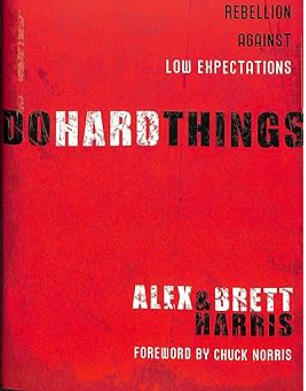
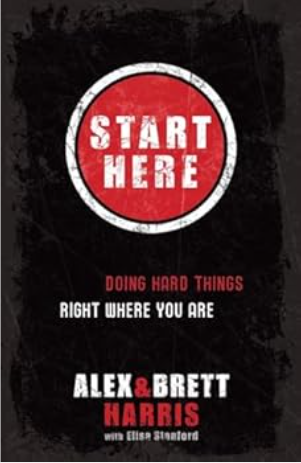
I read the book “Do Hard Things” when I was 13, and I later read the follow up book to it “Start Here” (both by Alex and Brett Harris.)
Then, inspired by a story in the second book, I tried to start my own fundraiser to send money to a charity I liked.
I thought people would do what they described, they would want to help me and that would make it happen. I had ideas…but, I never had a lot of support form others, and on my own, I didn’t have the means to raise the money. We raised some, but, not as much as I wanted.
One lady did try to caution me to be more realistic, and I dismissed her at the time, saying that I had enough faith for the big amount.
But, perhaps the Lord humbled me for that reason.
It wasn’t pure arrogance on my part, really, though. It was that I thought that’s how it worked. That God blessed everyone’s efforts if they were for the right reasons. I didn’t want glory for myself, I wanted to do something meaningful, something that would make a big difference.
Maybe I did want to accomplish something, in a way, to make myself feel important. But looking back, that’s more of something I think now that I’ve had time to examine myself, not what I thought at the time.
But it doesn’t matter if my motives we’re all selfish, or only partially selfish, or not selfish at all; whatever the case, I mistakenly assumed that a first try was going to succeed just because it was for a good cause and because the books made it sound that way.
The books didn’t share a lot of stories of failure. Probably because they didn’t think they’d be as inspiring. But the thing is, teens need to be told they will fail sometimes, even many times, before they succeed, because everyone’s path is different. And the odds are you’ll fail more often than you’ll succeed at anything that involves other people, because no one is likely to care as much as you about it. And even if you find that golden group of people who do, there is luck, or fate, or whatever you call it that has to line up, it can take years for that to happen.
For some people it does happen fast, but, that’s rare. And usually it’s not even the most talented people that it’s true of. It can be passing fad that they happens to hit at the right moment, it can be being in the right place at the right time, or it can be they do the wrong thing by accident, but it somehow works.
For me, it was very discouraging to realize no one else cared as much as I did, but now that I’m older and more experienced, I know that is not uncommon.
But I had the expectation that it would be simple for me. And maybe, for someone else, it would have worked, but the books didn’t cover what to do if you’re not that special person.
So I learned that you can’t do everything just on your own steam.
Other changes I tried to make I could do them, when it was just me. But not always as much as I wanted.
I’ve tried things like exercising regular for years, off and on, and it took till this last year for me to finally have the mental discipline and to know what works for me, enough to actually pull it off for months on end, so far.
I’m learning about what works for me, and I’m finding my footing. I’m 25. I Wish I knew what when I was 16.
But this is why it’s dangerous to tell kids to be their own hero.
The fact is, and if you are a teen or young adult, I say this with the greatest possible respect, but the fact is: You don’t know a lot yet.
I don’t mean that many of you are not smart, capable, and even independent.
But what I mean is that experience is what shows you what is going to work for you, and you just can’t have that figured out as a teenager. It takes months usually to test any thing enough to know if it’s a good fit, and we only have so many months in a year, and so many years of being old enough and capable enough to test out things. Especially in the West.
So the reality is, even for those of us lucky enough to be able to do what we want, and not what we must, as with most places in the world, it just takes time.
And kids can be really prepared with numbers, and figures and info, but still not be ready for the real world. But no one ever is ready. You just go for it, and you get ready as you do.
That’s the truth.
And I’m still in that phase, honestly, but at least, now I know I am. I didn’t before.
There’s another thing to consider:
The culture we live in is obsessed with personal success.
But, let’s look at some dark truths.
Statistically, not all of us will live to be old enough to be successful.
It takes most people till their 30s to be gaining more than they’re putting into anything, let alone a career.
It takes most people years to have kids, if that’s their dream, and to find a romantic partner. I’m still waiting for my first boyfriend in my mid twenties. It’s not that I haven’t looked, but I’v never found the right tone.
The Bible says we shouldn’t set our mind too much on earthly things. People have seen this as some hyper spiritual way of looking at life, that God just doesn’t want us to care about Earthly things that much.
But that’s not what the Bible means by that. In Ecclesiastes it even says you should enjoy what you do, and your marriage, and your life, as best as you can…but knowing that it’s all vanity. It all will pass. And that you may not live as long as you want to. But who’s to say you’d have been better off if you did?
It’s bitter wisdom, but it is still wisdom.
It’s not that God does not want us to try to succeed, He does, but that He is warning us to spare ourselves the heartache of pining all our hopes on one thing that is only temporary even if we get it.
What if we made a million dollars? We’ll spend it.
What if we have kids? They’ll grow up.
What if we get married? Both of us will die eventually, one before the other, probably.
What if we make a great piece of art? Well one day, it will be destroyed or forgotten about.
And this is not bad. It’s just the way time affects us. Nothing can last forever. If it did, new people would never have the chance to be successful also. Some works seem timeless, but even they will be destroyed one day, and new works will replace them.
This is not really bleak, it’s just the way the world has to be to give a constant new chance to the people who live on it.
And that said, whatever we do, while it may be good, is nothing to stake our whole life on.
I’ve seen people like my father who get so depressed they feel suicidal when they can’t do well at their job. A lot of men are like that.
Or who get so down when a relationship ends, because they put all their hopes into that.
I’ve never wanted that to be me.
Yes, I put a lot of myself into what I do and who I’m with, but, I know one day it will end. And while that’s not an excuse to slack off, it does mean I have to be ready to let it go, when it does.
Job, one of the most famous sufferers in the Bible, if not the most famous, said, when he had lost everything through no fault of his own. “The Lord gave me what I had, and the Lord has taken it away. Blessed be the name of the Lord.”
See, all success we have is borrowed.
Even if you didn’t believe in God, you have to just look at the world and see that things change all the time. Success will rise and fall for everyone in their life. A billionaire could lose everything and be a pauper, just as easily as someone could become an overnight success. Depends on the person, and the time they live in.
We get so focused on what’s in front of us, we forget that it will not always be in front of us.
Same goes for suffering.
So when it comes to being our own hero, our own answer, for things, we have to realize that it’s never that easy.
There is a lot we can do to help ourselves, but some things always depend on others and their actions.
For me, it’s hard to accept that because people have let me down a lot…yet, without the other people helping me, I wouldn’t have gotten to where I am now. I wouldn’t have learned more about myself and I wouldn’t have learned the skills I do have.
I resent it sometimes when people act like I need help, but, I do.
And I no longer think I can save myself, if I ever did.
And that’s the thing, you can’t save yourself.
That’s a lie they keep putting out there.
Even in that Titanic movie, they say Rose has to save herself.
It’s true that there will be times when it is just us against the world, that you must fight for yourself, and that is part of life.
But that’s more like a crisis moment than a regular thing. Rose didn’t even save herself, Jack saved her, as she even admits later.
And while I’ve had to think fast and act to save myself a few times, most of the time I’m teaming up with other people.
And for me, God has always been the thing that’s saves me the most, even when no one else is around.
If you look up only to yourself, and treat yourself like God, which is really what this self actualization and saving yourself and being your own hero crap is about, when it’s taken to its logical extreme, then when you run out of strength, as everyone does, you’ll collapse.
Why do so many people commit suicide who feel alone? Because you can only talk yourself out of something so many times before you start to feel like it’s just your empty opinion and you’re deluding yourself.
But if someone else is helping you, then it’s easier to believe it.
C. S. Lewis even observed that defending the faith for years might be a way to start having a harder time believing it.
Why is that? Because it was his ideas he was putting against consent opposition, and we start to doubt our own footing after a while. How can we be right? And everyone else be wrong?
But majority rule does not determine who is right. Even finding one or two other people who agree with us can be enough to encourage us to keep believing.
But we can’t all be right. For me, I still compare everything to what my faith teaches, because there has to be some way I can filter what everyone else says and what I think myself.
But if I was just alone with it, if I had no one and nothing to turn to, I couldn’t really believe anything. I’d have no way to test it.
So no, I’m not my own hero, or my own muse. And I think anyone who says they buy that, is kidding themselves.
Even if, at most, you could maintain that for a few years, the bubble bursts sooner or later.
And it should.
And what you find left after that point, that’s what your life really is.
So I guess I’m warning you all reading this not to put too much stock in your own character. Even if you are your best self, your best self will never replace the need for a perfect and flawless model to base our lives on. And we do need that, as humans, because we need to know where we come up short, so we can improve.
There is one recent modern example of this that most people will probably recognize, of the contradiction of saying you should be your imperfect self because that’s better.
In the hit movie “Encanto”, Isabel, the middle child in the Family Madrigal, sings a song called “What else can I do?”
In the song she says “It didn’t need to be perfect, it just needed to be, and they’d let me be!”
The song is about her letting herself go wile with her power.
Now, in of itself, that’s maybe not bad–though she does cause a lot of destruction and injuries by doing it, but the movie waves that off as just the result of her being able to be messy and free finally.
[What Else Can I Do?– Encanto]
But the film (and its reviews) missed the problem with what Isabel is doing.
If it’s truly better to be imperfect…how do we measure that? What are we comparing our imperfection to to say it’s closer to it than our attempt at perfection?
And the answer is usually ‘we don’t know’. There’s just this blind idea of a happier life that we think not trying to be perfect will get us.
[Because we all know it’s the people who try the least who are always the most satisfied with their lives…right? (Not statically).]
I am in favor of breaking the mold, but only because I think the model itself is never perfect, not because the idea of perfection is the issue.
See, when we say we can’t be perfect and we should be, we mean other people’s ideas of perfect, and it’s true, those are never accurate.
But if we ever saw true perfection, we’d see it was beautiful, liberating, and more satisfying than anything else. Because…that’s the definition of perfection. It has no flaws, no drawback.
Something can not be perfectly imperfect, that’s a contradiction.
And because we are not perfect, we always need to grow…but we need to realize we’ll never meet anyone else’s standards of perfection either.
And so we need to allow each other to make mistakes, but never assume that means making mistakes out of a callous disregard for any kind of standard is a god thing.
There has to be a balance to this.
And that’s part of the idea of not trying to be your own hero. If you are your own hero, you have to never mess up. But if you do, who will save you then?
Rather than being liberating, it’s horrifying, the pressure would be endless.
But if you are not your own hero, then you can save yourself, sometimes, but you can also be saved by someone else. Or something else.
And there’s nothing wrong with that. Experiencing things outside ourselves is why we’re on this earth. And to add our own flavor to it also. That’s the paradox of life, giving and receiving in a rhythm and often, doing it at the same time.
So to wrap it up, my thought is, we all should stop saying we’re going ot be the hero of ur own story.
You are a player, but you are not the game. You can be a hero, but you can’t be the only one. You can achieve greatness, but you can’t expect to be the pinnacle of all things.
We should aim high, but learn we’ll never reach heaven, to use the old Babel story metaphor.
And that’s good, because people who live that way are the most happy anyway. Because they know what they can achieve, and what they can’t.
And I hope to live this way myself.
Thanks for reading and please leave a like if this post resonated with you–


 drybonestruth