What do I complain about the most? (More in depth)

Daily writing prompt
What do you complain about the most?

I try not to complain too much, but I have the usual things. Traffic, weather.

I have cut down on complaining by listening to stuff during traffic, so I don’t get as impatient. Sometimes when I’m in the groove, I’m almost sorry it’s over.

I think though, that my biggest complaints have been about people treating me in a belittling way, or like I’m wrong.

I have fairly good judgment (with some exceptions) and it annoys me to no end when people act like I’m not informed on something or not thinking about it the right way.

The car incident being the latest example of this.

Everybody said I was overthinking the problem. That it was fine. That it was just the car’s quirks.

Even the mechanic said that.

But they were wrong. And I almost listened to them.

Taking people’s advice is nothing I have a problem with. I ask for it all the time. But I always weigh the different advice I get against my own judgment and what sounds right. What feels right. Or what matches my faith.

I’m not really the type of Christian who takes the “It will all work out in the end even if we do nothing” approach to life. I don’t really think it’s a biblical approach, in most cases. Religion is not an excuse to be inactive.

I do recognize some things are out of my control.

But here’s one hard truth that not everyone is ready to hear:

Sometimes, you assume things are outside your control because you’ve grown up around people who just accept problems and never change them.

I realized the difference between myself and my parents over the last 6 years. Ever since my dad moved out.

I don’t complain about anything unless I intend to find a solution for it. If I accept it the way it is, there’s no point to complaining.

Grwoing up, neither o f my parents modeld that.

My dad complains about everything. Money, church, weather, his friends, his family.

Other than weather, all of those things are ones you can affect directly.

And I got real sick of hearing it even as an 11 year old, about when I realized it was kind of on him.

It was like, if you don’t like your relationship with your family so much, do something about it. Do something else to earn money.

He did eventually, but he complained for years before he finally came to that conclusion. I would have done it immediately. I know because I do it now as soon as I have a problem.

Churches can be changed (he did that too, still complains though, and he’s done it again even since he moved out, though he told us the church he was going to when he left was the best one).

And then all the either, little, petty things that he would get mad about.

The house being messy, but he never cleaned it, his areas were some of the most messy.

That type of thing.

Still, my dad is more proactive than my mom, and f I had to guess I get that trait from his side of the family more than hers.

With her, while she’s a nice lady, she doesn’t really fix problems. She just tries to work around them.

With my dad for one thing.

And with a lot of other stuff, she just takes the L.

Stressful work sitations.

Health issues.

I mean not always. We’re not totally out of touch. But it’s more often than not, basically.

If she talks about a problem, and I have a solution, she won’t usually do it unless I’m basically doing it myself.

I’m not sure if my compulsion to fix issues is because both my parents are inactive. I do know that it got on my nerves from when I was a pre-teen up till now.

I don’t want to be unfair to them. Mostly they are smart people who avoid getting into problems as it is, so they don’t usually need to get out of them.

It’s just that life can knock you down sometimes. And you have to find a way to get back up.

And with you can do it slow, or you can try to find a way to speed it up.

Many people are never taught to think that way, and they accept problems very passively, or with anger, but no real approach to solving them. Both my parents were taught that by their parents.

It’s a cycle.

I’ve noticed it in my sisters often too. The willingness not to change anything, even if they don’t like it.

Granted, I’ve gotten in trouble for jumping the gun and trying to change stuff. People don’t like to be told they’re wrong.

I’ve realized since this car issue started, that people also don’t like being told that you don’t need their help to fix it anymore.

See, when I help someone, I try to make sure they need it first. I don’t push them towards my solution past that point, usually. Im’ not perfect, I have don that.

But since I’ve been told off for it, I think I learned to think more careful about it.

I don’t like to bite people’s head off or tell them they aren’t really helping me. But sometimes I wish they’d pick up on my hints that I don’t really want them to tell me what to do.

I asked my middle sister if she was annoyed when people told her that, and she said it just doesn’t bother her the same way as me.

So I said. “That’s because I tell you what to do all the time, so you’re inoculated to it.”

And she said “yeah” without one second’s hesitation.

I guess the joke is on me there.

To be fair, my sister is the kind of person who forgets simple things so often you have to remind them a lot and procrastinator on taking action. She’s very good at working hard and she can do a job well, but that initiative that I have isn’t her thing.

Basically, I’ll try to improve any work environment I’m in in some way, whether I’m asked to or not. Been doing that since my first job–which makes a lot of people think I’m arrogant.

And maybe, sometimes, I can be. I suppose anyone can be who likes to put their own spin on things.

When I write, I often do it to improve on ideas I got from someone else.

There are whole careers you can make out of doing that, though. So I guess I’m not the only one.

Maybe I should become a life coach (lol).

Look, the point I’m making it sno tlen to brag on myself, though I think it praon sounds that way.

I never thought I was good at this stuff. It’s only because I’ve noticed that my decisions work out better consistently that I’ve learned I might be.

I didn’t always expect them to.

What I’m trying to say is that if you’re the type of person who is like that, who doubts yourself because other people seem to doubt you, you might want to consider if you have a good track record. Maybe you’re doing better than you think.

And then we won’t need to complain so much. Better to fix it than complain about it, I say.

One-Time
Monthly
Yearly

Help me fix my car

Make a monthly donation

Make a yearly donation

Choose an amount

$5.00
$15.00
$100.00
$5.00
$15.00
$100.00
$5.00
$15.00
$100.00

Or enter a custom amount

$

Your contribution is appreciated.

Your contribution is appreciated.

Your contribution is appreciated.

DonateDonate monthlyDonate yearly

That’s hard to answer…

Daily writing prompt
Can you share a positive example of where you’ve felt loved?

This might sound kind of weird, but, I don’t know that I’ve ever “felt loved”.

I mean at least not by a person.

I am a Christian, and I have experienced God’s love. I think most skeptics would doubt that’s a real feeling. And since I can’t prove to them that it is, I don’t know if that counts for them.

I think there is a psychological reason for why I don’t feel human love.

I recognize love, in my mind. But there are walls up that block it from reaching my emotions.

Growing up with an emotional manipulative and abusive father, it’s not rocket science.

For my father, saying “I love you” was usually only a thing that happened when he was berating me.

It was pretty twisted in a way.

“We’re doing this because we love you, Natasha.”

And what they were doing was berating me for everything I ever did around them.

If you want the full story of how this started, keep reading. Otherwise that was my TLDR explanation.

Let me explain:

I was told I was rebellious. Even though I hardly ever broke a rule in my entire life. I’m not kidding, I barely even broke bedtime rules. I like limits and boundaries, they make me feel more balanced. I wasn’t the type to unravel them without a good reason.

But yes when I decided something wasn’t good for me or helping me anymore, I would protest it.

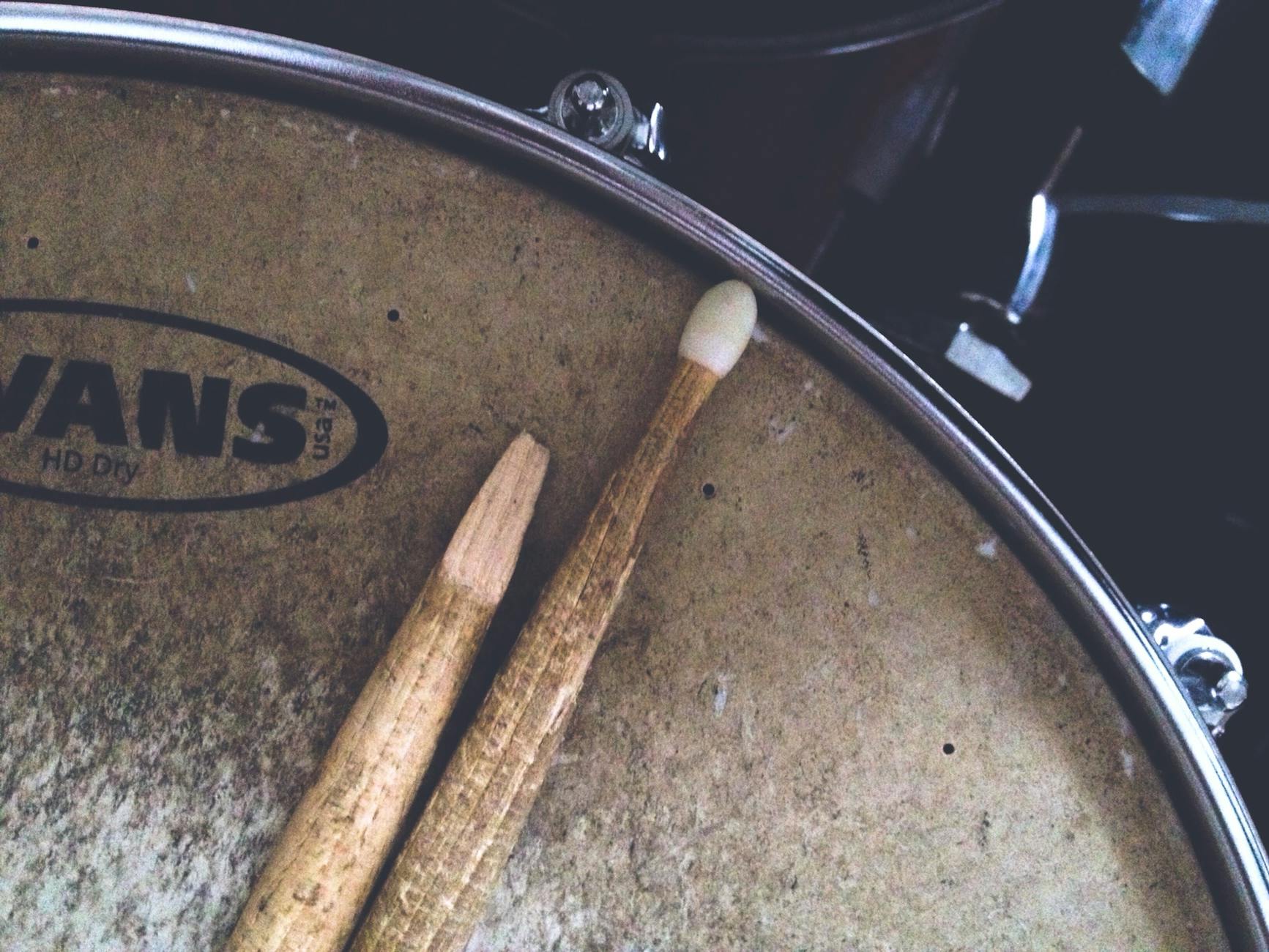
So when I decided I wasn’t enjoying drum lessons anymore, I said I wanted to quit. That’s where it all started.

This was after a year long of taking them, which my father agreed on as a trial period. When I brought up to him that I didn’t want to anymore, he said “Oh you’re not gonna quit.”

Mind you, I hadn’t ever actually used the drum in a real performance, or any performance. And the only time I even tried to play along with my dad and his friends, they criticized it because it was too loud…you know, because you learn drums to play a quiet instrument.

Since I saw no purpose whatsoever in learning it anymore, I was miffed at my dad breaking his agreement with me.

After thinking about it, I pointed that out to him, respectfully enough, I thought. And he said fine, I could quite.

But that wasn’t the end of it.

He talked to his best friend and the friend’s wife, as well as my mom, about me wanting to quit, like it was one big crime.

I couldn’t understand why they cared so much. Since I wasn’t using the drum for anything, what did it matter?

But it turned into a whining session where his friend aired some other grievances about me that I had no idea he had.

Apparent’y, I made some joke during one of his music lesson with one of my sisters. Just about tomato sauce. That was it. I didn’t even really direct it at him, just made a joke about the ingredients in tomato sauce. He was deeply offended.

Now, as an adult who has taught a class, I completely could understand why he might have been annoyed that I interjected while he was teaching.

However, as an adult who teaches 10-11 year olds, I would expect that behavior from that age group, without it really being malicious. And I was only 12 at the time of this conversation.

A 12 year old interrupting to make a joke isn’t , in my mind, a big deal. If it happened to me, I would have simply given the kid a warning, explained why it was disrespectful, and left it at that. If they didn’t do it again, I wouldn’t even tell the parents because who the heck really cares that much?

Apparently, my dad’s best friend.

Now he never said a word to me about this, oddly enough, nor did he ask my mom to talk to me about it delicately.

I didn’t hear about it till this big confrontation with 4 adults, all of whom told me I was a brat, disrespectful, and not nice to other people.

At the time, I also took singing lessons from this best friend’s wife.

She didn’t like me much because I couldn’t stand still while I sang. And I got tired easily. Also I didn’t like the music choices that she insisted on. She didn’t ever teach us any songs we actually got to pick, and when I asked if we could learn any songs I actually knew and liked, she said no because they were pop songs.

I guess it was her right as a teacher not to teach it if she didn’t like it, but she really shouldn’t have expected me to be interested in learning if it was all music I didn’t care about. I’m pretty sure music teachers in actual public school pick at least some songs the kids like.

I found out years later that the reason I can’t stand up easily is I have uneven legs, so I tilt to one side when I stand (good think my name isn’t Eileen), and I have a more curved spine than usual and a curved tailbone, making it hard to stand straight for long periods of time. I have gotten a bit better with some chiropractic treatment and exercises to improve my core, but it’s never been easy for me to move the same as other people, and it probably never will be unless the problem is resolved. Which is unlikely.

So she got mad at me for something I couldn’t help. and I told her and my mom that I just got tired and didn’t feel right standing.

The crazy thing is, you can sing sitting down. It wouldn’t have been a big deal. Sure it’s better to stand,but I wasn’t going to be doing any Broadway musical, it would have been fine for me to sit while learning. She sat while teaching me.

Even moving around, which was still easier for me than standing because I could at least shift balance, she wouldn’t allow.

I suppose, maybe it’s not her fault that she didn’t know I had a real problem and just thought I wasn’t listening to her. But the issue is, she never even considered any alternative explanation other than I was trying to be defiant.

Well, to be fair, after she got on my nerves with this crap for weeks on end, I was trying to be defiant. But it didn’t start off that way. If sh’e d been nice to me, I wouldn’t have wanted to act out. But she did all this from the start, when I wasn’t trying to do anything to set her off.

I know, not the most mature thing–but I was 12 years old. 12 year olds aren’t mature. Even so the worst I did was probably roll my eyes and act bored, which is rude, but hardly the kind of rebellion I would think would warrant a four person intervention.

Again, no one just sat me down and talked to me about this in a normal way first. Which is my first recourse as child care provider myself. I always gives kids a warning before I jumped to a full lecture. If they ignore the warning, then I know they’re blowing me off. But if they don’t, then they were just being kids with short attention spans who don’t know social etiquette yet. I make allowances. It’s not like every kid is going to be able to figure this out intuitively.

Anyway, to get back to how this tied into love.

During this dialogue we were having, which felt more like a one sided monologue to me, they were criticizing pretty much everything about me.

Even at the time I didn’t think it made a lot of sense, 4 adults, two of whom I didn’t really know that well, and barely talked to the one, and my parents, all criticizing me.

I’m now very against this approach in practice. I think most people with experience with kids or even teenagers would be. Two people is about the limit for any confrontation with a kid that’s not a medical emergency, I’d say, without it feeling like you’re bullying the kid. I’ve seen kids cry over less, as it is.

Oh and I was crying through most of the conversation. Do you think they stopped? Do you think they tried to comfort me and get me to calm down?

Nope.

Tey told me I shouldn’t cry anymore.

And my singing teacher even picked apart the way I was sitting as being a defensive psotiosns.

Can’t imagine why I would have feel the need to protect myself , under the circumstances.

Now that I’m experienced enough to know how weird this situation was , I’m amazed my mom didn’t see it that way. But I figure my father probably bullied her into it, as he usually did.

The icing on the cake of all this was that one thing I was getting in trouble for was something my dad told me to do, and though I even expressed doubt about doing it to him, he said it would be fine. So I did it.

It was not fine.

He conveniently had forgotten he told me to do it. He admitted to it during the confrontation.

Do you think they stopped? Do you think they apologized to me for the mistake? Do you think they admitted it wasn’t fair?

Not in my memory. But I have blocked out a lot of it, I could be wrong…I do know it wouldn’t be in character for them to do it. I can’t recall either of the other two adults ever admit they were wrong.

My dad would only admit he was wrong about imagined things, not real things. Go figure.

The part that made this about love, much to my dismay both now and then, was that they claimed this entire humiliating experience was done out of love.

Yeah…it really felt like being torn apart for 2-3 hour staring was an act of love.

In the end, though, I did still quit the drum. I find it funny that the thing that set this off was still something I won about. Yet, I feel like I lost more than I gained from the experience.

I’m not sorry now I quit drum, it wasn’t for me. I’m not even sorry I took singing lesson, I enjoy singing. Granted, I hated taking them for that woman, but I did like learning it and I like knowing a bit about it now.

I do still wish she’d taught me how to sing different styles than she did so I could have used it more widely, but them’s the brakes.

Of course one incident might not have given me a complex about love, though for some people that might be enough to do it, but I’m a reasonable person, and I was even as a teen, though less so then, of course.

Still, I could have probably put together that that wasn’t right, if my dad hadn’t reinforced it over and over again.

But pretty much any time my dad and I were alone for longer than 10 minutes he’d start up on the subject again. Bring up every example they had, remind me that his two friends,and even their family, didn’t like me. Say I was a lot like a narcissist.

The funny part is my dad is the the actual narcissist, or has BPD. One of other or both, maybe. I now know it’s common to project your own toxic traits onto someone else, I don’t know that at 12, of course.

Always though, my dad would end or begin or interject into the middle of these lectures, that this was done in “love.”

I’m a very sensitive woman. I always have been. I won’t say verbal abuse is worse than physical abuse, both suck.

But to a sensitive person, it was devastating to hear this so many times.

I’m not a meek type of girl though. I fought back.

But since fighting back, both the first time,and every time after that, never got my anywhere, it created this complex where I feel like nothing I do will ever change people’s minds about me, and I expected them to dislike me, secretly, even if I’m not aware of doing anything to them to cause it.

I expected that for many years every time I met any new person.

Unfortunately, the world had a lot of touchy people in it, and sometimes, I got proven right. I’m sure my insecurities didn’t help with that, since insecure people tend to do things to tick others off anyway, but sometimes it really just came out of nowhere.

The unlucky times my dad got involved, he would usually agree with whoever it was. Even if it was the Sunday school teacher beefing with me for causing problems just by sitting in her class doing nothing.

My sister was there too. They don’t call her in for questioning. She didn’t even know what I did, to this day, I don’t know. But I know my dad was always ready to agree with anyone who had a problem with his daughter. Didn’t matter how unbalanced that person was to begin with.

All the little things my dad did to sabotage my life, but they added up.

I can’t of course, lay the blame for everything at his feet. Some of it was my fault. Some of it was other people’s besides my dad’s.

But the person who twisted the knife every time by calling it love, that was my dad.

I’ve never had people comment on how little I seem to be able to receive love.

Because when someone says that word, I flinch sometimes, inwardly.

I actually prefer if people use words like “I care about you” or “I appreciate you” because they ton’d set me off the same way. My dad certainly would never use words like that.

But “proud for you” is a trigger too, because he used that also.

It never meant anything. I figured out years in that he didn’t mean it. And I figured out also that even if I had done something to be proud of, he would have meant it. He didn’t think that way.

Pride in us wasn’t about what we did, or even about us being his kids, it was always about what he thought we wanted to hear to do what he wanted.

See, some people just never give love, and that’s bad enough.

Other people use love as reward for good behavior, and that’s just as bad, or maybe worse.

The type of person really talk about is the kid who uses love as a motivation if and when threats aren’t working. Just so you can be both scared, and then feel guilty for being scared.

Gas lighting at another level.

Thanks to this, I can’t feel love easily.

I won’t say it’s impossible. I feel love for other people. It’s easier when it children, people who don’t scare me.

That’s what got me, truth didn’t help. Truth is very important to me. If I assume something about someone, and alt er find out a fact about them that calls that into question, I actually changed my mind. I can’t imagine not doing that. But there are many people who will never change their mind, no matter what the truth is.

It’s hard to realize that when you’re not that kind of person.

But I’ve learned to let it slide off my back more.

I’m not writing this to say that my dad ruined my life. Or even that he ruined my relationships. I have good relationships with some of my family. And I have friends. I’m learning to get better at all this.

I hope one day to have a good marriage–which I will probably get counseling for, but that’s just good sense.

And a good relationship with my own children, if God grants me them like I hope.

But I’m not going to lie about my life and say all this didn’t matter or have some effect. Admitting it mattered actually is part of healing.

So it did matter and it is sad. Even saying that took me years to get to. I’m glad for the people along the way, here and there, who did take my side and tell me that that wasn’t normal to go through that.

I had a very good grandmother who would sympathize with me, she was still there for me when my parents weren’t. I had a good youth leader who helped me see at least some of what my dad did was wrong years before I could go to therapy to her the same thing.

I wasn’t always alone. I was just alone too much for it to be good.

But we take what we get in life, and I see no point complaining about it. I think we get what we need ultimately if we seek it, but not always the way we imagine it.

I’ve still never really had father figure other than God. But God has been enough, I know that will sound weird to the person who’s not a Christian, but it is what it is. Think I’m crazy if you want, I really don’t care. Until you have a better cure for broken hearted and lonely people, I don’t really think I’ll swap out mine.

I hope that I will learn to like the word “love” when people say to me again.

I think all this came to mind not just because of the prompt, but because of a thing one of my friends, who is a very blunt person (too much like me probably) said to me at my birthday party.

She pointed out: “Look how loved you are.”

I was thinking that it was nice of them all to show up. And I thought she was right, they were trying to show love.

Yet, when she said it, I felt nothing expect probably confused.

Like I usually feel when someone says that. Or uncertain. Maybe it’s fear, maybe it’s just doubt. Maybe they’re the same thing at bottom.

If I accept that, then how will I handle it when they end up doing the wrong thing to me, or leaving me? As everyone will, sooner or later.

Unfortunately for the person who has “avoidant attachment” disorder, as one therapist told me (he was an ass though, but he might have been right about that–he didn’t help me with the problem though), the fact is that being separated from the people you love is inevitable.

It’s hard enough for a healthy person to accept loss and grief. It’s harder if you’re someone like me who has had very little chance to even feel loved at all, so any short stint of it that will be taken away again feels cruel.

I have learned however, that often we’re more loved than we see.

And that the way I interpret love is not always the way people show it. A lot of stuff is just not communicated right.

And recently, I had an ordeal that my friends did not exactly make me feel better about. Doing a lot of the same things that set me off–but I didn’t blow up at them.

I was a bit upset, but I didn’t lash out at them because I knew, at least in my head, that they meant well and were trying to help.

While I would rather actually feel better, I do at least derive some sense of comfort for the fact that I have people who will attempt to help me, even if they don’t succeed. Having grace for people is important.

And that’s a huge stride for me, from where I started from.

So if you related to this post at all, I can tell you that it’s small things like that are along the path to health.

I don’t have it all figured out yet, but I know that at least being able to treat people with some degree of trust, even if you have doubts and anxieties, is the only way to start.

It might take years for me to feel it the way others do. I can be mad about that– or I can accept it and keep trying.

Maybe this is my favorite Naruto characters are Sai and Gaara. Both characters who pretty much embody the journey of learning to feel things again and feel them the right way.

Or my favorite author is C. S. Lewis, who wrote that it was important to be able to feel the right way about things, to be a whole and happy person. [It’s in the “Abolition of Man” book.]

If you met me in person, you might not even guess this about me. My friends have told me they wouldnt’ have before I told them.

I take that good sign. I’ve worked enough on the issues I have are not all obvious. That’s progress. They used to be blatantly obvious to people, based on what they told me.

I’m not a closed off person in every way either.

I guess my point in all this it is to say that these issues don’t define me, and they don’t define you either. You can have issues like this and still be a loving person. So they make you more loving because you over-compensate, in fact.

But I think you can never been too loving, so it’s a win-win. Sometimes broken stuff can be fixed to be stronger than it was naturally. Like when they cut off the trunk of trees to graft in a stronger trunk, but keep the old root system. (They can do that with fruit trees, did you know that?). You gotta know what to keep and what to throw away.

I think that’s in Ecclesiastes actually.

Well this got pretty long for a daily prompt post, so I think I’ll end it here. I hope some of this was encouraging, since it was kind of raw and heavy for this kind of post, but it was where my mind went, as as you know my motto is to keep it honest.

So until next time, stay honest–Natasha.

Why I don’t regret being homeschooled (thank you Mom and Dad).

So as you may know from reading my other blog posts, I was homeschooled.

Being both white and homeschooled, and living on the West side of America, I’ve definitely never really fit in with modern prgoressive culture.

And the biggest way I always noticed that was (shockingly) in Education.

Not having the picture perfect background wasn’t harmful to my education

Usually people say that white kids have different family dynamics than other ethnicity, and my friends who are not white have expressed surprise at my personality and dynamic, I think because they expect my family to be the classic two-parent, non dysfunctional, well off household, just based on how they perceive my sisters and I as classy, polite people.

But the truth is that was mostly our mom, and partially ourselves too, our family is at least 50% white trash on one side, with just as many broken households, drug problems, and jail time as any other stereotyped group.

And by contract I know black and latino families who are much more well off and functional than us, and with better behaved kids than my cousins have.

So I’ve learned not to make so many assumptions based on the popular narrative.

My mixed experience in Public education

But I did not fit in at my secular college, being homeschooled and not given to assuming things about people based on their color or background.

(Shocking really, how much people just assume you’ll judge by color, when they say that’s racist.)

I did not get along too well with my professor who pushed this agenda the most.

Some people claim there is no agenda, that the schools should be educating their students about how racist America is and all its bad history.

I remember one of the singular moments I decided that was insanity was in my World History class where the teacher confidently told us that the Spanish Conquistadors were disrespectful to the Aztecs for criticizing them offering human sacrifices.

The “criticism” was pretty light, in my opinion, Cortex didn’t shoot them or start yelling at them and dragging people out of the temple, he just asked why they didn’t find it abhorrent, and the leader got very offended by the question (some things never change).

My professor said it was arrogant and disrespectful to their religion.

I put my hand up and said “Are you saying they should have been okay with human sacrifice?”

And for contex, they were sacrificing slaves…you know, the people these types always say were the most mistreated in America? But we never got to that point of sacrifing them to our pagan gods, at least. I mean, we had some line. (Not much of one for some people), but the thing is, it was totally accepted in the Inca and Aztec Cultures).

I’m not saying we didn’t have our sins, but I fail to see how Cortex questioning it made him the bad guy here. In fact, he seems to respect the lives of these slaves more than their own neighbors did (they were usually captured slaves from when the Aztec colonized smaller tribes…and yeah, that was thing that happened before the Europeans ever got here.)

The hilarious thing to me that all this was in our textbook, and the Professor could have fact checked her own class assignments to know she was wrong, but she just didn’t care.

She didn’t like me too much because I kept questioning her assumptions or “edited” version of history. And another student told me to “educate myself.”

I wanted to say: “I did, that’s why I know this.”

I wasn’t taking the class because I didn’t know history, I was taking it because my stupid college requires it and you can’t just take a test to prove you don’t need the class, unfortunately, so I had no choice. But I could have aced most of it without needing the lessons, for all the professor really covered in detail.

At that point I decided it was stupid to rely on them to teach me history and I avoided taking any more history classes except the required ones.

I also took a Philosophy class, where the Professor told us there was no such thing as definite truth.

I asked her if she was sure that was true.

She looked at me for a second and then said. “No, anything is possible.”

I lost all respect for her ability to teach me philosophy (the pursuit of truth), but I did have fun proving her wrong at the end of the semester after she expressed doubt that I could write an objective paper about whether or not people should teach Intelligent Design theory. ( I got an A, she admitted she learned something from it, she wasn’t a bad person, just clueless about her subject matter).

This and many other experiences convinced me that my parents were right about the modern education systems, 100%.

Funny, my family member all said that we wouldn’t be properly educated being homeschooled, and my grandma said that right up till I went to college and made the honor roll my first semester, and then stayed on it. She hasn’t said it since, but she’s never apologized to my Mom for her lack of support.

My aunt gets defensive about it if we talk about the problems with public schooling, since her kids are public school, but to me the crowning irony was that I tutored both her kids while they were doing online schooling during COVID, and I got her son way more into reading and her daughter to at least finish her work, where they couldn’t do it.

She even admitted it.

But no apology, no acknowledgment that we were right about school.

I’m not blaming parents per sec for putting their kid into public school if they have no choice, but my aunt could have homeschooled them if she wanted, she just didn’t consider it a viable option, which is too bad, because both of them woudl ahve done pretty well with it, I think. Especially her son, he’s probably smarter than I am, but his talents are wasted in Public school. Thankfully their school isn’t a bad one as far as that goes, but it’s just not even close to being able to provide the same nuturing as homeschooling.

I’ve learned through some other study that the modern education system was designed by businessmen to teach people only the basic knowledge they needed to work in factories or minimum wage or slightly above average jobs. (Look into Rockefeller and who funded the modern public school system.)

And now thanks to safety issues and the culture war, it’s gotten way worse.

Being raised homeschooled and then going ot college, I began to understand it.

The coursework was way too easy for the most part, it was shocking to me how little the professor expected of grown adults, and how irresponsible they were about studying.

But after years there,I began to stop studying as much also. Because I was smart enough to pass the class with minimal effort, I didn’t want to put in more effort. Because I wouldn’t be graded on how thoroughly I understood the subject, or be able to present more information than I was allowed to (gotta have no more than 5 points, or 5-7 pages per project, right), I had no motivation to keep digging deeper once I met the quota for the class.

Thankfully, I had the homeschool study mindset ingrained in me and I still looked further into some subjects when I was actually interested in them, but the ones I didn’t care about, I didn’t learn to care about more because of college.

I also learn to have very little faith in most of my professors to know what they were talking about. Aside from my History and Philosophy professor, my Astronomy professor admitted that the theory of how the moon was formed he was teaching was against scientific laws that we already know work and would have to just not work, magically, for the theory to make sense, he said he didn’t know the answer but there probably was one.

I was not impressed.

Granted, not everyone has to know the answer to everything, but you’re teaching a class on it and you’re teaching this in the class like it’s fact, when it’s not… So isn’t that lying?

To be fair, I have had the same experience in Sunday School when I had a teacher teach something that was unbiblical and I pointed it out. She didn’t like that (and I understand why now that I’ve taught, why it was annoying–but I’ve never had that happen to me in my Sunday School class because I don’t teach stuff that’s not in the Bible or at least not allowed for by the Bible).

Basically, teachers love me or hate me depending on what kind of student they prefer. I’ve had some who liked that I questioned stuff and dug deeper, but, I feel like they were more rare the higher up I got in classes.

And when I was in the Sign Language course, it was awful. So little focus on teaching the language, and so much on cramming the agenda down your throat.

(I don’t have a problem with people who are deaf, but I do have a problem with being asked to feel sorry for them and put myself down just because they’re involved in something. I wouldn’t ask anyone else to do this for me, no matter what disadvantages I had in life, and I find it disgusting that we encourage it in otherwise capable people who don’t really need to ask for pity when they could just function as part of society if they wanted to.)

To sum it up, public education of any kind often has done more to stifle my love of learning than it has to foster it, and that was mostly as an adult who’d been in the habit of learning for years before that. If it did that to me, what would it do to a child who never even got a chance to develop that enthusiasm before going to Public or Private school.

How did I learn to love learning?

My mom didn’t make us start learning seriously till we were 6-7, so unlike preschool and Kindergarten, we weren’t forced to start doing lessons really young, which is probalby partly why we didn’t hate it.

(Personally I believe before 6-7, the average child doesn’t have the attention span necessary to really start learning, and punishing them for not focusing is just teaching them to hate school).

My mom also started light, we didn’t learn officially about history or English or anything like that, we started just learning to read and do basic math. She eventually moved us up to high math, but she never forced us to read anything. She read to us a lot, and so did my dad sometimes, and explained stuff to us just in conversation so we didn’t think of it as learning. Mostly we were allowed to play and use our imaginations after doing a little bit of schoolwork.

For Geography, my mom didn’t officially teach us that till we were older, and then she used things like the Top Secret and Which Way USA kids magazines. I also read Ranger Rick, which taught me about life science in animals.

Eventually we officially studied anatomy and biology, but we were older and she didn’t really make us do it till we were willing to, usually (at least for me).

Me and my first sister both started reading chapter books at 7-8, I picked it up a little faster (and I still read faster than her now). But my second sister only really started to like reading at 12-13. She was very slow at it before then and sometimes wrote numbers and letters backwards.

Most people now would say to take her to a specialist, but we never did. She grew out of the problem and now can read much at a much higher level than most older adults. The trick was we just didn’t rush her to develop faster than she was ready to.

And that’s the problem, the education system is all about getting you through it as fast as possible, streamlining it, and not everyone’s brain develops at the same rate. Then you end up with all these “learning disabilities.” [I know that some of them are legitimate issues that can’t be cured, but, I believe the majority of them are caused by rushing kids before they are ready.]

My Mom’s approach was mostly inspired by this book that Homeschool leaders Oliver Demille put out called “A Thomas Jefferson Education.” They modeled their homeschool style after how the Founding Fathers, (and most gret men in the last centuries), learned and studied and got through college.

They have 7 Principles for learning that were applied, and I’m going to put them here, but also link to their page that describes it in their own words:

https://tjed.org/7-keys/#:~:text

 1. Classics, not Textbooks (or Fluff)

They have a list of recommended Classics also, but it’s not only old books. A Classic can be any book that has a profound quality to it that has stood the test of time at least enough to have people be impacted by it. Like “Ella Enchanted” could be a Classic, though it’s in the last few decades, because it was a trend setter of modern fiction and has a deep and thought provoking message, with no vulgarity.

But parents decide mostly what counts.

Also movies can be classics. The TJEd thing is very open to interpretation, which is why it works for so many people.

2. Mentors, not Professors (or Pals)

The idea here basically is to teach in a more personal way, not just doing lectures. Having a relationship with the students where you can give more one on one advice…and having worked as a tutor, I now see that most people would benefit greatly from more of this in their teaching style. Lectures should be only the start off point for learning, with mentoring and self study building off of it. (Some programs even in mainstream school realize this, I had a mentor assigned to me during my last few Sign Language classes–but unfortunately they don’t really allow for the language barrier making it difficult or the fact that my first mentor had a definite bias against me and tried to tell me to reconsider my field several times. So having a parent pick the right mentors is a must.)

3. Inspire, not Require (or Neglect)

They say this is the most important principle, and I agree.

The main thing was that my parents did not require us to read history books, or social studies books. I Read PYSCH books for fun as a pre-teen, and teen, and still as an adult. I read historical fiction and non-fiction stories about peoples’ lives for fun. I read about social issues from reading and learned about them in Church also. I watched videos about science for fun.

Because they let me find the things that worked for me, and we used YouTube and movies, and audiobooks and songs, and computer games even, to learn harder subjects.

My parents mostly just talked to us about the subjects they thought were important and then let us explore on our own. My mom took us to the library and let us go browse for whatever we liked. We all developed our unique reading taste through trail and error. I got into the Magic Tree House books, and learned a bunch. We loved the Magic School Bus too. A lot of stuff we watched was educational, but still fun.

The stories and interactive aspects of it inspired us and made us want to learn, instead of us feeling required to learn before we had any interest in it.

The key thing is that kids must feel their parents are invested in their learning. We felt like that with our mom.

4. Structure Time, not Content (or Ignore)

“There are 4 phases of learning: Core Phase, roughly ages 0-8; Love of Learning Phase, roughly 8-12; Scholar Phase, roughly 12-16; and Depth Phase, roughly 16-22.” According to Demille.

this was helpful to my family, because we did go through these phases while learning. I’m still kind of in Depth Phase, though I’m more of exiting it into full adulthood.

Because of these phases, My mom didn’t worry too much about my sisters not always wanting to learn some stuff right away. The cool thing is that once you like learning, even if you don’t like one subject at first, usually your love of learning eventually spreads to it. For me, it worked with every subject but Math, and that’s mostly because I’m not good at doing it in my head enough to enjoy it. But I did like it up till pre-Algebra. [Don’t use Saxon though. That will kill any child’s love of math, we made that mistake.]

Pretty much every subject we picked up either by osmosis because we read books that covered it (like History we picked up from Historical Fiction), or we did study projects. But at the Scholar phase, we mostly took con of our own learning, and that happened for us in our late teens usually.

5. Quality, not Conformity (or Contempt)

Basically this step means you don’t grade, you just critique constructively until the student does a good enough job to feel proud of their work. And for you to feel proud of it.

And of course if you don’t know the standard, there are people you can hire even for brief stints who can help.

6. Simplicity, not Complexity (or Chaos)

Again, their words might be clearer than mind:

“The more complex the curriculum, the more reliant the student becomes on experts, and the more likely the student is to get caught up in the Requirement/Conformity trap.

This leads to effective follower training, but is more a socialization technique than an educational method.

Education means the ability to think, independently and creatively, and the skill of applying one’s knowledge in dealing with people and situations in the real world.” [Demille]

When we studied, we read books written by people who experienced it or had a passion for it and did their research, not by people who just studied it to get a degree.

And you know what? That made it a lot more fun. People who love a subject do way better research than people who just need to earn points.

7. YOU, not Them (or Nobody)

At bottom, this method is about teaching your child (or yourself) in the ways that’s best for them.

Doing this makes you smarter too. My mom said she learned way more about stuff and became a better reader after she taught us how to read and do other subjects. She became better educated through homeschooling. We’d go on trips to museums, watch historical exhibits, see people reenact, observe old skills like weaving, woodworking, dying, glass blowing.

And we’re not a rich family. We didn’t do all this stuff all the time. We got our books from the library more than we paid for them. We went on discounted trips or went only once in a while. We used free resources when we could.

My Dad also taught us economics by having us take part in his own small business, and we raised chickens and kittens and a dog and learned about the care of animals. We had our own backyard garden and read up on agriculture.

I now know that Potato had plant parts and carrots get flowers (weird looking ones too.) and so do onions. I didn’t know that before.

And we were not rich. We were renting the home we had the garden in, but they said it was okay (the last renter just left it a dump anyway, so we couldn’t make it worse. At least we weeded it so we could have the garden. And our chickens ate the pests. We also trapped gophers who stole our plants so we made the neighborhood more pest free.)

We aren’t even the most extreme homeschoolers. I knew kids, Mormons usually, who could whittle, cook, and do farm work and have small businesses before we did. And they had huge families who had a lot of expenses. But they made it work. Probably because they had a community of support.

Which is one thing no one ever credits homeschoolers for, but you often make better friends in a homeschool community because people care about depth and arts more than they do about cliques and trends; and those interests tend to last, while fads fade every few months.

Also the rate of teen pregnancy and drug use is in the abysmally low percentage in homeschooling co-ops since your parents are usually watching you at all times, or your older or younger siblings, so…not much chance of getting into any trouble there.

(A little too much so, maybe. One mom didn’t like that I picked her daughter up in a princess carry for a joke, though I didn’t touch her in any weird place and I was doing something I did with my sister all the time. I didn’t do it again after that but I thought it was odd that she made such a big deal out of something so small.

Was just as well though, I realized afterward that my back wasn’t strong enough for those stunts.)

Conclusion:

There were some challenges to being homeschooled.

We never fit in with Public schoolers. We had only a few friends, and after we moved, none of them lasted for very long. They were good friends, but the distance just made it too much for them.

There were subjects that got somewhat passed over. We didn’t do a lot of exercise because my mom didn’t really care about that. We didn’t do a lot of Geography either. (But then public school barely does that now.)

I studied language of my own accord, but my sisters never really got into it but they did art. One did dance.

So yeah, I don’t regret being homeschooled.

And if all that sounded like an amazing experience to you, then you might want to consider it. Heck, even if you’re not an adult and are still in college or highschool, homeschool yourself.

Really, it’s so painfully easy to do most school assignments, it’s shocking to me that kids don’t just do them quickly and then study more on their own, like I would, but, then, schools make them hate learning.

FAQs:

But what about transicps for college?

What we did was take our Highschool equivalency test, and then I’ve gone to community college for several years to get a GPA.

Then you can transfer to a lot of universities from a community college and already have several credits and a good academic record. They really just care about your most recent records, usually.

It’s true that the government does not support homeschool. You can’t take tests usually and prove you’re ready for a higher level and you don’t usually get grants or scholarships for homeschooling specifically. Though there are a few more right leaning colleges that might be able to help you like Hillsdale, and Monticello (where they use TJEd.)

I wouldn’t worry too much about your kids being successful. As long as they make social connections with people, even if they’re older or younger than them, and learn about the real world bit by bit, they’ll be able to figure it out.

It took me a while to learn how to talk to people who weren’t homeschooled in a natural way, but you can learn social skills also, and if you have a love of learning attitude, then you’ll put effort into it, like I did and not just wait for the skills to hit you in the head one day.

That said, homeschooling benefits far outweigh the cons, and especially nowadays, public school is dangerous.

So I’m not sorry my parents made a different choice, and if I have kids, and have the means and ability to home educate them, I will be doing it.

You will make sacrifices. But, the way I see it, either you can sacrifice your comfort zone, cushy lifestyle, and the approval of your friends and family–or you can sacrifice your kids to a system that demoralizes them, exposes them to danger, and makes them hate leaning.

Your choice. [If you have the means to have a choice, obviously not if you simply can’t afford it. But most of the things I mentioned you can do even as a single or lower class working parent, just with some tweaks. Check out websites about free or discounted learning activities in your area.]

Sorry if that got a little dark, but the school system is in terrible shape now and the time for being lenient about it is kind of fading, I think.

[Any more questions you have or resources you’d like me to recommend for different school subjects, please leave a comment. I know a lot of great tools for educating both yourself and your kids in a fun way.]

Until next time, stay honest: Natasha.

One-Time
Monthly
Yearly

Make a one-time donation

Make a monthly donation

Make a yearly donation

Choose an amount

$5.00
$15.00
$100.00
$5.00
$15.00
$100.00
$5.00
$15.00
$100.00

Or enter a custom amount

$

Your contribution is appreciated.

Your contribution is appreciated.

Your contribution is appreciated.

DonateDonate monthlyDonate yearly