Paragon of Virtue

For it is in passing that we achieve immortality. Through this, we become a paragon of virtue and glory to rise above all. Infinite in distance and unbound by death, I release your soul, and by my shoulder, protect thee.
Pyrrha Nkos

It’s no secret if you’ve followed me for a while that I was originally a big fan of RWBY.

And that I’m still a fan of the first 3 volumes, at least. Possibly the 4-5 ones also.

I’m also a fan of the Justice League Animated show (and recently I watched the Snyder cut of the live action movie, and holy cow was it like watching a different film! One I actually lied. I think we should burn the theatrical cut and pretend it never happened.)

So I was talking to my sister about both these things and comparing the characters, and she specifically requested I blog about this topic.

So here we go:

What is a Paragon?

Let’s look at the web’s definition, though most weebs already know what it is, sort of:

“A paragon means someone or something that is the very best. The English noun paragon comes from the Italian word paragone, which is a touchstone, a black stone that is used to tell the quality of gold. You rub the gold on the touchstone and you can find out how good the gold is.” (vocabulary.com)

Most people acknowledge that the main character of any given kids show or movie is supposed to be the paragon. And if I name names, you’ll see a pattern.

Anime has a paragon almost as a requirement, with a few exceptions, like the Shield Hero.

Midoriya (My Hero Academia)

Naruto (Naruto)

Tohru (Fruits Basket)

Natsu (Fairy Tale, Erza would also be one)

Hiro (Darling in the Franx)

Not all of these are perfect examples, the first two are the closest. But you know the characters who stand above the rest, who everyone wants to be like, who they trust to lead them, who they think has some moral insight that they don’t.

Outside of anime, the paragon is less worshiped, but still present.

Captain America (Avengers)

Xavier (X-men, often Logan also fulfills this role)

Mickey Mouse (any Micky Mouse media)

Aang (Avatar the Last Airbender)

So you see paragons are everywhere. That’s why it’s considered a trope.

For a better explanation of how it is used in a story and the pros and cons, I refer you to Overly Sarcastic Productions excellent video:

Love Red’s videos about tropes

So, of course, the two paragons I wanted to talk about are Ruby, from the show RWBY, and Superman, from the DC Universe. Particularly his recent shows and movie renditions.

I’m going to argue that neither of these characters are good paragons, though they are treated like paragons by their writers and fellow characters, and the fans, by and large.

But my unpopular opinion is that they both suck at fulfilling this role, and that is because people lack understanding of what makes a paragon really work.

I think it goes back to our culture’s lack of understanding of what makes a righteous person to begin with.

(I’ve argued that Gaara should be the protagonist of Naruto also, and a protagonist and paragon do not have to be the same thing but they usually are in anime, however I think Gaara fulfills both roles better.)

It’s easy to see why Superman would be considered the best of the best, who can be better than Superman?

Yet, it’s interesting that in every version of the Justice League that’s written where they turn to the dark side, Superman is the first to fall.

I now the premise is that he is the only one holding the league together, so if he falls, they all fall.

I’m going to argue now that that is actually one of the signs of a bad paragon.

1. Instead of people being inspired by the paragon, they instead rely on them, both intellectually and physically.

Ruby is the bigger offender here, but so is Superman.

Lazy thinking is the bane of every group in real life, but it’s also one of the main things that kills fictional teams.

The whole team relies on thsi one person to know what’s right and to know what to do.

Sample:

Yang from RWBY: “She (Ruby) always knows what to do, so I’m going to follow her.”

Flash from JL animated series: We don’t do that to our enemies.

Diana: Speak for yourself.

Flash: I was trying to speak for Superman.”

This is just one of many examples from the shows where the other characters rely on the example of the paragon…to a point where it seems they may not actually agree with them.

I’m against murder, of course, but Diana stopping herself only because Superman would say to, and not out of any mercy of her own, seems like a red flag.

And it’s made more poignant when we consider that both in the Justice Lords episode of this show, and in the video game and movie versions of the Dark Justice League, Diana goes dark once Superman has led the way. Implying she never had any root in herself and her own ideals to resist the pull of power.

Diana’s weakness is not thinking for herself. Flash, who we learn died before the League went full on power mad in the alternate world, would have been the only person to resist the corruption, and he is the only one to stop Diana in the regular timeline.

J’onn, the Maritian, also expresses how he wonders if they can still be a league, how many battles did they win just because Superman was there, he asks.

[I actually think he’s less necessary than they think based on the show at least, but not in the movies.]

On RWBY, Ruby is followed by her sister, Yang, but also by Ozpin, who insists that victory is in the simpler things. Even the theme song says ‘victory is in a simple soul.’

The problem is, Ruby is not a simple soul.

Actually she is full of insecurities, questions, and later on, she resorts to deception and misleading her allies, just because she’s not sure what they will do with the truth, even though she was angry at Ozpin for doing the same thing.

Whereas Oscar, a much better character, is against ding this, but gets ignored because no one respects him.

And Superman, despite Flash’s well meaning optimism, is not the paragon of mercy Flash thinks he is.

Flash didn’t witness the two times Superman tried to kill Darkseid, a villain who humiliated him more than even Lex Luthor, who he just barely holds himself back from killing as it is. But Superman actually had zero hesitation to try to kill Darkseid, and was only stopped, one by Supergirl using reason, and once by Batman, who used brute force (sort of, he got lucky with a boom tube.)

The issue I have with both Supes and Ruby isn’t that they make these mistakes, while being the leaders, but it’s actually my second point:

2. The paragon lacks humility.

A good paragon has flaws, that’s not the problem. The problem is when they pretend that they don’t.

Ruby makes a crap ton of mistakes, but notably, she never once admits it.

As far back as volume 1, Weiss goes off on Ruby for being reckless and a show-off, but then admits that she herself can be a little ‘demanding’ and offers to compromise.

I might be missing something, but I don’t recall Ruby ever owning up to Weiss having a point. She’s just blindly confident that she’ll impress everyone with her skills. Which she does, but that doesn’t make her a good leader.

Weiss also complains that Ruby is the leader of their team, and offers some valid reasons, which in my mind were proven entirely right by Ruby herself several times, and then some, and while Weiss is hardly perfect, Ruby never tries to amend her actions to give Weiss more confidence in her, or acknowledge Weiss might have a point.

“I’m not perfect! Not yet, but I’m still a hundred times better than you.” Weiss, volume one. (I may have paraphrased slightly)

All the way up to Volumes 6-8, which were all horrible train wrecks, including the actual train wreck that happened in volume 6, where Ruby actually says she never needed her uncle’s help, after he saved her butt like 3 times just since his reintroduction in vol 4, and the other times people bailed her out.

Ruby, much like Naruto and Deku on their shows, doesn’t one off win nay fights on her own after volume 2, and that was a draw. Yet she has the idea that she’s independent somehow…why?

Let’s look at Superman for a moment.

In one of the worst episodes of the first JL show (but still far better than the last season of the Unlimited follow up show) Secret Society, Superman pisses off Flash and Hawk Girl by saying:

“At the end of the day, I’m the invulnerable one. Every hit I take is one someone else doesn’t have to.”

While they get mad at this, no one makes the pretty obvious come back: “Sure, until someone has Kryptonite or Red Sun Radiation.”

Something multiple people have had access to, in the show alone, and on his own show.

Superman may be tough, but everyone knows his weaknesses! He’s not invulnerable or invincible. Plus, even Lois Lane has had to save him, not once, but at least 2 or 3 times on his show, and the others saved him many times on the Justice League show.

So where does he get off suggesting that he’s somehow less subject to peril than they are? If he was less reckless about his own safety, they’d actually win their fights faster because they might employ this thing called strategy.

And this leads into point number 3

3. A paragon that never learns

Because of people worshiping them, and their big head, often bad paragons never learn anything from their mistakes.

The entire show of RWBY is proof of that for Ruby, but Superman is a little less obvious.

However, if we consider what happens in the Justice League show, it’s kind of unnerving.

One episode, Patriot Act, points out that after the League got called into question for having a weapon that was worse than a bomb would have been in their watchtower, and Cadmus has issues with them, instead of losing power, the League gains a second base on the earth, but doesn’t’ dismantle their watchtower.

And the only group that was capable of competing with them has been so publicly shamed that they are no longer a threat. Meaning the League is freer from criticism than ever.

Yet the League is still caught off guard by the villains unifying, and almost loses yet again to Darkseid. Superman, rather than show more caution, seems to be overly confident, and has to be saved, ultimately, by Lex Luthor, the most humiliating choice yet.

I can’t blame Superman entirely for that, but he didn’t really back off after the Cadmus incident. I don’t see how getting more power is learning his lesson about hubris and controlling things too much.

What really stands in the way of the League becoming the Justice Lords by the end of the show? Only Flash, anything could still happen to him. How have they learned and become stronger?

This is a problem with the show overall, but especially with Superman. Everyone else changes and evolves over time at least a little, but he stays the same. The same pride and anger under the surface, and willingness to compromise what he claims he upholds.

And finally, one last point

4. A paragon who is only an example when everyone is looking or they have something to prove.

What I detest about both Ruby and Superman, not because I’d hate them as people if it was true, but because they are hailed as such paragons of virtue, is their lack of consideration for anyone else.

If no one is looking, Ruby never gives a crap about helping anyboyd but herself, if shes’ not playint he hor.

Ruby herself is helped both by Blake and Jaune just on her first day at Beacon Academy, but we see her help no one else, nor try to.

While others stand up to the racism against Faunus, Ruby does nothing.

And when Oscar gets beat on for unfair reasons later in the show, Ruby only steps in one time, and that’s when it’s someone who she’d not get much flack for calling out, but not when her uncle or sister also abuse Oscar.

Ruby is nice to Oscar, because she has a crush on him, and once or twice she is nice to Jaune. So she’s not the worst, but she never goes out of her way to help anybody. Nor is she ever more open-minded than anyone else in the team.

But Superman has to be even worse.

I was reading someone else’s post about Wonder Woman the other day, and they brought up a scene where Diana teaches a little girl how to fight to help her have confidence about playing with the boys. The author commented that she couldn’t see Superman or Batman doing this.

I think Batman actually does demonstrate compassion more often, in his own way, when he helps Ace, one of the villains Cadmus created, as well as Baby Doll, one of his sadder villains, and many others. Actually it’s why he and Diana are good together.

But I agree, I can’t see Superman doing it.

Superman is the type of guy who’d say he has to focus on the big problems, fly around and help people, and the little things aren’t ones he can afford to spend time on.

Yet those things are what make us the most human and help us to stay grounded. If you’d take time to help a kid, even if it’s just over something small, then you will remember what’s really important.

He keeps Lois, the closest relationship he has, at arm’s length. At the end of the show, she still doesn’t know his real identity, that we know of. She knows freaking Batman’s, but not his!

I’ve never seen Superman help a kid, outside of his old comics, and then it was to prove a point, that he was Superman…he still helped either way, and I’m not saying he wouldn’t have anyhow, but he got invested primarily for that reason.

Contrast it with Flash, who is a great guy on and off the job, based on how his coworkers treat him. And is a great guy even to the other League members.

Can you see Superman getting Hawk Girl a coffee and blanket? Or giving an old coot an actual fair chance to explain his magic crystal and have a job later? Or painting someone’s fence?

Me neither. The fact that I wouldn’t even imagine it says a lot.

Oh and RWBY has an example of this too. Pyrrha freaking Nikos!

And that’s the perfect cue for me to launch into why Pyrrha is a way better paragon than Ruby, and why many people would be a better one than Superman.

Ironically, almost any member of the 7 would be better than Superman, but most of them lack the leadership drive to be so.

Good Paragon traits

Basically just turn all the bad ones on thier head.

Let’s star twith the last one and work backwards.

Instead of only dong good when it’s beneficial for them also, good Paragons do good when no one thanks them for it.

On Naruto, Gaara sticks up for the rights of people to have life, and for the ideals of mercy, long before he gets made the leader of the army. He works for years to reform Sand Village, to the point where assassination attempt on him by the elders who think he’s crazy or wrong happen so often that his siblings no longer even react to having to save him and each other’s lives at any given moment.

On RWBY, Pyrrha sticks up for Faunus though it gets her little thanks from her classmates. She also helps Jaune with his problems, even when it would get her the opposite of what she wants, or when he gets mad at her.

But what I love is that she’s got bit of a temper too. When Jaune forsakes his team because Cardin blackmails him, instead of coming to them for help, she makes her sentiment clear until he finally apologizes, but she still bails him out of a tight spot.

Pyrrha helps Jaune for his own sake, even when she’s not getting anyth out of it.

She also is nice to team RWBY, paying for their meal and is generally kind and caring to everyone.

Jaune also is a decent paragon, he has more of the traits of pursuing excellence that they have in anime, but he also sticks up for his team and helps people even when he doesn’t have to, as I mentioned above.

Turning back to Justice League, Wonder Woman is far more compassionate than Superman, and Batman is less arrogant. Flash however is the best example, since he combines both those traits at the same time.

Often the traits of a good paragon would be better if they rested on two or three character’s instead of just one, since few people are that virtuous, but if we want to find who’d be a better starting point, those are our choices.

Hawk Girl has the most integrity of everyone in the League, but lacks the confidence to lead, or she might make the better choice.

Point number 2, all of these other characters learn more than the actual paragon characters do.

Granted, not that much, in Batman’s case.

But Batman has a healthy respect for people with different qualities than himself, whereas Superman doesn’t.

Pyrrha is not given the chance to learn much since she (SPOILER ALERT) dies before she really can. But based on her overall humility, it seems like she would have.

Jaune we see does learn from his mistakes and improve, becoming more of a peacemaker in the group and a protector.

And of course, that includes having humility.

One of my favorite things about Pyrrha’s character, as I got more mature about looking at her, was that she isn’t above improving. She has a power that makes it easy for her to win fights by hardly doing anything, but only uses it to give her a bit of an edge, she still trains like crazy to hone her skills. She still thinks she needs to practice. Shes’ willing to team up with less skilled people like Jaune just because she likes his attitude, and to take orders from him despite his lack of experience, unlike Weiss’s attitude towards Ruby.

Pyrrha could roll her eyes😒at Jaune, but instead she builds him up. And he becomes the kind of leader she believed in, as he even acknowledges in vole 5 when he said she told him something once, and he believed her.
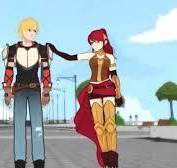
Pyrrha and Jaune

Pyrrha could win more on a different team, or if she asserted herself over Juane, but she doesn’t. Instead she embraces being treated like a normal person by him, and doesn’t see herself as the invincible, untouchable warrior.

And last bu not least, back to point 1.

A good paragon is not worshiped, they are imitated and respected.

Perhaps this is where Pyrrha, Flash, and the others I mentioned shine most clearly beyond their competition of the canon paragons.

While people talk about imitating Ruby, or Superman, no one actually does it. Or when they do, it’s usually the worst parts of them. Because people always copy your underlying attitude more than your professed one.

Flash copies Superman’s reckless actions more than his selfless ones, the Flash is selfless on his own, that’s why he can take that out of Superman’s example, but Superman never really has any interaction with Flash about this, nor do we see any one moment where Flash is inspired by him to be selfless when he’s actually there.

In contrast, Batman is moved by Flash’es compassion towards his foe the Trickster, in the episode about Flash. And tells Orion that he does not understand him.

Batman actually never talks Flash down, notably, and hes’ shown to be a closet fan of the Flash even in other renditions of the League.

So Flash inspires respect from people it’s worthwhile to earn the respect of, and he is looked up to by kids and regular citizens also just for being so good hearted.

Even if not everyone imitates Flash, they respect his heart.

Pyrrha on the other hand has admiration from her peers and superiors alike, but it’s interesting that in her closet ring of friends, she doesn’t inspire the hero worship that Ruby does.

People don’t look up to Pyrrha to lead them, they want to be like her, because she follows the right thing not just in her words, but in her actions.

Ruby and Superman tell people what the right thing is, Pyrrha and Flash show them what it is.

This doesn’t even mean that I’m arguing for Pyrrha and Flash to be the leader of their teams, I don’t think either of them are suited to that, in fact I thin paragons often don’t make good leaders because of their lack of putting themselves first. A leader ha to have some self confidence.

But like Jaune, and like Batman, the best leaders are the ones who are following the example of a paragon who isn’t the leader, but isn’t a blind follower either, who makes their own choices, but i willing to work with others also.

Pyrrha never turns down help, and Flash is the first to ask for it again after the League breaks up.

Every leader I know of who is also a paragon is the most boring and frustrating kind of protagonist, the most engaging leaders are the ones who learn from paragons as they go.

Like the show My Little Pony’s MC Twilight, who has to learn from all her friends in order to become the Princess of Friendship.

Pyrrha’s influence is felt in volume 4 and 6 especially when we see that Juane, as well as her other teammates, all want to be more like her, they do not say that about Ruby.

Ruby can lead, but she can not exemplify. That’s the problem.

Like Obi Wan Kenobi in Star Wars, Luke might be the leader, but he’s following Obi Wan’s example.

Once in a great while, a paragon may make a good protagonist, Twilight Sparkle sort of grows into being a paragon by the end of MLP, usually it’s done best when it’s like that, one character growing into being one over time.

Which is where Pyrrha having struggles and an arc in volume 3 made her much more like a protagonist than Ruby has ever been, fight me.

A paragon can also become a protagonist over time, it’s usually very satisfying to see that actually.

But the starting point has to be them working together, or it just doesn’t feel right, at least to me, it feels fake.

We are all protagonists in our own lives, but we all should want to be paragons, and if we find people looking up to us like ones, we should never forget to be protagonists also, always able to learn from others.

But when you divorce these two characters from helping each other, your story falls apart, because that’s not real life.

And with that, I think I’ll end this post, until next time–Natasha.

Enemies to Lovers and Crackshipping

Hey, it’s been awhile. I know, I’m sorry, I was writing other stuff.

I decided to do another fandom post, why not?

Let’s talk about crack ships.

I’ve been on Wattpad a lot lately (uploading fan fiction) and I discovered that peopel acutally write whole fics that are just analyzing ships…and people actually read that.

Okay, to be honest, I read it too, but I thought I was the only one who cared why people ship things. Like, I like discussing pros and cons, but from what I see in fandoms it usually is just “It’s cute and sexy so I ship.”

I never ship stuff based off that alone, usually. But I enjoy cute and sexy as much at the next girl, I suppose.

(my version of sexy is probably pretty homeschooled, though.)

Anyway, in the mha fandom there’s been a ship since last year or so that’s gotten a following for being a crack ship, and it got me thinking why do people ship crack ships?

I always thought it was sexual addiction, honestly. I mean, I’ve shipped a crack ship maybe once or twice because of a fan fic I wrote where it kind of made sense, but I don’t take it seriously outside of that. So I never got it.

And I was a little judgy about it, to be honest.

But I really don’t care if people ship Jack Frost x Elsa, or whatever, if they want to do that. The crack ships I find disturbing are the ones between adults and kids, or siblings, or other inappropriate people.

You can ship whatever you want if it’s not creepy, I think, but don’t make it creepy, guys…

So the ship that got my attention on all of this was DustBunny, or ShigarakiXMirko.

I never heard of it till I clicked on this one video on YT, and I thought “this cannot be a thing…what?”

But then I watched it and it was funny, and I thought “okay, I see why people think it’s funny, but is are they serious?

And a lot of fans think shippers are crack heads, especially crack shippers, kind of goes with the name…

I’m here to say you all should just screw off if you’re going to seriously think that shipping is weirder than the stats arguments you other nerds get into over shows and movies and books.

I mean critisize me for shipping if you think it’s bizarre, but don’t act like it’s weirder than what the “intellectual” fans do, for crying out loud. I can’t stand hypocrisy.

Anyway, I’m not trying to start a fight, just saying people should stop acting like it’s better to be a weird fan for one thing than for another, it’s all the same, isn’t it?

Except people who consume content just to get sexual pleasure out of it…that’s weird.

Anyway, why should any of you care?

I assume you like ships if you’re reading this, so let’s ignore that part.

Is it worth it to analyze a crack ship, that’s the question I want to answer.

[I’m also going to talk about why this particular kind of Crack Ship is so popular, and why I think it matters in the second half of this post, so read to the end if you want the deep stuff.]

Firstly, I think it depends on what you mean by worth it.

Will it make it more likely to happen? No.

We all know crack ships will probably never happen, ever.

But is it worth it to ask why people like it? Sure.

There’s always people who are in it just for the sexual content, but there’s always some people who actually put real thought into it.

And if you can’t judge humanity by the person, I think you can’t judge shippers by them either.

I mean romance is something most people want, so why let the perverts out there stop you from appreciating it, that’s my attitude.

And whie you don’t have to ship Dustbunny to understand what I’m saying, I’m going to use it to illustrate what I mean:

First of all, a crack shp has to be between people who it doesn’t make a whole lot of canon sense for them to be together.

The reason is that it strongly appeals to some people to change canon.

Some are just perves, again, but for the more serious cases, I notice a trend.

Crack ships tend to pop up around characters people think are lacking something. Whether it’s that they are lonely, or perhaps morally bankrupt, or too arrogant, people use a ship as a vehicle to imagine character development within.

And whether the two halves of the ship even know each other is not really the point. The person is picked base on the trait the shipper thinks will help the other person the most.

Case in pont: In MHA, Shigakria and Mirko have never met…and may never meet, quite frankly.

But that just makes it better for a crackshipper, because there are no limitations that way.

They won’t look at facts, the look at possibilities.

I call it “what if” scenarios, (and that was before I found out that was a kind of fan fiction, btw)

And you may ask “if it’s not going to happen, then who cares?”

My answer to that is: You can’t go through life thinking of what seems like it’s possible, and expect to ever exceed very mediocre expectations.

I mean, everything looks impossible and unlikely to us until it happens. When you were a kid, driving a car, tying your shoe, or riding a bike seemed like it would never happen. It was a whole new world of rules and skills you did not have. When you didn’t know how to read, reading seemed out of reach. Books were a thing you didn’t get.

Then you learn those skills, and you can’t imagine not being able to do it anymore. When you really learn something it’s hard to forget it.

It’s called expanding our horizons.

Stranger things have happened in real life than it would take to make most crack ships happen, if you chose to take that route.

2. The second objection that might be made is that ships like this are creepy and weird, not becuase of age gaps or being related, but because they are built on nothing and are often between characters on opposite sides of the good-evil conflict.

That’s more likely because if they were on the same side, chances are they would interact, and it wouldn’t be 100% a crack ship then, there would be come canon material for it.

So a hero-vilia ship is usually a crack ship, I’ve seen a few canon ones from time to time. I actually usually enjoy them. You can’t beat stakes like that.

But mostly, it’s crack.

Sometimes they are creepy, I’ll give you that. And it’s probably always going to be weird.

But there are some objections I think miss the point.

One being: He or she is a villain.

Duh, that why people are shipping it, for the redemption arc part (more on that later)

Two: There’s a slight age gap.

An age gap of 5 years or so is not worth making a fuss over. Maybe after 8-10 years you could question it, but I think it’s only creepy if it’s between an adult than teenager/kid.

People will throw the age thing in there when it really shouldn’t mattter. Only dating people who are with 1 or 2 years of you is going to be pretty limiting, especially since people are at such different levels of maturity at any given age. I’m more mature at 22 than most of my older family members three times my age are. If I let age be the only factor I’d be in a tight spot.

Crack ships do often have bad age gaps though, but as I said those are the ones I do think are wrong.

The ones that are small, and that the only reason people are objecting…I just don’t get it. Pick a real reason, man.

Back to the moral question:

I think me and some other people wonder if it’s really okay to ship heroes and villains.

I mean, my whole objection to ship  Toga from MHA with anyone, hero or villain, is that she’s psychotic, kills whoever she likes, and shipping her with anyone is kind of like saying you want them to die. (Which makes me wonder if all the people who ship her with Bakugo have ulterior motives.)

I don’t find it cute, sorry.

I think that’s one other objection that is valid.

People contemplate that crack ships ignore very important parts of the characters. Like that they are killers, or abusive.

Sadly, canon ships also do that, as Naruto proves…but yes, fans do it more.

It’s very true. Toga is one example. But you could name a bunch more if you’ve been in any fandom for a certain length of time.

And I don’t support that. I think if to ship someone, you have to ignore part of who they are, a big part, because it’s just too repulsive otherwise, then you cannot ship them. Unless you intend to rewrite the character entirely.

But then…it’s not really them anymore.

When I was younger and less mature I used to think that approach made sense, but now I don’t. If I have to change a character to like them, I just should like them. I can be mature enough to admit that.

Like, could I like Toga if I ignored her psychotic tenacies? Sure…probably, I’m not immune to the weird cute act the author pushes with her (why doe anime do that?).

But I refuse to overlook part of character in order to like it. She may be cute-ish, but she’s psycho, and not in a joking way, in a legitimately will murder you type of way. That’s not okay with me. If I wouldn’t ship it in real life I won’t ship it in a show either.

But I don’t think Dustbunny and other ships like it are on the same playing field.

You have to look at the characters involved. Shigaraki is not like Toga. He’s crazy…ish. But we also have signs that he can be more human, self controlled, and mature than she’s ever going to be.

And then if you are caught up on his backstory, you have a reason to think he was not naturally the way he is. All For One has trained him to be sick and twisted. But if you can be trained one way, you can be trained another.

I was watching one video and some idiot commenter was saying that Shigaraki justifies his actions because of his trauma, which is just not okay, because characters who have it just as bad as him are still good.

And I thought “When has Shigaraki ever justified anything he does because of trauma?” I can’t name a time. He claims he has the right to do it, because AFO taught him that, but he never says it’s good, or that it’s okay because of what happened to him. He does not really seem to think about what happened to him as unfair, he thinks he is just made to destroy (again, thanks to AFO).

Seriously, do we even watch the same show. Dabi justifies his actions because of his past, so does Twice, so does Spinner. All a bunch of victims, really. But Shigaraki doesn’t. He is brainwashed into thinking he should destroy by his ever helpful and despicable master. Talk about blaming the victim.

Unlike Toga, who actively seeks out twisted things as part of her whole schtick about doing what she wants.

Shigaraki is always referring to AFO teaching him to be this way, like he knows he didn’t come up with it himself.

That give the redemption arc fan a hope he might be made to see it’s all a lie.

Not much of a hope, perhaps. but there is some.

(And for the record, I’m still saying it’s going to happen, though not because of this ship, but I think if I’m trope savvy, that’s what’s coming. )

I guess this is kind of a hot take on Shigaraki’s character, as well as the ship.

The reason I need to talk about both is because people object to the ship because they think he’s a schmuck who cannot be redeemed.

And that’s hypocritical, because most people who complain about that will ship other stuff if they like it, regardless of how bad the person is, but whatever.

If that was true, I’d agree, it’s useless to ship. It’s like shipping Emperor Palpatine with someone, I’m sure people do, but decent people don’t talk about it.

But I actually like ships for villains who are more victims of other villains, because the ship is sort of a vehicle to introduce the idea of happiness to them. Something they would fight for, something they might defy their programming for.

I mean if you won’t do it for love, what will you change for?

I was watching a video about the enemies to lovers trope earlier today that basically summed up how I think of it.

It’s hard to reform villains in a way that makes sense in story. Either you do what Avatar did, and humble them through hardship and the truth about their past, but that is not going to work for every villain, obviously, if they already know their past and are evil because of that.

Your other option is for the villain to start to care about something.

(We’re gong to ignore the Naturo/shonen anime standard of beating them into submission and then they somehow have a change of heart. That never works irl.)

What would the villain carea bout?

Maybe there’s a vague good concept you could try, but most often, it has to be another person. What else can get past our defenses?

It can be their son or father, like in Star Wars, but family is always a gamble at the motivation for reforming. It might work, but then, if they cared about their family at all, why would they be evil?

MHA did this with Endeavor, but Endeavor also change because he realized getting what he wanted was not really what he wanted, and he didn’t get it the way he had wanted it anyway. That humbles him, and he starts looking to be a good dad as an alternative goal to outdoing All Might.

Very well done, but rare in real life. I would know.

So, what many authors do is use a romantic love interest. The reasons are simple.

A: Romantic feelings are some of the most powerful ones we experience, they can make people do both good and bad things, crazy things, or beautiful things, depending on what kind of person you are.

B: A Love interest is usually someone new, someone the villain cannot already resent the same way they would old friends or family. Someone who can surprise them and defy expectations.

Most redemption arcs turn on the idea of “new”

I mean, it’s biblical isn’t it? A new life, a new heart, a new spirit, that’s what we’re told. A new beginning.

You need the “new” Much more than the old to redeem someone, both in real life and in fiction.

Because it’s “new” You always run the risk of people rejecting it, but if they can accept it, that’s where real change comes in.

And that is why Enemies to Lovers is so popular. It allows both people to become new, and do new things, have new feelings. But still be themselves.

And, what no one talks about, but I think we should, it’s also most of the Bible, if not all of it.

God’s dialogues with the people of Israel, Judah, and then the Church, all read like they’re describing an enemies to lovers ship between a hero and villain.

God leaments the poor decisions His people make, and gets angry at them, but then He promises they will become new, and He would love them and heal them if they just come back to him.

We all crave that in the enemies to lovers story, and any other romance story.

Gd compares his relationship with us to a marriage for a reason.

Marriage captures something about God and us that no other relationshp can.

Friendship relies on the idea of being equal to each other.

Parent/child, relies on the idea of being unequal but still loving and giving to each other, even knowing it will never be an equivalent exchange.

But the idea of lovers is more than that.

Romance doesn’t even ask if you are equals (unless you want to kill it), it doesn’t ask who’s giving more. At the peak of romantic feelings, both people only care about seeing and drinking in the other person.

And so, it makes sense that for God, the absolute climax and epitome of closeness to us is where we’ve forgotten who’s more powerful, and who’s able to give more. We give all of ourselves, and God gives all Of Himself, and who cares which is more, none of us will think of it anymore. God never seems to think of it at all except to teach us humility.

The pinnacle of Love is to stop caring about measuring or defining it by anything, and to just do it, be it, really.

I now, a lot of us can’t imagine that. I’ts pretty much a forgotten idea, but I still find traces of it sometimes even in modern stories.

Now, a fiction trope can not begin to encomapps taht, but I would defend the Enemies to Lovers trope at one of the few that can even get a taste of it.

Relating all this back to Dustbunny, I won’t claim it’s quite what I’m talking about.

But my goal was to defend the legitimacy of shipping these kinds of ships. Even if it’s mostly for fun, we need the idea that people an be redeemed, especially by love, to stay alive.

I’m actually kind of concerned by how hard people find it to understand this simple idea, we want redemption.

We’re made to want it, and people who hate on fans who vie for it are…well, kind of pathetic. And it’s almost inhuman.

Hate on a ship for any other reason, but hating it because it requires redemption to work…I mean, do you know any healthy couples in real life?

The truth is, peeps, there is going to be an element of enemies to lovers in every real relationship you ever have. We are all the villain sometimes, and we can hope, we are all also the hero. I’ve been both, you have too.

And if we cannot, even in concept, agree with the idea that we will need redemption, and that it will come because of love, I don’t think we should be in a relationship at all.

If you cannot admit your’e the villain sometimes, but also rise up to being the hero, you are not ready for love. Even the more family affection type of love has elements like that in it. And deeper friendships do too, but superficial ones don’t.

That’s where it is people.

My opinion is, if you hate on enemies to lovers for the sole reason it’s that, you have issues, and are probably a narcissist. We all have to change, we all have to transform. Especially in marriage.

Someone else said that the beauty of Enemies to Lovers is that is is someone seeing all the worse parts of you first, and still being able to fall in love with you. We all hope to have enough good in s for someone to love us even if they see our bad.

I think that is so true.

And hot…just saying.

But even for me, who’s never dated (not for lack of wishing), I can see why it appeals to us.

We’re all insecure. It’s been popularized to just own it and like that you have flaws, but that’s bullcrap. If you like your flaw, it’s not a flaw, is it?

But the more honest among us now that, and we just want someone to look past it.

I was taught from birth on upward that my flaws were too big of an obstacle to love me. That my pain would make it impossible for me to be cared for, and that my boldness would drive everyone away.

I still struggle with believing anything different than that. I’ve met a lot of weak people who refuse to get close to me because of my edges.

I’m not a mean person, no one would tell you that, I just have a lot of fire and at times I may be harsh without knowing it. Working on that. But never with any real intent to be cruel. Some people get that about me, and others refuse to.

I have learned though, that people will back off from whoever they think is tougher than them.

So maybe I like that Enemies to Lovers trope for that reason. It happens in real life, people have attested to it, and I hope that there is someone who will treat me that way.

I like the idea that what repels some people about me would attract someone else, the right person. I just have to find them.

I think also, the loneliness factor is thing. Villains are lonely, so when the trope is hero-villain specifically, we can relate. Heroes can be lonely too.

As Shakespeare pointed out, we are the most like God when we show mercy, and that is what Enemies to Lover is about. having mercy, maybe on ourselves as well as the other person, since often there is a moment where one or both halves of the ship realize they were wrong and did some bad stuff.

It’s about hope, too.

Basically, it’s like God towards us, and I find that beautiful.

the Bible says “love covers a multitude of sins.”

It better, right? Or what would all of us do?

So with that really in depth take on this, I think I’ll end, and I’ll see you all next time–Natasha.

Pride, Prejudice, and anime.

I was reading Pride and Prejudice, like I do usually twice a year, at least, and I started drawing some comparisons between the Regency Period and Anime.

If that sounds like a stretch, you haven’t been familiar with both materials, I’m sure anyone who was would know exactly where I’m going right now.

It’s funny how your background can influence your perception of something so much. Even just what country you are born in. It’s not a new idea to me, but many people don’t even think of their country as influencing their points of view. They think everyone thinks that way, if they are smart or normal people.

For instance, the odd blend of respect and disrespect in Asian cultures toward teacher figures, I’ve found it to be somewhat true. They allow for a lot of teasing and humor about certain things, but you absolutely never question others without severe punishment. Which can be the same here in the West, just usually over different stuff.

Free thinking is rare anywhere, even America, and I’m well aware of that as a citizen.

The difference is America puts more stress on free thinking being a good thing than many countries do.

I won’t pretend to be an expert on the intricacies of other cultures, I will have to go on what I’ve read and watched and heard form people who’ve been there about it, but even so, there’s some interesting things you could note.

My strange fan fic story

While I’ve been working on my now 3000 page long, year’s wroth of effort, fan fiction, I’ve delved into Japanese culture at a very deep level. People who don’t study anime deeply don’t realize how much you can know about a real place from the fiction it produces. I’ve written before about how Anime kills God (Killing God With the Power of Friendship: an anime conundrum. ), and doesn’t fix the problems it raises in its stories (Anime won’t Fix-it!), there have a been a couple exceptions, very rare, that I’ve seen so far. Usually, it doesn’t extend to the whole anime, just one part in it.

When I wrote my Naruto fan fic (I do plan to publish it, if anyone’s interested, I’ll probably link it to this blog eventually) I constructed a narrative about how the country would receive Christianity, all on my own, without doing research into Japan’s history with Christianity, and I didn’t really plan to make any statement on Japan itself, since I didn’t know about it.

But in my history class, we briwfly covered that very topic, and then my sister filled me in more from a documentary she watched, there’s also a movie called “The Silence” that I’m planning to watch.

My narrative was that if someone like Christian Missionaries came to the Naruto world (i. e. basically Japan), they would be feared and hated, and people would try to kick them out. I based this on the Bible and other accounts of missionary work not any history of Japan, I didn’t know about it, as I said.

But to my shock, I learned that my fictional idea was almost exactly what happened. And I had written the motives and reasoning in much the same way without prior knowledge.

Japan has a lot of missionaries at one point, but when new powers rose up, they felt threatened but Christianity’s freer way of thinking and thought it would encourage people not to follow their new ways, so they kicked them out as a while, and to this day, Japan has a very small christian population. And treats religious items and icons as the enemy in most of its anime.

Coincidence? I can’t believe it.

(That joke wan’t planed, but then I saw it and couldn’t pass it up 🙂

I had taken characters of Naruto and explored their reaction to the ideas, just like I do on this blog with media, and I got the same result. Fear of challenging the status quo, fear of a loss of control… it was scary (for more if my ideas on Naruto, check out this series: Naruto: 5 months of frustration-pt 1.)

I got the idea that Japan must be terrified of God after seeing so much anime, and I got some confirmation from a fellow blogger who lives there that this may be closer to the truth than I thought.

I probably sound like I’m bragging here, but I don’t think I figured it out because I’m just smart, in fact, some might still argue that I’m even right, but I do think fiction tells you an immense amount about its culture.

You have to have an eye for it, I’ve had years of training in critical thinking, writing tropes, and artistic style recognition, I spot this stuff very naturally. But most people could if they studied it.

I will say the most helpful advice about reading or watching the ideology of any art from a different background is this: Look for what isn’t there.

Are there things characters never say that you would expect them to say?

Are there events that never happen that seem like they would happen?

Are there events that do happen, but for unexplained reasons that contradict the set up?

In American media this happens quite often too, but anime is almost unilaterally this way. It’s called “anime logic” by the fans.

Other examples:

I notice it in French stuff too, as I’ve watched quite a bit for French class. And, I also notice it in ASL media.

Some things will never be said.

In French stuff, you will never hear that love is unimportant, I would be very surprised to be given a counter example of it. Tragic love is more popular than here, but love in some form is part of pretty much all their stories. They have a reputation for a reason.

In Deaf media, the opinion that Deaf people should try to become part of the hearing world more is not going to b supported by the media, whatever private opinions the actual members of the culture have. It’s not allowed.

If I watched more I’d probably notice other stuff, I could say French media considers feelings more important than logic in writing, but I haven’t seen enough to be sure.

In British writing, which I have read more of, logic and reality are much more central to any story, even a children’s story. The question of what is real will come up in most stories, and logic is far more likely to guide the hero’s actions than passion. If passion does take over, it will be pointed out as unusual, not seen as the most natural thing. The English always seem half ashamed of being ruled by passion, when they are, though that maybe a development more of the last few centuries. Shakespeare doesn’t have the same feel, though logic and wit are the main attractions of his writing too.

All this to say, I do this with everything, and I’ve also become more acquainted with my own countries stories.

We value freedom, independence, and discovery. All our original stories usually focus on that. Growing up, moving on, and become your own person is one of our favorite themes, both form the start of our nation to present day.

Our disregard for the opinions of authority figures is often seen as disrespect and cheek by other countries.

But after studying their media more myself, I have come to be exceedingly grateful that I was born in America, if I had my personality and was born somewhere else, I’d be miserable, probably. Or I’d never have developed my skills to the point I have (I’m aware that there are free thinkers in other countries, but there’s not such a rich support for it as here).

I’m a Xenophile, but I far prefer American idealism to any other.

America sees no reason to treat royalty, nobility, or gentry with any particular deference, we tend to see everyone as equally valuable int heir rights. One an’s opinion may be right or wrong depending on their character, not their station.

To my Western audience, that no doubt sounded obvious.

But, it really isn’t.

Authority in other cultures

In English books you will find great preference given to the opions of anyone higher ranking, whatever their character is known to be. From morality to clothing to food, they are just assumed to know better.

Like in “Fiddler on The Roof” when Rev Tevya says “If you’re rich they think you really know.”

There’s some reason for this, rich people are generally more educated, and therefore might really know more, but as Pride and Prejudice so eloquently shows, that doesn’t guarantee they understand any better than a common beggar the real problems of life, or how to treat people well.

Anime takes a very similar view to the British though, it tends to show that teachers and leaders may not always know best, but must be followed anyway. That rebellion is justified only when unspeakable atrocities have happened and the world is about to end, and even then, it’s 50-50 whether the system will actually be overthrown.

The idea of contradicting a teacher/leader is almost unheard of, I’ve seen a couple exceptions, but notably, even then you rarely criticize the leader themselves, just say they are mistaken.
Oh, the times I’ve longed to see one of those sick tyrants get punched and told “You are a monster with a god complex!”

Instead it usually boils down to “Our feelings just make us not want to be mindless robots, so sorry, but we’ll take you down, but please don’t take it too hard, you’re probably right, people suck, but we like being alive so...”

I’m all for being alive, but after the villains deliver their indictment against humanity, it feels like a hero needs more than “feelings” to come back with (literally every Fairy Tail arc ever.)

These are the good ones though, far worse anime have a compromise with evil that would be truly disgusting if we believed it was real. Like accepting a demon half, or something :-[

But, since they cannot defeat the monster, they befriend it.

Music Notes HD Stock Images | Shutterstock
“I’m friends with the monster under my bed…”

This attitude doesn’t surprise me too much if I think of how Asian countries tend to move from one dictatorship to another, some more subtle, others blatant, and even now the same ideas permeate their culture even if the legal system has relaxed in some.

I doubt many people there would even argue that point with me, if I put it to them in different words. What we call limited thinking is usually called tradition and family ties.

I’m not against tradition of family ties either if they are good, but Americans reserve the right to distinguish between good and bad traditions and family responsibility, while many cultures see no difference in duty, whether you have cruel or kind traditions or family. You show respect either way.

America promotes the idea of earning respect, for leaders as well as peers, while you will not find that idea in most countries, leaders get respect based solely on position.

Someone might wonder, though, if I disagree with this, since the Bible teaches it.

My answer is no, I don’t think you get to disrespect a leader just based on not liking them. But I do think that you should not obey them if they are leading you to folly or evil. And that line just seems to disappear in many countries.

Of course, people are diverse, I can’t make blanket statements without knowing I am ignoring the exceptions. So, yes, exceptions exist, whole groups of them no doubt. I am talking about the ideas generally promoted, not what I think every single inhabitant of a foreign country will act like. I feel I shouldn’t need to state that, but I’ve seen enough comment sections and review to know people will not give me credit of taking that into consideration unless I say I am.

Being american also informed my view on my abusive father. I will probably never forget in this life him screaming at me multiple times “You WILL respect me! I am your farther!”

My life coach laughed about it, like “why would I respect you when you don’t act worthy of it?”

The Bible does not say to respect your parents, it says to Honor them.

Honor is not respect. I realizing. You can honor the position they are in, acknowledge it, and be kinder to them because of it, without respecting who they are.

I don’t respect my dad at all. He is, in my opinion, an almost 60 year old child, but he is still my Dad, and I will honor him as far as I safely can, which is not very far, and not as far as he wants.

The man doesn’t know what respect is himself. To him it means blind obedience, never arguing with him, never questioning his words. Even when I pointed out that he was okay with my questioning other authorities, he said “but I’m your dad, that’s different.” How is it different? I wondered.

I think his idea is that if I loved him, I would not question him. I would just do what he says. I would ignore my better judgment.

But, I think being an american, I found it easier interpret the Bible as promoting independence in this case.

The Bible could make the case either for dependence or independence on rulers, it’s all in how you want to read it, the truth of the matter is, the Real Message is telling us to use wisdom and discretion, and follow God first, than figure out how leaders factor into it. Some of the old saints rebelled or stuck out on their own, others did their best to live in peace with authority. You have to seek God for what to do in your situation.

And I am against any ideology that doesn’t allow for that. My complaint against anime isn’t that it promotes respecting leaders, but that it promotes it against all else. And the alternative is your own judgement based on feelings. Never turning to God and asking, what should I do?

Even though in real life, that is what people fall back on, whatever the media says.

There is no standard of morality in anime, unlike in British stories. The similarity to the British empire lies in this: that the British acknowledge God, but ignore the bible in how they treat the poor, lower class with less respect than the upper class, rich. There are most certainly exceptions, Elizabeth is an example of it, but the general attitudes is of that.

(Actually, it’s funny, anime and Korean media both make rich people out to be quire decent human beings, who don’t really care about money or status, at leas if they are a hot love interest, while American’s tend to write all rich people as spoiled snobs. I find both portrayals equally stereotypical.)

The real crux of moral issues in anime is: who is stronger?

It seems like it’s promoting the underdog, don’t shows like MHA do that?

Not really… I wish they did, but anime can’t commit to that message, no matter what.

Fairy Tail bases power off feelings, and morality is based off feelings.

But the logical point to be made is that, everyone has feelings, the bad guys do too, and there’s might be very strong, so how does the power of feelings, or friendship, fix anything?

Anime won’t go so far as to say evil should win, but the reason for good winning is pretty flimsy. What if some day, a villain has stronger feelings that a hero?

Actually, MHA stands out again as an interesting example here. When the hero killer Stain is cornered by the heroes, the strength of his feelings and convictions freezes all of them, and they cannot resist him. Deku recounts it in an awed, scared tone, recognizing he was so intense they couldn’t make a move. Stain then collapses from injuries, and straining himself, not from any of them.

Here is a startling case of a villain truly having more passion than the heroes and the show rather uncomfortably moves on from the subject, but damage is done. Stain’s influence still affects the villains and heroes to the current point in the story. Gran Torino points out only All Might has a passion strong enough to oppose Stain, it can’t be said that Deku is there yet.

If anything, Bakugo is far closer, but not close enough.

Conviction is dangerous in anime but irresistible, they admit. To many people who want to see change. The heroes are not offering them change. One wonders who the real villains of the story are. The villains do evil, and that’s not excusable, but if they didn’t do evil, if they simply held the same view and rebelled in less reprehensible ways, would it change anything? Or would the heroes still look down on them?

When I watched it, I found Stain intimidating, but I didn’t believe I would have backed down there, and I couldn’t understand why the heroes did. Now I do, they lack conviction. I have conviction. Of something else, I believe in more than Stain.

It’s true I don’t know how I would be if my life was truly in danger, but I would attribute that to cowardice, not that I had no alternative perspective. I hope I would be brave.

MHA is truly interesting more for what it dares to acknowledge than anything else, at times. Like Bakugo’s trauma after being kidnapped.

If stronger feelings determine who wins, might still makes right, it’s just a different kind of might. All Might has all the strong feelings, do you see where this is going?

It’s the same on every shonen, and every shoujo. The persistent, strongly emotional person wins, or the highly intelligent one (Dr. Stone, among other examples).

I don’t take issue with strength, just if that’s the only reason. If the villains were stronger than the heroes, they would win, and there would be no moral reason to resist if everyone else was too weak to do so.

It should be first and foremost about what is right.

The idea can be worked in that right is what makes the MC powerful, but it is not focused on enough to ever be certain that that’s the real point, and the answer to all failures is to try harder, work harder, and do better.

Never just that your outlook and approach is wrong.

I am sure I ticked off several weeaboos if they read this, but I don’t really care…

I think I’ll wrap up this post here for now, do you have any other thoughts about this subject? Feel free to comment and discuss, I always read comments.

Until next time, stay honest–Natasha.

The Restoration Principle.

Hi, Followers, it’s the end of the year. What better time to talk about fixing problems?

Specifically how fiction chooses to do it, and how it just might be a key to real life.

I wrote a post a few months back about The Resurrection Arc, in fiction, and how it works and how it can be used well.  (link here: https://wordpress.com/post/drybonestruth.wordpress.com/16361)

One thing I said in that post was that: “Resurrection means restoration.”

I’ve been thinking since finishing that too-oft-named Anime, Naruto, that Restoration is actually a big part of anime, and other shows too.

Also, it’s not just fiction, G. K. Chesterton said that:

In history there is no Revolution that is not a Restoration... all the men in history who have really done anything with the future have had their eyes fixed upon the past.”

                                         groundhog_day

Restoration, it’s used a lot in Church, many people might just associate the word with what you do to an old building, or an original version of a movie. (My mom wishes they’d restore the original Star Wars movies to the pre-CGI versions.)

Here’s a dictionary.com definition of Restoration:

noun

Renewal, revival, reestablishing.

If you go by what Christianity, and a myriad of other religions, teaches, then anything Mankind does right would have to be a return to its original state.

Deep down, human beings feel this longing to return to former glory, sometimes we call it Nostalgia. A wish to return to innocence. Innocence is glory.

We also feel a desire for new things, but new things tend to be just old things in a different form.

All Revolution calls for a new thing, but an honest look at the past would reveal that the new thing is something people did long ago.

The American Government was supposedly new, but it was based on both Roman and Hebrew systems, one found in the Bible quite clearly. The Biblical Law was one of the earliest known to not have a king or ruler in charge of the people. Until they demanded it later. (A tale as old as the hills, historically speaking.)

Chesterton also had the thought that Human Beings, have grown older than God our Father, we grow tired of doing the same things, and that is why we have to package Goodness into so many new forms. We don’t like to play the same game, hear the same song, over and over again without a new change of pace.

But it is possible God does not get tired of Good Things. And those things are, in the end, what we keep coming back to.

20160625_123317_001

In the Bible, when someone strays from the path then turns from their wicked ways, it is always called a Return.

Notably, in fiction there’s a common thread that the way to fix things is to go back to a state of being. In Modern Fiction, the Ideal tends to be a normal human society, not a robot, or communist, or barbaric society. While in older fiction, the ideal was more likely to be a heavenly society of some sort, something higher and purer than just ordinary people’s interactions.

We’ve all seen the story-lines where the MC has to return some special item to some spot, and that will restore the land, the proper power, the true heir to the throne, etc. Sometimes the item has to be destroyed to restore because it is cursed.

Whether the answer is destroying or returning, the end result is always a restoration.

008Dragon fury2

Can you think of happy ending that did not include a Restoration? Go ahead, try, I’ll wait…

Anime is rife with this theme of Restoration. Usually it is through defeating the Big Bad at the end of the arc, and the land will magically heal. I watched the Naruto Movie: The Stone of Gelel today (It had the best boys in it, so I thought why not?), and it had the same thing, the trope where the land is healed all at once.

The Lion King has it too, though its over several months in that one.

I know I have readers from outside America, I may not know them, but you’ve definitely already got stories in mind that end this way. Every culture does.

In fact, it’s been noted that there is really only one basic plot in writing, even in nonfiction writing.

A problem is introduced, and a way to fix it, to restore us back to some ideal.

C. S. Lewis’s Pilgrim’s Regress is actually based entirely on the idea that any going forward, morally, is a going back. In it John, the Pilgrim, travels his land in search of an Island that ends up being the back of a mountain by his home. He comes full circle.

That is what the Eastern idea of Cyclical time is really about, that everything returns to its initial state, (we just disagree about what that state is.)

The important thing to understanding what the Restoration was is to keep in mind it can be either a symbolic physical act in the story, or it can be an emotional restoration, even a spiritual one.

Some stories will have a healing, where someone will have a physical problem fixed. Breaking Curses, undoing creepy science experiments, remedying a plague, all that falls under this category.

Other times the restoration will com in the form of finding a family member, finding a homeland, finding a title or position.

It’s more widespread for it to be an emotional restoration. From romances to kids shows, that restoration has to happen. Someone finds true love, remembers what’s important, learns what it is like to be human, learns the power of a certain virtue. And it restores them to who they are meant to be. Often who they once were, at the beginning of the tale, before the bad events took it from them.

Isn’t that what we all want in our lives, some of us want to be able to want it again.

All of us have an idea of a good life that we once had, or could have had, and we feel we missed it.

We’ve been told that the good life is in the present, yet we want to go back still. Be young again, be married again, have kids again, have that job again, like that thing again.

Like constellations imploding in the night; everything is turning, everything is turning, And the shapes that you drew may change beneath a different light, and everything you thought you knew will fall apart, but you’ll be all right“–The OH HELLOS, Constellations.

galaxy-sky-stars-Favim.com-192527

Today is the last day of 2019, how often have we thought that this year? Or in previous year’s. Maybe we had a good year, but even in happiness there is often a nostalgic feeling, at least for me. Like “Ah yes, this is how I used to feel.”

But when I was a kid, I wasn’t often happy. The nostalgia is an illusion. I am really wanting to go back even further. To a different time, one before I was even born.

20160211_083516

But those ages had trouble too. I’ve read enough to know they felt the same.

We have to go back further still, before the Fall.

Stories communicate that in their own way, by settling on one disaster that really changed it all for the worse, and must be undone. On Naruto, it was the battle of two friends, and two brothers, that begun the whole freaking mess. Supposedly it is undone by Naruto and Sasuke coming to peace. Rather like Cain and Abel.

In real life, people rarely narrow it down to one thing that’s wrong with the world–or their lives. You could list a half a dozen right now, if I asked.

As Rich Mullins sang “Everybody’s always saying they need just one thing, but what they really mean is they need just one thing more.”

In stories, a value like love, friendship, courage, or honor, tends to be the One Thing we MUST NOT LOSE EVER, AT ALL COSTS.

I’d like more things to be good in the world, and my life, sure. But I’m with Mullins. God is my One Thing.

To wrap this up, I guess my final point is that at the end of the year, the end of the story, the real question is: What is that One thing you need restored to you? Or maybe you need to be restored to it.

images (2)

To find a new thing is to find an old thing.

Well, I hope you enjoyed this send-off post, it’s been an interesting year for me, and I wish you the best in 2020. Happy New Year everyone⌚⌛☺–until then, Natasha.