White Guilt

Whoo, let’s just start the flame wars now.

JK, my followers aren’t like that…so far.

Actually, given how many international followers I have, I wonder if everyone even is familiar with the term White Guilt.

This is a term those of us in the USA who are white have for the feeling of shame associated with the actions of our ancestors, and with our many privileges we have allegedly because of our race.

While people of any other ethnicity claim that they really are worse off and we just don’t understand.

Now I’m taking a World History Class at my public college, and its predictably anti-European.

Not that anyone calls it that, they cal it “Fair and Balanced” “Telling the Real Story” “Coming at it from a different perspective” and not using “The European Narrative.”

Now, there are no really honest generalizations if you’re talking about individual views. The Narrative of history from a European perspective is no more biased than from any other, if you mean in general. If you want to talk about the individuals, than it becomes a matter of each person’s story. Our judgment shifts from national and global to biographical. That’s fine. It’s human nature to be more interested in personal stories than vague histories.

If you want to look at the spirit of the age, that’s another matter. Certainly some ages had a general cruelty to them, others a more general sense of justice. I’m not sure any country has even been overwhelmingly kind, as kindness is always an individual sort of virtue, but some have been more fair, less likely to condone horrible things.

What my point is is that the claim of the public schools, at least in my country, that our older history is slanted toward the Europeans, and therefore it’s inaccurate, is bogus.

Of course it is, and our modern way of telling it slants it against the Europeans and if favor of literally anyone else, no matter how corrupt they are.

For example, a real instance that happened last week in my class discussion. We talked about the Aztecs, an ancient Mesoamerican civilizations (meaning they lived in the general area that is now Mexico or Central America). During the discussion, my professor and classmates criticized the Spaniards for disrespecting the Aztec’s religion by saying its gods were evil for requiring human sacrifice.

A little more history about the Aztecs: They were conquerors in much the same way the Spanish were. They took over and absorbed other cultures around them, took slaves (something that the Spanish did not do at the time) and sacrificed them to their gods as part of their blood ritual religion. Regularly.

My professor and classmates showed no sign of horror at this abominable practice, and when I suggested it was wrong, and the Spanish were right to criticize it, my professor decided to bring up some troubling beliefs in Christianity, the religion of the Spanish at the time (and, I’m certain she had guessed, my own religion, as I wore a cross to make it obvious.)

It’s only fair to share her points. She said that part of Christianity is symbolically eating the body and blood of Christ (which is not human sacrifice, even if it sounds gross) and that Abraham was even willing to sacrifice his son Isaac.

She should have brought up the time Japhthah sacrificed his daughter. That would have been a much stronger case than the time when God stopped Abraham form doing it.

Now, even among the people Jesus said it to, the Sacrament was a pretty weird idea and a lot of his followers left over it. Peter said they would stay because Jesus had the Words of Life. Jesus later established that eating his body and blood was to be symbolic thing, using bread and wine. Common foods that rich and poor alike would be able to eat.

While I agree it’s a strange practice, you won’t find any real religion that doesn’t have bizarre practices. And most are real, not symbolic. In the Bible God forbids cannibalism and human sacrifice (not self sacrifice, however).  God does not contradict Himself. Abraham’s sacrifice of Isaac was before God had commanded against it, and God prevented it from actually happening, then later forbids it to make ti clear that it was a test and not something to actually do as an act of worship.

The Holy Communion is one of many parts of Christianity that use symbolism to show spiritual truths. When you eat something it becomes part of you, Jesus is a part of all of us. We are his body, and his blood is for our healing, when we eat and drink the symbolism of it, it is showing our oneness with Christ. IT has nothing to do with cannibalism.

Much the same way the Bible refers to suffering and judgment as a cup, it uses eating and drinking to symbolize the nearness and intensity of an experience or connection, but the followers of Christ understood that it was a symbol. And anyone who confuses a symbol for a real thing is generally starting a cult.

Which brings me back to the Aztecs. They were not symbolically shedding blood, they were actually doing it. The Christians’ own religion is not one that condones this or anything like it, and my Professors using it as such displays her ignorance of it, not my or the Spaniard’s ignorance of history or our own religion.

Why would an intelligent woman, who does not seem unkind, and a class of the brightest students at the college (if Honor Roll means anything) not see that they are defending murder sanctioned by a corrupt religion?

Because in their own words, no one is really right or wrong, there is no black and white.

But just to be clear, it was the Europeans who were in the wrong. They make sure we know that.

White Guilt. This is where is starts. Actually, it starts in Elementary School, with the view of history that justifies everyone but the ancestors of  many of the kids learning it, not to mention our Founders who gave us the country where we have the freedom to question them and our current leaders alike.

No race or ethnicity is perfect. No nation is perfect. Most are not fair. Most have been or are currently cruel.

Human Government as a rule has to be harsher than the individuals in it, because human justice is damage control. Unlike the justice of God, it cannot fix anything permanently, it is simply trying to assuage some of the evils that every society has.

No matter where you live and at what time, some class or race of people is being treated unfairly. Oppressed, perhaps. Though oppression is a tricky word. If the person really has no choice, than sure, they are oppressed. But in the Western world and some of the Eastern wold too, people can choose to quit a job and look elsewhere, or get a divorce, or not marry at all, or move. Then oppression becomes more of a mentality.

We in the USA are taught to feel ashamed of our past, and to strive for a vague idea of equality that the people who promote it do not even understand how to achieve, except by calling the rest of us who dare to have a spine out for being bigots.

I try to stay away from politics in my posts, but this goes beyond politics. It affects relegation, people’s sense of culture, and self respect.

I find it revolting to apologize for being an American and being White. While I do have ancestry that dates back to the colonies, I also have ancestry that dates back only 3 generations in America. And my people are some of the most hated and oppressed worldwide that exist, maybe the most.

I went to a Black Church for 6 years of my life (they were mostly 1st or 2nd generation Americans, so they didn’t feel as awkward about the race thing). There’s people at my current church from Sri Lanka, Africa, China, and Latino America, plus white people.

So I hardly think it’s really a matter of skin color or background. It’s an attitude to feel guilty for something you didn’t do, and to feel like a victim for something that never happened to you.

White Guilt is ridiculous in more ways than one, because it puts all White people into a box. I’m technically white, I look White, but I’m Slavic, with some Scottish, people who were not really a huge part of the European Slave trade. I’ve got Irish too, they were shipped around as indentured servants right along with the Africans, treated badly also.

My point is, you can’t look at me and assume I or my ancestors had any part of slavery or racism. You can’t assume that we were privileged, as Irish and Scottish people were looked down on in America, and still are in Britain, had the worst jobs just like the Africans did, and on my other family side, my people were hated even more.

So White Guilt, as an idea, is just as racist as Racism against anyone else. It’s saying that because you’re white, you’re a perpetrator of these ideas, or you come from people who perpetrated them, and now you need to make it better.

In the end, if you look at history honestly, everyone sucks. Humanity is a mess.

“There is none righteous, no not one; there is none who understands; there is none who seeks after God.” (Romans 3:10-11)

There’s Human Guilt, that’s all there is. No sense blaming it one any one group of people.

That’s all for now, until next time–Natasha.

A tree by its fruit: My reflection on past experiences with a church.

Well it’s been too long.

I got busy with finals and then I hit writer’s block.

4a1e449df46a99931d3d0da195b825d4062101c6

To be honest, I just didn’t feel like blogging about my thoughts and life because it’s been kind of rough lately.

Now I’ve started my new classes and things are a little better.

I was thinking about something today.

How the bible measures being Christlike.

Story time:

So, way back when my dad started making us all go to his church, which I hated, as part of his insistence on control of the household, he would always praise the pastor of said church because he had over 20 attempts on his life, and he’d been delivered from them all by the Lord.

This pastor had some amazing stories. It was impressive.

As a young teen, I supposed that this pastor must be a very godly man if he had continued on through all that and been protected miraculously.

And I am not one to judge how close someone really is to God. All I can say is that God sounds very different from a traditional African perspective (as that’s what the church was.) They are all about God’s judgment and hatred of sin, and his power and majesty in our lives.

I do appreciate a focus on the sovereignty of God, but I kept noticing, year after year, a  discrepancy between what they talked about, and what went on at the church.

The people were generous, and seemingly well off based on their clothes and cars, but there was always talk from the pastors about God showing them that gossip and dishonor was going on among the congregation. I never heard any of it, but I did witness a lot of inconsiderateness from the Sunday School, which I helped with. And I got in trouble for being disrespectful to the teachers. (Though I was mostly just exchanging looks with my sister that the teacher didn’t like, and they claimed I encouraged the kids to misbehave. Instead of it being their disorganized teaching style.)

The pastors claimed to hear the voice of God, and there were healings and spiritual manifestations on a regular basis, seemed like a great church in that way.

Yet I never felt at home, or really comfortable around the people. As a younger person I was expected to sit quietly and do whatever I was told. I didn’t appreciate being bossed around at the age of 15-17 by people who were not my parents, or teachers, and who I did not really know.

Finally it came to a head after I and my sisters had left the church officially, and the whole abusive situation with our dad has blown up into something too big to ignore. We went to his pastor, who we were angry at for telling him to come home when he has been going to leave it for a few days. Much needed solitude, we thought. Let him feel some consequences for his actions.

For some context, this had happened years before in one of m dad’s childish tantrums and in his desire to punish my mom, he had been going to move out of the house for a brief periods of time. He also told us girls that he was tired of getting no respect in our house. Our pastor came to the house to talk him out of it, and my mom into thinking she was partially at fault.

I remember she told me that my dad was upset that she didn’t try to stop him, but she hadn’t because she didn’t know “what else to give.” She had done he’d asked.

But of course, with both of them saying she was partly at fault, she went long with it.

Now,several years later, when we’d thought we were past this, Dad pulled it again, because it worked so beautifully last time.

Now that I have delved more into this, I realize my pastor should have seen a red flag in the fact that this same thing was happening, and my dad had no sense of irony about it.

Instead he did the same thing as before.

So, us girls took initiative and had a meeting with him. During which my sister said he’s handled it the wrong way, and we said he should not have given such advice without more information.

The pastor got angry when we said that. He felt he should be blameless in the matter and it was very serious for us to say he was in the wrong.

What got more alarming was we also told him about the physical abuse  and he said Dad had told him about it and repented… he told us with a smile on his face.

download (4)

I told him that dad had threatened me with violence since that time, (implying I doubted he had really seen the error of his ways), and he seemed unbothered by it. He asked what we wanted him to do to help.

It became clear, after a certain point, that he was not really getting it, and that he wasn’t going to. We settled for telling him not to counsel Dad to come home again if the situation repeated itself, but beyond that, we saw that we couldn’t rely on Pastor for back up.

I really hope reading this story you were shaking your head in disbelief and not thinking that this sounded about normal from your experience.

MV5BNzcyNDNlMWMtNTRiNC00NWM4LWIzOTMtNWY2OWVjNWU3MjQxXkEyXkFqcGdeQXVyNDk3NDEzMzk@._V1_UY268_CR147,0,182,268_AL_

But it was normal in my experience. My dad picked friends and a church that encouraged all his ideas of himself. The emotional manipulation he used on us was doubled down on by family friends, fellow believers, and we ourselves in our blindness to it.

I had one lady from the same church come up to me with no prelude, and start telling me to stop pulling the princess act with my father, and to respect him more, while he stood there smiling and nodding in a satisfied way. I stared at her in disbelief.

No one ever asked me my side of it. They assumed there wasn’t one. I don’t know why adults assume kids who are difficult to their parents are always just brats, I was not a rebellious kid in other ways. I was well behaved, polite, and there was no uncontrolled behavior.

Everyone judged me based on how I treated my dad, coldly. My dad had made it impossible for me to show him affection. If I ever tried, he turned it into a guilt trip. He was so unpleasant to me, I didn’t often feel like it, it was all I could do to hold back my biting words at his cruelty.

6486314-images

My dad, even now, has tried to manipulate me again about the situation. But now, I have words for it. I tell people what was really going on. Not in great detail, but I tell them. It wasn’t my fault.

I haven’t spoken to anyone from that church since my dad moved out. I haven’t spoken to him either.

I now know kids at my current church who are kind of like me with their parents. In the past, I judged kids like that as having bad attitudes, because that’s what I was told, but now, I am starting to think twice about making assumptions.

Kids often know whether they are really, truly loved or not. The people who buy books trying to figure out how to love their kids or spouses either already do, or are doing it because they see they have an all around problem with relationships and want to figure out what it is.

I couldn’t get my dad to read a book like that, because he didn’t really love me.

I begin to think we just don’t give children enough credit. I saw the problems between my parents a decade before they did. I still see it more clearly.

download (7)

What the point of this was is that my pastor would have done well to be more humble. He was so concerned with being spiritual, he was not even really hearing us. In their culture, it seemed that situations like what happened to use were just assumed to be normal, and if the man just apologized we could move on.

Broken trust was not really understood.

But Jesus said, whoever wants to lead and be great among you must first be a servant. While 1 Corinthians 13 says that even if we can do miracles, and understand all mysteries and all knowledge, and can prophecy, if we have not love, we are nothing, we gain nothing, and nothing comes of it.

Image result for whoever wnat to begreat among you must be a servant image


It’s so crucial, yet it is so easy to forget. Love is what God measures our works by, not how many times we survive an attempt on our life, or how much we know about each other.

If we cannot have compassion on people who are suffering, and humility enough to know when we are wrong and need to change our opinion, than what good is our advice? Our knowledge.

I know people who can give you a textbook diagnosis of your problem but can’t hear  you out patiently to save their lives. Maybe you know someone like that too. Or maybe you are the person.

Hey, I’m argumentative, I know the acceptation to just talk about your perspective, but I am at least becoming aware of when i tend to do that, and how I can stop myself. So, I’m not judging, I’m just warning.

I also know now that people can think they are hearing God, and only be hearing what they expect to hear.

I am no expert on the voice of God, and that’s a topic for another time,  for now suffice it to say that it’s dangerous to assume someone knows what God wants, if they are not full of his kindness or care for other people.

You know a tree by its fruit. Jesus said that too.

img_1549-4

With that, I will conclude this post. Until next time, stay honest–Natasha.


Phil Paper: Should Intelligent Design be taught?

This is my Philosophy Paper about Intelligent Design being taught. I cut out the title page and formal argument, I figured no one would want to read that, this is just the body of the paper, and the Works Cited, if anyone wants to double check my facts. The post follows the structure of a introduction, terms defined, three premises, and a conclusion. Enjoy 😁👍

Introduction

From the late 1800s people have been debating whether Intelligent Design (ID) or Evolution should be taught in public schools, and since the 1960s, the debate has veered in favor of Evolution. Intelligent Design has been entirely eliminated from most public school curriculum.  Though not considered scientific by the majority of people, Intelligent Design is widely believed as an alternative to Evolution, and I will argue that it should be taught, and at the very least explained to students.

There are valid reasons to teach Intelligent Design. First, I will argue that teachers and school districts have the right to choose their own curriculum. Second, I will argue that many of the parents of children in the public school system do not want their children to be taught to believe Evolution. Thirdly, I will argue that since Evolution is not scientifically verified, teaching it is no different than teaching a religious perspective.

I will now begin by defining a few terms.

Terms Defined

Intelligent Design: the theory that the universe and living things were designed and created by the purposeful action of an intelligent agent. Abbreviation: ID (dictionary.com)

 Evolution: Has 6 meanings, all of which relate to my subject

 Cosmic evolution: the origin of time, space, and matter from nothing in the “big bang”

Chemical evolution: all elements “evolved” from hydrogen

Stellar evolution: stars and planets formed from gas clouds

Organic evolution: life begins from inanimate matter

Macroevolution: animals and plants change from one type into another

Microevolution: variations form within the “kind” (Creationtoday.com)

Creationism: the doctrine that matter and all things were created, substantially as they now exist, by an omnipotent Creator, and not gradually evolved or developed (dictionary.com)

Natural Law: a body of law or a specific principle held to be derived from nature (Merriam-webster.com)

Now that I have defined some of the key terms in my paper, I will proceed to argue that Educators have the freedom to choose their curriculum.

Teachers and School Districts have the Freedom to Choose Their Curriculum

         The right to free speech, or Freedom of Expression, is one of the founding principles of America as a society, and is meant to extend to all its areas of politics, education, religion, etc.  It is simply not constitutional to demand that many teachers, professors, principals, and other educators, teach as truth an opinion they do not believe in. It is in effect making them lie to their students, and denying them their right to free speech.

  Some might be skeptical that teachers really are required to teach evolution and not ID. It is true that teaching Creationism has been outlawed by the Supreme court since 1987 (Wapshott 36-37). ID has not been prohibited by the Supreme Court. However, because many people claim that ID is just Creationism repackaged, it is coming under the same scrutiny. Whether the ruling against Creationism makes it also illegal to teach ID is a subject of great debate, but it is easy to imagine how it might intimidate any teacher who does wish to present it as an alternative. 

  The problem is not in telling students that Evolution, the alternative to ID, is considered the scientific explanation for how things came to be. The problem is in refusing to allow teachers and schools to freely admit they do not accept the theory, or present any counterarguments to the theory that they may find worthy of consideration. I as a student, can freely express disagreement with evolution, but my professors are not supposed to, at least during class time, teach an alternative perspective even if they believe it.

  While a teacher may not get fired for speaking against Evolution, it can be easier to simply not risk it, and even if the head of the school might not have a personal problem with ID, they may enforce the rule anyway, sometimes because parents insist on it. I found one case that went to a federal court in Pennsylvania over the issue: “Dover’s school board ordered that a short statement be read at the beginning of biology classes, which pointed to ‘gaps’ in Darwin’s theory of evolution and endorsed intelligent design as an alternative. Eleven parents filed suit against the district, claiming that the statement violates the required separation of church and state in lessons” (Brumfiel,  607; Sparr, 719-720).  Though this is only one incident, the fact that it went to federal court meant the outcome set up a precedent for the middle district of Pennsylvania. I looked up the case results, and the judge ruled in favor of not teaching ID, which will apply to the whole middle district of Pennsylvania (Sparr 719-720). 

I found out more about this case, “By analyzing the arguments of one of the most prominent and respected ID supporters in the country, the Kitzmiller court’s opinion went to the heart of the ID movement and created an analytical roadmap for other courts to follow” (ibid). In other words, since this case was decided, it has been referred to by educators as a reason not to present ID. What’s interesting is that the Dover School District’s statement did not actually say ID was true.  “Because Darwin’s Theory is a theory, it continues to be tested as new evidence is discovered. The Theory is not a fact. Gaps in the theory exist for which there is no evidence… Intelligent Design is an explanation of the origin of life that differs from Darwin’s view. With respect to any theory, students are encouraged to keep an open mind” (Sparr 719-720). The school also left an option for parents to sign a release for their child to not have to read the statement if they did not want them to (ibid).

I am not arguing that parents should not get to object, but in this case their reason for doing so is weak. I will address the separation of church and state more in my counter argument section, but for now, I want to point out that acknowledging gaps in Darwin’s theory and supporting ID as an alternative was not bringing any one religion into the school district, but simply being honest with the students about possible problems with the curriculum and offering them a possible solution. Furthermore, it was an option, not a requirement. Encouraging the students to keep an open mind and making an alternative perspective available would be fulfilling the right to Freedom of Expression.

Now that I have defended a teacher or district’s right to choose their own curriculum, or at least express disagreement with the school’s openly, I will argue that the current curriculum does not reflect the beliefs of many of the parents.

Public Education about Evolution does not Reflect What Many Parents Want Their Children to be Taught to Believe.

I already mentioned that parents got involved in the case I detailed before, but what is notable is that only eleven parents were involved in the issue (Brumfiel  607). This case ended up in the federal court because of eleven parent’s objections, not to the curriculum, but to the disclaimer. However, is it right to assume that their opinion, in one school district and one area, represented the general wishes of parents in the state of Pennsylvania, or the rest of the country? I would say that there are some good statistics that would say otherwise. 

According to the 2014 Gallup Poll, the percentage of people nationally who believe in Evolution is now at 47%. While the percentage of people who believe in Creationism (which falls under the ID category) is at 40-47% (Bradshaw).  Also according to the poll 79% of Americans who believed in Evolution reported being familiar with Evolution, familiarity with Creationism at 76%. The results for this Gallup poll were based on telephone interviews conducted May 8-11, 2014, with a random sample of 1,028 adults, aged 18 and older, living in all 50 U.S. states and the District of Columbia. The landline and cellular telephone numbers are selected using random-digit-dial methods. The landline respondents are chosen at random within each household on the basis of which member had the most recent birthday. The samples are weighted to correct for unequal selection probability, nonresponse, and double coverage of landline and cell users in the two sampling frames. They are also weighted to correspond to the national demographics of gender, age, race. 

If we infer that these percentages represent the country with some accuracy, then it is clear that a sizable chunk of the adults (meaning parents) in this country do not accept Evolution as truth. Their beliefs are not reflected in the public school curriculum. I am not arguing that we treat truth democratically, that is what I am arguing against. We are split almost 50-50 currently in what we accept. Yet the state gets to decide what curriculum is approved for its public schools and that decision can be in the hands of a single judge, or a council. I argue that with something as important as a worldview, the state should not be deciding by itself or by majority rule what to instill in our children. This goes against the First Amendment, which is supposed to keep the state from establishing any one worldview. I would argue that the right to Freedom of Expression also means the right to not have your children be taught something you do not believe in, at least until they are old enough to be expected to think critically.

I argue that the better solution would be to do what the Dover district attempted to do, and present both perspectives. It would represent the wishes of more parents, though I think they should be allowed to exempt their children if they do not wish them to be taught both sides. Parents can opt their child out of gym for approved reasons, why not extend that to other classes? I would even go a step further, and argue that the Origin of Life would be better left out of grade school curriculum entirely. If students could wait until College to pursue the topic, they could choose which perspective to learn about.  However, I do not think that this solution is likely to be adopted, so I am proposing at least teaching a more balanced view that would better serve the needs of all the parents, not just the ones who believe in Evolution.

Now that I have argued that an exclusively evolution based curriculum does not reflect the wishes of many parents, I will proceed to argue my last point, that Evolution is not proven, so teaching it is no different than teaching ID.

Evolution is not Scientifically Proven so Teaching it is on the Same Level as Teaching Intelligent Design

 There are some guidelines that have to be met for a theory to be considered scientific, I found them in the book Are Creationism-Intelligent Design Writings Scientific? “Overton defined science as such: ‘1. It is guided by natural law; 2. It has to be explanatory by reference to natural law; 3. It is testable against the empirical world; 4. Its conclusions are tentative; 5. It is falsifiable’ ” (Overton quoted in White’s, 318). 

However, Evolution is not a proven theory by these standards, it has been tested to a small extent. For example, the creation of a few amino acids (which are the building blocks of proteins in your DNA) under highly controlled conditions that would not be found anywhere in Nature, where Organic Evolution allegedly took place (gwu). These tests did not explain how Organic Evolution could happen without those extremely controlled conditions. In the end the article concluded that Earth must have had different conditions, like no oxygen, when life originated. That is a hypothesis that has not been proven, as all testing of the air from crystallized amber reveals that there was more oxygen in the past few thousand years, and the size of the animal and plant skeletons we find also suggests a richer environment in the past (Livina 97–106) . That does not disprove Organic Evolution, but the fact remains that it is still a hypothesis. 

The only Evolution that can be proven to be guided by natural law is Microevolution; all the others are purely theoretical. To be clear, my argument is not that Evolution should not be taught; I already argued that Teachers are allowed to teach what they believe is the best explanation, and many believe Evolution makes sense. The reason I have laid this out is because Evolution is claimed to be scientifically proven, while ID is claimed to be a religious worldview ( Brumfiel, 607; Furigay; Manis). However, the evidence for ID is on par with the evidence for Evolution. That is, it is interpreting the observable things in the natural world as coming from an unobservable cause that cannot be proven, because we were not there. I define proof, in this case, as being able to demonstrate something happening in today’s conditions that would not require Man intervening in order to make it work. 

For clarity, I will give one example of the way in which Evolution and ID are equal. The foundation for Evolution is the Big Bang Theory, the theory that the matter in the universe came from a central location, exploded, and then expanded (see Terms Defined) into what we see today. The foundation for ID is that this was set in place be a designer, or designers, if you are a polytheist. Some intelligent life form, on consciousness. For many people, of course, it is God. The similarity between these two theories is this: No one knows the cause. 

If we take the Evolution perspective, we do not know where the matter came from, or what set off the explosion, or what made the laws of physics take effect. If we take the ID perspective, we do not know where the Designer came from, or why they chose to make our universe, and why they made it the way they did. All either of us have is the observable facts, and our theories. The evidence for both depends purely on interpretation of the facts. This is only one of many examples, but I am not arguing the pros and cons of the theories.

 Now that I have argued for ID being equal to Evolution in terms of proof, I will address two counter arguments to my claims.

Counter Arguments:

Counter argument #1: Intelligent Design is just Creationism repackaged, making it a religious worldview. It is unconstitutional for  government funded schools to teach a religious viewpoint. It violates the principles of freedom of religion, that there should be a  “Separation of Church and State” (Furigay; Manis).

Refutation: The words “Separation of Church and State” are not in the constitution, but in a letter Thomas Jefferson wrote in 1802 to the Danbury Baptist Association. What the constitution says is the government should not establish a State Religion. The government should not insist that any one viewpoint be taught in every public school, or rule that presenting an alternative viewpoint is unconstitutional. ID is not a single religion. It is a summary of what all religions usually claim, except for the humanist ones, such as Evolution, or Existentialism. Therefore, instructors endorsing ID cannot be endorsing a state religion, because it is not one. Within the broad category of ID you can believe in anything from Greek Mythology to Aliens visiting the planet, and it is all technically intelligent design. While it is true that many ID endorsers are Creationists, they are not all one religion. Islam is a Creationist religion, so is Hinduism, so are any number of tribal religions. ID is an inclusive worldview, while evolution is exclusive.

Counter Argument #2: ID does not represent the population as a whole so it should not be taught to the public (Manis).

Refutation: Truth is not democratic. Public opinion is not a reliable source for what is and is not right. This is an example of the fallacy known as ad populum. This is also a weak argument because plenty of subjects that are taught in public school are not necessarily representative of the majority’s opinion/knowledge, such as higher math, yet they are still accepted as accurate. Evolution was not accepted widely for hundreds of years, and statistics vary as to whether it is the most popular opinion even now. Moreover, ID is a far less exclusive view than Evolution, because ID includes any and all religions that believe in God or in gods, as part of the category, and Evolution does not. To represent the population as a whole is impossible. The only truly fair option would be to remove any explanation of the origin of the universe at all from public education.

 Conclusion

In summary, instructors have the right to present ID if they want to do so, parents have the right to choose what their children learn, and Evolution and ID are both unproven and should be presented as equally valid theories. Therefore, we should be allowed to teach Intelligent Design as an alternative to Evolution.


                                                                    Works Cited

Bradshaw, William S. “A Longitudinal Study of Attitudes Toward Evolution among Undergraduates Who are Members of the Church of Jesus Christ of Latter-Day Saints.” PLoS One, vol. 13, no. 11, 2018. ProQuest

Brumfiel, Geoff. “School Board in Court Over Bid to Teach Intelligent Design.” Nature, vol. 437, no. 7059, 2005, pp. 607. ProQuest.

Furigay, Jane. “Pence in 2002: Intelligent Design should be Taught as Science in Public Schools.”   Targeted News Service, Aug 05, 2016. ProQuest.

Manis, Karalee. “Karalee: Should Intelligent Design be Taught in Public Schools?” University Wire,  Jan 02, 2020. ProQuest.

Martin, Daniel; McKenna, Helen; Livina, Valerie. “The human physiological impact of global deoxygenation Journal of  Physiological Science. 67(1): 97–106. 2017. Online. www.ncbi.nlm.nih.gov

Simon, Neal G. “Freedom to Express Unscientific Ideas.” The Chronicle of Higher Education, vol.   52, no. 9, 2005, pp. A63. ProQuest.

Smith, G. M. “Creation and Evolution.” Choice, vol. 48, no. 4, 2010, pp. 700. ProQuest.

Sparr, Phillip.  “Special ‘Effects’: Kitzmiller v. Dover Area School District, 400 F. Supp. 2d 707 (M.D. Pa. 2005), and the Fate of Intelligent Design in Our Public Schools.” pg 719-720.   2007. Online. digitalcommons.unl.edu 

Unknown Author. “The Origin of Life.” Not Dated. https://www2.gwu.edu

Wapshott, Nicholas. “A NEW AGE OF UNREASON.” New Statesman, vol. 18, no. 881, Oct 17, 2005, pp. 36-37. ProQuest.

White, David J. “Are Creationism-Intelligent Design Writings Scientific? A Content Analysis of Popular Evolution, Creation, and Intelligent Design Texts.” University of South Dakota,       Ann Arbor, 2011. ProQuest.

Thanks for reading–Natasha.

How my Philosophy class had a twist ending.

Well it has been awhile, but I had finals last week, and spent a lot of time writing my Philosophy paper.

Interesting class.

At the end of it, I had some good conversations with my classmates, talking about our beliefs.

But the biggest miracle came at the end, and I want to share this story because I think it may encourage other people, but first I want to explain why I think it’s important.

Christians, and people of others faiths, alike, have a hard time knowing how to talk about their faith at secular colleges.

Actually, I don’t even talk about my faith with other Christians all that often. Sometimes I think the Sunday Sermon is not really conducive to starting real conversations between believers.

At college, it’s a twitchy subject. People steer away from it.

But towards the last part of class, I began researching Intelligent Design for my final paper, and I mentioned in class that I do not believe in Evolution.

My classmates were surprised, one guy asked “Why don’t you believe in Evolution?”

My professor interrupted us, so I said we’d talk about it later, and then I had the audacity to actually follow up and ask him about it.

Well, we got into it, why I don’t buy it, why he does. What our backgrounds were. Why we choose to keep believing what we do.

As I gave reason after reason I doubt Evolution, and he failed to come up with any real evidence for it, I began to question him as to why he believed something he didn’t actually know of any evidence for, as he admitted he did not understand the theory very well.

He said he did not know enough evidence to believe in God, but as I pressed further and got more into why I think religion makes sense, he said he chooses not to pursue Truth any further.

I said he probably had not found truth because he had not pursued it. At which point, he said that might be true, but he was just lazy and content with not knowing.

I was surprised at this amount of honesty, but actually, I’ve seen it before. Sometimes people really know deep down what their problem is, but they don’t want to change it. They’ll even admit that.

However, I believe my classmate was a bit more interested than he gave himself credit for, because at last he asked why I believe what I do.

I gave him the Chesterton answer, because when I read it, it seemed to sum up my own feelings on the subject..

G. K. Chesterton said that he believed in Christianity not because one or two things were explained by it, but because everything was explained by it. All moral, scientific, and intellectual questions are answered in Christianity. All our private desires, and all public concerns (see Orthodoxy.) I paraphrase.

There is no good reason not to believe in God. There are many reasons to believe in Him.

I researched a lot to find an argument for Intelligent Design, since my topic was to prove, objectively, that it should be taught alongside or as an alternative to Evolution.

(Link to my paper, https://wordpress.com/post/drybonestruth.wordpress.com/16959 –if people are interested in reading it with the sources to prove I was not making this stuff up.)

I found very few arguments for ID, because no one was even willing to consider it. The bulk of what I found was people, not always scientists, saying ID was the same as Creationism (it’s not) and accusing religious people of trying to undermine science.

They also accused creationism as being akin to Nazism (I am not making that up) and being the reason the Russians launched Sputnik ahead of us.

Sure

In Philosophy, we call that Fallacy ad hominim, or to the man. Accusation, in other words.

They say too that we have no specific evidence for Intelligent Design. That us referring to the complexity of living organisms, or DNA, or even single body parts like the human eye, is not evidence.

While Evolution has no claim to any evidence that anything can evolve. They have done experiments, but experiments, by definition, are designed, planned, and organized by human beings, who have intelligence. Thereby, making the results products of intelligent design. Nullifying any claim that it proves evolution.

If we can replicate nature with a lot of human effort and ingenuity, all we have proved is that Nature is better at functioning itself than we are at copying it, but it takes endless design on our part to even come close.

If Nature evolved, how can it be more complex than our human intelligent inventions that are just copying it? Planes were designed based on birds, that is just one instance (Google the Wright brothers.)

If then, Evolutionists turn to nature itself, and observe it for signs of evolution, the problem does not get any better. Insect colonies have a structure, animals live in groups and cooperate. But there are not set rules.

You might say a lion will always be a predator, and by natural selection, the weak will be culled. 9 times out of 10, the lions may act that way. But the 10th case, a lion will do something crazy, like adopt an animal it would normally eat, or protect a member of a rival tribe, when it could just let her get killed off, or protect a human being (look it up.)

I see odd behavior just in my pets that I can’t explain by instinct and nature. One of my cats has a propensity for feminine objects, and she will only cuddle if she’s on a bed, usually. I can’t really explain that by nature, my cat just has a personality.

In fact, the truth that animals have personality is one any pet owner can tell you, but it’s not exactly easy to explain by evolution.

After all personality is the expression of someone’s soul. Some will say we just assign certain attributes to people and pets that we imagine. But pet owners and parents can tell you, they are just reporting facts. Living things have quirks. Even plants can have quirks.

Life itself is just unpredictable, while death is extremely predictable. Evolution relies on death of the weak for progress, but death has never, that we can see, progressed anything. It was the living things that changed, adapted, and migrated.

Evolution can also not explain how we have a conscience. Just read Mere Christianity, for Lewis’s in depth explanation of how the fact that we have moral dilemma’s cannot really be explained by survival instinct.

The fact that we feel compelled to consider the truth of things, the whole reason blogs even exists, cannot be explained by survival instinct. Because truth, aside from material facts, is not really necessary to survival in an animal sense.

Even animals, however, have a conscience, that is, they can understand when they have done something wrong. Our dog used to hang his head guiltily when he’d broken a rule, and even if we encouraged him to break one (we were not very fair) he would refuse to do it.

If all a dog can understand is obedience, as some would claim, which might be a survival instinct, then why not obey us when we told him to break a rule? He refused, showing an act of actual willpower, how does a dog rationalize that he should not obey if it means breaking a long standing rule?

I cannot answer, I do not believe animals have Reason, but they seem to have a sense that we, as their owners, do. And that we do things for a higher purpose. They seem to understand hypocrisy enough to know we can go back on our own word.

Christianity would tell me it is because God made man to rule over the earth, and beasts know this instinctively, and follow our lead. Pets can reflect their owners personality. Wild animals will often not even run human beings off their territory, if the human beings don’t do anything to agitate them.

I just do not see how Evolution can explain behavior. And that is the chief thing human beings are concerned about.

So, what was the miracle I alluded to at the start of this post?

Well, when I chose that topic of ID for my paper, my professor said she thought I might have difficulty being unbiased. I thought this was unfair of her to say, and she criticized my rough drafts on that premise.

But after I turned in my final, she wrote, with a tone of some surprise, that it was objective, well researched, and she wouldn’t change anything except a few formatting errors. She also said “I learned a lot.”

I knew going in that she would be hard to convince since she was expecting me to be biased, and it amazed me that she praised it that much. I got 99 out of 100 points.

I worked really hard on that paper, and I’m glad I did. It was never a fair fight, as I had sundry difficulties finding good, unbiased sources. Plus, I had classmates who were skeptical to begin with and criticized things that were irrelevant, a couple of times. My professor also used fallacious reasoning when she criticized it.

All this to say, that I finally won out was a miracle, in my opinion.

Also, one of my other classmates said the paper made them think because they had not really considered the question before, but they agreed with my conclusion that ID should be given a fair chance.

I proved I could be fair but also prove my point. Shooting down two expectations people have of religious people.

And my classmate I mentioned at the start actually told me during our conversation he was surprised at how fair I was, that is, I stuck to my points but was not a jerk about it.

I took from all this that it is possible to talk about your faith with people, and defy expectations.

I think Christians in general accept the label that we hate science way too easily. I don’t know of many in my community who have had these kinds of talks with people. People assumed I hated science because I was religious.

I love science, actually, but not Evolution.

Anyway, I hope this post encourages you about it. If you want to know more about ID and Evolution, I recommend Kent Hovind’s seminars, and a movie you can find on YouTube called “The Atheist Delusion” despite the title, it is not hating on atheists, it’s actually very respectful. Just a play on the book “The God Delusion” (which is anything but respectful).

Until next time, stay honest–Natasha.


Accidentally Brilliant?: The InoSai ship.

Ready for a post about a couple not that many people care about? Good.

After watching Naruto, I, like most fans, had my favorite pairings…there were not many I actually liked. ShikaTema was the best, NaruHina was…not what is could have been, but cute…kind of…we try to ignore how disjointed the movie was…

Kishimoto, the author of Naruto, did not give a flip about writing good romance, as two of his MCs are still in an abusive cycle relationship on the current Boruto show. He admitted to not being good at it…however, he was fine at writing good couples moments between Naruto and Sakura to troll the audience with, I call BS.

(As a writer who struggles with romance writing also, let me just say, you have to push through it and be willing to experiment until you get it right, but it’s possible to overcome the difficulty.)

His indifference or straight up meanness to the female characters also did not help, the poor things barely get to be likable half the time, let alone the type of chick any self-respecting guy would date…and I would not date any of the men on Naruto either, so they are not much better.

Seriously, what girl dreams of  guy who will neglect her half the time, and spend the other half not understanding her feelings?

Luckily, the fandom is nicer to the characters than the show is, and has endeavored to fill in the blanks with imagination (and also there’s a video game that does it better than the show, for some reason.)

That is why we somehow have this thing where we like the ships, but hate how they were executed, and there may be no better example of this, for the side characters, than the InoSai ship.

S_i

Yeah, that’s how we felt at first.

I talked about Sai and how much I like him in my review of the show, and he is one of the best boys, and the only one with a real excuse to be bad at relationships.

Ironically, he is not that bad at them. Sai puts so much effort into figuring things out that he usually stumbles his way into finding a right answer. Which is pretty much how he and Ino got together, after Ino developed a crush on him off screen and apparently between the war and the wedding timeline.

At first, I though InoSai was a terrible idea. Sai was introduced as the more foulmouthed substitute for Sasuke when he first came on the show,

sasuke-uchiha-sasuke-34637401-1280-1024

Personally, I say Sai was a step up.

and Ino was always the sloppy seconds when Cotton Candy Hair couldn’t be around to be the annoying twit.

MV5BNzcyNDNlMWMtNTRiNC00NWM4LWIzOTMtNWY2OWVjNWU3MjQxXkEyXkFqcGdeQXVyNDk3NDEzMzk@._V1_UY268_CR147,0,182,268_AL_

Sorry Sakura, you’re usually comic relief.

But I did start to like Ino a little bit after the Chunin exam…I liked everyone for a little bit after that…We find out she’s actually not a carbon copy of Sakura with blonde hair.

Ino was, at one point, that one girl all the others girls tend to want to be friends with, the one who know how to do cool feminine stuff, is good at school stuff, and is always wone for girl talk.

She and Sakura initially became friends because Ino felt Sakura needed someone to help her deal with getting teased about her face, and then they ended up having common interests, it was a sweet little friendship.

Then Sakura violated girl code by liking the same guy as Ino, and it all went up in flames.

images

To be fair, Ino was part of the reason for that…

However, one gets the vibe that Ino would probably pick up the friendship again if Sakura, the ever toxic example, was not so dead set against it. During their slap fight at the exams, it’s revealed that Ino still thinks of Sakura as a friend who needs her help.

In typical Ninja fashion, instead of encouraging the traits that would save their society from the hatred and preying upon the weak that plague it, the show and Sakura both stomp on this display of Ino’s softer side by telling her it is bad and unnecessary. Ino accepts this…she really has no choice…but is never quite the same girl after the exam. Her confidence seems to be gone.

1_lTw9s1t5F0NEyd_jgb1bgw

Ninjas: Who the frick needs emotional support?

Later she becomes a bit of a sad, rather passionless older teen. One who has accepted she will never surpass Sakura. Whose progress is really do more to having people actually “expect things” of her, rather than any greater talent, initially she had less talent than Ino.

It was nice to see Ino and Sai get together because for once, Ino was able to care about someone and not have them throw it back in her face. She actually seems hesitatant to believe Sai actually does care, which carries into the future when they (SPOILER) get married and have a son.

There is not a lot to go by, but the ship that no one wanted, and no one thought would ever work, ended up becoming one of the best. Even the former haters admit they have a good relationship.

At first I didn’t understand why, it was just discount SasuSaku wasn’t it?

AngryComputerGuy-1024x581-799x445

Oh heck no!

But upon closer inspection, I realized that Ino and Sai are actually a very good match.

It’s one of those very rare cases in media, where the relationship makes more sense if you think it out then it does when you just watch them interact.

Sai and Ino work because their flaws actually compliment each other.

While Temari and Shikamaru function because they make up for each other’s weaknesses, Sai and Ino bring out each other’s weaknesses, but in such a way that it would be a good thing.

30ff6dd7-d582-4e13-b81f-a38941f3a2e8

Cloak and Dagger anyone?

Sai is emotionally stunted and unable to read signals. At first glance, the hypersensitive and insecure Ino seems like the worst possible combination with him, and some do hate the ship for that reason.

But if you are like me, and think one of the main things a relationship does is grow you, then it’s actually a good idea.

Sai is ignorant, but he is not at all cruel or neglectful on purpose. When Ino gets worked up, she generally calms down after reaching a certain point where she knows she is being ridiculous (I have fights like that with my sister all the time.) With Sai, one could infer this would happen much sooner, as he cannot really be said to be being a jerk on purpose, as with the other people Ino fights with. Gradually, one could assume, Ino would learn not to have such a short fuse, because it’s clear that Sai is not actually trying to make her mad.

The sad thing is generally Ino is being provoked deliberately when she loses her temper, and seems cooler headed than Sakura when she is around people who do not push her buttons.

On the other hand, Sai is unable to pick up on subtleties, but he wants to change that. His problem is that he cannot guess what is really bothering someone.

In some ways, Ino, who complains more than anyone else usually, is the perfect match for him. She does not take long to start saying what’s annoying her. Sure, usually it’s something stupid, and the real reason does not even come out till later, but eventually it does, and then communication happens…or could happen, if the other person cared to know.

What really galled me about her and Sakura’s friendship was that Sakura realized what was going through Ino’s head, and didn’t show her any mercy. Like it’s the worst thing ever to have someone actually care about you and not want to whale on you for that reason…well, I guess the record shows Sakura doesn’t mind people trying to hurt her.

9eff4aa32768e751963a2221e13b98b0

This is what we call Vicious Cycle

It is unlikely this situation would ever repeat itself with Sai, because Sai is grateful for people who care about him, and tries to learn about their feelings.

While one could forsee plenty of fighting between them during the first few years, some fans have pointed out that it would likely subside after that, once they got used to each other.

They really have no reason to fight, once that is understood, above the petty argument now and then.

What is even better than that is that the strengths of their personalities actually do compliment each other, along with the weaknesses.

Sai’s devotion to his friends is one of his best point, even if he pulls it off very clumsily, he is not half way about it. Unlike many of the characters on the show.

Ino’s tenancy to take care of people and show them the ropes, while not given much attention, is a rare quality among the negligent shinobi culture of adults who really couldn’t seem to care less about training their students most of the time. (Except you Iruka-sensei, love you.) It would go perfectly with Sai, who gets ignored by the rest of his friends and would probably love it if someone would try to help him learn.

To be sure, the show never demonstrates this happening, as a fan, you have to be willing to look at their personalities as a whole, not as what they are reduced to for convenience/comedy’s sake.

images

Back when we thought Ino might actually be relevant, she was interesting, and if you choose to belief that person is still present in her as an adult, it makes for a very cute ship.

More importantly, it makes her different form Sakura, and makes her dynamic with her team make more sense.

Now, what does this half-baked ship that the fans have made valid have to do with real life?

It’s actually a great example of how the perfect person for you does not have to be the one who would cause the least friction in your life. It could be you need someone who would cause plenty of friction, but ultimately would be doing their best to love you, and in the end, it could be worked out.

I guess the lesson here, if you want one, is that Ino and Sai work because they fight together towards a point, and do not fight just because neither of them really wishes to be bothered with the other.

There is a huge difference between fighting with your significant other because you can’t stand them and want to get away form them, and fighting because you value them and want things to be better, for both of you.

img_1549-4

Whether InoSai perfectly represents that or not, there is that germ of an idea in it, and it is rare to find fictional, or real life, examples of it.

It’s hilarious that we all know it was 100% an accident. The ship was the most lazily written ever…but it works.

Well, that is all for today, till next time, stay honest–Natasha.

PS. (If you’re interested in fan fiction about anime, maybe check out my Wattpad page, I have the first few parts of my own work there. If you’re into it. At https://www.wattpad.com/user/worldwalkerdj)

What it’s like to be an Empath.

I looked at my Home Page post today, I hadn’t updated it in ages, boy, it was rough. Now that I’m used to blogging, I feel it was too rigid.

But it’s a great reminder how I didn’t know what I was doing 5 years ago, almost, and now I do–sort of.

In many ways I’m still an amateur who doesn’t know how to market themselves, but I have a blast writing this anyway. And thank you for reading it.

Between shifting family dynamics and shifting cool perceptions, this past year has not gone as I expected.

You know what I have discovered? A lot of people don’t put in effort to understanding each other.

Shocking, I know.

Seriously, though, I am that semi-rare individual who studies people around me constantly and I have done it for as long as I can remember. My mom even confirmed that I did it as a toddler. It’s in the genes, I guess.

Not sure whose, neither of my parents are like that.

I realized I am something called an Empath.

Related image

“An empath is someone who is highly aware of the emotions of those around them, to the point of feeling those emotions themselves. Empaths see the world differently than other people; they’re keenly aware of others, their pain points, and what they need emotionally.

But it’s not just emotions. According to Dr. Judith Orloff, author of The Empath’s Survival Guide, empaths can feel physical pain, too — and can often sense someone’s intentions or where they’re coming from. In other words, empaths seem to pick up on many of the lived experience of those around them.” (Andre Solo. 13 Signs that you’re an Empath. Link here: https://highlysensitiverefuge.com/empath-signs/)

1. You take on other peoples’ emotions as your own

Turns out the feeling I get when other people come in a room, like I am feeling their energy and emotions, is something empaths tend to feel. That’s number one on this list.

6. Tragic or violent events on TV can completely incapacitate you

So, it’s also why I hate scary and tragic stories, it’s never just a story for me.

6486314-images

Poor baby.😢


download (3)

Freaking why?!!!😠😣 (Not the ship, the afterward.)

(I love both shows, by the way.)

Also, apparently, I can tell when people are lying (No#10.).

Being an empath is also the reason why I am an introvert. I don’t need alone time because conversation and activity drains me, people drain me because I pick up on all their energy and emotions(No#2 and 3).

It is as natural as breathing to me to do this, it blows my mind that other people do not walk around constantly noticing this stuff.

Grayhugsjuvia

Oh, yeah, right, that’s why.

Every little change of expression and voice come across to me.

Another sign mentioned in the post is being able to feel pain and even sickness(No#8).

I’ve talked about this before, but all the way up to my tweens, I would feel sick after reading about sickness, or feel pain after reading about an injury. Hypochondria, in other words.

It used to scare me, it no longer does, but there are times when I still feel it, even if I don’t think I have it.

Now imagine this, having a confrontation with someone, only you can feel their anger, sadness, and frustration as well as your own, the entire  time…

Image result for images for the emperor from star wars

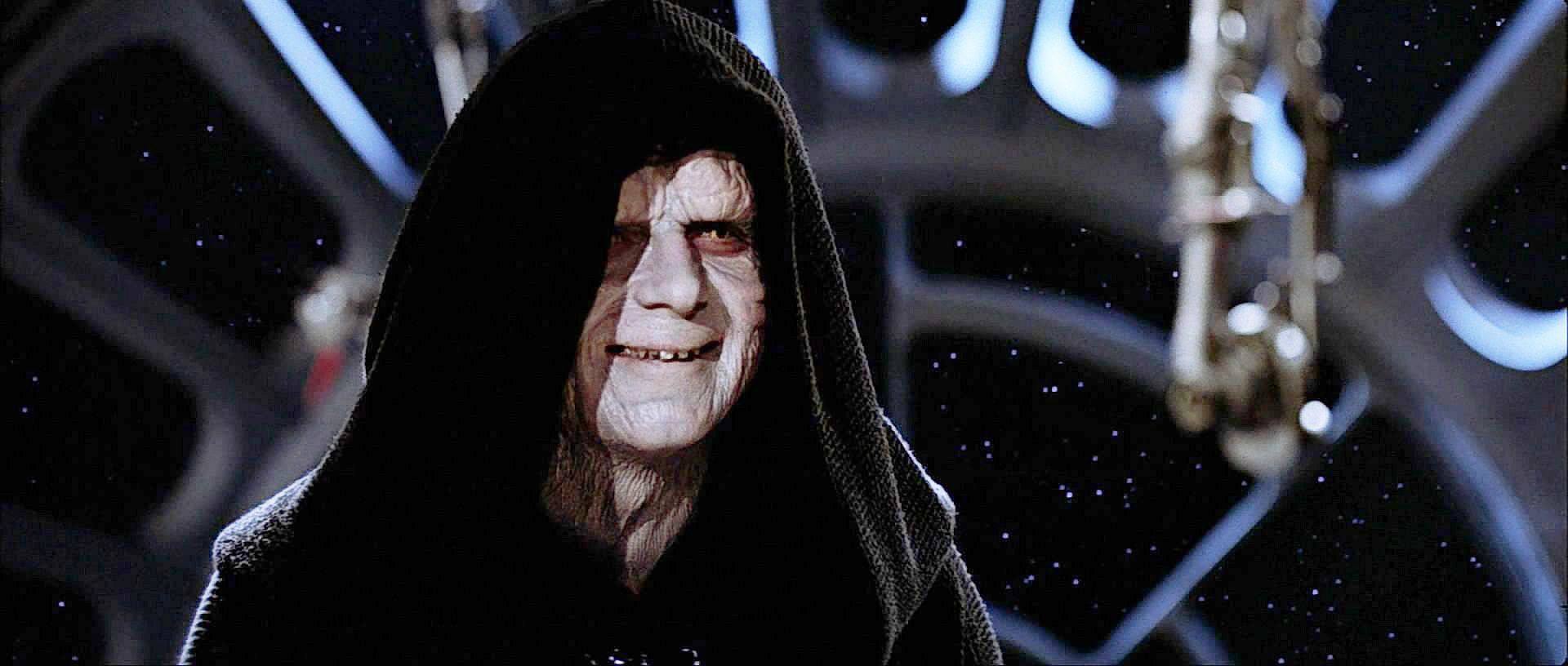
“I can feel your anger…” (Not an empath, just to be clear.)

Some of you who have a hard enough time dealing with your own want to curl up into a ball at the mere thought of that.

That’s my life. I’m Natasha, Nice to meet you.

And yeah, if anyone is every BS-ing me, I can tell pretty quickly.

I never used to believe my impressions of people, I thought I was just mistrusting…and I can be. But I am very often on point to a degree that amazes my family.

This even works with fiction. I can predict show plot points very easily. I pick up on patterns of characters. and the author, based on what they feel and how they act when they feel that way.

You may have see reviews that over analyzed every detail of something, that’s me.

However, though I have experienced all 13 of the signs of being an empath at some time in my life, I do not deal with all of them all the time, anymore.

I realized I could not take that pressure. It’s easy for me to compulsively take care of people, but I still have feelings of my own that I have to divide from everyone else’s.

The reason I want to share that with you here is that all of us, obviously, have a personality type.

But you are not limited to your type.

I am an empath, I will always pick up on what people feel, but I have grown much stronger at rejecting negative feelings when they are not my own, and positive ones, when they are false. I will feel their pain but I do not have to carry it.

s3uddaqxa6001

Suck it, Pain. You think you’ve got it bad.

It could be easy for me to be a sucker. What’s an annoying sob story or pep talk to you becomes a barrage of emotions flung at me, and if the person believes it, I can tell.

And if they are wrong, I have to consciously choose to reject what they said.

If you wonder how this can be dangerous, then  think bout this, I come form a background of having an Emotionally Abusive Parent.

The delusions of emotionally abusive people is that they often think they are right. Emotions are tricky like that.

Even when my dad knew he was wrong, he used my  emotions against him. He could tell when I was weakening, and he’d latch onto it.

This man liked to tell me, when I came to apologize for some stupid fight that he usually started, that he was going to give up on trying with me.

I would feel his pain, yet, I also would feel his intention to make me feel bad, and get furious.

It was not fully fake but it was never honest.

Take that, multiply it by dozens of incidents over the years that I’ve lost count of, and you have a really bad set up.

You might think as an empath that I am easily offended…

download (4)

…but as this blog and the book it was talking about point out, not all empaths are HSP (highly sensitive people).

I was once, but I am no longer very easy to offend.

In fact, instead of being weaker emotionally, I am actually stronger emotionally than many people. My ability to process other people’s emotions and my own at the same time has made me stronger, because I have to hold both.

And I had to learn to let stuff go, otherwise it would always weigh me down.

I have evidence that the empath ability starts at birth, as even as a baby I reacted poorly to people who were stressed or angry.

Empaths aren’t really easy to explain with science. Unless you believe in mind reading (and you’d be surprised at the evidence that mind reading is actually somewhat possible, though not like in sci-fi, where it’s conscious concrete thoughts) how will you  explain that we can actually feel feelings and read people so accurately.

But there is, as always, a biblical; explanation where science has not yet reached(though it’s getting close.)

In the bible there is a gift of the spirit known as Discernment.

Someone with this gift can tell truth from lies, and one emotion from another, and make sense of it.

Discernment is dangerous without wisdom.

Image result for image knowledge without wisdom puffeth up

I can attest that empaths who do not have wisdom can end up very unhappy and make the people around them miserable. Also, we tend to get asked for advice, and if our priorities are not straight, we aren’t going to give it well.

Discernment is gift from God, but you can have it without knowing God, just like with other talents. People who do can end up in a world of hurt.

But walking with God and letting him refine and hone my gift, I have enjoyed it a lot for the most part.

God helps me avoid pitfalls, as I can’t always be right. Where my gift comes short, He will provide an answer.

Being an empath enables me to be interested in a lot of people, and to always have new things to notice about them.

If you were to ask me, after all this, what the hardest part about being an empath for me (as it is like a job in many ways, to monitor all the people around you without even wanting to) is, I would say this:

Trusting yourself.

When you know what everyone feels, deciding what you feel is right, is hard. Sometimes they can be so passionate, and yet over the wrong thing, that it’s hard to say no.

You doubt whether you made the right choice, because you can sense their disappointment or anger.

But if you keep giving yourself enough credit for when you are right, it gets easier.

I am at the point now where I can stick to my guns even if I know someone is getting upset with me. I just have to choose to think that what is right is more important that if they get upset.

And that’s an interesting thought. Because many people now say that what people feel is more important than what’s right, empaths might be more likely to buy into that, yet here I am, saying I don’t.

Which is why I say, your type does not control you. You are still a person with free will. Whatever your natural inclination are, you can choose better, if you know that there is a better.

Learn to make your type work for you, don’t let it drag you by your hair, if you have hair.

And that is all for this post, stay honest–Natasha.